Kyoto Autumn Foliage: A Practical Guide to Koyo Season
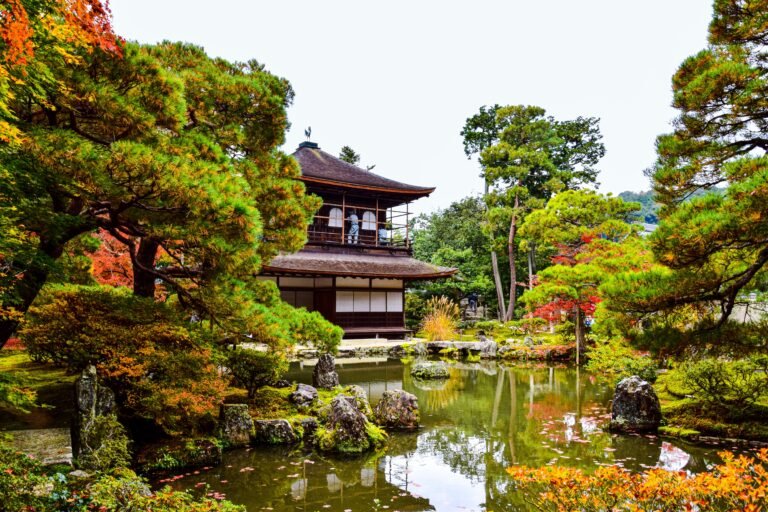
Kyoto’s cherry blossoms get more hype internationally, but ask anyone who’s done both, and a lot of people will tell you autumn is the better season here. The color runs longer than sakura’s one-week window, it’s spread across a wider stretch of the calendar depending on where you go, and the combination of red and gold maples against centuries-old temple architecture is, if anything, more photogenic than pink blossoms against blue sky.
The catch is that koyo — autumn leaf-viewing — is a moving target. Color doesn’t arrive on the same date every year, and it doesn’t arrive everywhere at once: the mountains around Kyoto turn weeks before the low-lying city center does. Get the timing and location right and you’ll have some of the best temple scenery in Japan largely to yourself in the early morning. Get it wrong and you’ll be standing in a queue with a few thousand other people. Here’s how to plan around it.
The Essentials at a Glance
| What | Details |
|---|---|
| Typical peak window | Mid-to-late November through the first week of December, shifting year to year with autumn temperatures |
| Early color | Kibune, Kurama, Ohara — early-to-mid November |
| Peak color | Higashiyama temples: Tofuku-ji, Eikan-do, Nanzen-ji — mid-to-late November |
| Late color | Central Kyoto, Arashiyama, Uji, ginkgo trees — late November into early December |
| Best times to visit temples | Right at opening (before 8:30 a.m.) or during evening illumination |
| Where to check timing | Individual temple websites and Japan’s official koyo forecasts, which firm up through September and October |
Why Kyoto’s Foliage Season Is a Moving Target
Kyoto sits in a basin ringed by mountains, and that geography is exactly why the color doesn’t arrive all at once. Higher, cooler spots in the hills north of the city start changing first, while the low-lying streets of central Kyoto — warmed slightly by the city itself — hold onto green leaves for weeks longer. In a typical year, that means color moves roughly from early November in the mountains to early December in the city center, but “typical” is doing a lot of work in that sentence: a warm autumn can push everything back by one to two weeks, and a cold snap can pull it forward just as easily.
Because of that, it’s not worth locking in exact dates months in advance if peak color is your main goal. Japan’s meteorological forecasters and individual temples both publish updated color forecasts through September and October, and those get considerably more reliable the closer you get to your travel dates. If your trip dates are flexible, decide roughly when you’re going based on the general pattern below, then check current conditions once you’re within a few weeks of arrival.
Early Color: The Mountains Turn First
If you’re visiting in early-to-mid November, head for elevation. Kurama and Kifune, north of the city along a scenic train line, typically color up before almost anywhere else near Kyoto, and the ropeway and forested trails at Kurama give you canopy-level views most temples can’t match. Ohara, further northeast and less visited than either, is another reliable early spot, with Sanzen-in’s moss gardens taking on color while central Kyoto is still green. These northern spots also see meaningfully fewer visitors than the famous Higashiyama temples, simply because they take longer to reach.
Peak Season: The Higashiyama Classics
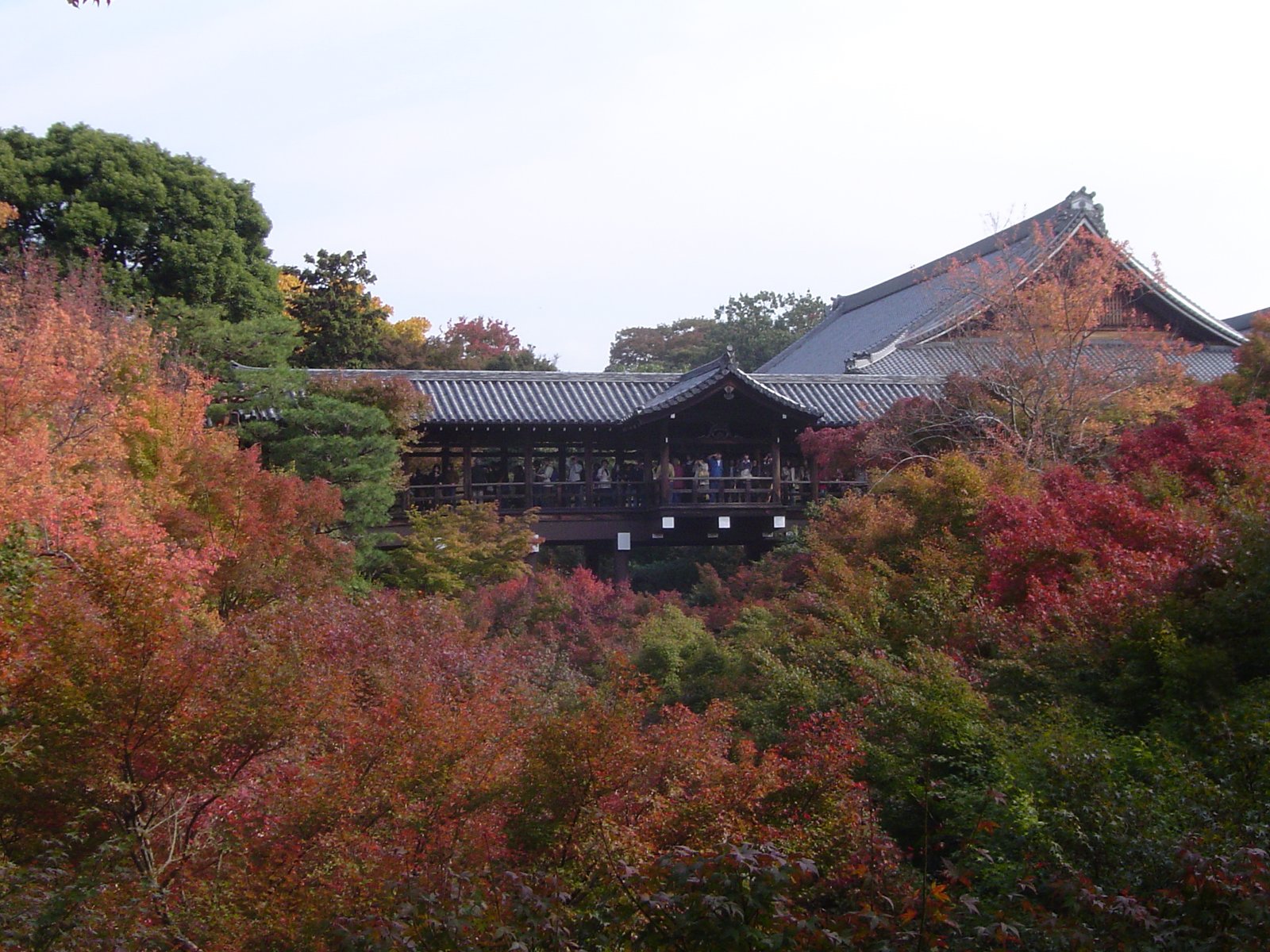
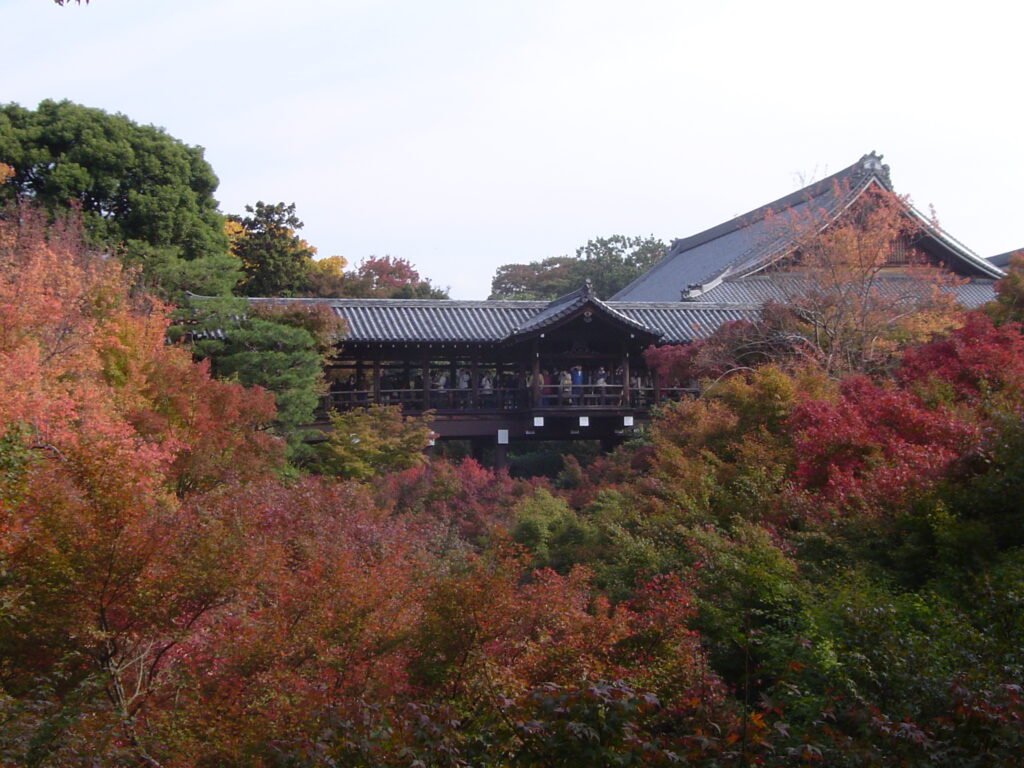
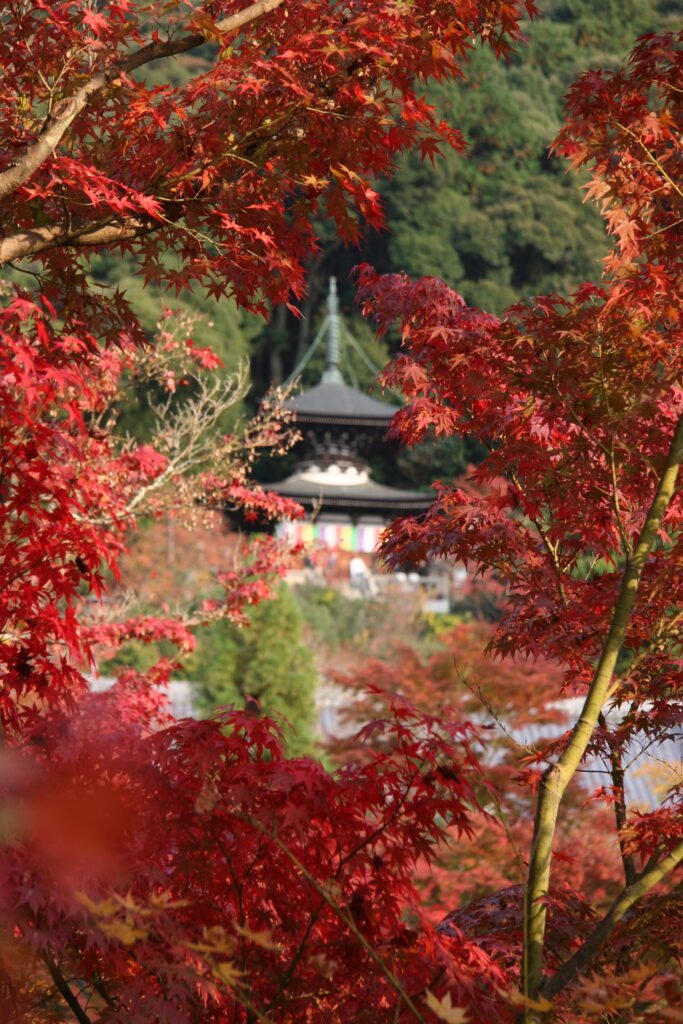
Mid-to-late November is peak season for the temples everyone pictures when they think of Kyoto in autumn, and it’s also when crowds are heaviest. Tofuku-ji‘s Tsutenkyo bridge, looking out over a valley of some 2,000 maple trees, is the single most photographed foliage view in the city — arrive at or before opening on a weekday, because it’s shoulder-to-shoulder by mid-morning during peak week. Eikan-do pairs its maples with a pond and the Tahoto Pagoda for some of the best reflection shots in the city, and it’s arguably even better after dark during its evening illumination (more on that below). Nanzen-ji and its brick aqueduct, and the maple-lined Philosopher’s Path connecting several of these temples, both belong on the same morning if you’re working through Higashiyama on foot. Kiyomizu-dera extends its opening hours during this stretch specifically for foliage viewing, and the wooden stage looking out over a hillside of color is worth the early start it takes to beat the crowds.
Night Illuminations
Several temples light up their maples after dark during peak season, and it’s a genuinely different experience from a daytime visit — the light hits the leaves and the water differently, and evening sessions run as separate ticketed hours from the regular daytime visit. Eikan-do’s evening illumination is one of the most highly regarded in the city, especially reflected in its pond, though expect a queue if you don’t arrive close to when evening entry opens. Kodai-ji, true to its nickname as Kyoto’s temple of illuminations, runs its own light-up with projection effects across the garden. Kiyomizu-dera’s night session, with the wooden stage lit against the hillside, draws some of the biggest crowds of any illumination event in the city, so budget extra queueing time if that’s on your list.
The Late Bloomers
Late November into early December is when color finally reaches the lower-lying parts of the city, and it’s a good stretch to visit if you’re trying to dodge peak-week crowds at the Higashiyama temples. Arashiyama, on the western edge of the city along the Katsura River, tends to color up on the later side and pairs its maples with the bamboo grove and Tenryu-ji’s garden. The Kyoto Imperial Palace grounds turn gold rather than red, with mature ginkgo trees dropping a carpet of yellow leaves across the open park — free to enter and a nice change of pace from maple-heavy temple gardens. Further out, Uji often holds color a little later than central Kyoto too, and combines it with a quieter, less touristed day trip.
Crowd and Timing Strategy
Peak week at the famous temples is genuinely crowded — tour buses, timed queues, and packed platforms on the trains and buses that serve Kyoto’s public transit network. A few things make a real difference: arrive at temples right when they open rather than mid-morning, pick one or two major sights per day instead of trying to chain several together, and lean toward weekdays over weekends if your schedule allows it. Hotel prices climb well before peak color actually arrives, so if autumn is the main reason for your trip, book accommodation earlier than you would for other seasons rather than waiting to see how the forecast looks.
Bottom Line
There’s no single date that guarantees peak color in Kyoto, but there’s a reliable pattern: mountains first, Higashiyama temples in the middle of the window, and the low-lying city center and Arashiyama last. Pick your general timeframe based on that pattern, check updated forecasts once you’re a few weeks out, and get to whichever temple you’ve chosen before it opens. That’s the whole strategy, and it works whether you’re chasing the single best shot at Tofuku-ji or just want a quiet morning walk under red leaves.