Yoshiminedera: A Practical Guide to Kyoto’s Dragon Pine and Mountain Garden
Most visitors who make it out to Nishikyo-ku stop at Katsura Imperial Villa and call it a day. A few kilometers further into the hills, up a mountain road that’s gotten harder to reach by bus rather than easier, Yoshiminedera spreads itself across a slope in a way most Kyoto temples don’t attempt: more than two dozen buildings connected by stone steps and covered walkways, climbing rather than clustering, built around a pine tree some 600 years old that was trained to crawl sideways along a terrace instead of growing up. It takes more effort to reach than almost anywhere else on this blog. That’s most of the reason it’s worth the trip.
The Essentials at a Glance
| What | Details |
|---|---|
| Location | Nishikyo-ku, Kyoto, in the hills above Katsura — roughly 40 minutes from central Kyoto by taxi |
| Founded | 1029, by the monk Gensan, who trained at Enryaku-ji on Mount Hiei |
| Sect | Tendai |
| Known for | Yuryu-no-Matsu, a nationally designated natural monument pine trained to grow horizontally |
| Pilgrimage | 20th of the 33 temples on the Saigoku Kannon Pilgrimage |
| Hours | 8:30am–5:00pm weekdays, 8:00am–5:00pm weekends and holidays; last entry 15 minutes before close |
| Admission | ¥500 |
| Access | No direct bus since May 2025 — taxi from a nearby station, or a connecting bus plus a long walk |
A Mountainside Temple Built to Climb, Not Cluster
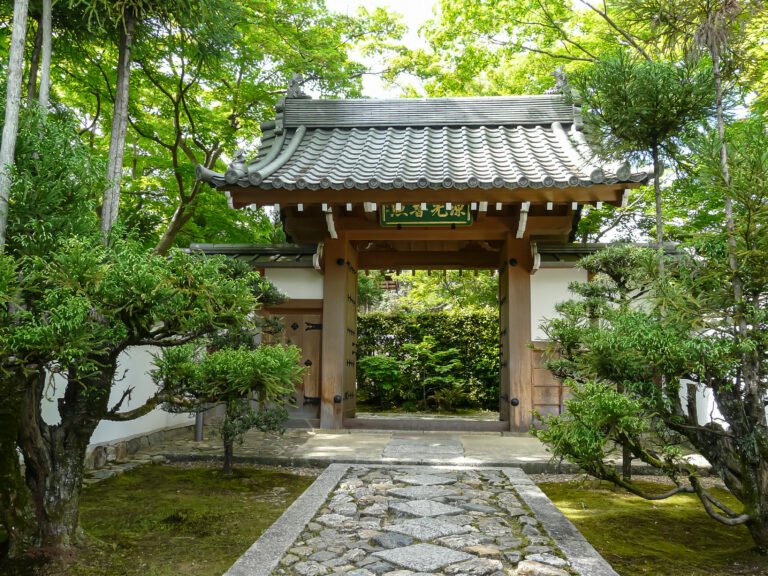
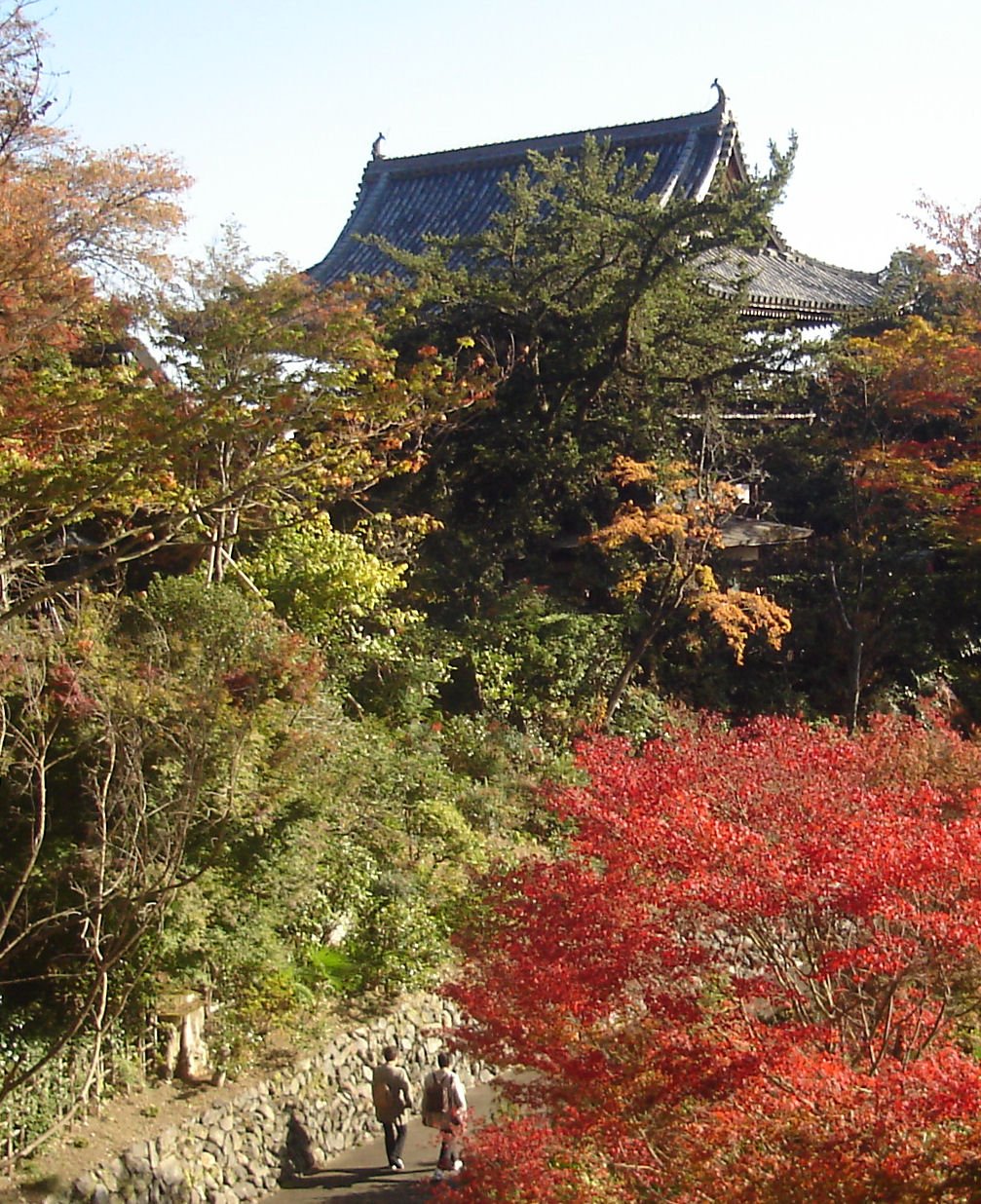
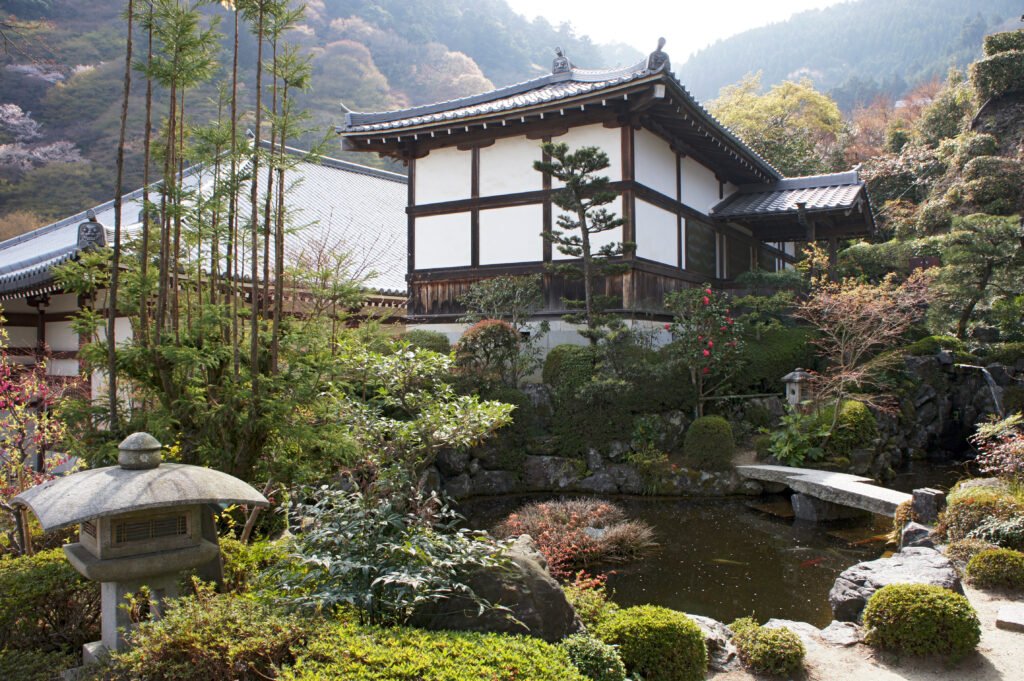
Yoshiminedera was founded in 1029 by a monk named Gensan, who had trained at Enryaku-ji on Mount Hiei before coming west to build a retreat of his own in these hills. Under imperial patronage the temple grew quickly into a major Tendai complex, with reports of well over a thousand monastic buildings at its height — then lost nearly all of it in the Onin War of 1467, when fighting across Kyoto left the hillside in ruins for close to two centuries. Its revival, when it finally came in the early Edo period, owed a great deal to Keisho-in, a Kyoto-born woman who became the mother of the fifth Tokugawa shogun, Tsunayoshi, and funded the reconstruction of several of the halls still standing today. What resulted isn’t a temple arranged around a single courtyard the way many Kyoto sites are. It’s a chain of halls, gates, and a pagoda strung along stone paths up the mountainside, which makes a visit here as much a walk through a forested hillside as a tour of any one building.
The Yuryu-no-Matsu: A Pine Tree Trained to Lie Down
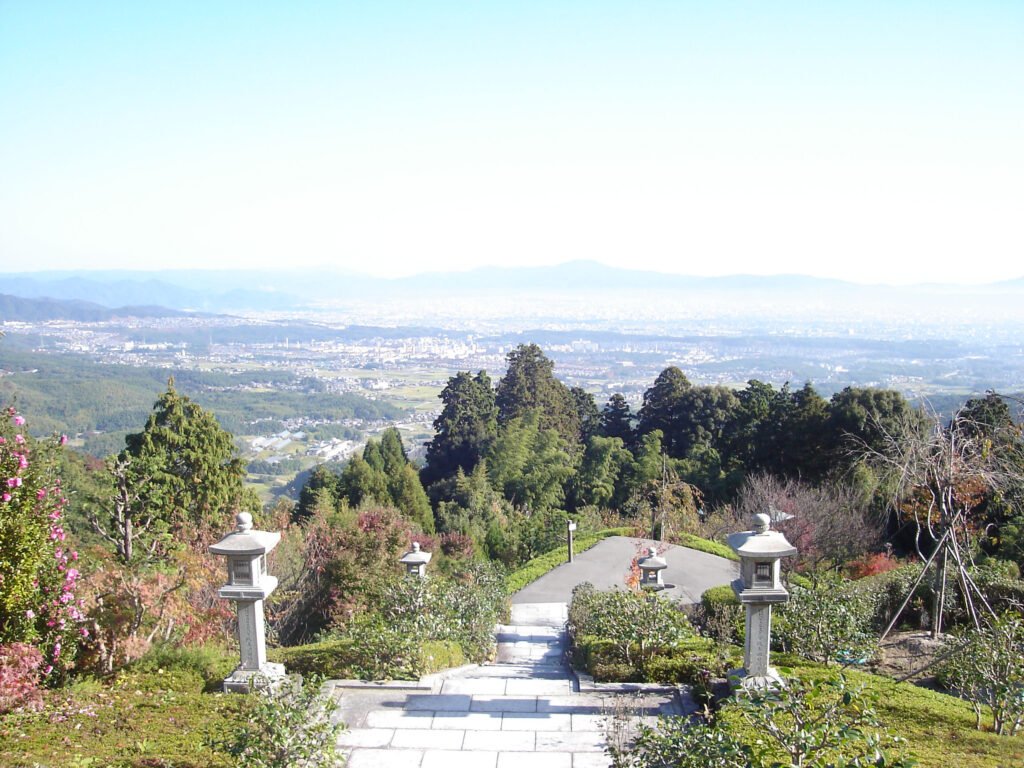
The temple’s best-known feature isn’t a building at all. Yuryu-no-Matsu, a Japanese white pine estimated at around 600 years old, has been pruned and trained for generations to grow outward along a stone terrace rather than upward, its branches supported at intervals so the whole tree reads as a single long, low wave of green. It’s been a nationally designated natural monument since 1932, and the name itself — roughly “reclining dragon pine” — was given in 1857 by Kazanin Ieatsu, a court noble who thought its shape resembled a dragon at rest. Reports on its exact length vary: it’s said to have once stretched as long as 50 meters before pine weevil damage forced a significant trim in the 1990s, and today it’s generally measured at somewhere in the 30-to-40-meter range, figures worth treating as approximate rather than official. What isn’t in question is the view from the same terrace, which opens out over the Kyoto basin and the hills beyond it, one of the better unobstructed panoramas on this side of the city.
Hydrangeas, Azaleas, and a Mountain Garden That Changes With the Season
Yoshiminedera isn’t a one-season temple. The Hakusan Sakura to Ajisai-en garden fills with thousands of hydrangeas, many of them the blue mophead variety the temple is particularly known for, typically peaking sometime around early-to-mid June — a quieter, greener alternative to the spring cherry-blossom crowds elsewhere in the city. An azalea-lined lookout near the Shaka-do hall adds a smaller spring highlight of its own. Autumn is the busiest stretch by far, with maple color usually building from mid-November into early December, among the later-turning spots in the Kyoto area, which makes it a reasonable option if the bigger-name foliage temples closer to the center have already peaked. In 2026, the temple is opening early at 6:30am on November 21 through 23 for the color, with the car park opening around 6:00am for those arriving by taxi or car; outside those three mornings, normal hours apply, and tripods aren’t permitted on November weekends regardless.
Getting There Takes Real Effort Now
This is the part of the visit that’s changed, and not for the better. Hankyu Bus Route 66, the direct bus that used to run from Mukomachi and Higashimuko stations to a stop a short walk from the temple, was discontinued on May 31, 2025, and nothing has fully replaced it. The most reliable option now is a taxi, roughly 15 to 20 minutes from JR Mukomachi Station, Hankyu Higashimuko Station, or Hankyu Nagaokatenjin Station — budget a few thousand yen one way and confirm the current fare locally, since published figures online are mostly a few years old. If you’d rather take a bus, Hankyu Bus 63 or City Bus Nishi 9 (roughly every two hours) and City Bus Nishi 4 or the Yasaka Bus (roughly twice an hour) all get you within range, but each one ends with a walk of about 3.4 to 4 kilometers, something like 43 to 50 minutes, so this isn’t a casual backup plan. Drivers have it easiest: the temple keeps a lot with around 150 spaces plus separate coach parking, which is part of why a rental car or a taxi genuinely makes the most sense here now, bus access aside.
Pairing It With the Rest of a Nishikyo-ku Day
Since getting out here already takes some planning, it’s worth building a fuller day around it. Katsura Imperial Villa sits in the same general corner of the city and pairs naturally with a taxi-based day in Nishikyo-ku, since both are reservation-light stops that reward travelers willing to go a little further from the center. If autumn color is the reason for the trip, our Kyoto Autumn Foliage guide puts Yoshiminedera’s late-November timing in context against the rest of the city’s koyo spots, and our Kyoto in November guide covers the broader month if your trip falls in that window. And for the logistics of getting around the city generally between stops like these, our guide to getting around Kyoto covers the bus and train basics in more detail.
Bottom Line
Yoshiminedera asks more of a visitor than most Kyoto temples do these days, mainly because getting there no longer has an easy public-transit answer. What’s waiting at the end of that effort is a genuinely unusual place: a mountainside complex built to be walked rather than viewed from one spot, a famous pine tree that’s spent centuries being trained to lie down instead of grow up, and a view over the city that most of Kyoto’s visitors never see. If you’ve got a car, a willingness to call a taxi, or simply don’t mind a long walk at the end of an infrequent bus, it earns the trip.