Daigo-ji: A Practical Guide to Kyoto’s Oldest Building and Mountain Hike
Kyoto’s oldest surviving building isn’t at Kiyomizu-dera or Kinkaku-ji — it’s a five-story pagoda finished in 951, standing quietly on the grounds of a temple most first-time visitors never make it to. Daigo-ji sits far enough from the city center that it gets skipped in favor of the bigger names, which is exactly why its gardens stay calm even during cherry blossom season.
The temple is really three places bundled under one name: a lower complex with the pagoda, the main hall, and a garden built for a single, famous afternoon of flower-viewing, plus an upper complex on the mountain behind it that most day-trippers don’t even know exists. Which parts you see, and what you end up paying, depends on which tickets you buy.
Here’s what it actually costs, how the ticketing is split up, how to get there, and whether the hike up the mountain is worth your legs.
The Essentials at a Glance
| What | Details |
|---|---|
| Admission (Sanboin, Reihokan & Garan) | ¥800 adults in the normal period; ¥1,500 during the spring (Mar 20–May 15) and autumn (Oct 15–Dec 10) special periods |
| Kami-Daigo (mountain area) | Separate ticket, ¥700 adults (¥500 if you’re also holding a lower-grounds ticket) |
| Hours | 9:00 a.m.–5:00 p.m. (March–early December); 9:00 a.m.–4:30 p.m. (winter); last entry 30 minutes before closing |
| Kami-Daigo hours | 9:00 a.m.–4:00 p.m. (9:00 a.m.–3:00 p.m. in winter) — you’re required to be back down the mountain by 5:00 p.m. |
| By train from Kyoto Station | JR to Yamashina (5 min), then the Tozai subway line to Daigo Station (8 min), then a 15-minute walk |
| Typical visit length | 1–1.5 hours for the lower grounds only; add 2–3 hours round trip if you’re hiking to Kami-Daigo |
Getting There
The straightforward route from Kyoto Station is JR to Yamashina, a five-minute ride, then a transfer to the Tozai subway line for two stops to Daigo Station, followed by a 15-minute walk to the temple gate. If you’d rather skip the transfer, the Keihan Bus 301 runs directly from Kyoto Station to Daigo-ji in about 30 minutes for ¥280 — slower, but door to door.
Daigo-ji sits out past Fushimi on the southeastern edge of the city, near Yamashina, which is noticeably further out than most of the temples on this site. It doesn’t pair naturally with a Higashiyama temple-hopping day — treat it as its own half-day trip instead. If you’re deciding where to base yourself for the rest of your visit, our Kyoto neighborhood comparison guide covers the tradeoffs, and our guide to getting around Kyoto covers IC cards and how the subway-and-JR combination works if this is your first time switching between the two.
Three Tickets, Not One
The confusing part of visiting Daigo-ji is that “one temple” actually means two separate ticket gates. The lower grounds — Shimo-Daigo, with the pagoda and main hall, plus the Sanboin garden and the Reihokan treasure museum — are covered by a single combined ticket. Kami-Daigo, the mountaintop section, is sold separately at its own entrance partway up the trail, though holding a lower-grounds ticket gets you a small discount on it.
Decide before you set out whether you’re doing the hike. If you’re not, the lower grounds alone are a comfortable, mostly flat 1–1.5 hour visit. If you are, budget the extra time and buy both tickets at the start rather than doubling back.
Sanboin: The Garden Built for One Party
In 1598, the warlord Toyotomi Hideyoshi ordered Sanboin’s garden rebuilt and much of the surrounding grounds cleared out for a single, extravagant cherry blossom viewing party — one of the last big events of his life. What’s on the grounds today is largely the result of that one afternoon’s ambition: a Momoyama-era stroll garden with a carefully arranged pond, more than 700 stones brought in specifically for the occasion, and a scattering of teahouses positioned for the best views.
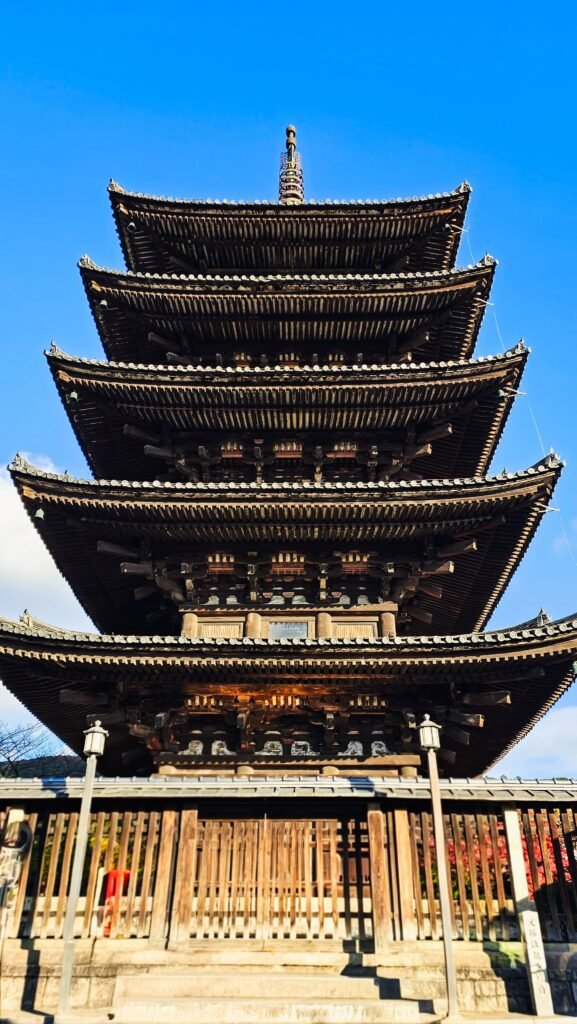
Shimo-Daigo and the Five-Story Pagoda
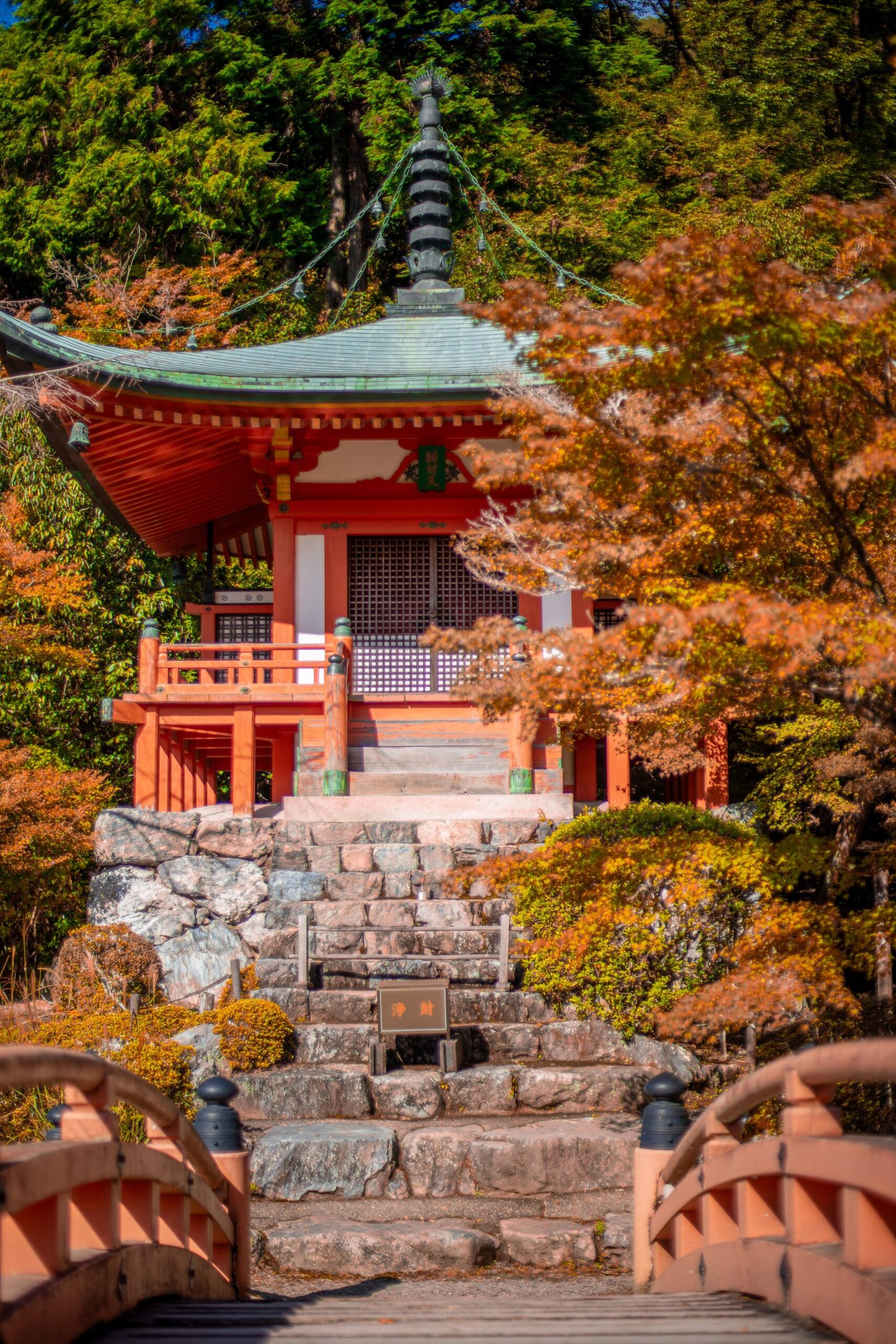
The five-story pagoda here was completed in 951, and it’s the oldest verified wooden building still standing in Kyoto — everything else on this list of temples has been rebuilt at least once, usually after fire. Most of Daigo-ji’s lower grounds actually burned during the Onin War in the late 1400s, a conflict that leveled much of the city; the pagoda is one of the rare structures from before that period to survive intact.
The Kondo main hall nearby was rebuilt using material relocated from another temple in the early 1600s, and the Reihokan museum on the same grounds rotates through the temple’s collection of statues, sutras, and paintings, with special exhibitions timed to spring and autumn.
Kami-Daigo: The Hike Most Visitors Skip
Kami-Daigo is the original temple site — a cluster of halls on the mountain summit behind the lower grounds, reached by a steep, forested trail that takes most people about an hour to climb. It’s the part of Daigo-ji that almost nobody bothers with, since it requires real shoes and real effort rather than a casual stroll, which is exactly why it’s worth doing if you have the legs and the weather for it.
The trail is unpaved and genuinely steep in places, so this isn’t the temple to attempt in sandals or in the rain — access can be restricted in bad weather, and you’re required to be back down by 5:00 p.m. regardless of when you started. The payoff at the top is a scatter of weathered halls, including Kaisando and Junteido, with views back over Kyoto that you won’t get standing in line at the more famous viewpoints.
When to Go
Daigo-ji has two genuine peak windows, and the admission price rises for both of them. Spring, from March 20 through mid-May, covers the weeping cherry trees around Sanboin and the museum garden, which bloom in early April — roughly the same timing as the original 1598 party. Autumn, from mid-October through early December, covers the foliage around the pagoda and along the Kami-Daigo trail, peaking in mid-to-late November.
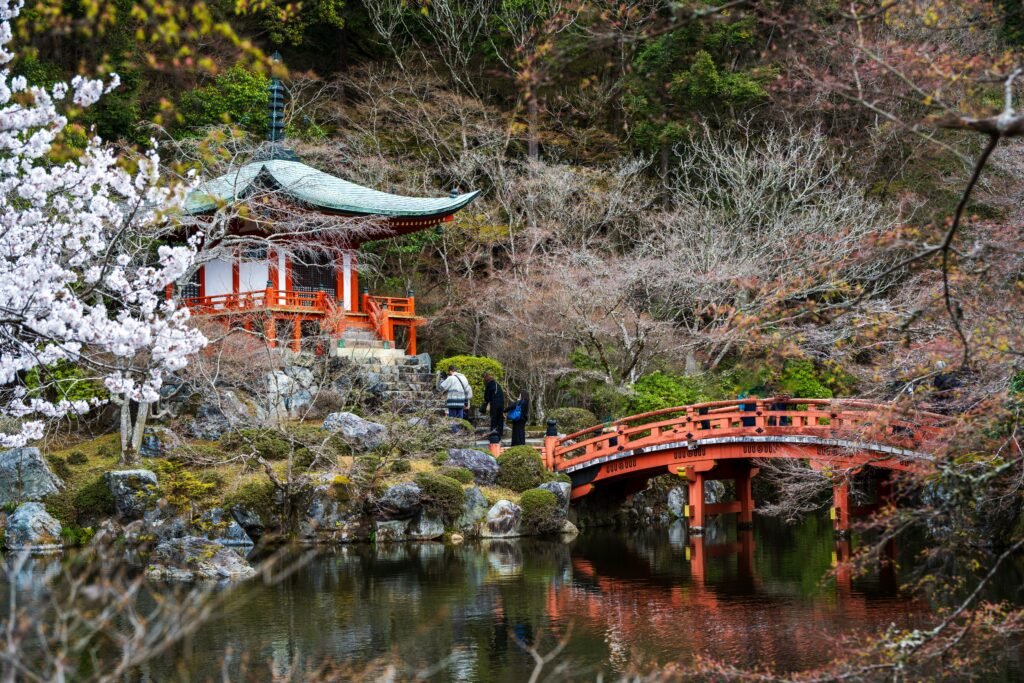
Outside those two windows, admission drops back to ¥800 and the crowds thin out considerably. The gardens are less dramatic in the height of summer or the middle of winter, but the pagoda and the hike are just as worthwhile, and you’ll likely have long stretches of the trail to yourself.
Bottom Line
Daigo-ji asks more of you than most Kyoto temples — it’s further out, the ticketing is split in two, and the best part of the whole complex requires an uphill walk. In exchange, you get Kyoto’s oldest building, a garden built for one of history’s more famous parties, and, if you climb for it, a mountaintop that most visitors to this city will never see. If you’ve already done the Higashiyama circuit and have half a day free, this is where to spend it.