Kamigamo Shrine: A Practical Guide to Kyoto’s Upper Kamo Shrine
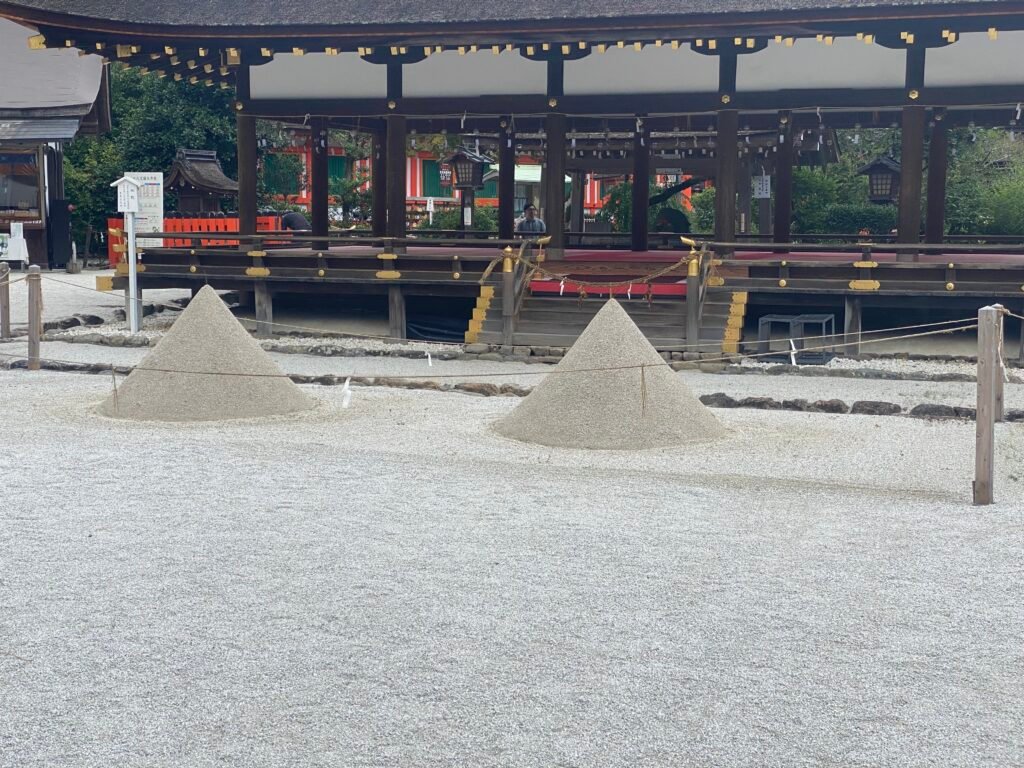
Two carefully raked cones of white sand sit in the courtyard of Kamigamo Shrine, precise little peaks that look almost sculptural against the vermilion buildings behind them. They’re not decoration — they represent Mount Kōyama, the peak where the shrine’s deity is said to have first descended to earth, and for centuries worshippers carried handfuls of this same sand home to purify their doorways. It’s one of the more striking sights in Kyoto’s shrine circuit, and one that a surprising number of visitors miss entirely.
Kamigamo is the “upper” of Kyoto’s two ancient Kamo shrines — kami meaning upper, shimo meaning lower — sitting a few kilometers further up the Kamo River from its sister shrine, Shimogamo Shrine. Both predate Kyoto’s founding as capital in 794, both are inscribed on the UNESCO World Heritage list for the Historic Monuments of Ancient Kyoto, and both are still linked every May by the Aoi Matsuri, one of the city’s three grandest festivals. Kamigamo, being further from the center, sees noticeably fewer visitors than almost anywhere else on that UNESCO list.
Here’s what to see, how the sand cones actually work, and how to pair a visit with Shimogamo for one quiet, temple-free afternoon along the Kamo River.
The Essentials at a Glance
| What | Details |
|---|---|
| Admission | Free (shrine grounds) |
| Hours | Grounds open from around 5:30 a.m.; shrine office (amulets, goshuin) roughly 8:30 a.m.–5:00 p.m. |
| Getting there | City Bus 4 from Kyoto Station or Demachiyanagi (30–40 min), or Karasuma Subway to Kitayama Station, then a 15-minute walk |
| From Shimogamo Shrine | About 3.5 km upriver; roughly 15 minutes by bus or taxi |
| Typical visit length | 45 minutes to 1.5 hours |
| Best for | Quiet mornings, the sand cones, avoiding crowds |
Getting There
The easiest route from central Kyoto is City Bus 4, which runs from Kyoto Station and passes through Demachiyanagi on its way north, stopping directly at Kamigamojinja-mae — about 30–40 minutes from the station, depending on traffic. If you’d rather take the subway, the Karasuma Line’s Kitayama Station leaves a flat, easy 15-minute walk to the shrine’s south entrance. Neither route is complicated, which is part of why Kamigamo stays quiet: it just takes a little longer to reach than the temples clustered in Higashiyama.
A Shrine Older Than the City
Kamigamo’s origins reach back to the Asuka period, with structures on this site well before Kyoto became the capital in 794. Once the court moved in, the shrine was adopted as a guardian of the new city and received ongoing imperial patronage for over a thousand years. Its enshrined deity, Kamo Wakeikazuchi no Ōkami, was traditionally invoked for protection against lightning strikes — a connection that gets a modern reframe today, with the shrine sometimes described informally as watching over electricity itself.
The current buildings include two National Treasures and 41 Important Cultural Properties, rebuilt periodically over the centuries in keeping with Shinto renewal traditions, and the whole precinct is part of the UNESCO listing for the Historic Monuments of Ancient Kyoto — the same designation covering Kiyomizu-dera, Kinkaku-ji, and 15 other sites across the city.
The Tatesuna Sand Cones
The two sand cones in front of the Hosodono hall, known as tatesuna, are Kamigamo’s signature image and worth planning your visit around. Each is built into a precise cone and finished with a single pine needle set at the peak, standing in for an evergreen tree. Together they represent Mount Kōyama, the mountain where tradition holds the shrine’s deity first descended to earth.
The cones aren’t just symbolic scenery — they’re the origin of a purification practice still followed today. Worshippers once took handfuls of this consecrated sand home to scatter around their doorways and gardens, a custom known as kiyome no suna, believed to keep misfortune out of the house. You’ll still see small packets of shrine sand for sale near the entrance for exactly this purpose.
Nara no Ogawa Stream and the Nagoshi no Ōharae Ritual
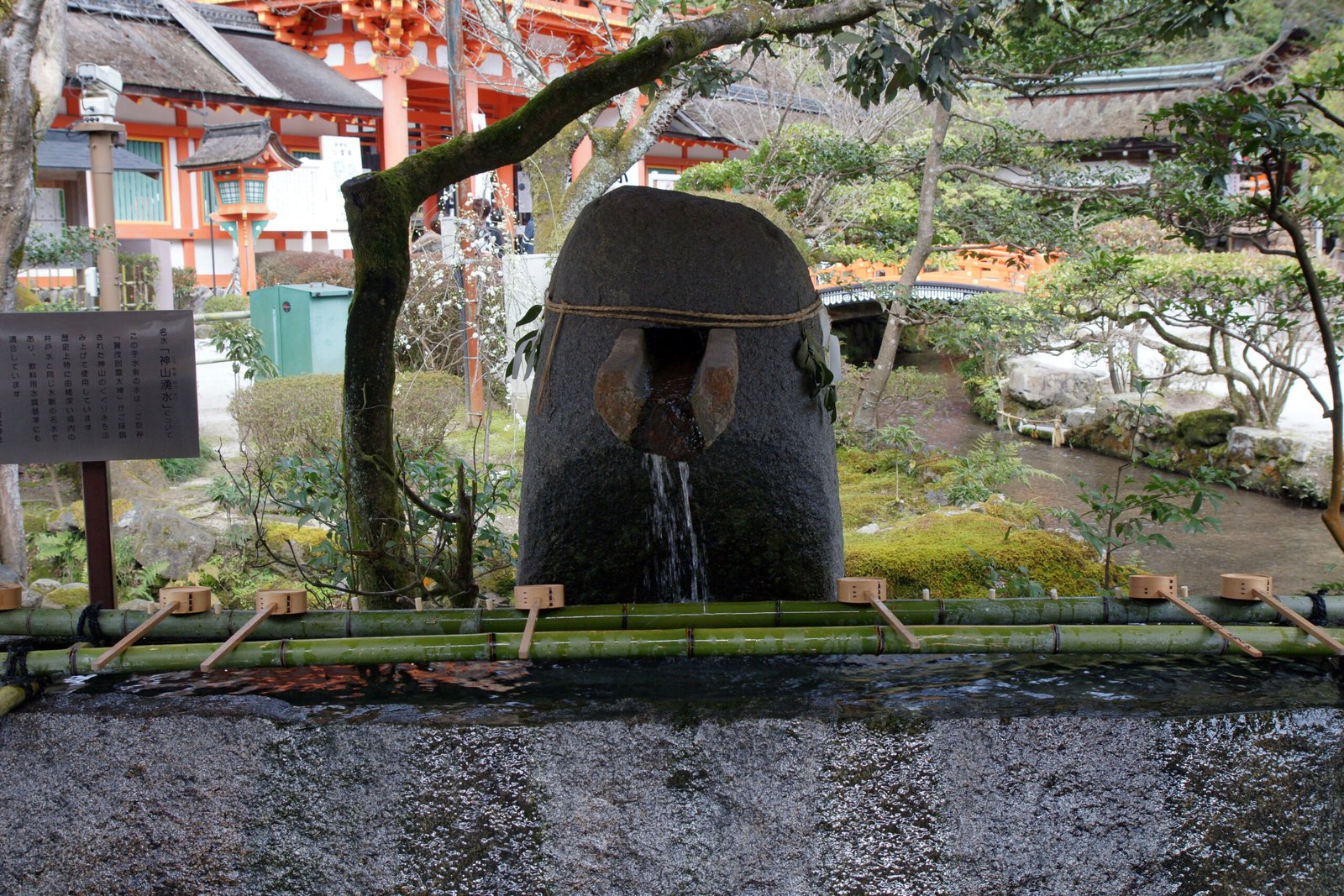
A clear stream called the Nara no Ogawa runs through the shrine grounds, formed where the Omonoi and Mitarashi rivers meet, and it’s a genuinely nice place to slow down and sit for a few minutes regardless of when you visit. On June 30 each year, it becomes the setting for Nagoshi no Ōharae, a mid-year purification ceremony: a priest passes through a large ring woven from grass set up in front of the sand cones, worshippers write their names on flat paper dolls called hitogata to transfer their accumulated impurities, and the dolls are then released to float down the stream. If your visit lands anywhere near that date, it’s worth timing your arrival around it — anyone can walk through the grass ring after the priest does, whether or not they take part in the doll ritual itself.
Karasu Sumo: Crow Sumo Wrestling
On September 9, as part of the Choyo no Sekku chrysanthemum festival, Kamigamo hosts one of Kyoto’s stranger annual sights: Karasu Sumo, in which local children wrestle in a ritual sumo match performed in a distinctly crow-like hopping style. The custom ties back to the shrine’s mythological connection to Yatagarasu, the three-legged crow associated with the deity’s lineage, and it draws a small, mostly local crowd rather than tour buses — a good one to catch if your dates happen to line up and you want to see a side of Kyoto’s shrine calendar that isn’t aimed at visitors at all.
Pairing It With Shimogamo Shrine
Because Kamigamo and Shimogamo Shrine are the same shrine family split across two sites on the same river, they pair naturally into one unhurried day that skips the temple circuit entirely. Start at Kamigamo in the morning while it’s quietest, then head south — by bus, taxi, or a pleasant riverside walk if you have the time — to Shimogamo and its old-growth Tadasu no Mori forest. The contrast is part of the appeal: Kamigamo’s open courtyard and sand cones against Shimogamo’s shaded forest approach, two very different moods from shrines that share the same origin story.
Bottom Line
Kamigamo won’t take long to see, and that’s exactly why it’s easy to add on: free admission, a short bus or subway ride, and one of the more photogenic and least crowded corners of Kyoto’s UNESCO shrine list. Go for the sand cones, stay for the stream, and pair it with Shimogamo if you have a free morning and want a break from temple crowds.