Tofuku-ji: A Practical Guide to Kyoto’s Autumn Temple
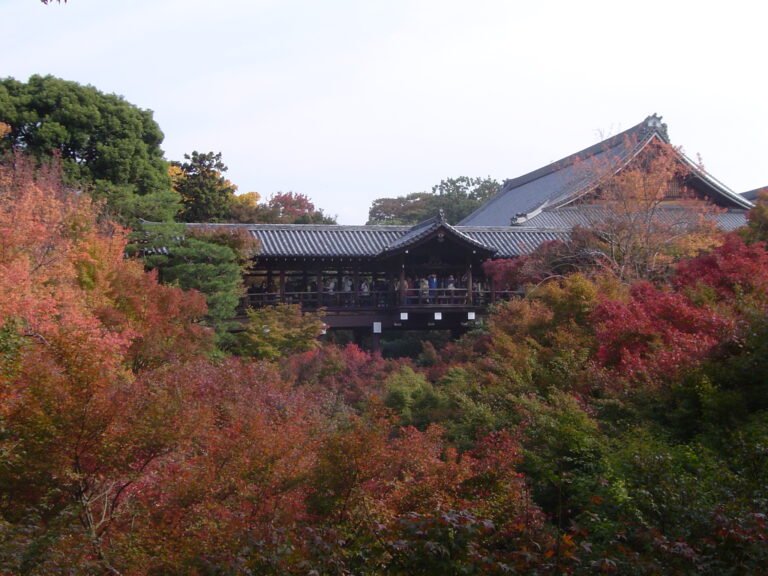
Tofuku-ji has a split personality, and most visitors only ever meet one half of it. Show up in November and you’ll find one of the most crowded, most photographed maple valleys in Japan, viewed from a wooden bridge packed shoulder to shoulder. Show up any other month and you’ll find a quiet Zen temple with one of the most influential modern gardens in the country, and hardly anyone in it.
Both versions are worth knowing about, because they call for completely different visits. This guide covers both: the bridge everyone comes for, and the garden most people walk straight past.
The Essentials at a Glance
| What | Details |
|---|---|
| Tsutenkyo Bridge & valley | ¥600 (¥1,000 during autumn foliage, Nov 15–Dec 7) |
| Hojo garden | ¥500 (combination ticket with the bridge, ¥1,000, unavailable during autumn foliage) |
| Hours | 9:00–16:30 (Apr–mid-Nov), 8:30–16:30 (mid-Nov–early Dec), 9:00–16:00 (Dec–Mar); admission closes 30 min before |
| Typical visit length | 45–60 minutes for both the bridge and the garden |
| By train from Kyoto Station | JR Nara Line, 2 minutes to Tofukuji Station (150 yen), then a 10-minute walk |
| By bus | City Bus 208, about 15 minutes (230 yen), then a 10-minute walk |
| Least crowded time | Any weekday outside mid-November to early December |
Getting There
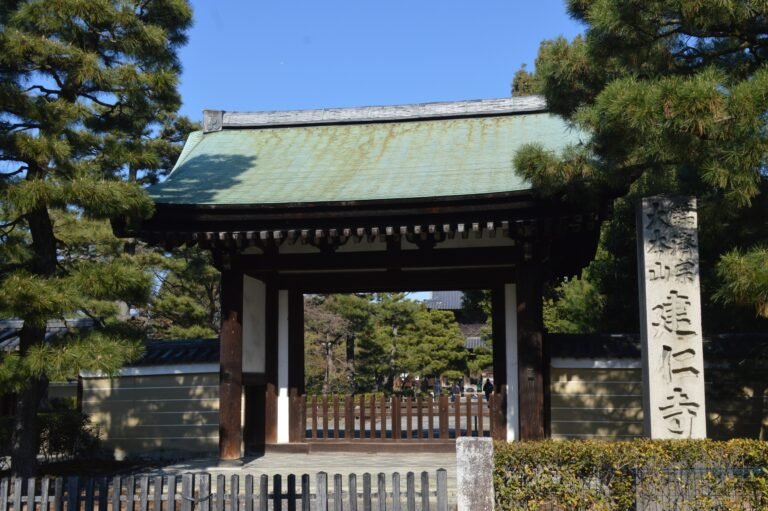
The JR Nara Line makes this one of the fastest big-name sights to reach from Kyoto Station — a two-minute ride to Tofukuji Station, followed by a ten-minute walk through a quiet residential neighborhood to the temple gate. Bus 208 works too, though it takes longer for a similar walk at the other end.
During peak autumn foliage, the walk from the station to the temple can bottleneck badly, and some years the temple has capped entry or closed the bridge to new visitors on the busiest weekends. If you’re coming specifically for the leaves, get there at opening.
When to Go
For the maple valley, the roughly three-week window from mid-November to early December is the entire point, and also the worst possible time to visit for anyone hoping for a calm morning. Admission jumps to ¥1,000 for the bridge alone during this stretch, the combination ticket disappears, and the crowd on Tsutenkyo itself can move at a shuffle. Arrive right at opening, or plan for a genuinely packed visit.
Outside that window, Tofuku-ji is one of the calmest major temples in Kyoto. The valley is green rather than red, but the Hojo garden looks exactly the same year-round, and you’ll likely have long stretches of it to yourself.
What You’re Actually Walking Through
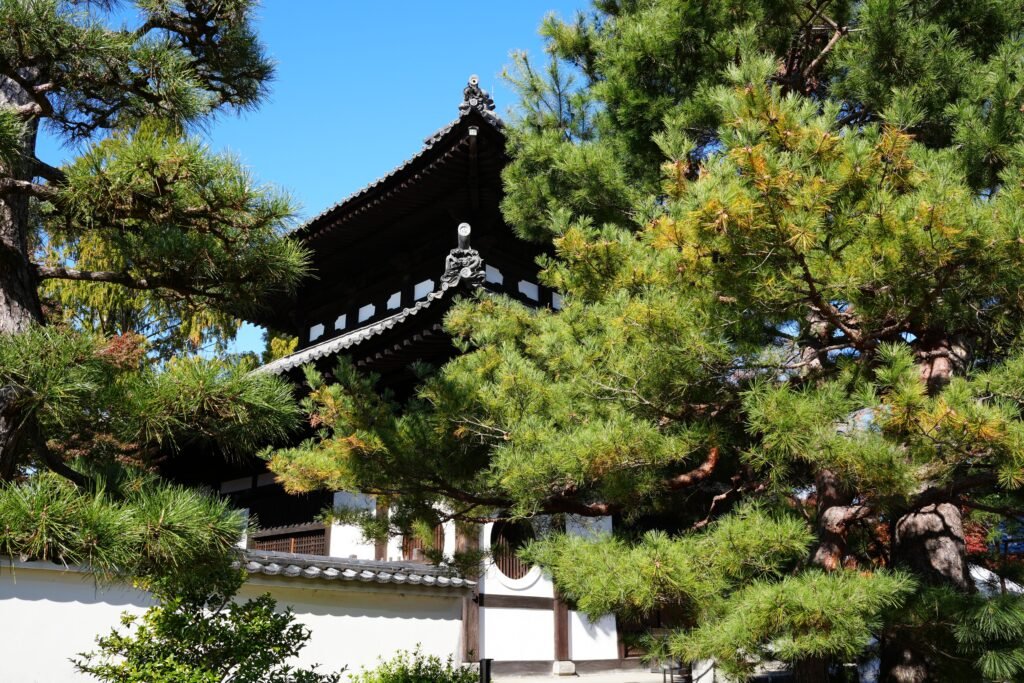
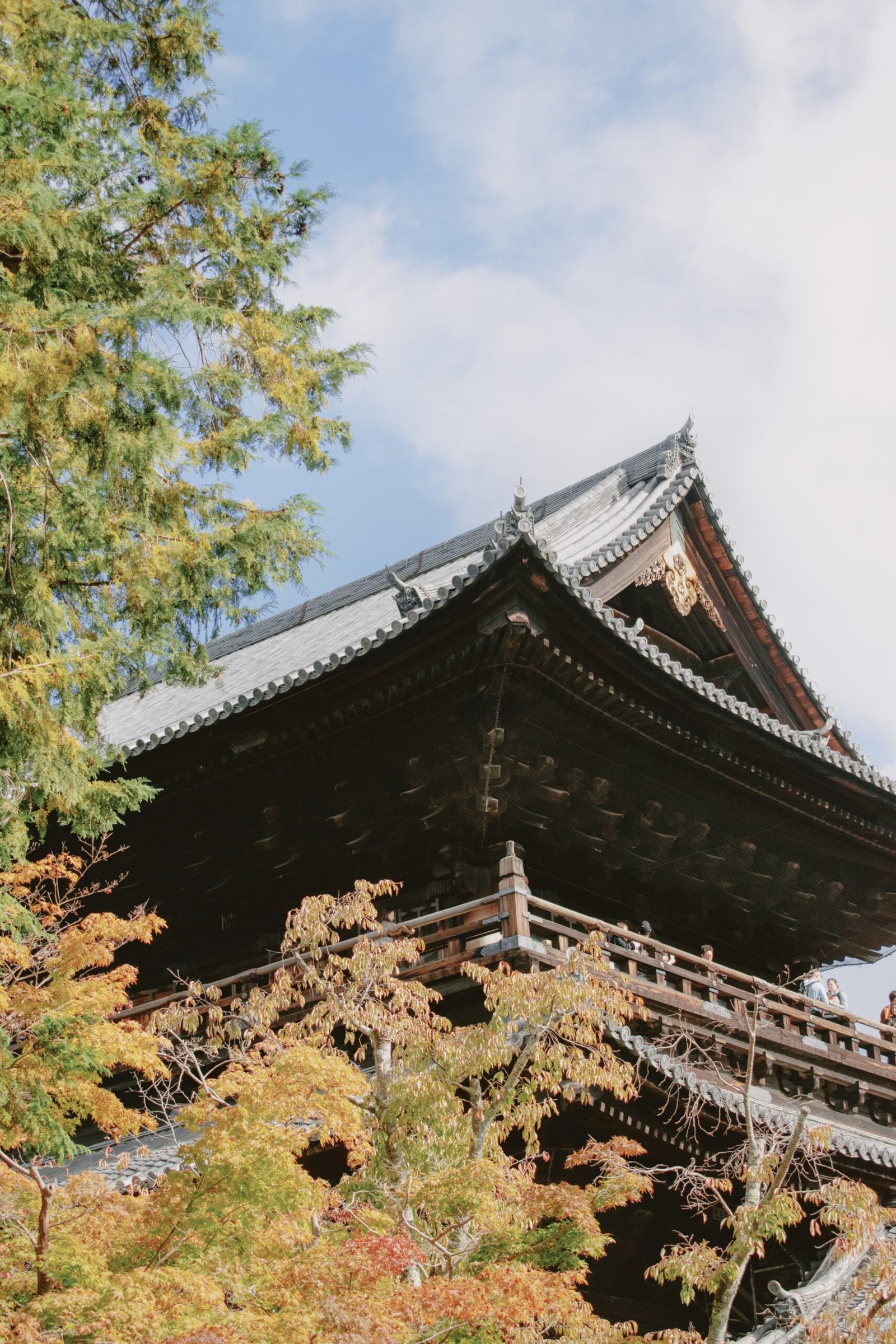
Tsutenkyo Bridge. A covered wooden bridge crossing a steep, narrow valley planted with roughly two thousand maple trees. It’s the reason Tofuku-ji shows up on every autumn foliage list in Japan, and the view down into the valley from the bridge is genuinely spectacular when the leaves turn — a solid, unbroken canopy of red stretching below you.
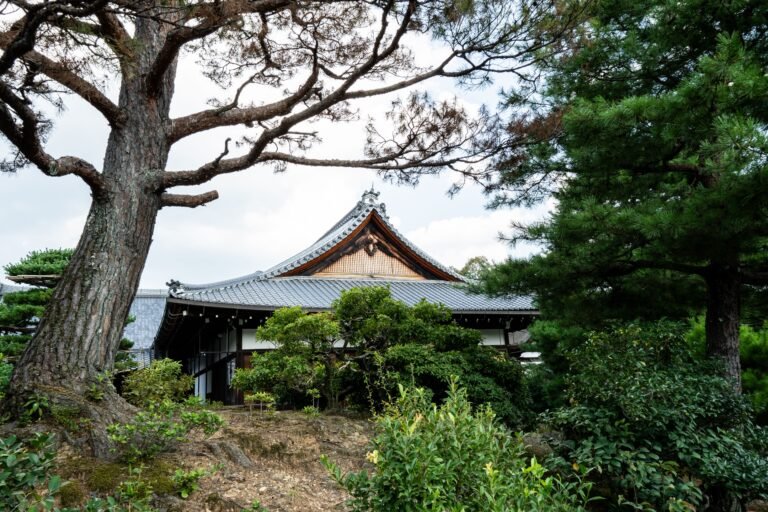
The Hojo garden. Designed in 1939 by Mirei Shigemori, this is one of the most important gardens in modern Japanese landscape design, and it’s easy to miss if you only came for the bridge. Four separate gardens wrap around the abbot’s hall, one per side, each built around a different idea — a checkerboard pattern of moss and stone on the northeast side is the one most people photograph, but all four are worth the slow walk around.
Kaisando Hall. Included with the bridge ticket, this smaller hall and its own garden sit just past Tsutenkyo and get a fraction of the bridge’s foot traffic — a good spot to actually sit down for a few minutes.
Nearby, If You Have More Time
Fushimi Inari is one stop further south on the JR Nara Line, making a natural pairing with Tofuku-ji if you’re spending a morning in this part of the city — our Fushimi Inari guide covers that stop in more depth. Kyoto Station itself is close enough to treat this as a first or last stop of the day rather than a dedicated outing.
Where to Stay Nearby
Tofuku-ji sits just south of central Kyoto, close enough to Kyoto Station to make that area a practical base if this temple is high on your list. Our Kyoto neighborhood comparison guide covers the Kyoto Station area alongside the city’s other main districts.
Given how close this temple sits to a major JR line, almost anywhere along the Nara or Keihan lines works as a base. Booking.com is a reasonable place to check availability near Kyoto Station specifically.
Bottom Line
Know which version of Tofuku-ji you’re visiting before you go. For the maple valley, come during the narrow autumn window and accept the crowds as the price of admission. For everything else — the Hojo garden especially — come any other time of year and enjoy one of Kyoto’s genuinely quiet major temples.