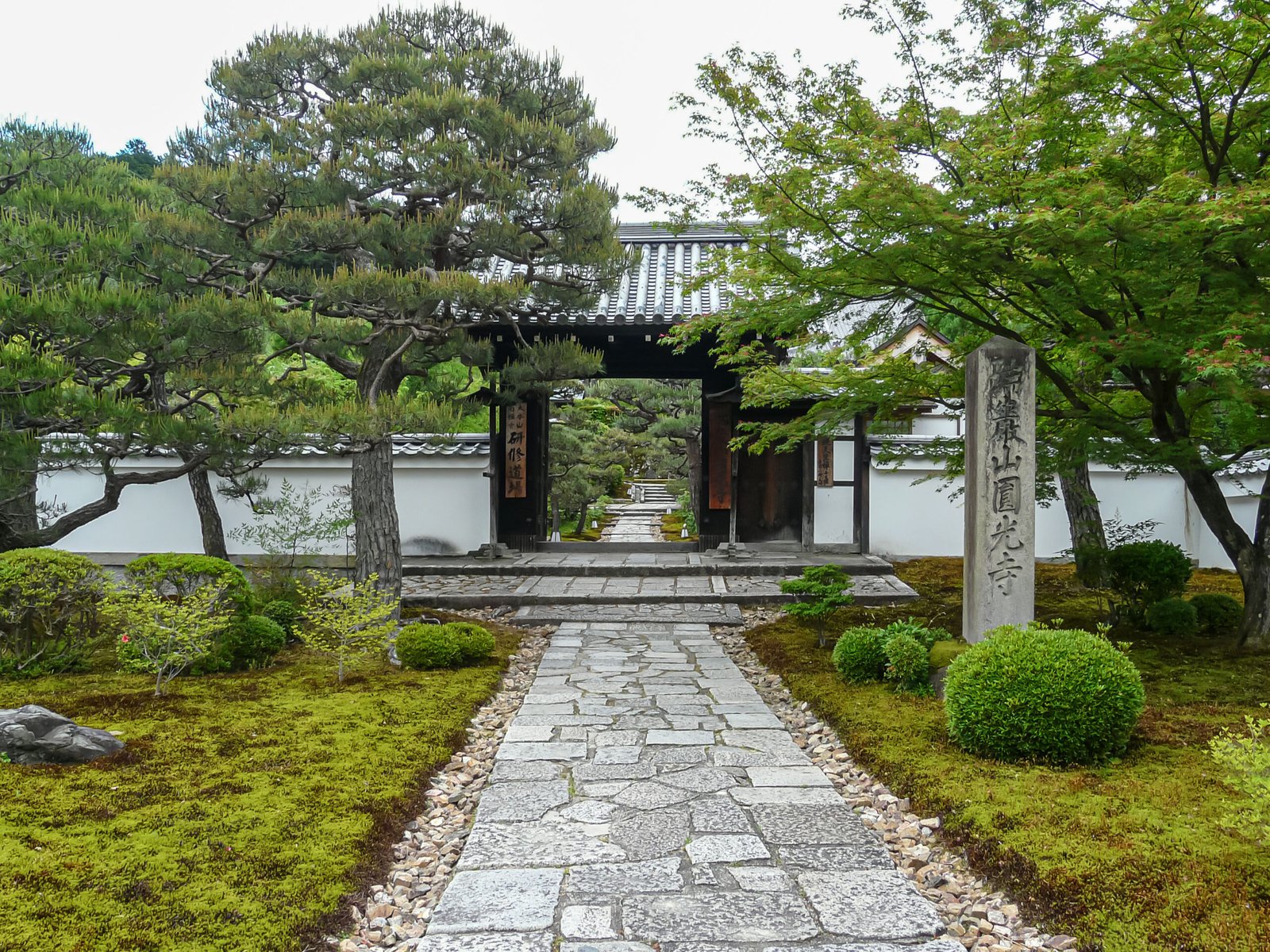
Enko-ji: A Practical Guide to Kyoto’s Ten Oxen Garden
Ichijoji’s hillside stays busy with visitors heading for Shisen-do’s poet garden and Manshu-in’s long stone approach, and most of them walk right past Enko-ji without noticing it — the lane that leads to it splits off just before Shisen-do’s gate, easy to miss unless you are already looking for it. That is a shame, because Enko-ji is the kind of Zen temple Kyoto does particularly well: small, not especially famous outside a fairly loyal circle of regulars, and built around two gardens that reward sitting still rather than moving quickly. It has been teaching people something — first scholarship, now stillness — since 1601, and it still feels built for sitting rather than sightseeing.
The Essentials at a Glance
| What | Details |
|---|---|
| Location | Ichijoji, Sakyo-ku, just below Shisen-do on the hillside near the Eiden Line |
| Founded | 1601 in Fushimi by Tokugawa Ieyasu; moved to its current site in 1667 |
| Sect | Rinzai Zen, Nanzen-ji branch |
| Main gardens | Honryu-tei (a dry rock garden) and Jugyu-no-niwa, the Ten Oxen pond garden |
| Hours | 9:00am–5:00pm, open daily |
| Admission | Most current listings put it around ¥500–¥600 for adults (a few list it as high as ¥800), roughly half that for school-age children |
| Best seasons | Autumn for maples around the pond; early summer for fresh moss and bamboo |
| Access | About 15–17 min on foot from Ichijoji Station (Eiden Eizan Line), or Kyoto City Bus 5 to Ichijoji-sagarimatsu-cho |
A School Before It Was a Garden
Tokugawa Ieyasu founded Enko-ji in 1601, well south of here in Fushimi, as a school open to both monks and ordinary laypeople — part of a broader push by the new shogunate to put education on firmer footing after decades of civil war. The temple relocated to its present spot on the Ichijoji hillside in 1667 and has belonged to the Nanzen-ji branch of the Rinzai Zen sect ever since. A handful of accounts of its later history mention a period, after the Meiji-era reorganization of Japanese Buddhism, when Enko-ji served as one of the few training centers specifically for Buddhist nuns — worth treating as local lore rather than settled fact, but it fits a temple that has spent more of its history teaching than performing.
Honryu-tei: A Dragon Made of Sand and Stone
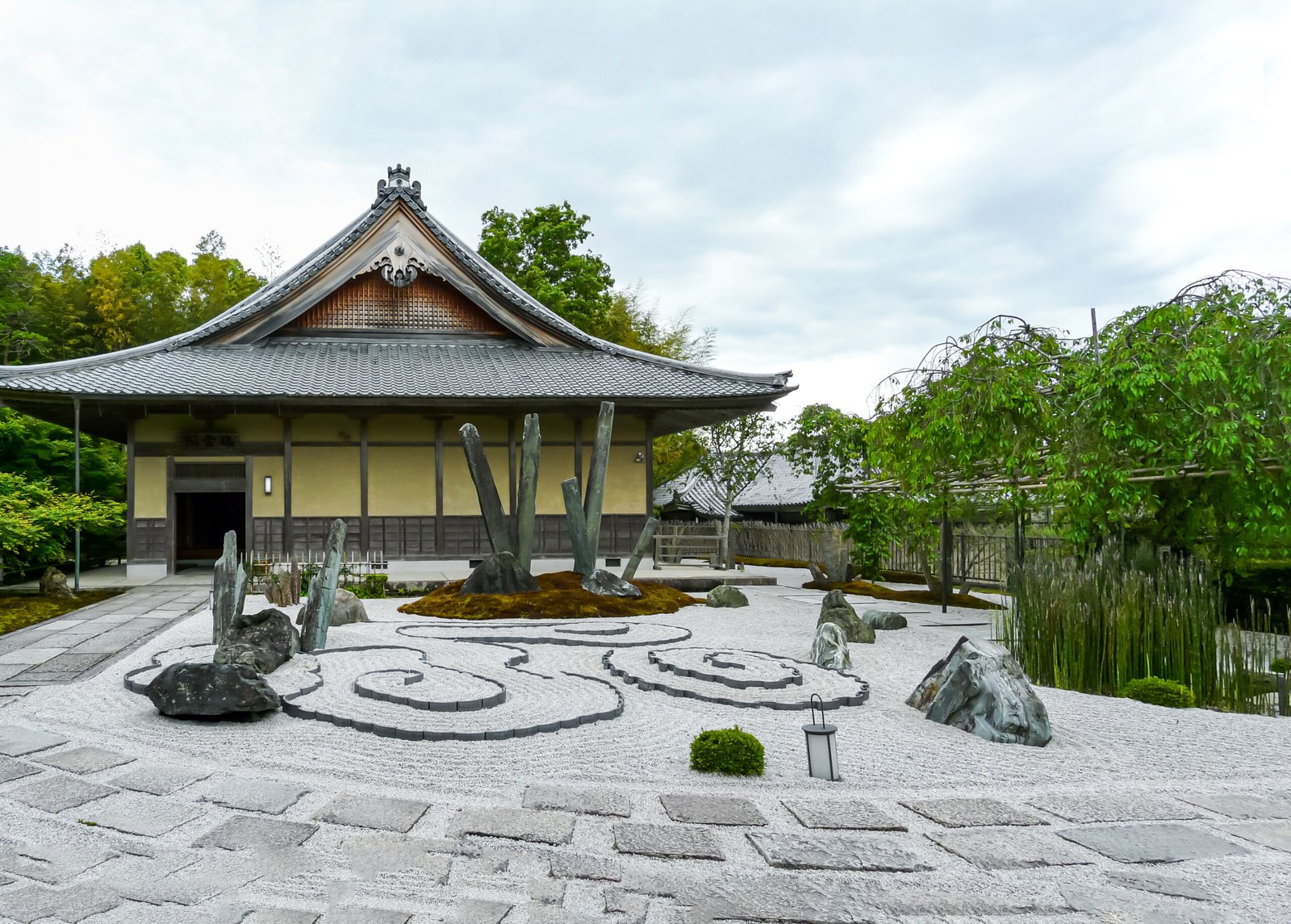
Just past the entrance, Honryu-tei — the “Running Dragon Garden” — is Enko-ji’s dry landscape garden, and it rewards a slow look rather than a glance. Raked white sand stands in for a sea of clouds, and an arrangement of upright stones reads as a dragon rising out of it, horns and spine included, if you give your eyes a moment to find the shape. It is a considerably newer addition than the temple itself — built well after Enko-ji’s founding — but it sits comfortably next to the older buildings around it, which is true of a lot of Kyoto’s famous rock gardens: plenty of the ones visitors assume are centuries old turn out to be much younger than the temples that house them.
Jugyu-no-niwa and the Bamboo Maruyama Okyo Loved
The main garden, Jugyu-no-niwa, takes its name from the Ten Oxherding Pictures, a well-known set of Zen images that use a herder chasing down a stray ox as a metaphor for the long, uneven process of training the mind. Seen from the guest hall’s tatami floor, the garden slopes down past moss and maples to a small pond, and the framing the old wooden pillars give it is good enough that a lot of visitors just sit on the veranda for a while rather than walking the path around it. A modest bamboo grove grows behind the pond — small next to Arashiyama’s, but Kyoto has a long memory for bamboo, and this particular grove is said to have been a favorite subject of the Edo-period painter Maruyama Okyo, whose six-panel folding screen is on display inside the temple’s reception hall. A suikinkutsu, a buried ceramic jar that turns dripping water into a faint, resonant note, sits near the garden’s edge; it is easy to walk past unless you stop and listen for it.

Through the Seasons
Most visitors time a trip to Enko-ji for autumn, when the maples around Jugyu-no-niwa turn a saturated red that regularly earns the temple a spot on local lists of lesser-known koyo viewing spots. But the rest of the year is worth remembering too: cherry blossoms frame the approach in spring, moss and bamboo settle into a deep, humid green through early summer, and winter leaves the garden bare and quiet enough that you may well have the veranda to yourself. None of those beats autumn here exactly, but each one is a genuinely different temple — a rarer thing in Kyoto than it should be, at sights this well known.
If You Want to Sit Rather Than Just Look
Enko-ji still runs a Sunday zazen session, 6:00 to 8:00am, that includes temple cleaning, a short dharma talk, and a simple breakfast of rice porridge afterward. Reservations are required at least a day ahead, and the session runs in Japanese, so some ability to follow along helps, but it is a genuine practice session rather than a staged demonstration for visitors. If sitting zazen at dawn is not part of your trip, the simpler version is just arriving on a weekday morning soon after opening, before the rest of the Ichijoji hillside’s temples draw in their own crowds.
Pairing It With the Rest of Your Trip
Enko-ji sits close enough to Shisen-do that treating the two as a single stop makes sense — Shisen-do’s gate is the landmark to watch for, with Enko-ji’s narrow approach road splitting off just before it. Manshu-in is a further walk up the same hillside, and all three fold naturally into the route described in One Day on the Eizan Railway, which covers this stretch of Ichijoji and Yase in more detail. If you are timing the trip around color, Kyoto Autumn Foliage has the wider picture of when and where the season tends to peak each year, which is worth checking before you commit a morning to any single maple garden.
Getting There
From Kyoto Station, the simplest route is Kyoto City Bus 5 to the Ichijoji-sagarimatsu-cho stop, then a short walk uphill toward the temples. By train, Ichijoji Station on the Eiden Eizan Line puts you about 15 to 17 minutes on foot from the gate — head east toward the hills, cross Shirakawa-dori, and keep climbing; signs for both Enko-ji and Shisen-do appear along the way.
Bottom Line
Enko-ji is not trying to be anyone’s single must-see temple, and that is exactly its appeal. It rewards visitors willing to sit on a veranda for ten extra minutes rather than rush on to the next gate, with two gardens — one raked, one grown — that have quietly been doing their job since long before anyone treated Kyoto’s temples as a checklist.