Nijo Castle: A Practical Guide to Kyoto’s Shogun Palace
Most first-time visitors fill their Kyoto itinerary with shrines and temples and never make it to the one major sight in the city that’s neither: a fortified palace built by the Tokugawa shogunate to make a very specific point about power, and the site where, over 250 years later, that power was formally handed back to the emperor. If you associate Kyoto mainly with quiet gardens and vermillion gates, Nijo Castle is a different register entirely.
It’s also one of the more approachable big sights in the city: no hiking, no long lines historically, and a self-paced walk through a palace interior most visitors don’t expect to find intact anywhere in Japan. What actually surprises people isn’t the cost or the crowds. It’s the floor.
A first-timer’s version looks something like this: what the entry fees actually cover, the detail worth knowing about the floorboards, when to go, and how much time to realistically set aside.
The Essentials at a Glance
| What | Details |
|---|---|
| Grounds admission | ¥800 |
| Ninomaru Palace (add-on) | ¥500 — most visitors’ main reason for coming, worth the add-on |
| Honmaru Palace (add-on) | ¥1,000, advance reservation required |
| Grounds hours | 8:45 a.m.–5:00 p.m. (entry until 4:00 p.m.) |
| Ninomaru Palace hours | Entry until 4:10 p.m. |
| Closed days | Dec 29–31 (grounds); Ninomaru Palace also closed Tuesdays in Jan/Jul/Aug/Dec, plus Dec 26–Jan 3 |
| Typical visit length | 1.5–2 hours for grounds + Ninomaru Palace |
| By subway from Kyoto Station | Karasuma Line to Karasuma-Oike, transfer to Tozai Line to Nijojo-mae — about 15 minutes, 260 yen, exits right at the castle |
| By bus | Routes 9 or 50 from Kyoto Station, 15–20 minutes, 230 yen |
| Least crowded time | Right at 8:45 a.m. opening, on weekdays |
Getting There
The subway is the cleanest option here, which isn’t always true in Kyoto. Take the Karasuma Line from Kyoto Station to Karasuma-Oike, transfer to the Tozai Line, and get off at Nijojo-mae. The exit puts you close to the main entrance gate, with no walking through unrelated streets to find it. The whole trip is about 15 minutes and 260 yen.
Buses 9 and 50 also run from Kyoto Station, about 15–20 minutes for 230 yen, or bus 12 if you’re coming from Shijo-Kawaramachi. The bus works fine if you already have an all-day pass, but if you’re paying per ride, the subway is faster and about the same price.
There’s not much reason to fold this into a long walk from Higashiyama or Gion. It sits a bit apart from Kyoto’s main sightseeing clusters, so treat it as its own dedicated trip rather than something to squeeze into a walking day.
When to Go
Nijo Castle doesn’t have quite the same crowding pattern as the shrine and temple sights elsewhere in the city. There’s no free-entry crush and no famous sunrise photo drawing people in before dawn, but it still fills up, especially with tour groups by mid-morning. Arriving right at the 8:45 opening gets you a genuinely calmer walk through Ninomaru Palace before the day’s groups arrive.
Cherry blossom season here runs later than most of Kyoto. The castle plants nearly 400 late-blooming varieties, which stretches the good viewing window from late March through the end of April, well past when Kyoto’s more famous cherry spots have finished. Autumn colors peak in the second half of November, same as most of the city, and both seasons bring noticeably heavier crowds and sometimes special evening illumination events, worth checking the current schedule if the dates line up with your trip.
Weekdays are calmer than weekends year-round, and the last-entry cutoffs, 4:00 p.m. for the grounds and 4:10 p.m. for the palace, come earlier than you’d expect from the 5 p.m. closing time. Don’t plan a late-afternoon visit assuming you have until close.
What’s Actually Worth Your Time
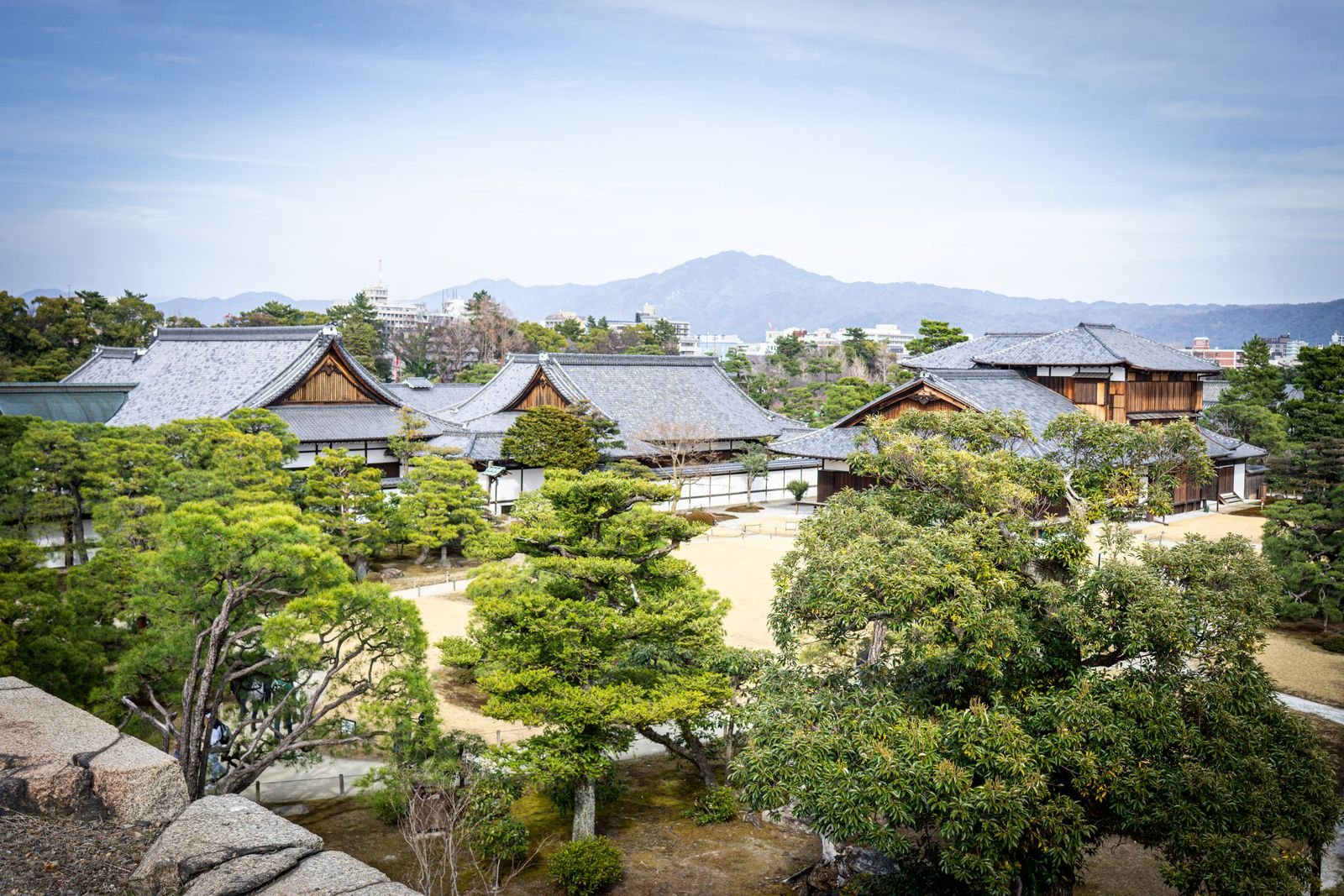
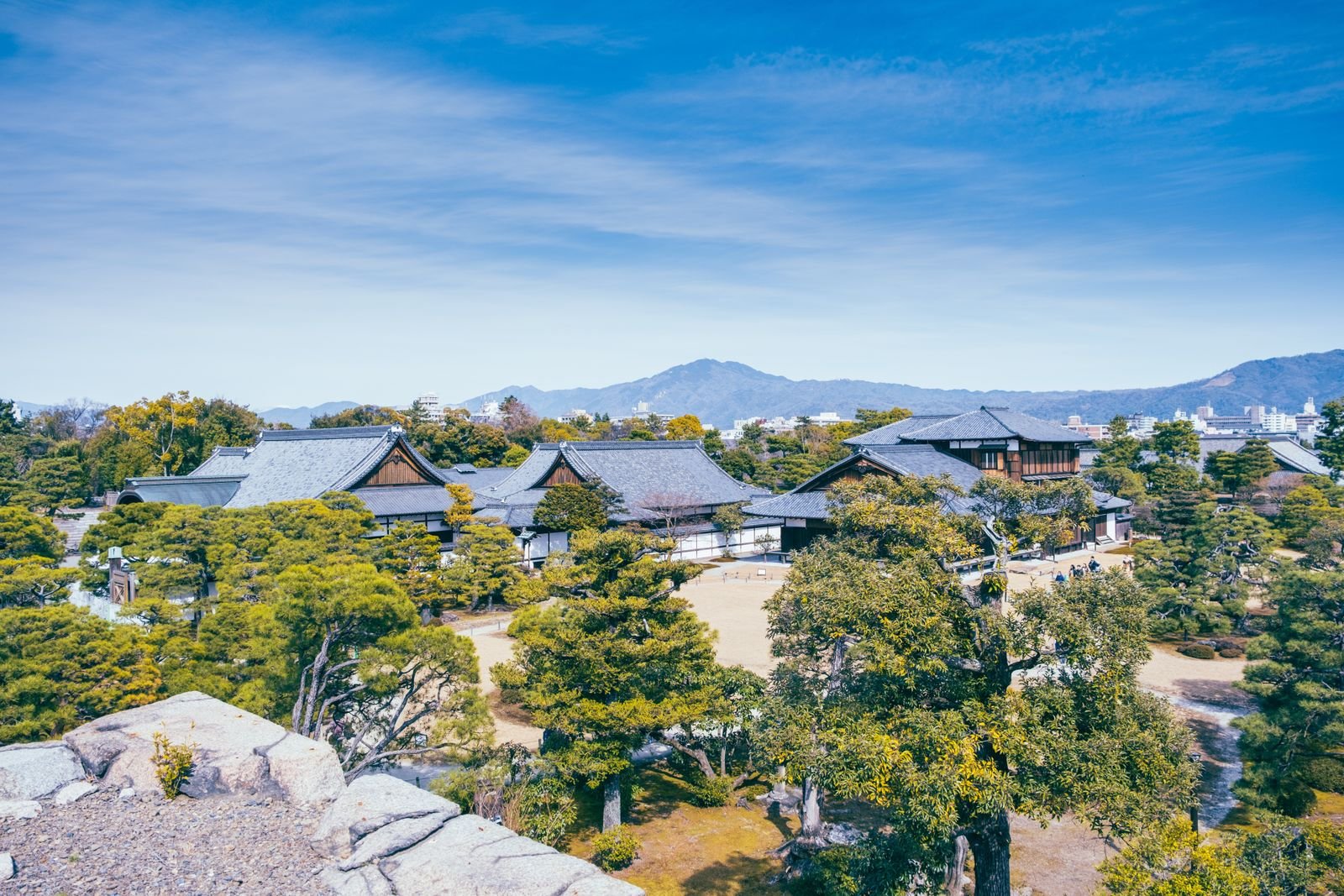
Ninomaru Palace and its nightingale floors. This is the reason to pay the extra ¥500. The palace’s reception halls survive largely intact from the early Edo period, with painted sliding doors (fusuma) by Kano school artists and audience chambers arranged specifically to reinforce rank and distance from the shogun. The corridors are famous for their “nightingale floors” (uguisubari): floorboards engineered to chirp underfoot as a low-tech security measure against anyone sneaking through at night. It’s not subtle. You’ll hear it the moment you step in, and it’s worth pausing to notice rather than walking straight through.
No photography inside. Worth knowing before you go rather than discovering at the door: interior photography isn’t allowed in Ninomaru Palace, to protect the paintings and structure. You’ll need to experience the rooms rather than document them, which, honestly, is part of what makes the floor detail land harder.
The gardens. Ninomaru Garden, a strolling garden attributed to the designer Kobori Enshu, sits beside the palace and is arranged to be viewed from specific rooms as well as walked through, a different design logic than the more famous Zen dry gardens elsewhere in Kyoto. Seiryu-en, a newer garden on the castle grounds, is quieter and rarely crowded even when the rest of the site is busy.
Honmaru Palace, if you’re planning ahead. A relocated Edo-period building, originally part of the old imperial Katsura complex, with its own ¥1,000 fee and a reservation requirement. Not a spontaneous add-on, so only worth building into your plans if you look it up in advance.
Where to Stay Nearby
Nijo Castle sits between central Kyoto’s main hotel areas rather than inside any of them, so it works better as a stop on a day out than a reason to pick a neighborhood. Staying anywhere near the Karasuma or Tozai subway lines, whether that’s central Kyoto Station, Kawaramachi, or Higashiyama with a longer commute, keeps it a quick 15–20 minute ride away. Our Kyoto neighborhood comparison guide breaks down those tradeoffs.
If your itinerary leans more toward castles and Edo-period history than temples, staying centrally near Karasuma-Oike puts you within easy reach of both Nijo Castle and the Kyoto Imperial Palace Park. Booking.com is the easiest way to compare what’s available near central Kyoto on your dates.
Bottom Line
Nijo Castle rewards a different kind of attention than Kyoto’s shrines and gardens. It’s history you walk through room by room rather than scenery you photograph from a distance. Pay the extra ¥500 for Ninomaru Palace, arrive close to opening on a weekday if you can, and give yourself a genuine hour and a half rather than treating it as a quick stop between temples. The floor alone is worth the trip.