Hozugawa River Boat Ride: A Practical Guide to Kyoto’s Classic River Run
This guide contains affiliate links. If you book through them, Kyoto Journey may earn a small commission at no extra cost to you. Learn more.
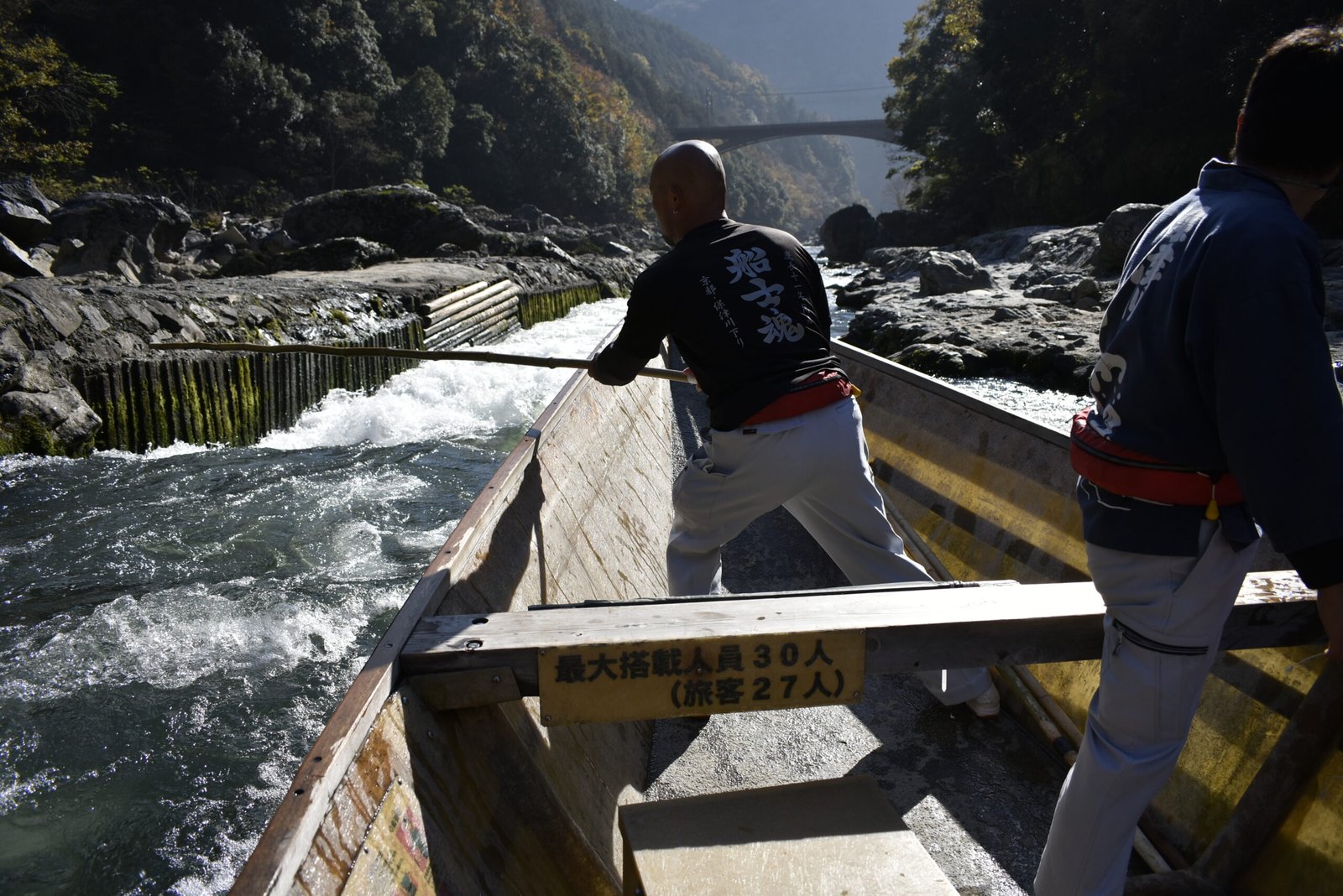
The Sagano Scenic Railway carries you up the Hozugawa valley in an open-sided train. The Hozugawa River Boat Ride takes you back down the same valley the slower, older way: in a flat-bottomed wooden boat, steered by hand from Kameoka all the way into Arashiyama. The two make an obvious pair, and a lot of visitors do exactly that — train up, boat down — but the boat ride stands on its own as one of Kyoto’s more memorable half-days, with two hours on the water, a bit of white-knuckle rapids, and a crew of boatmen who treat the whole thing like a running commentary.
The Essentials at a Glance
| What | Details |
|---|---|
| Route | About 16 km down the Hozugawa River, from Kameoka to Arashiyama |
| Duration | About 2 hours |
| Price | ¥4,100 for adults; ¥2,700 for children aged 4–12 |
| History | Used to move lumber downriver as early as the 8th century; widened for cargo shipping in the early 1600s; running as a sightseeing trip for more than 400 years in total |
| Riders | Roughly 300,000 people a year |
| Boarding point access | JR San-in Line to Kameoka Station, then about a 7-minute walk |
From Hauling Lumber to Hauling Tourists
The Hozugawa has been a working river for a very long time. Boats were already moving lumber down it as early as the 8th century, and in the early 1600s the wealthy merchant Suminokura Ryoi had the channel widened so it could carry rice and other goods all the way down to the Port of Osaka. That was heavier, slower work than today’s sightseeing trip suggests: boatmen who’d just ridden the current down to Arashiyama then had to haul their empty boats back upstream by rope, walking paths along the bank whose traces can still be made out in places today. Once railways and trucks took over the cargo side of things, the boatmen’s know-how didn’t disappear — it shifted into guiding passengers down the same stretch of river for the view rather than the cargo, which is how operators today can describe the ride’s roots as running back more than four centuries, even though the sightseeing trip itself is the more recent chapter of that history.

What the Two Hours Actually Look Like
The ride covers about 16 kilometers and takes roughly two hours from the moment you push off in Kameoka to the moment you step out in Arashiyama. Most of that stretch is calm, unhurried water, but a handful of livelier rapids break up the pace and give the trip its reputation for a little bit of splash and excitement without tipping into anything genuinely dangerous. Throughout the ride, the boatmen do more than just steer: they point out wildlife along the banks, historical sites tied to the river’s cargo-hauling past, oddly shaped rocks that have picked up their own nicknames over the years, and good spots for photos, often explaining how they’re reading the current and steering the boat as they go. What you actually see out there depends heavily on when you go — cherry blossoms in spring, deep green in summer, the valley’s maples turning color in autumn, and occasionally snow along the banks in winter.
Price, Season, and What to Expect
A ticket runs ¥4,100 for adults and ¥2,700 for children between 4 and 12 years old. Roughly 300,000 people ride the river each year, so on a clear weekend during cherry blossom or autumn color season you should expect other boats on the water and a wait at the boarding point rather than a private river all to yourself. Departure times and the exact operating schedule shift by season, and the river is occasionally closed for high water or maintenance, so it’s worth checking the current schedule close to your visit rather than planning your whole day around a fixed departure time.

A Few Practical Notes
You don’t need any boating experience to do this — the boatmen handle everything, and passengers just sit on simple bench seating along the length of the boat. It’s a reasonable choice for most ages, including children and older travelers, though the rapids do splash, so it’s worth keeping anything you can’t afford to get wet, like phones or paper tickets, zipped away rather than loose in your lap. There’s no real luggage storage on board, so if you’re arriving straight from Kyoto Station with bags in tow, our Luggage Storage and Forwarding in Kyoto guide covers ways to send bags ahead so you’re not managing them on the water. A light jacket is worth packing even on a warm day, since the breeze picks up once you’re moving and there’s no real shelter from spray during the rapids.
Getting to the Boarding Point in Kameoka
The simplest approach is the JR San-in Line straight to Kameoka Station, followed by about a 7-minute walk to the boarding dock. If you’re coming from the torokko train side, you can ride it to Torokko Kameoka Station and then walk roughly 30 minutes to the dock, or cut that down by walking about 6 minutes from Torokko Kameoka to Umahori Station, taking the JR San-in Line one stop to Kameoka Station, and walking the last 7 minutes from there. Combining the two — train up the valley, boat back down — is a popular way to see the same scenery from two very different vantage points without retracing your steps.
Pairing It With Arashiyama
Since the ride ends in Arashiyama, it fits naturally into a full day in the district. Our Sagano Scenic Railway guide covers the uphill half of the same valley, and our One Day in Sagano itinerary has ideas for filling out the rest of the day once you’re back on dry land. From the boat dock it’s an easy walk to the Arashiyama Bamboo Grove and Tenryu-ji, and Okochi Sanso Villa is close by as well if you want a quieter garden to finish on. If you’re timing the trip for fall color, check our Kyoto Autumn Foliage guide, and our Getting Around Kyoto guide covers the trains and buses that’ll get you out to Kameoka in the first place.
You can buy tickets at the boarding point in Kameoka, but in the autumn foliage season the boats get busy, and having a booking settled makes it easier to plan the train ride out. You can reserve the Hozugawa River boat ride on Klook ahead of time; check the cancellation terms, since the river operator can suspend boats after heavy rain.
Bottom Line
Two hours, ¥4,100, and a crew who’ve clearly done this run more times than they can count — the Hozugawa River Boat Ride is one of the few activities in Kyoto that’s genuinely about the journey rather than a destination at the end of it. Book around your preferred season if you can, bring a layer for the breeze on the water, and let the boatmen do the talking.