Kyoto Autumn Illuminations: A Practical Guide to Nighttime Maple Viewing
Kyoto’s temples don’t just look good in daylight. Starting in late October and running through mid-December, a rotating handful of the city’s best-known maple gardens stay open after dark, lit with lanterns, projections, or colored LEDs so visitors can see the autumn foliage in an entirely different register. This is separate from ordinary daytime koyo viewing, which our Kyoto autumn foliage guide covers in more detail — illumination events run on their own schedules, charge separate admission after dark, and tend to draw a different, later crowd than the temples see during the day. Here’s what to expect at the three venues that reliably run an evening program, plus a couple of quieter alternatives if the ticket lines aren’t for you.
The Essentials at a Glance
| What | Details |
|---|---|
| Season | Late October through mid-December, with exact dates varying by temple and by year |
| Typical hours | Gates open around 5:00–5:30 p.m., with last entry roughly 8:30–9:30 p.m. |
| Typical admission | ¥500–¥1,000 per venue, charged separately from any daytime ticket |
| Tickets | Generally sold at the gate on the night; advance reservations aren’t usually required |
| Best strategy | Arrive right at opening — the light is better before full dark and the queues are shorter |
Eikan-do: The Reflecting Pond Everyone Photographs
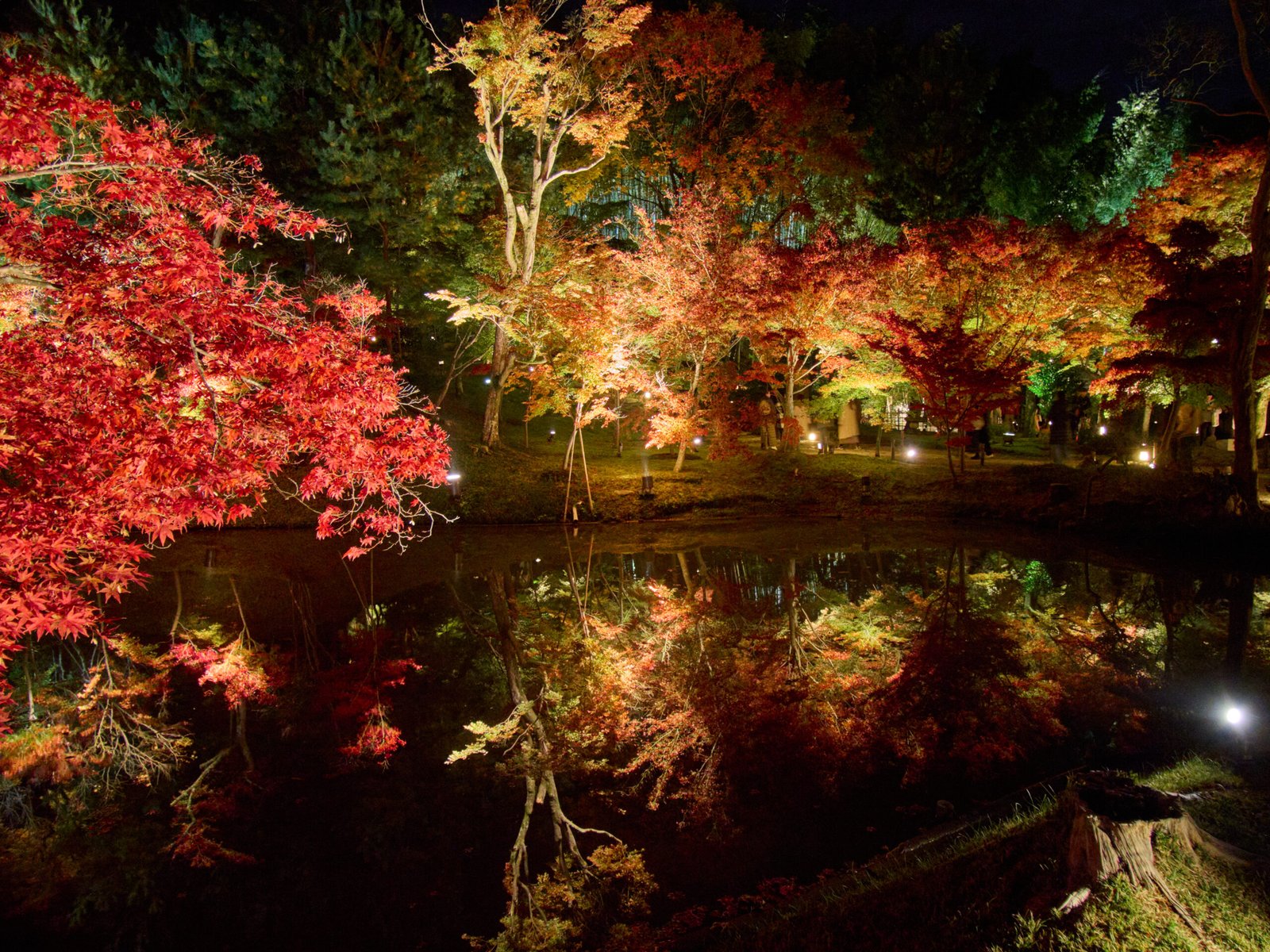
Eikan-do runs one of Kyoto’s most photographed illumination events, built around a pond ringed with maples and backed by a pagoda partway up the hillside. For 2026, the evening viewing is scheduled to run from November 20 through December 6, with entry from around 5:30 p.m. and last entry at 8:30 p.m. before the grounds close at 9:00 p.m. Admission is a flat ¥1,000 for anyone of junior-high age and up, and it’s worth knowing that daytime and evening tickets are sold separately — a day ticket doesn’t carry over into the lit hours, so if you want both you’re paying twice. Tickets are sold at the gate rather than online, and arriving right at opening tends to mean the shortest line and the best light before the pond area fills in.
Kodai-ji: Projection Mapping Over a Zen Garden
Kodai-ji takes a different approach, pairing its illuminated pond garden with projection mapping cast across the raked white-sand garden in front of the main hall. The 2026 autumn run is scheduled for October 23 through December 13 — a notably longer window than most other venues — with lights on from around 5:00 p.m. and last entry at 9:30 p.m. before a 10:00 p.m. close. Admission runs ¥800 for adults and ¥400 for junior and senior high students, with elementary-age children admitted free alongside an adult. A discounted combined ticket covering both Kodai-ji and the neighboring sub-temple Entoku-in is available for ¥1,200 if you want to see both in one evening. As of this writing, no advance reservation was required, though it’s worth checking the temple’s own site close to your travel dates in case that changes.
Kiyomizu-dera: A Beam of Blue Light Over the Valley
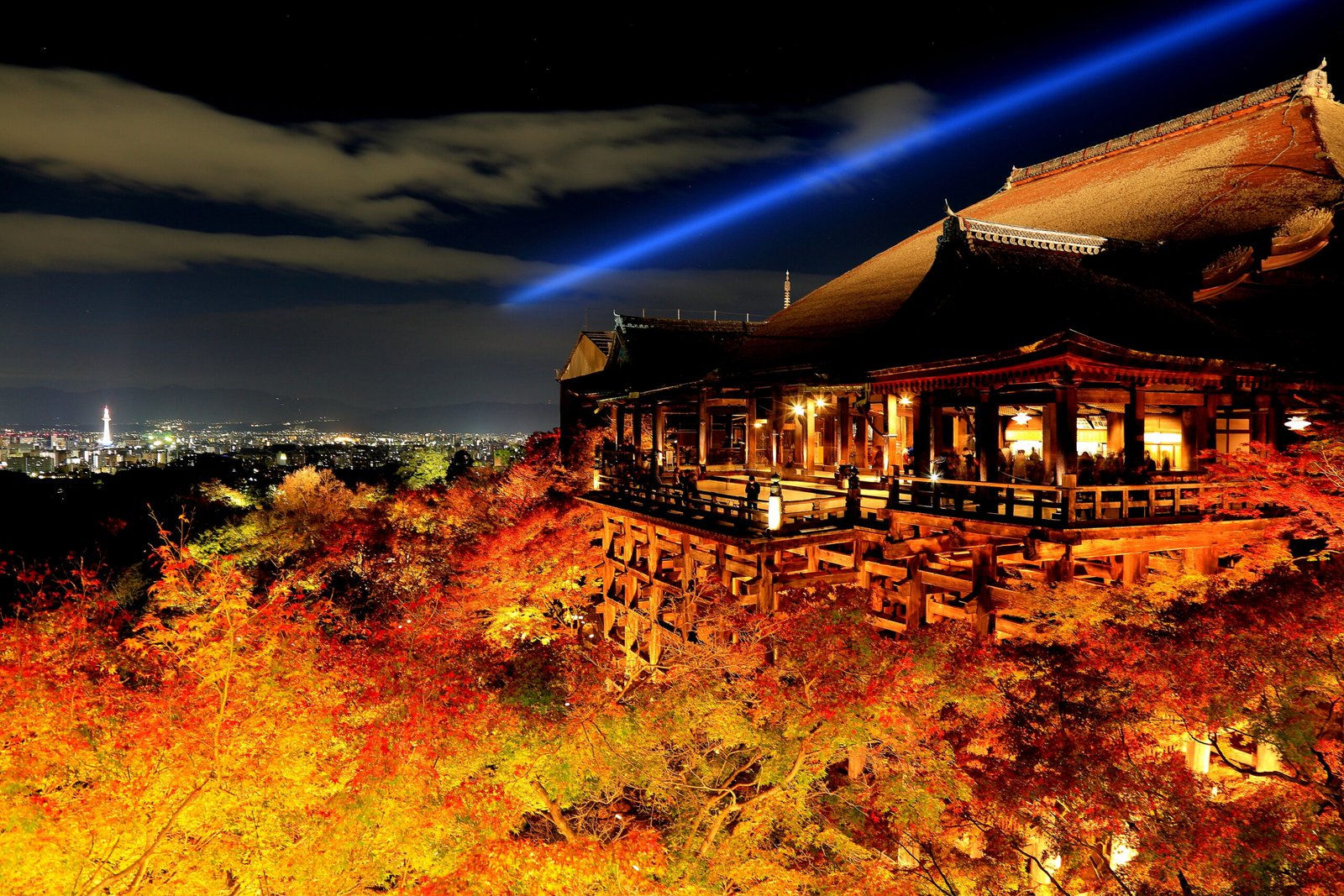
Kiyomizu-dera‘s evening opening is shorter than the other two, scheduled for November 21–30, 2026, with the grounds lit from roughly 5:30 p.m. to 9:30 p.m. and last entry around 9:00 p.m. Admission is ¥500 for adults and ¥200 for students, again sold separately from the daytime ticket. The wooden stage that draws crowds by day looks different after dark, framed against the illuminated maple valley below it, and a beam of blue light rises from beside the main hall — a nod to Kannon, the Buddhist deity of compassion the temple is dedicated to. Evenings here get cold quickly once the sun is down, and the approach up from the bus stop is steep, so warm layers and comfortable shoes matter more than they do for a daytime visit.
Not Every Year Looks the Same
It’s worth building in some flexibility, because illumination programs change from year to year in a way daytime temple hours generally don’t. Shoren-in, known in some years for a striking blue-LED evening garden, has not run an autumn illumination for 2026 — a reminder that these events are scheduled fresh each season rather than guaranteed fixtures, and that a temple famous for a past light-up won’t necessarily be running one when you visit. If a particular illumination is the reason you’re timing a trip around this season, it’s worth checking the temple’s own website within a few weeks of travel rather than relying on last year’s dates.
If You’d Rather Skip the Crowds Entirely
Evening illuminations at the big three draw genuine crowds, and the combination of low light, steep paths, and a packed schedule isn’t for everyone. If that sounds more stressful than scenic, Kyoto’s daytime-only maple spots are a reasonable substitute. Takao, out in the hills west of the city, sees some of the earliest color of the season across its three mountain temples and stays genuinely quiet even at peak foliage. Rurikoin, with its famous reflection of red maples in a black-lacquered tabletop, only opens during the day and rewards an early-morning visit far more than a nighttime one ever could. Neither requires fighting an evening crowd, and both are arguably more photogenic in soft daylight than under artificial lighting anyway.
A Few Practical Notes Before You Go
Dress warmer than you think you need to — Kyoto evenings in November regularly drop into single-digit Celsius temperatures, and standing around outdoors for an hour after dark is a different experience than a brisk daytime walk. Remember that day and night tickets are almost always sold separately, so factor the extra cost in if you’re planning to see a temple both ways. Buses and trains near the major illumination venues get crowded around closing time as everyone heads home at once, so building in extra time for the return trip, or having dinner nearby afterward to let the crowd thin out, tends to make the evening less rushed. And because these are working temples rather than theme parks, expect uneven ground, steps, and limited lighting away from the illuminated areas themselves.
Fitting This Into a Longer Trip
Illuminations work best as an add-on to a day you’ve already spent seeing Kyoto by daylight, rather than the sole reason to head out after dinner. Our guide to the best time to visit Kyoto can help you decide whether autumn is the right season for your trip in the first place, and the getting around Kyoto guide covers the buses and trains you’ll need to reach these temples and get back to your accommodation once the lights go out.
Bottom Line
Kyoto’s autumn illuminations are worth the extra evening if you’re already in the city for koyo season, but they’re a genuinely different experience from daytime temple visits — separate tickets, cold weather, and real crowds included. Pick one or two venues rather than trying to see them all in a single trip, confirm dates close to your travel window since programs shift year to year, and keep Takao or Rurikoin in your back pocket if the evening crush isn’t what you’re after.