Murin-an: A Practical Guide to Kyoto’s Garden Where a War Was Planned
Murin-an sits a few minutes on foot from Nanzen-ji and the start of the Philosopher’s Path, tucked behind an unmarked wall that most people walk straight past. That’s a shame, because what’s inside is one of the more quietly consequential gardens in Kyoto: a Meiji-era retirement villa built in the 1890s for Yamagata Aritomo, a general and two-time prime minister who personally directed its design and chose the site specifically for its access to fresh water. It’s also, less peacefully, where a handful of Japan’s most powerful men met in 1903 and effectively set the country on course for war with Russia the following year. You can stand in that same room today, which is a strange thing to do in a garden this calm.
The Essentials at a Glance
| What | Details |
|---|---|
| Admission | Roughly 400–600 yen most of the year, but the price rises substantially during spring and peak autumn foliage weeks (sometimes close to 1,500 yen), and advance online reservation may be required in those windows — check the official site (murin-an.jp) before you go |
| Hours | 9:00am–5:00pm daily (extended to 6:00pm from April to September); closed December 29–31 |
| Visit length | 20–40 minutes to walk the garden at your own pace |
| Tea ceremony | Offered by reservation for an additional fee on set days; contact the garden directly to book |
| Access | About a 7-minute walk from Keage Station on the Tozai subway line, or a 10-minute walk from the Dobutsuen-mae bus stop |
| Nearby | Nanzen-ji, Heian Jingu, and the start of the Philosopher’s Path are all within easy walking distance |
A Statesman’s Garden Built Around a Canal
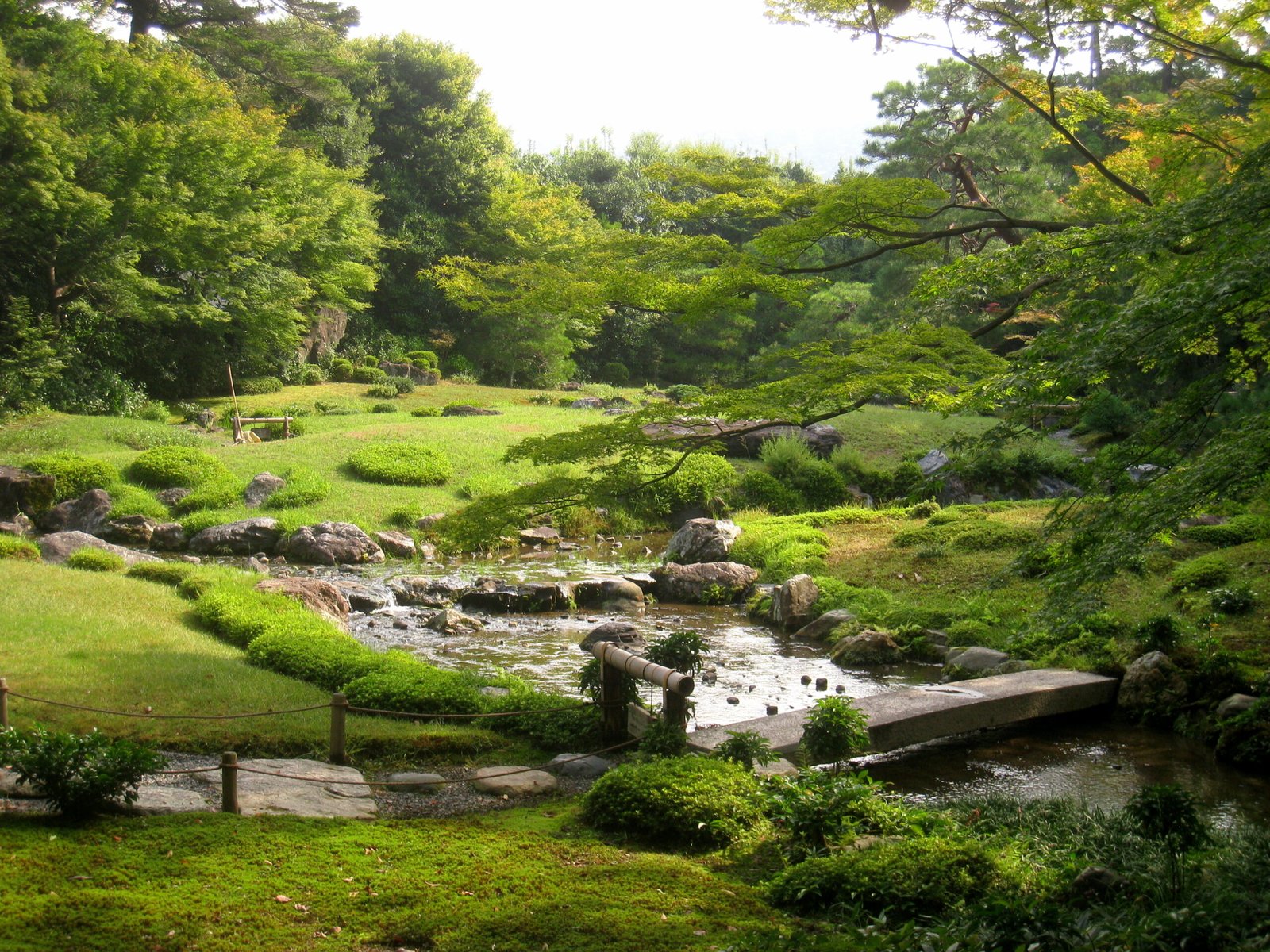
Yamagata Aritomo was one of the defining figures of Meiji-era Japan — a military leader who helped build the modern Japanese army, served as Minister of War, and held the office of prime minister twice — and by most accounts a genuinely serious gardener in his private life. He began work on Murin-an in 1894, choosing this particular plot in the Nanzen-ji neighborhood specifically because it sat beside the newly completed Lake Biwa Canal, an engineering project that carried water (and soon after, hydroelectric power) from Lake Biwa into Kyoto. Construction paused during the First Sino-Japanese War and resumed afterward under the garden designer Ogawa Jihei, known professionally as Ueji, with the grounds essentially complete by 1898. Rather than following the older convention of artificial hills and a composed, picturesque pond, Ueji built something flatter and more naturalistic: an open lawn, a shallow stream drawn straight from the canal, and a three-tiered waterfall, all framed so that the Higashiyama hills beyond the garden’s low boundary read as part of the design itself — a classic use of borrowed scenery, or shakkei, done with unusual restraint for its era.

The Meeting That Helped Start a War
On April 21, 1903, four of the most powerful men in Japan sat down in Murin-an’s modest reception room, its walls decorated with Kano-school paintings, to talk through the country’s options regarding Russian influence in Korea and Manchuria. Yamagata Aritomo was joined by Ito Hirobumi, Prime Minister Katsura Taro, and Foreign Minister Komura Jutaro, and the course they settled on that afternoon is generally regarded by historians as a direct step toward the Russo-Japanese War that broke out the following February. The room itself is unassuming — there’s nothing in its scale or decoration that announces its significance — which is part of what makes visiting it an odd experience. It’s one of the few spots in Kyoto where a quiet, private conversation in a nice room changed the shape of a war, and the garden outside gives no hint of it.
Walking the Garden
The garden itself rewards slow walking more than most in Kyoto, partly because it’s small enough to take in in one loop and partly because so much of its effect depends on where you happen to be standing. The stream winds from the triple waterfall at the rear of the property down through the open lawn, past moss beds that are said to include more than fifty distinct species, before settling near the main house. There’s a two-story Western-influenced building near the entrance and a smaller tea pavilion further upstream, placed so that neither interrupts the sightline toward Higashiyama — the hills stay visible through gaps in the planting from nearly every point in the garden, which is exactly the effect Ueji was working for. It’s a garden built to be experienced in motion rather than from one fixed viewing spot, closer in spirit to a private retreat than to the more formal temple gardens nearby.
When to Visit
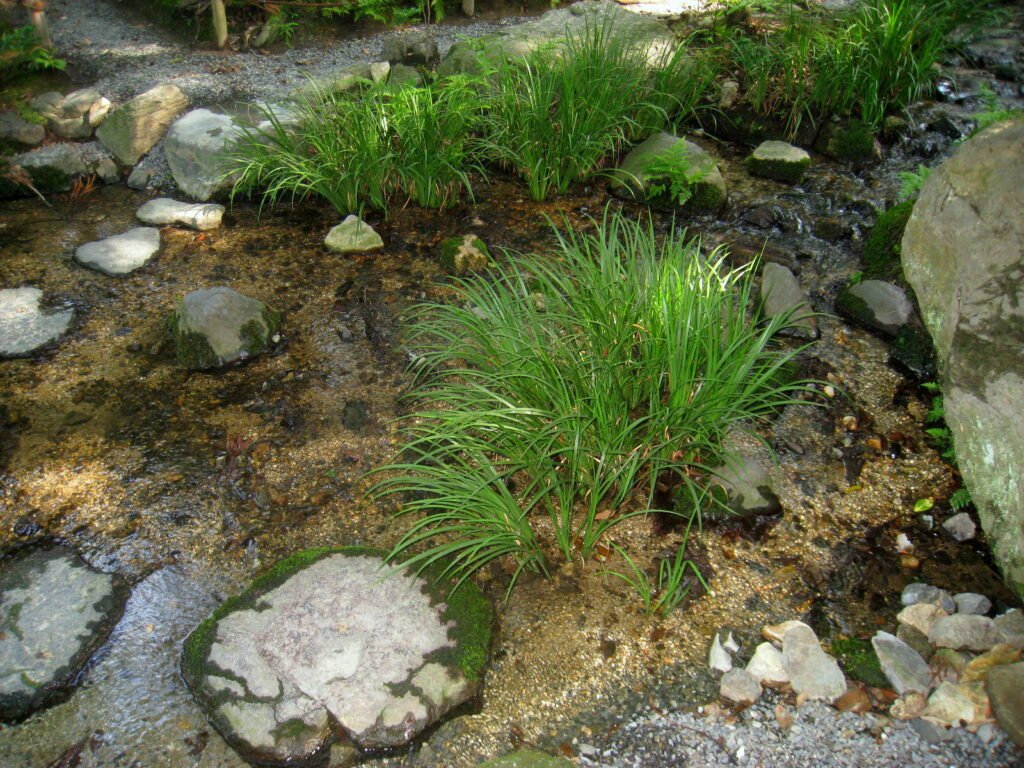
Autumn is Murin-an’s best-known season, with the maples along the stream turning through late November in a setting small enough that the color feels close rather than distant — see our guide to Kyoto’s koyo season for how it fits into the citywide picture. It’s also worth knowing that admission and reservation rules tighten up considerably during that same window, so check current pricing before building a visit around it. Early summer, during and just after the rainy season, is when the fifty-plus moss varieties look their richest, and it’s a far quieter time to visit than the spring or autumn peaks. Cherry blossom season draws a crowd too, though a smaller one than nearby Nanzen-ji sees, simply because Murin-an is still an easy place to overlook.
Pairing Murin-an with Nearby Sights
Murin-an’s location is its best feature for itinerary planning: it sits almost directly between Nanzen-ji and the start of the Philosopher’s Path, and it’s an easy walk or short bus ride from Heian Jingu as well. A natural half-day loop runs Nanzen-ji’s gate and aqueduct first, a stop at Murin-an while it’s still uncrowded, then north along the Philosopher’s Path toward Ginkaku-ji, with Heian Jingu’s vermillion torii as an optional detour on the way back. None of these sights takes more than an hour, so the whole loop fits comfortably into a morning or afternoon without feeling rushed.
Getting There
The subway is the simplest route: take the Tozai Line to Keage Station and walk about seven minutes toward Nanzen-ji, watching for a low, easy-to-miss gate rather than a grand temple entrance. City bus routes 5, 57, 32, and 100 all stop at Dobutsuen-mae, roughly a ten-minute walk away, which works well if you’re combining the visit with the Kyoto Municipal Zoo or Heian Jingu on the same trip.
Bottom Line
Murin-an is easy to skip and easy to love once you’re actually inside it — a small, deliberately unshowy garden that happens to double as the setting for one of the more consequential private meetings in modern Japanese history. If you’re already walking the Nanzen-ji to Philosopher’s Path stretch, the short detour through its gate is worth the extra half hour.