Fushimi Momoyama Castle: A Practical Guide to Kyoto’s Rebuilt Hilltop Fortress
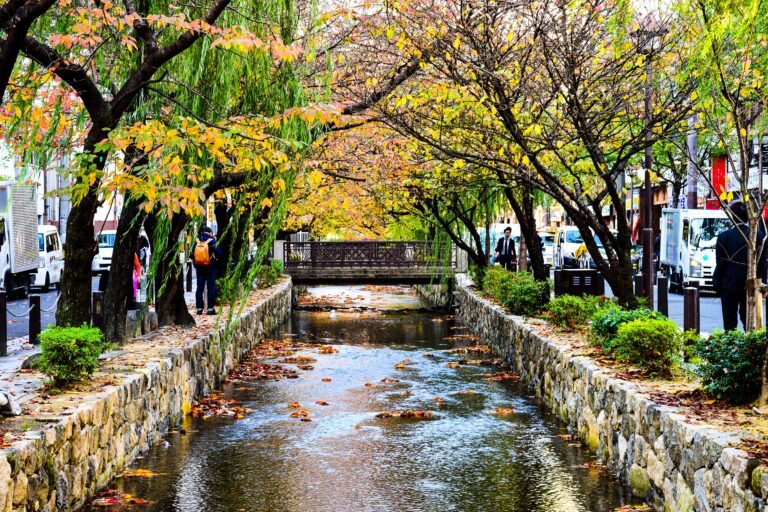
South of central Kyoto, past the vermillion torii tunnels of Fushimi Inari and the sake breweries lining the Horikawa canal, a pair of castle turrets rises above a quiet, forested hill. This is Fushimi Momoyama Castle — and it’s worth saying upfront that what you’re looking at isn’t a genuine historic building. It’s a concrete reconstruction from the 1960s, built near the site of one of the most consequential fortresses in Japanese history. The castle doesn’t draw anywhere near the crowds of Nijo Castle or the big-name temples further north, and that’s a large part of the appeal: free admission, a hillside park with real views over southern Kyoto, and a story involving Toyotomi Hideyoshi, a thirteen-day siege, and a grim legend about bloodstained floorboards that ended up scattered across several of the city’s temples.
The Essentials at a Glance
| What | Details |
|---|---|
| Hours | Grounds open roughly 7:00 a.m.–5:00 p.m. daily; no fixed closed days |
| Admission | Free — the exterior and park only, since the castle interior isn’t open to visitors |
| Access | About a 20-minute walk from JR Momoyama Station (Nara Line), or from Tambabashi Station (Keihan) / Kintetsu-Tambabashi Station |
| Visit length | 30–45 minutes for the castle exterior and surrounding hillside park |
| Best time | Weekday mornings for a near-empty hill; spring for cherry blossoms, autumn for foliage color |
| Known for | Toyotomi Hideyoshi’s original 16th-century fortress, the 1600 siege of Torii Mototada, and a 1964 concrete reconstruction |
A Retirement Villa Built by Japan’s Most Powerful Warlord
The original Fushimi Castle was built in 1594 by Toyotomi Hideyoshi, the warlord who had unified Japan a few years earlier, as a retirement residence overlooking the Uji River. It was an enormous undertaking — historical accounts describe tens of thousands of workers involved in its construction — and it briefly stood as one of the grandest fortresses in the country. That first version didn’t last long: an earthquake in 1596 leveled much of it just two years after completion, and Hideyoshi had it rebuilt on a nearby hill before his death in 1598. For a few years afterward, Fushimi Castle functioned as a genuine center of national power, the place where key decisions about the country’s future were being made in the uneasy period following Hideyoshi’s death.
A Thirteen-Day Siege and a Legend About Bloodied Floors
The castle’s most dramatic moment came in 1600. As Tokugawa Ieyasu marched east to confront his rivals in what would become the pivotal Battle of Sekigahara, he left a small garrison at Fushimi Castle under his retainer Torii Mototada. Mototada held the fortress against a vastly larger besieging force for around thirteen days before the castle fell and he died by his own hand rather than surrender — a last stand still remembered in Japan as an example of samurai loyalty. When the castle was later dismantled in the 1620s, some of its wooden flooring was reportedly moved to temples around the city, including Kosho-ji in nearby Uji. According to a well-known local legend, the boards still bore the bloodstains of Mototada’s men, and the resulting “blood ceilings” — chi-tenjo — can still be seen today in a handful of Kyoto-area temples, floorboards turned skyward as a way of honoring the dead rather than walking over them.
The Castle You See Today Is a 1960s Reconstruction
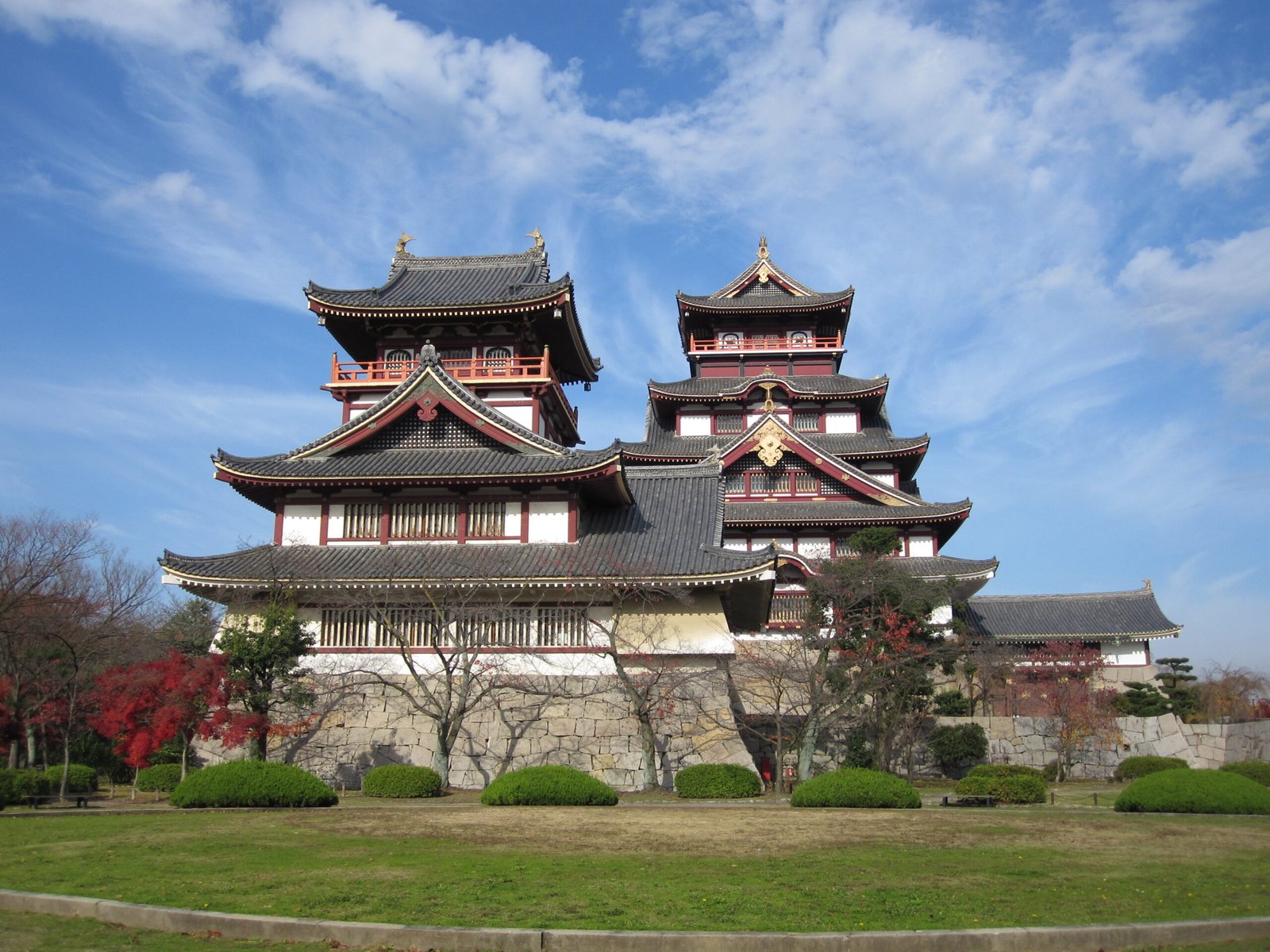
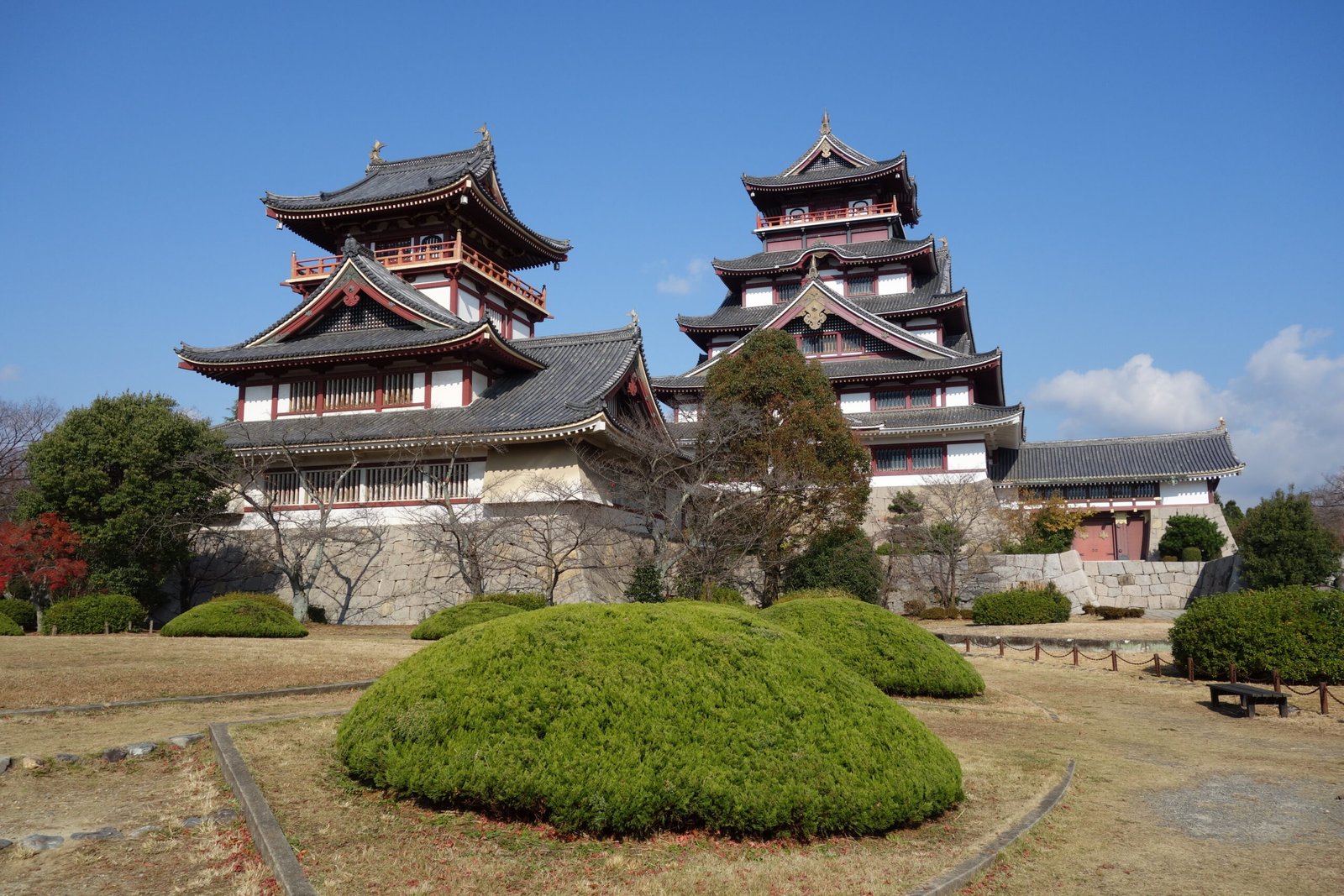
What’s standing on the hill now has no direct structural connection to Hideyoshi’s fortress. The current castle is a concrete replica completed in 1964, built as the centerpiece of a now-defunct amusement park called Fushimi-Momoyama Castle Land. The park drew visitors for decades before financial trouble forced it to close in 2003, and while the surrounding rides and attractions were cleared away, the castle building itself was left standing and eventually reopened to the public as a free city landmark. It’s worth setting expectations accordingly: there’s no museum, no reconstructed interior, and no way inside the keeps. What you get is the exterior silhouette — genuinely photogenic, especially from across the pond at the foot of the hill — and a walk around the grounds it sits in.
Momoyama Hill: A Quiet Park With Real Views
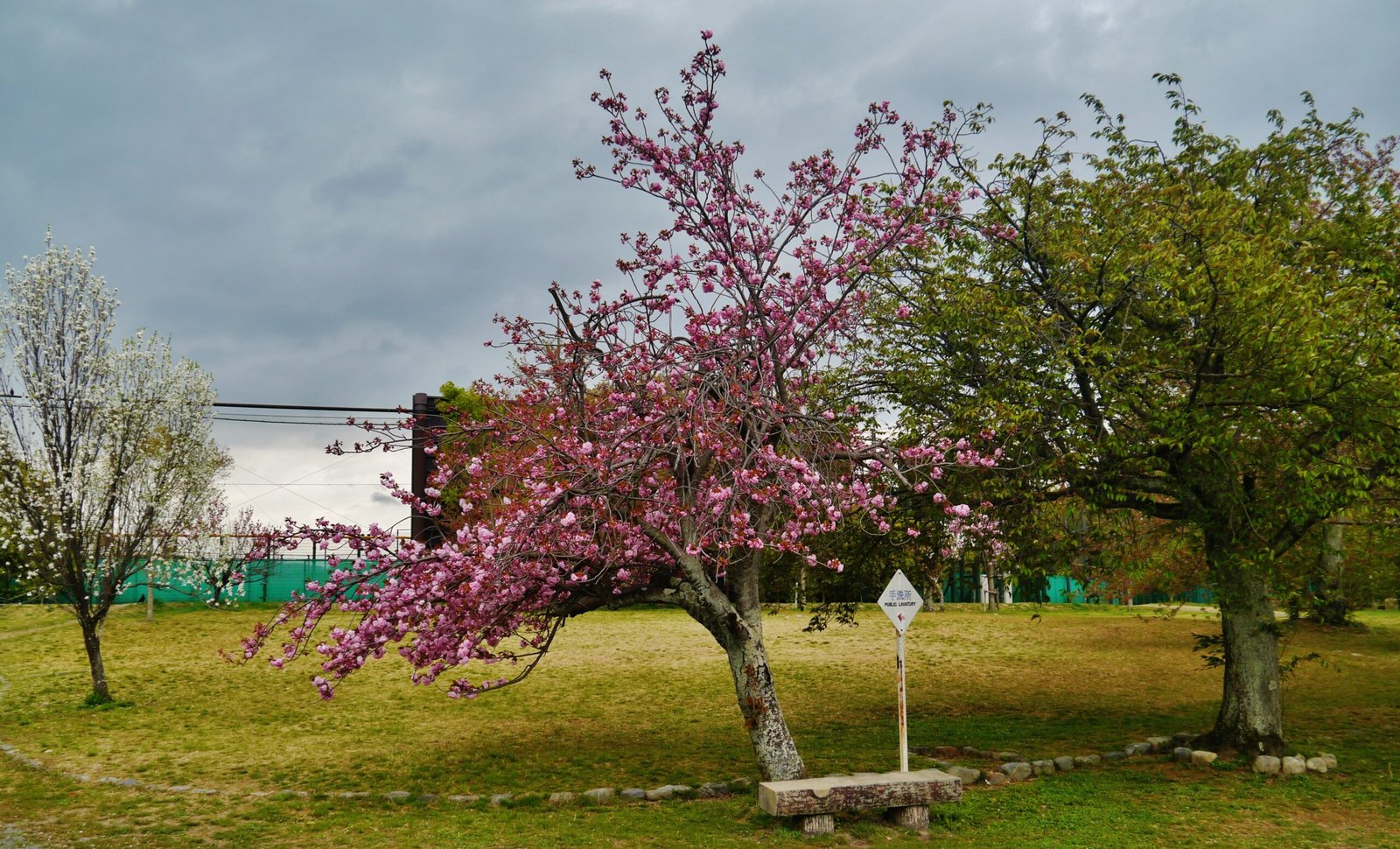
The castle sits inside a public park that covers most of Momoyama hill, and the park itself is arguably a bigger draw than the building. Paths wind through pine and cherry trees up toward the Meiji Emperor’s mausoleum on the adjoining hilltop, a long, quiet stone stairway climb that most tourists in Kyoto never bother with. The grounds are rarely crowded even on weekends, which makes this one of the easier places in the city to get a stretch of green space to yourself — a nice contrast to how the day usually goes at Fushimi Inari a few stops away. Cherry blossoms draw a modest local crowd in spring, and the hillside maples turn color in November along with the rest of the city, without the illuminated night crowds you’d find at Kyoto’s bigger autumn-foliage temples.
Getting There
Three stations put you within reasonable walking distance. The most common approach is JR Momoyama Station on the Nara Line, about 12 minutes from Kyoto Station, followed by a 15–20 minute walk northeast up the hill. Keihan’s Fushimi-Momoyama Station and the Kintetsu Kyoto Line’s Kintetsu-Tambabashi Station both work as alternatives if you’re coming from elsewhere in the city, with a similar walk from either. There’s no shuttle bus and no taxi stand at the top, so plan on the walk being part of the visit — it’s a steady uphill grade rather than a difficult hike, but it’s worth wearing shoes you don’t mind climbing in.
Easy to Pair With Fushimi Inari and the Sake District
Fushimi Momoyama Castle sits in the same general area as two of the neighborhood’s better-known attractions, and it’s an easy add-on to a day already built around them. Fushimi Inari Taisha is just a couple of train stops away, and if you’re saving your energy after the climb up Inari mountain, the castle hill makes a good lower-key second stop instead of a second big hike. The Fushimi sake district, with its canal walk and brewery tours, sits between the two and can anchor a lunch stop in the middle of the day. None of the three sites requires much advance planning, which makes southern Fushimi a good half-day loop for a trip itinerary that otherwise skews toward central and northern Kyoto. For getting between them, our guide to getting around Kyoto covers the bus and train options in more detail.
Planning Your Visit
There’s genuinely nothing to pay for here, which makes the castle a rare free stop on an itinerary that otherwise adds up quickly — see our guide to visiting Kyoto on a budget for more places that don’t charge admission. Come during daylight hours, since the paths up the hill aren’t well lit after dark and the walk back down gets genuinely hard to see in the evening. There are no restaurants or shops directly at the castle, so bring water if you’re visiting in summer, and don’t expect restrooms much beyond a basic public facility near the entrance. Outside of cherry blossom weekends in spring, you’ll likely have long stretches of the park to yourself, which is reason enough for some travelers to make the trip on its own.
Bottom Line
Fushimi Momoyama Castle isn’t going to be anyone’s main reason for visiting Kyoto, and the fact that it’s a 1960s reconstruction rather than a surviving original is worth knowing before you make the trip out. What it does offer is a genuinely quiet hillside park with real history underneath it, free admission, and an easy pairing with Fushimi Inari and the sake district if you’re already spending a day in the neighborhood. For history buffs interested in the Sekigahara period, or anyone who wants a break from Kyoto’s more crowded temples, it’s a worthwhile hour or so.