Shoren-in: A Practical Guide to Kyoto’s Blue-Lit Imperial Temple
Squeezed between Chion-in’s enormous gate and the slopes leading up toward Gion, Shoren-in is easy to walk past without a second glance from the street. Step through the gate, though, and it’s a different Kyoto: a former imperial monzeki temple with a pond garden by a Muromachi-era master, camphor trees older than most of the city’s shrines, and a twice-yearly night illumination that bathes the whole garden in blue light. It’s one of the few Higashiyama temples where you can go from a quiet weekday afternoon to a genuinely striking evening event without changing neighborhoods.
The Essentials at a Glance
| What | Details |
|---|---|
| Hours | 9:00 a.m.–5:00 p.m. daily (last entry 4:30 p.m.); no regular closing days |
| Daytime admission | Around ¥500–600 for adults, less for students and children; prices are adjusted from time to time, so it’s worth confirming before you go |
| Illumination admission | Separate ticket, roughly ¥1,000 for adults and ¥500 for students, held on select evenings in spring and again in autumn (dates vary by year) |
| Access | 5-minute walk from Higashiyama Station on the Tozai subway line; also reachable by City Bus routes 5, 46, or 100 to the Jingu-michi stop, 3 minutes on foot |
| Visit length | 30–45 minutes for the garden circuit; longer if there’s an evening illumination on |
| Known for | Monzeki (imperial-lineage) status, a Sōami-attributed pond garden, and blue LED illuminations |
A Temple Run by Princes
Shoren-in traces back to monks’ quarters attached to Enryaku-ji on Mount Hiei, the same Tendai-sect mountain temple connected to a number of Kyoto’s older institutions. According to temple history, retired Emperor Toba built a residence here so his son, Prince Kakukai, would have a suitable place to study, and when Kakukai later took over as head priest the temple was granted monzeki status, meaning its abbots were drawn from the imperial family. That gave it an alternate name still used today, Awata Palace, and it kept an imperial-lineage head priest all the way through to the Meiji era. Later, after Kyoto’s Great Tenmei Fire of 1788 left the Imperial Palace itself damaged, Shoren-in briefly served as a residence for retired Empress Go-Sakuramachi, cementing its status as one of the city’s five monzeki temples rather than an ordinary neighborhood temple.
Eight-Hundred-Year-Old Camphors and a Sōami Garden
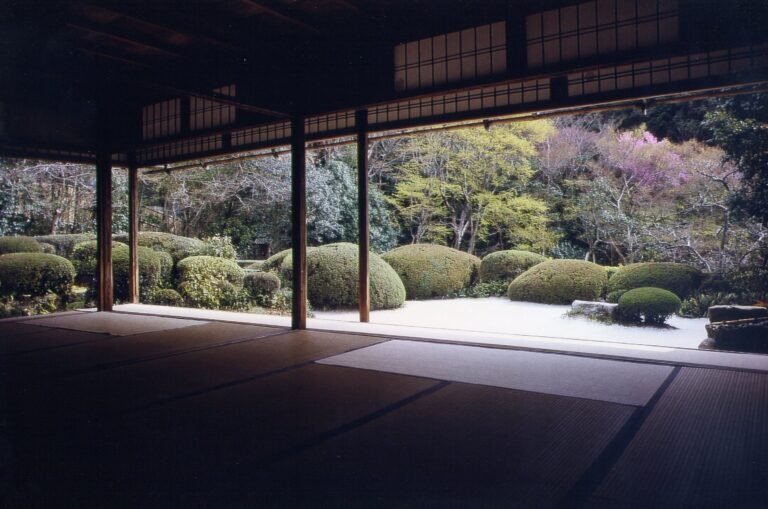
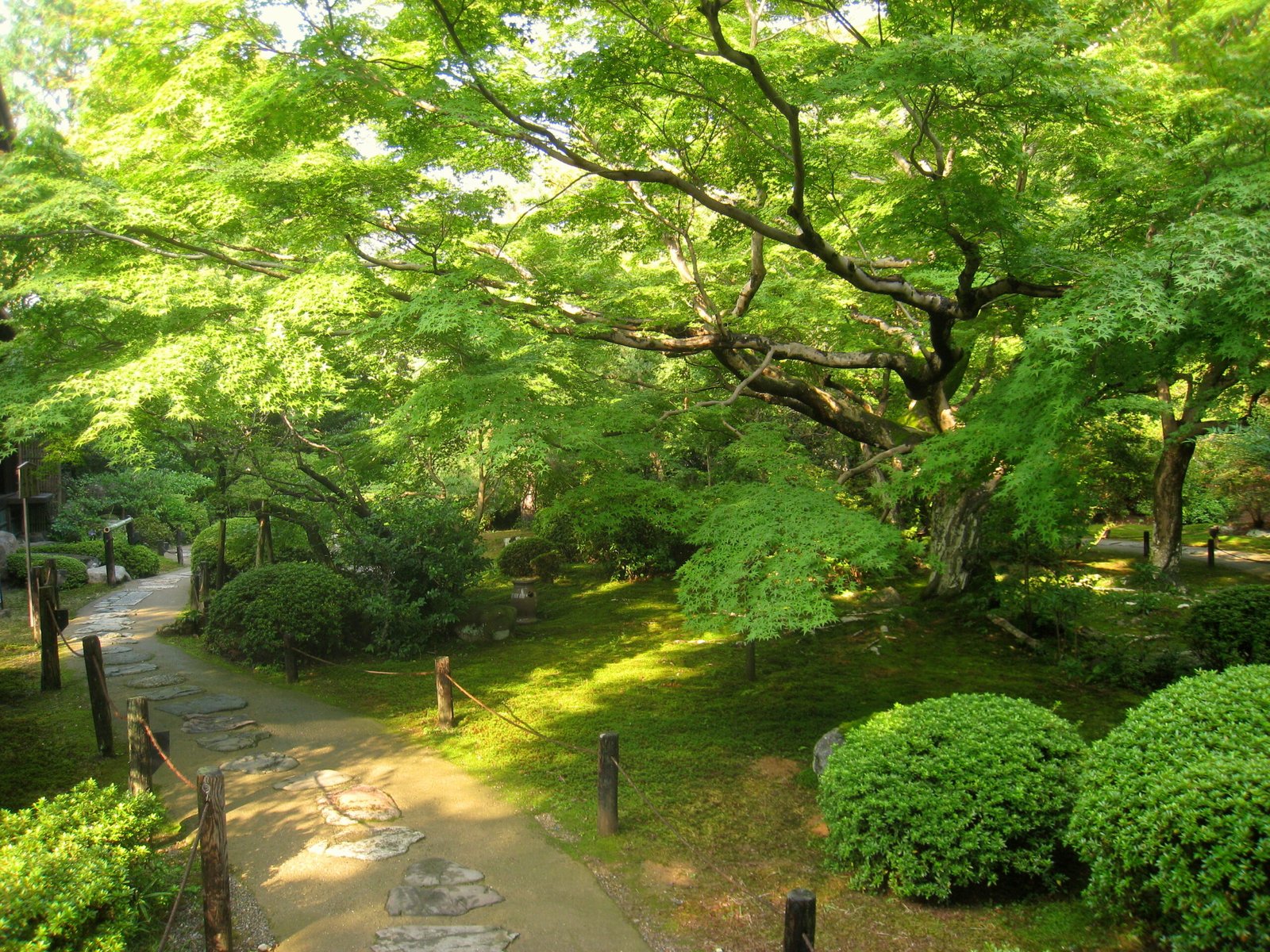
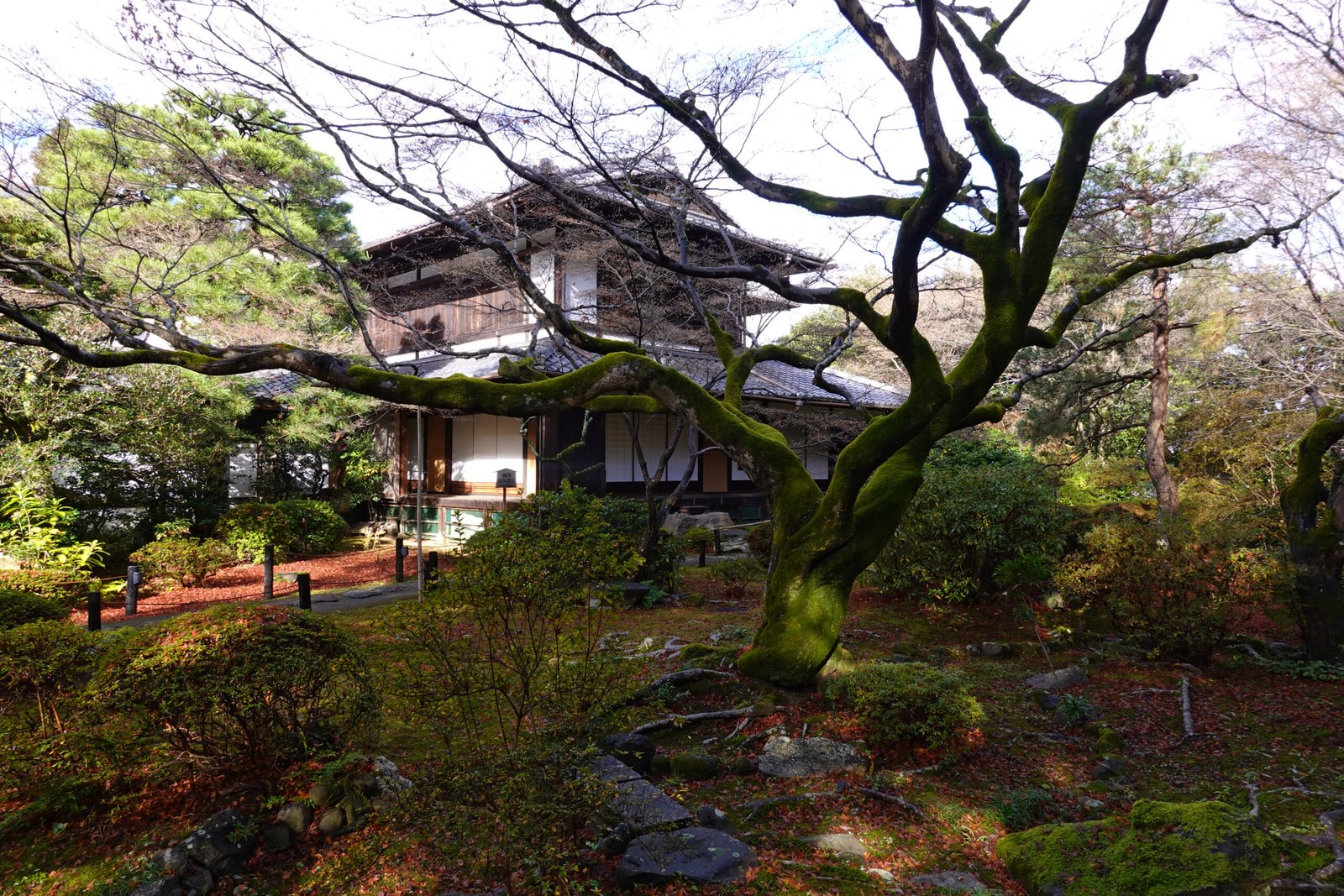
The first thing most visitors notice is at the gate rather than inside it: two enormous camphor trees, said by temple tradition to have been planted by the priest Shinran in the early 1200s, now designated Natural Monuments by the city of Kyoto. Inside, the garden circuit takes in four distinct areas linked by a walking path. The Ryushin-chi pond garden is attributed to Sōami, the Muromachi-period landscape artist who also worked on gardens elsewhere in Kyoto, while a separate strolling garden and the Kirishima Garden are credited to the Edo-period designer Kobori Enshu. A moss garden sits in front of the Shinden hall, and the pond itself is ringed with azalea bushes that lead up toward a small shrine with elevated views back over the grounds. It’s a slower, more layered garden than the rock-garden temples nearby, worth the full walking loop rather than a quick look from the veranda.
The Blue Illuminations
Shoren-in’s best-known event is its night illumination, held on selected evenings in spring, timed loosely around the Higashiyama Hanatoro lantern festival, and again in autumn during the leaf-viewing season that typically runs from October into December. Around a thousand blue LED fixtures light the garden and the approach to the Shinden hall, giving the whole space a cool, almost underwater glow that’s noticeably different from the warmer lantern light used at other Higashiyama night events. Illumination tickets are sold separately from daytime admission and exact dates shift from year to year, so it’s worth checking closer to your travel dates rather than assuming a fixed calendar. If you’re building an evening around it, arriving near opening keeps you ahead of the crowds that build once word gets around on social media that the lights are on for the season.
Pairing It With Chion-in and the Rest of Higashiyama
Shoren-in sits directly north of Chion-in and its famously oversized Sanmon gate, close enough that the two make an obvious pair on the same walk. From there it’s a short continuation south and west toward Kodai-ji, another temple known for its own evening illuminations, and on into the lanes that lead down to Gion. If you’re mapping out a full day on foot through the district, our One Day in Higashiyama walking itinerary covers the fuller route Shoren-in fits into, and our Kyoto Autumn Foliage guide is worth checking alongside this one if you’re specifically timing a visit around the illumination and the leaves changing together.
Practical Tips
Shoren-in gets meaningfully less crowded than Chion-in next door, so it’s a reasonable place to slow down even during a busy Higashiyama day. The garden path involves some uneven stone steps around the pond, so wear shoes with a good grip rather than sandals, especially if the ground is damp. For the illumination evenings, bring a light jacket even in early autumn, since the garden sits in shade most of the day and cools off quickly after dark; a tripod is generally discouraged for photography during the light-up, so plan on handheld shots or a camera that handles low light well. Regular daytime admission and illumination tickets are handled separately, so don’t assume one covers the other if you’re visiting both a day session and an evening event on different trips.
Bottom Line
Shoren-in is a temple worth building deliberate time for rather than a five-minute stop tacked onto a bigger Higashiyama loop. The daytime garden alone justifies the admission, and if your dates happen to line up with one of the blue-light evenings, it’s one of the more distinctive night events in a city that already has plenty of them.