Kozan-ji: A Practical Guide to Takao’s Temple of Frolicking Animal Scrolls and Oldest Tea Garden
Our Day Trip to Takao guide and our deeper look at Jingo-ji both mention Kozan-ji as the third temple in the valley, the smaller stop people add on if they have the energy left after Jingo-ji’s staircase. That undersells it a bit. Kozan-ji holds the originals-in-spirit of what’s often called Japan’s first manga, sits on what’s considered the country’s oldest tea garden, and does both from a quieter, flatter plot of ground than its uphill neighbor. If Jingo-ji is the climb, Kozan-ji is the reward for not needing to climb quite as far.
The Essentials at a Glance
| What | Details |
|---|---|
| Location | Toganoo, Ukyo-ku — the Takao valley, a short walk past Jingo-ji along the Kiyotaki River |
| Sect | Originally Kegon, associated with the reformist monk Myoe |
| Known for | The Choju-jinbutsu-giga scrolls (reproductions on view; the originals live at two national museums) and Japan’s oldest tea garden |
| Hours | 8:30am–5:00pm daily, with no regular closing days |
| Admission | Around ¥1,000 to enter the Sekisui-in pavilion grounds; an extra ¥500 autumn-season fee typically applies from early October through early December, so double-check current pricing if you’re visiting in that window |
| Access | JR bus from Kyoto Station (about 50 minutes) or City Bus 8 from Shijo-Karasuma (about 40–45 minutes), both to the Toganoo stop — a short, mostly flat walk from there |
A Mountain Temple Reborn Under Myoe
Temple tradition traces a building on this site back to the late 8th century, but the Kozan-ji that visitors see today really begins in the early 1200s, when the monk Myoe (also written Myoe Koben) restored a derelict mountain hall here with backing from the retired Emperor Go-Toba. Myoe was a Kegon-school reformer known for pushing back against what he saw as a laxer, more fashionable Buddhism elsewhere in the capital, and he wanted a secluded place to practice and teach on his own terms. Toganoo, tucked further up the valley than Jingo-ji and reachable only by a modest path along the river, suited that purpose well. Go-Toba granted the temple’s name, and Myoe spent the following decades building it into a serious center of study, copying sutras and training disciples in a setting remote enough to stay out of the court politics that consumed so much of religious life in the capital. The temple is counted among the Historic Monuments of Ancient Kyoto on UNESCO’s World Heritage list, alongside Jingo-ji and most of the major sites across the city.
Sekisui-in: A Kamakura-Era Room With a View
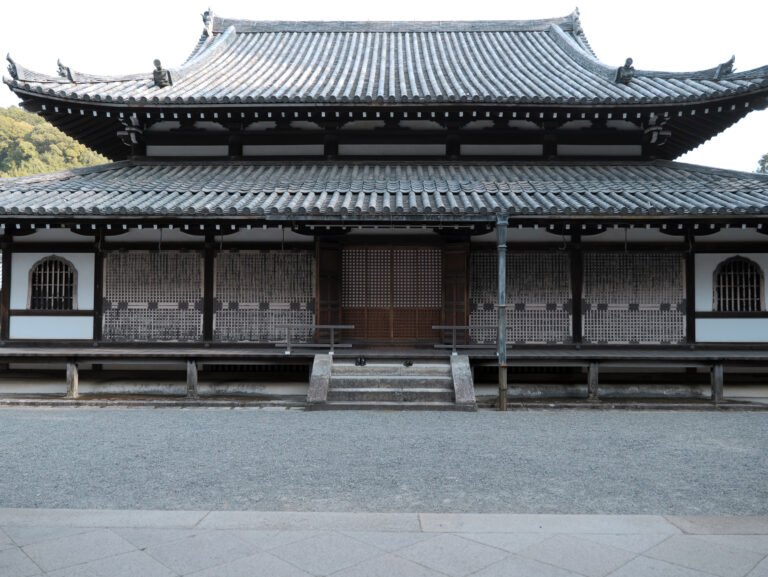
The temple’s main structure, the Sekisui-in, is a National Treasure and one of the few residential buildings from the Kamakura period still standing anywhere in Japan. It started out connected to the imperial family before being moved to the temple grounds, and its design has the restrained, slightly austere feel typical of a building meant for study rather than show — a thatch-and-shingle roof, plain wood, and a veranda that looks straight out over the forested Kiyotaki river valley below. It’s a small building, and there isn’t a long list of rooms to see, but sitting on that veranda for a few minutes is close to the point of visiting Kozan-ji at all. The valley views are especially good in autumn, when the hillside opposite turns color before most of central Kyoto catches up.

The Frolicking Animals, and Where the Originals Actually Are
Kozan-ji’s best-known possession is the Choju-jinbutsu-giga, four painted handscrolls usually translated as the Scrolls of Frolicking Animals and Humans, and often called Japan’s first manga. They show frogs, rabbits, monkeys, and other animals standing in for people — swimming, wrestling, chasing a thief, praying, smoking pipes — in scenes widely read as gentle satire of court life and, in the later scrolls, of the monks and priests of the day. They’re generally dated across the 12th and 13th centuries, spanning the late Heian into the Kamakura period, and were traditionally attributed to a monk-painter named Toba Sojo, though most scholars now think more than one artist was involved and treat that attribution as unproven.
Here’s the detail that trips people up: the originals are no longer kept at the temple. The first two scrolls are held by the Tokyo National Museum and the other two by the Kyoto National Museum, which is a more practical arrangement for a set of 800-year-old paintings on paper than keeping them in a mountain valley. What’s on display at Kozan-ji itself is a set of careful reproductions, which is a perfectly good way to see the imagery and get the joke, even if it’s worth knowing going in that you’re not looking at the 12th-century original. If you want a shot at seeing the real scrolls, or at least substantial sections of them, keep an eye on special exhibitions at either national museum — they surface periodically, though not on any predictable schedule.
Japan’s Oldest Tea Garden
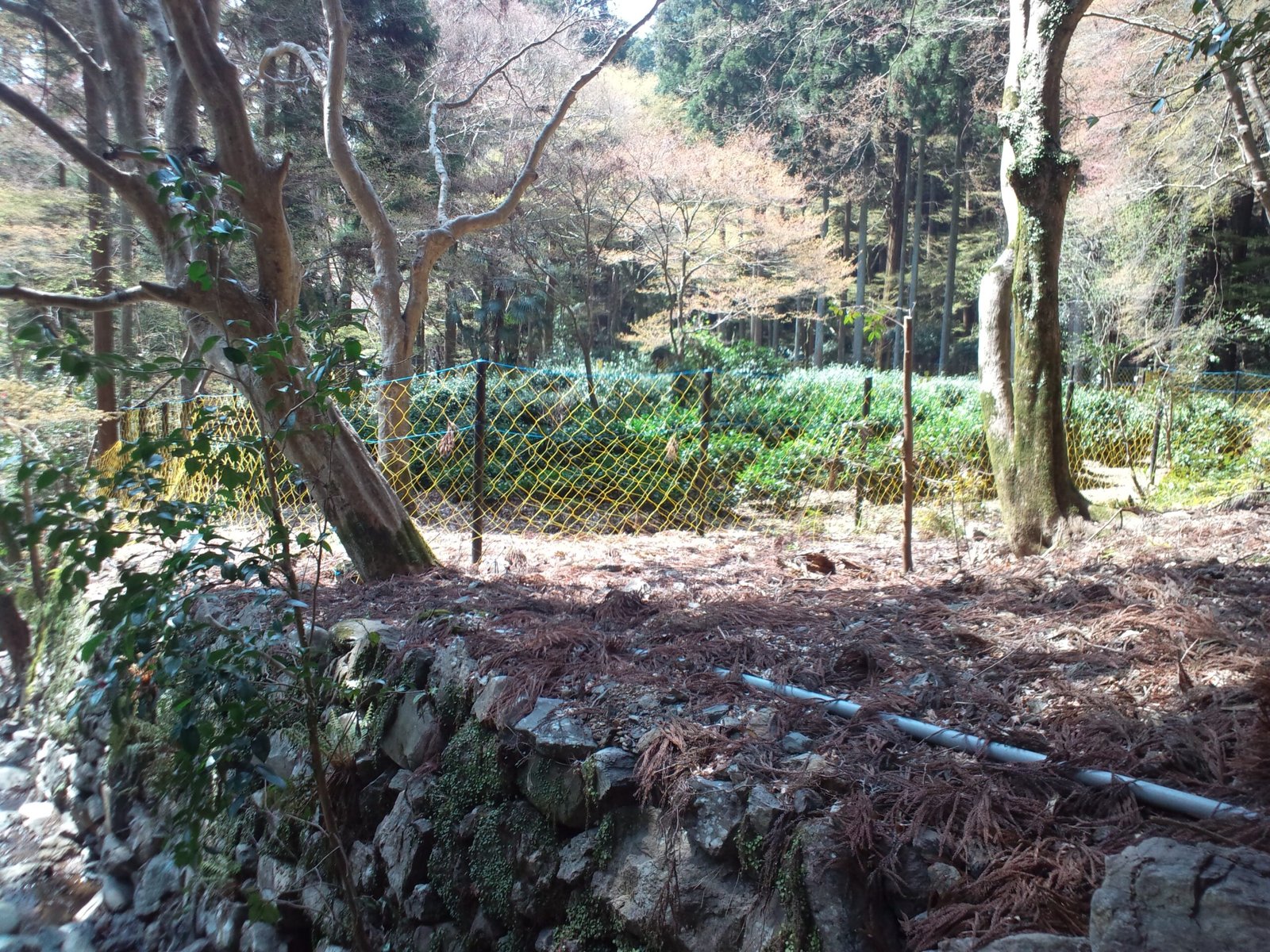
Kozan-ji’s other claim to fame is smaller and easy to miss if you don’t know to look for it: a modest fenced plot near the grounds marked as Japan’s oldest tea garden. According to temple tradition, Myoe received tea seeds from the priest Eisai, who is credited with bringing tea cultivation back from China, and planted them here to help monks stay alert through long nights of meditation and sutra study. Whatever the precise history, the plot has been maintained and replanted over the centuries as a deliberate link back to that origin story, and it’s a nice detour if you’re at all interested in how tea culture took root in Japan before it spread to Uji and the rest of the country. It’s not a manicured show garden — don’t expect anything on the scale of a formal tea plantation — just a small, quiet patch of tea bushes with a stone marker explaining what you’re looking at.
Autumn in the Upper Valley
Takao’s elevation means its maples tend to turn later than the famous spots closer to central Kyoto, with color in this upper part of the valley typically building toward a peak from mid to late November. Kozan-ji’s grounds are more wooded and less manicured than Jingo-ji’s terraces, so the effect is less a single dramatic view and more a slow walk through color on the approach and around the Sekisui-in veranda. It’s also the reason for the extra autumn admission fee mentioned above — the temple sees a real jump in visitors once the leaves turn, though nothing like the crowds at Arashiyama or the eastern hills. If you’re building a longer autumn itinerary around the city, our Kyoto Autumn Foliage guide covers how Takao’s timing compares to other koyo spots, and our Kyoto in November guide is worth a look if your trip lands in that specific window.
Getting There
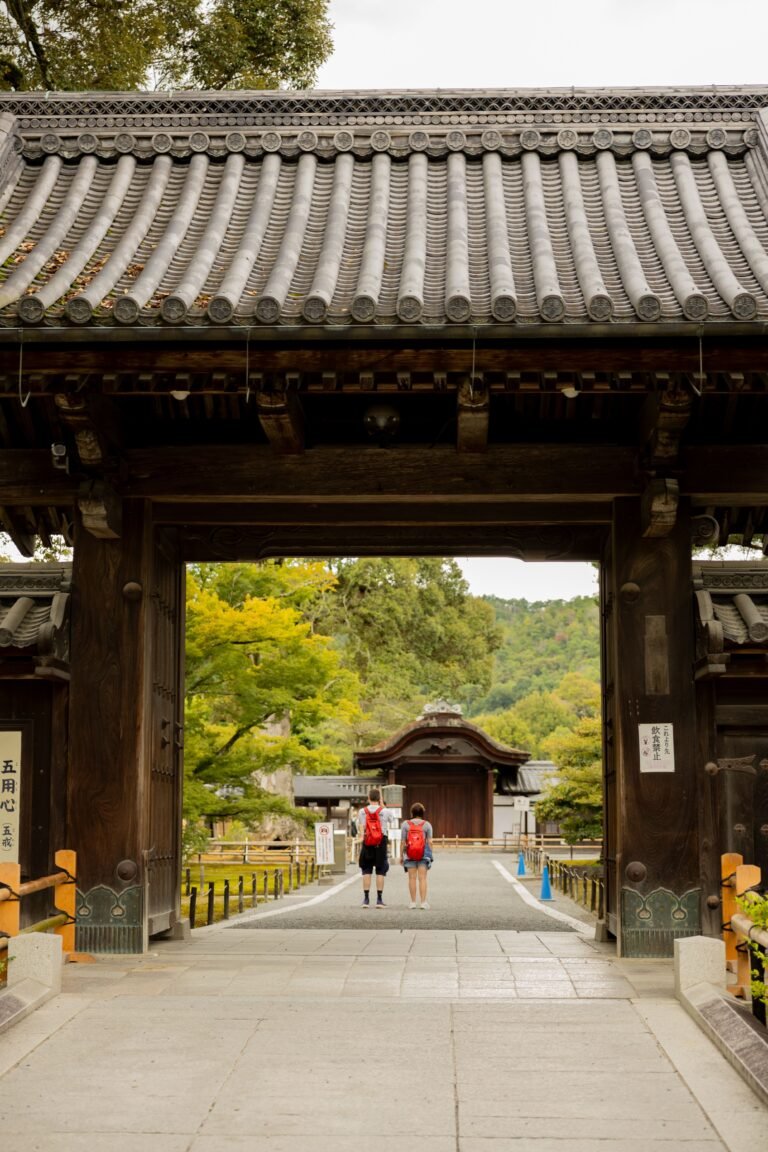
The JR bus running the Takao/Keihoku route from Kyoto Station takes about 50 minutes and drops you at the Toganoo stop, which sits closest to Kozan-ji — worth noting that only roughly half of the buses on this route run all the way to Toganoo, so check the destination before boarding or confirm with the driver. City Bus 8 from Shijo-Karasuma covers similar ground in around 40 to 45 minutes. From the Toganoo stop, the walk in to Kozan-ji is short and considerably flatter than the climb up to Jingo-ji, crossing a small bridge over the Kiyotaki River before a gentle path through the trees to the temple gate.
Pairing It With the Rest of Takao
Most visitors treat Kozan-ji as the third stop in Takao, after Jingo-ji’s staircase and treasures and a look at Saimyo-ji in between. That order works well: it leaves the easiest, flattest temple for last, once you’ve already done the climbing. Our Day Trip to Takao guide lays out the full loop, and the Jingo-ji guide covers the steeper, more dramatic stop you’ll likely want to do first while your legs are fresh. Since the whole trip runs on buses rather than the subway or JR lines most visitors rely on downtown, our Getting Around Kyoto guide is a useful refresher on fares and IC cards before you set out.
Bottom Line
Kozan-ji doesn’t ask nearly as much of visitors as Jingo-ji does, and that’s exactly its appeal: a short, flat walk to a National Treasure building with river views, a chance to see Japan’s oldest tea garden in person, and reproductions of one of the country’s most famous works of art, all in a quieter corner of an already quiet valley. Plan for 30 to 45 minutes here, more if you linger on the Sekisui-in veranda, and treat it as the calm final stop after Jingo-ji’s stairs rather than a destination to rush to on its own.