Kyoto Gyoen National Garden: A Practical Guide to the Grounds Around the Imperial Palace
Our Kyoto Imperial Palace guide covers the walled grounds you need a timed visit to see, but it skips past the much bigger, much less structured space that actually surrounds the palace: Kyoto Gyoen National Garden. It’s free, it’s open around the clock, and most visitors walk straight through it without realizing it’s a destination in its own right rather than just the park you cross on your way to the palace gate. Given that it covers close to a square kilometer in the middle of the city, that’s worth fixing.
The Essentials at a Glance
| What | Details |
|---|---|
| Location | Kamigyo-ku, central Kyoto — surrounds the Kyoto Imperial Palace, Sento Imperial Palace, and Kyoto State Guest House |
| Size | Roughly 1.3km north to south and 0.7km east to west — about 65 hectares in all |
| Known for | Open lawns and forest in the middle of the city, former court-noble residence gardens, weeping cherry trees, and free year-round access |
| Hours | The grounds themselves are open to everyone, any time, with no admission charge; individual facilities inside (tea houses, exhibition halls) keep their own shorter hours |
| Admission | Free for the garden; ¥300 for a seat at the Shusui-tei tea house on the days it’s open |
| Access | Subway Karasuma Line to Marutamachi Station, then about a 5-minute walk to the nearest gate |
From a City of Noble Residences to a Public Garden
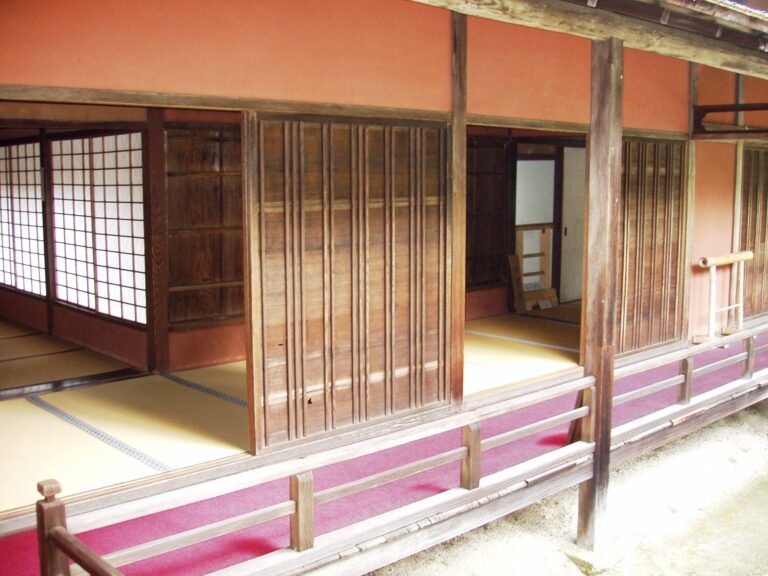
It’s easy to assume this open space has always been parkland, but for most of the Edo period it was the opposite: a dense residential district where court nobles (kuge) lived clustered around the Imperial Palace, with roughly 200 residences packed into the area at various points in its history. That changed abruptly in 1869, when the emperor and much of the court relocated to Tokyo following the Meiji Restoration. With their reason for living beside the palace gone, the noble families moved away too, and their residences were gradually cleared rather than maintained. Rather than let the area fall into disorder, the Meiji government converted the cleared land into open ground, partly to give the palace a more dignified, protected setting and partly just because there wasn’t a clear use for a few hundred suddenly empty noble compounds. The space was formally designated a National Garden after World War II, in 1949, and has been managed by the national government — now Japan’s Ministry of the Environment — ever since.
Four Residences That Survived as Gardens
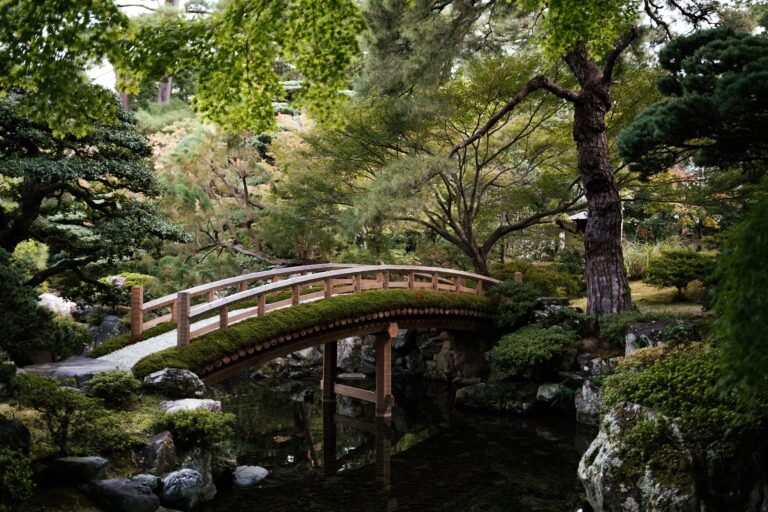
Most of those 200 noble residences left no visible trace, but a handful of garden sites were deliberately preserved and are still identifiable today. The former Konoe residence — the Konoe family was one of the five regent houses eligible to serve as imperial regents — is now best known for its roughly 60 weeping cherry trees, among the garden’s most popular cherry-blossom spots each spring. The former Katsura no Miya residence belonged to one of the imperial collateral houses and briefly served as a temporary imperial palace for Emperor Komei in the late Edo period; its garden survives in reasonably good condition. The former Kujo residence, another regent house, retains its Edo-period garden along with the Shusui-tei tea ceremony house, which still hosts tea gatherings on a limited public schedule. And the former Kan-in no Miya residence, another imperial house, has had its pond restored to its original shape and now houses a small exhibition hall with historical displays on the area’s noble-residence era. None of the four reads as a single “garden” in the way a temple garden does — they’re scattered features across a much larger landscape — but together they’re the clearest physical link back to what this whole space used to be.
A Working Forest in the Middle of the City
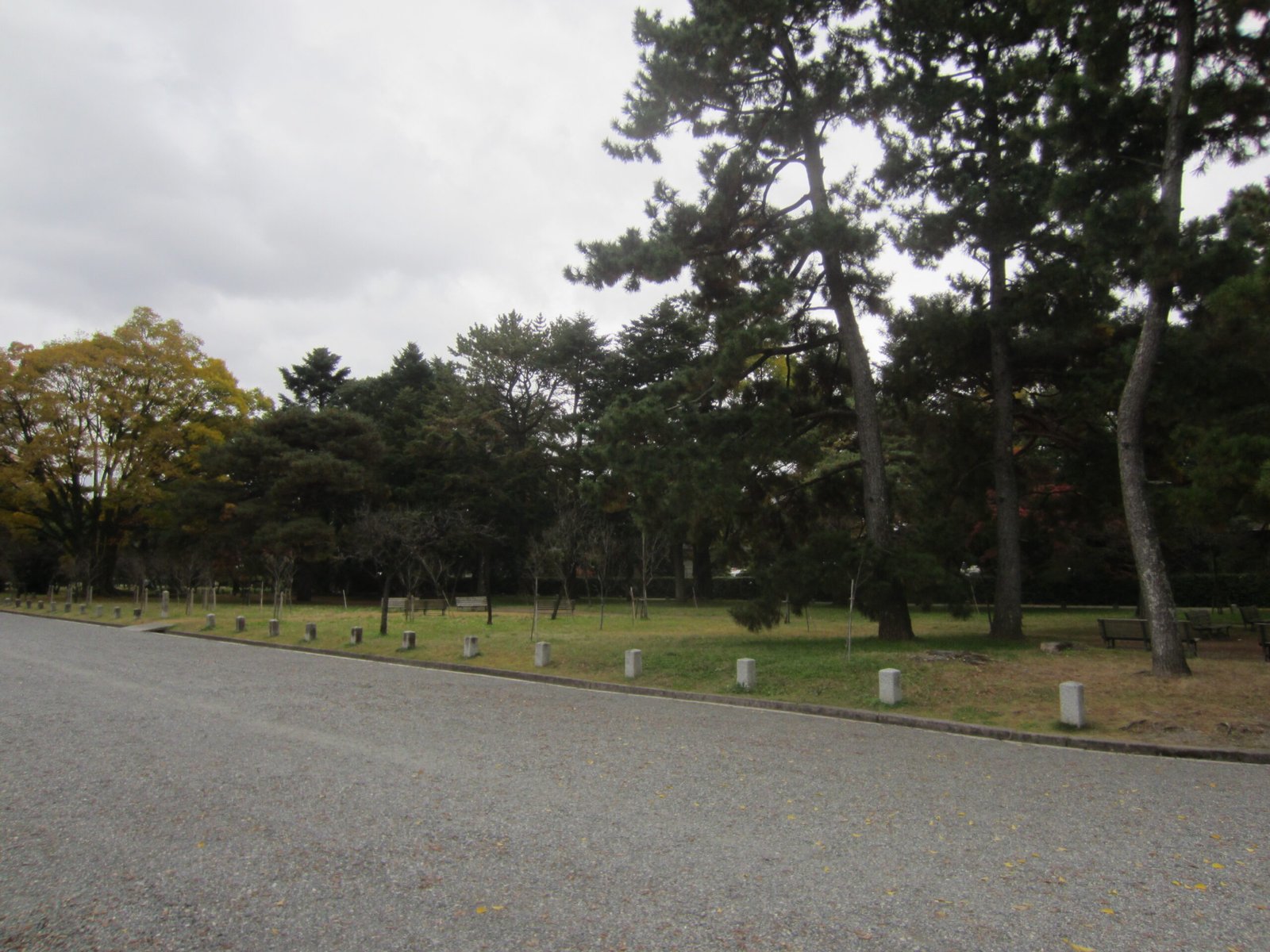
What makes Kyoto Gyoen feel different from a typical city park is the sheer scale of it as a living space rather than a landscaped one. The grounds hold an estimated 50,000 trees and more than 500 plant species, enough that colonies of Kansai dandelions — a native variety increasingly squeezed out elsewhere by introduced species — still thrive in the open grasslands. More than 100 bird species have been recorded here, including northern goshawks that hunt over the grounds and brown hawk-owls that breed in the wooded sections, which is a notable amount of biodiversity for a site this central. If you’ve already visited the Kyoto Botanical Garden on the north side of the city, Gyoen makes an interesting contrast: that’s a curated, labeled collection, while this is closer to a protected semi-wild landscape that happens to sit in the heart of downtown Kyoto.
What to See by Season
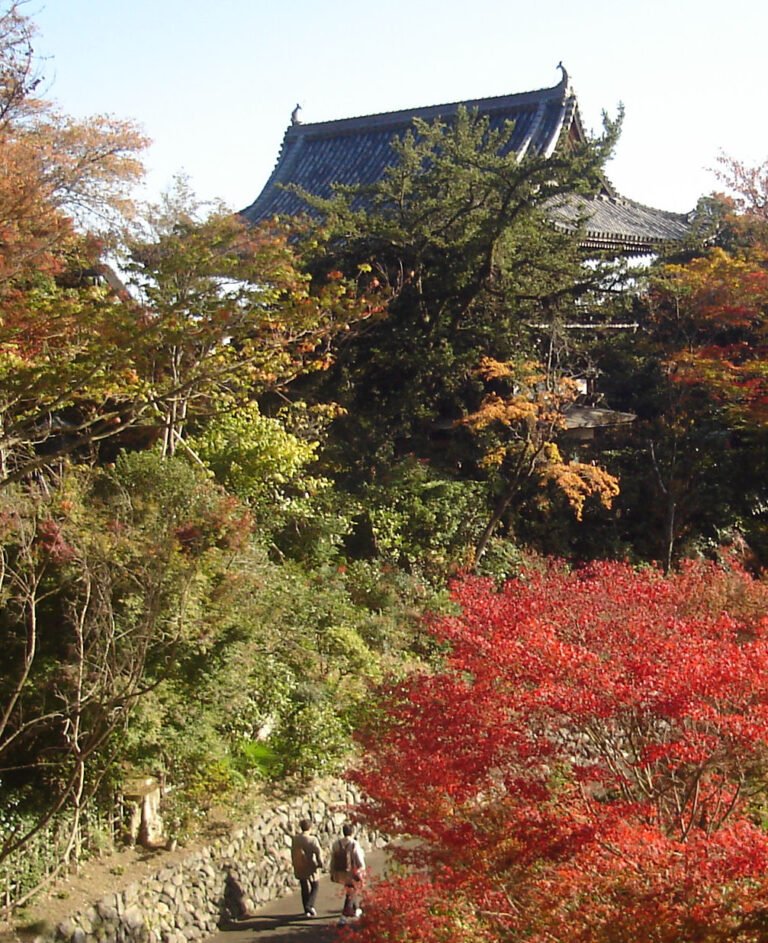
Cherry blossoms are the obvious headline, and the weeping cherries at the former Konoe residence site tend to bloom earlier than the standard Somei-yoshino trees elsewhere in the city, giving Gyoen an early start to the hanami season most years. Plum and peach trees bloom in the weeks before that, clustered mainly around the Demizu Stream in the garden’s north-central section, and the same stretch turns color again with maples in autumn — a smaller-scale, quieter koyo spot than the famous temple gardens covered in our Kyoto Autumn Foliage guide, but a pleasant one to add if you’re staying nearby. Because the garden is open at all hours and free to enter, it’s also one of the few places in the city where you can time a visit around light rather than opening hours — early morning, before the day’s heat or crowds build, is consistently the best time to walk through regardless of season.

The Gate With a Battle Scar
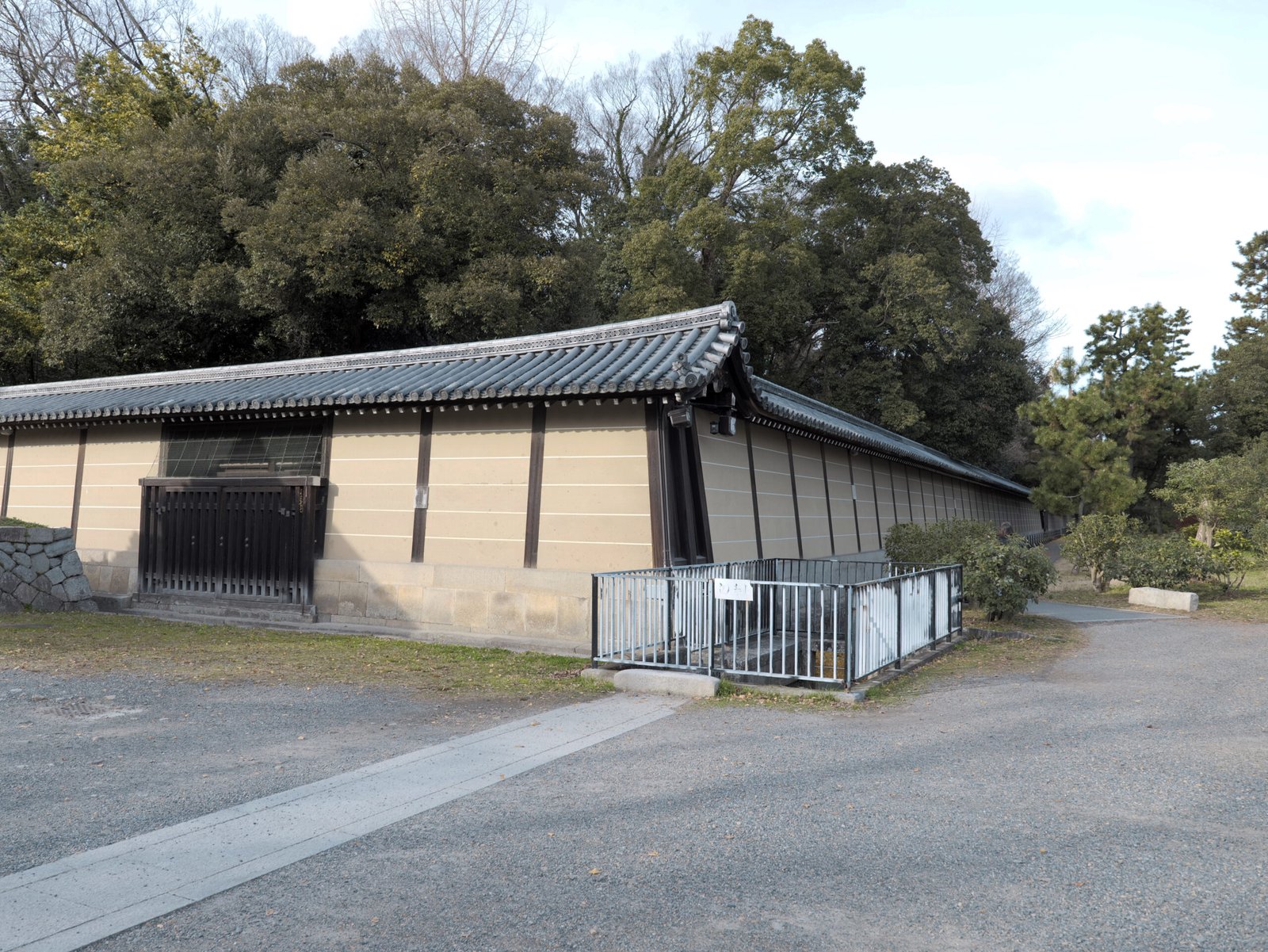
Of the garden’s several gates, Hamaguri-gomon on the west side carries the most history. It takes its place in the story of the Kinmon Incident of 1864, when forces from the Choshu domain, trying to force their way back into favor at the imperial court, clashed with shogunate and allied domain troops right at this gate. The fighting here was part of a larger confrontation that burned through a significant part of the city and marked one of the more violent flashpoints in the years leading up to the Meiji Restoration. There’s nothing dramatic to look at today — it’s simply a gate like the others — but it’s a reminder that this calm, grassy space has a history considerably more turbulent than its current atmosphere suggests.
Getting There
The easiest approach is the Subway Karasuma Line to Marutamachi Station, from which the nearest gate is about a 5-minute walk; from Kyoto Station, that’s roughly 10 minutes on the subway before the walk. If you’re coming from the Keihan Line, Jingu-Marutamachi Station leaves about a 15-minute walk to the garden’s eastern side. Because the garden has gates on all four sides and no single main entrance, it’s worth deciding in advance which part of the grounds you actually want to see — the Imperial Palace’s visitor entrance, the former Konoe cherry grove, or the Demizu Stream area — rather than wandering in and hoping to stumble onto it. For general orientation on fares and routes around the city, our Getting Around Kyoto guide covers the basics of the subway and IC card system.
Pairing It With Nearby Sights
Gyoen’s biggest advantage is how easily it combines with sights right on its doorstep. The Kyoto Imperial Palace grounds sit inside the garden itself, so a palace visit and a Gyoen walk naturally fit into the same trip. A short walk north of the garden’s upper edge brings you to Seimei Shrine, dedicated to the Heian-era diviner Abe no Seimei, which makes for a quick add-on if you’re already in the neighborhood. Both pair naturally with a morning or late-afternoon loop through the garden itself, especially outside the midday heat of summer.
Bottom Line
Kyoto Gyoen rewards treating it as a destination rather than a shortcut between the subway and the palace gate. It’s free, it never closes, and it holds enough genuine history — former noble residences, a battle-scarred gate, one of the city’s best early cherry displays — to justify an hour or two of unhurried walking on its own. Pair it with the Imperial Palace or Seimei Shrine if you want a fuller afternoon, or just cut through slowly instead of quickly the next time you’re in the area.