Fushimi Inari Taisha: A Practical Guide to Kyoto’s Torii Gate Mountain
Photos never quite capture it. You’ve probably seen the shot a hundred times: an empty tunnel of vermillion gates stretching into soft light, not another person in frame. What those photos leave out is timing. That shot is almost always taken before 7 a.m., because by mid-morning the same tunnel turns into a slow-moving line of people angling for the exact photo you wanted.
Fushimi Inari Taisha is the single most-visited site in Kyoto, and also one of the easiest to get wrong. Some people show up at 11 a.m., walk the first ten minutes of gates, snap a photo, and leave thinking they’ve “done” it. Others commit to the full summit hike in July heat without enough water and regret it by the halfway point. I’ve walked this mountain at every hour of the day, more times than I can count, and the experience changes completely depending on when you go and how far you push.
So here’s the practical version: what it actually costs (nothing), how far you really need to walk, the best timing if that empty-tunnel photo matters to you, and a few things worth stopping for on the way up.
What You’re Actually Signing Up For
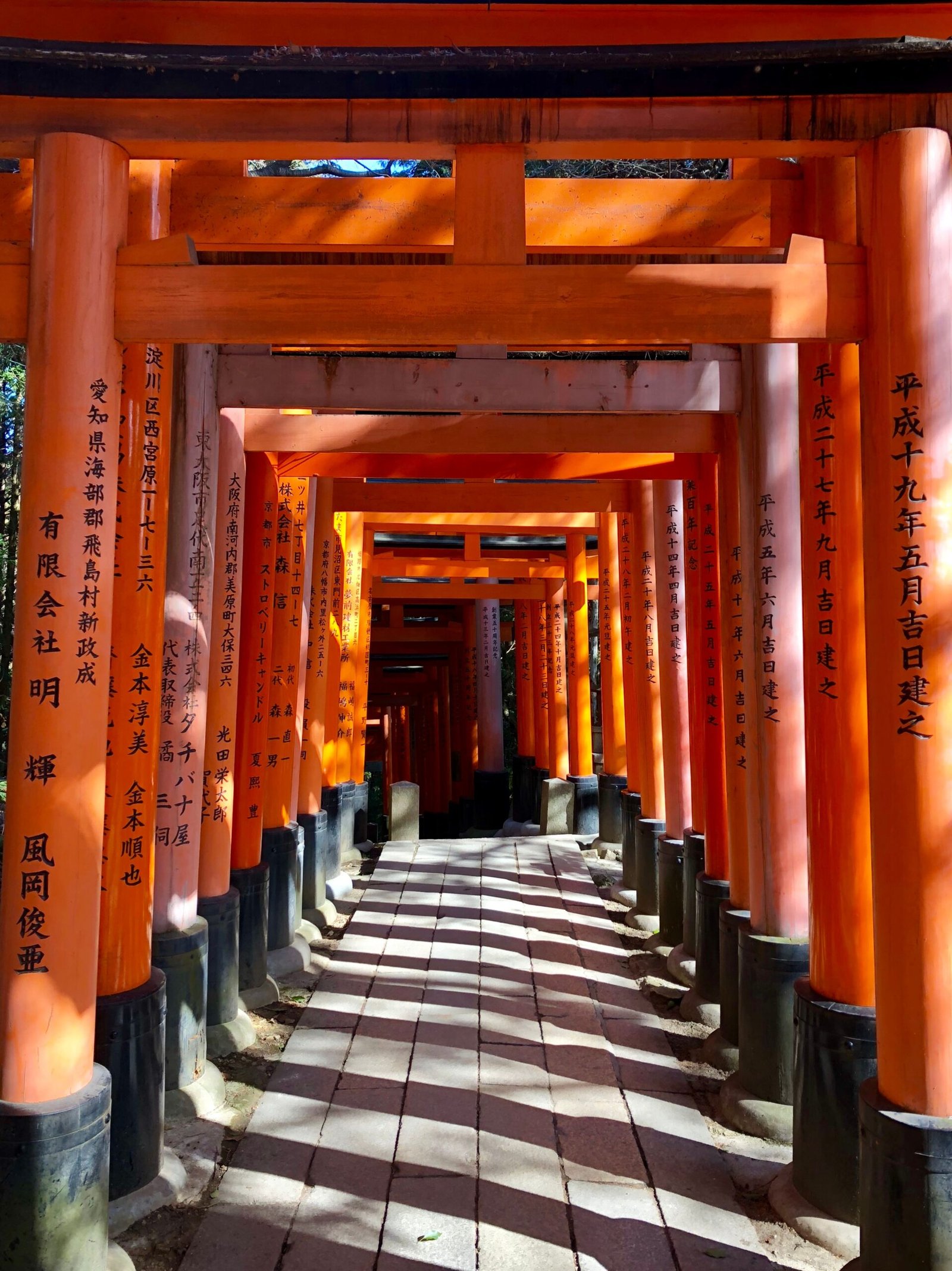
Fushimi Inari Taisha is a Shinto shrine dedicated to Inari, the deity of rice, sake, and prosperity, which is why foxes, believed to be Inari’s messengers, show up everywhere as statues instead of the usual lion-dogs. The shrine sits at the base of Inari Mountain, and the main draw, the torii gate tunnels, climbs the mountain behind it. There are roughly 10,000 gates in total, each donated by a business or individual hoping for good fortune, with the donor’s name and date painted on the back in black.
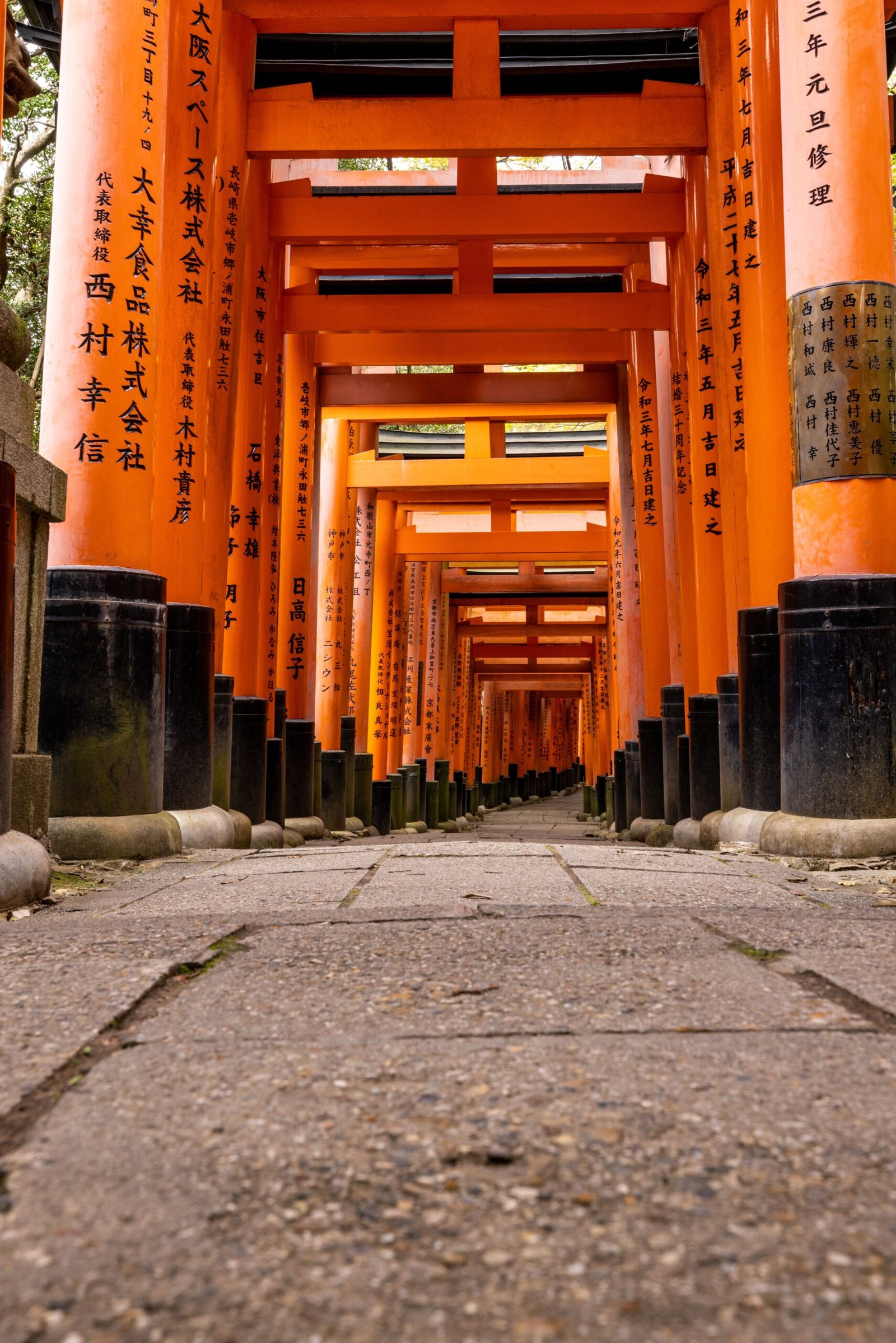
Here’s the part that surprises most people: you don’t need to hike the whole mountain to get what most visitors actually come for. The dense, famous tunnel, Senbon Torii (“thousand gates”), is only the first ten to fifteen minutes from the entrance. Everything past that thins out gradually, and so does the crowd.
The Essentials at a Glance
| What | Details |
|---|---|
| Admission | Free, always has been |
| Hours | Grounds open 24/7; shrine office (goshuin, charms) runs roughly 8:30 a.m.–4:30 p.m. |
| Total torii gates | Around 10,000 |
| Senbon Torii (main tunnel) | 10–15 minutes from the entrance, on flat ground |
| Yotsutsuji viewpoint | 30–45 minutes up, where most visitors turn back |
| Full summit loop | 2–3 hours round trip, about 4 km, roughly 12,000 steps |
| Nearest JR station | Inari Station, JR Nara Line — 5 minutes and 150 yen from Kyoto Station |
| Nearest Keihan station | Fushimi Inari Station, Keihan Main Line |
| Least crowded hours | 6–7 a.m., or after 4 p.m. |
Getting There
This is one of the easiest sights in Kyoto to reach, which is part of why it’s so busy. Take the JR Nara Line two stops from Kyoto Station to Inari Station; the shrine’s main entrance sits almost directly outside the ticket gate, so there’s no signage-hunting involved. It’s a five-minute ride for about 150 yen, and if you already have a JR pass or IC card, there’s nothing to plan ahead of time.
The Keihan Main Line also stops nearby, at Fushimi Inari Station, a short walk from the gates. Coming from Gion or Kawaramachi, Keihan is often more direct than backtracking to Kyoto Station for the JR line, so it’s worth checking whichever transit app you’re using before committing to a route.
There’s no real visitor parking to speak of, and given how central and well-connected the station is, driving here mostly adds stress for no benefit. Take the train.
When to Go, If the Crowds Matter to You
Because entry is free and the grounds never close, Fushimi Inari doesn’t get the natural crowd control that ticketed sites do. There’s no line to slow things down, so it fills up fast once the day’s tour groups arrive.
If you want anything close to that empty-tunnel photo, arrive by 6:30 or 7 a.m. It really is quiet then: a handful of joggers, a few other early photographers, and a stillness that disappears within an hour or two. By 9 or 10 a.m., Senbon Torii is shoulder to shoulder, and it stays that way until roughly mid-afternoon. Weekends are worse than weekdays, and spring and autumn are worse than summer, when the heat thins the crowds out a little on its own.
Late afternoon into evening is the other quiet window. The gates aren’t lit at night in any dramatic way, so you’re trading photo light for solitude, but if you’ve already seen the tunnel once during the day and want to walk it again without the crush, early evening works well too.
How Far You Should Actually Walk
Most visitors do one of three versions of this hike, and none of them is wrong. It really depends on what you’re here for.
Just Senbon Torii (10–15 minutes). If you’re short on time, or this is one stop on a packed day, the main gate tunnel gives you the photo and the atmosphere. It’s flat, it’s the densest concentration of gates, and it’s worth doing even if you go no further.
Up to Yotsutsuji (30–45 minutes). This is the sweet spot, and where most people naturally stop. Past Senbon Torii the crowd thins fast, the path starts climbing in earnest, and you reach an intersection with a real payoff: a clear view over Kyoto, plus benches, a couple of small teahouses, and vending machines if you need water. If you only have energy for one push past the main tunnel, make it this one.
The full summit loop (2–3 hours). I’ll be honest about this one: the actual summit has no view. Dense forest blocks it completely, and the shrine at the top is modest compared to what you’ve already passed. People do the full loop for the sense of completion, or because they enjoy mountain walking, not because the top is more dramatic than Yotsutsuji. If a great photo and a solid workout are the goal, Yotsutsuji is where the good part ends. If you want to say you did the whole thing, budget half a day, wear real shoes, and bring more water than you think you’ll need. There’s very little shade in places, and it gets properly hot in summer.
One more practical note: you can turn back almost anywhere. This isn’t a one-way trail; there are exit paths down at multiple points, so committing to “just a bit further” doesn’t lock you into finishing the loop.
Food and Stops Along the Way
Foxes are considered Inari’s messengers here, and their favorite food, aburaage (fried tofu), shows up on the menu in two forms near the entrance and scattered along the trail: kitsune udon, a simple noodle soup topped with a sheet of sweet-savory fried tofu, and inari-zushi, vinegared rice stuffed into the same tofu pouches. Both are quick, inexpensive, and better than they sound if you’ve never had them — a solid lunch stop rather than a novelty.
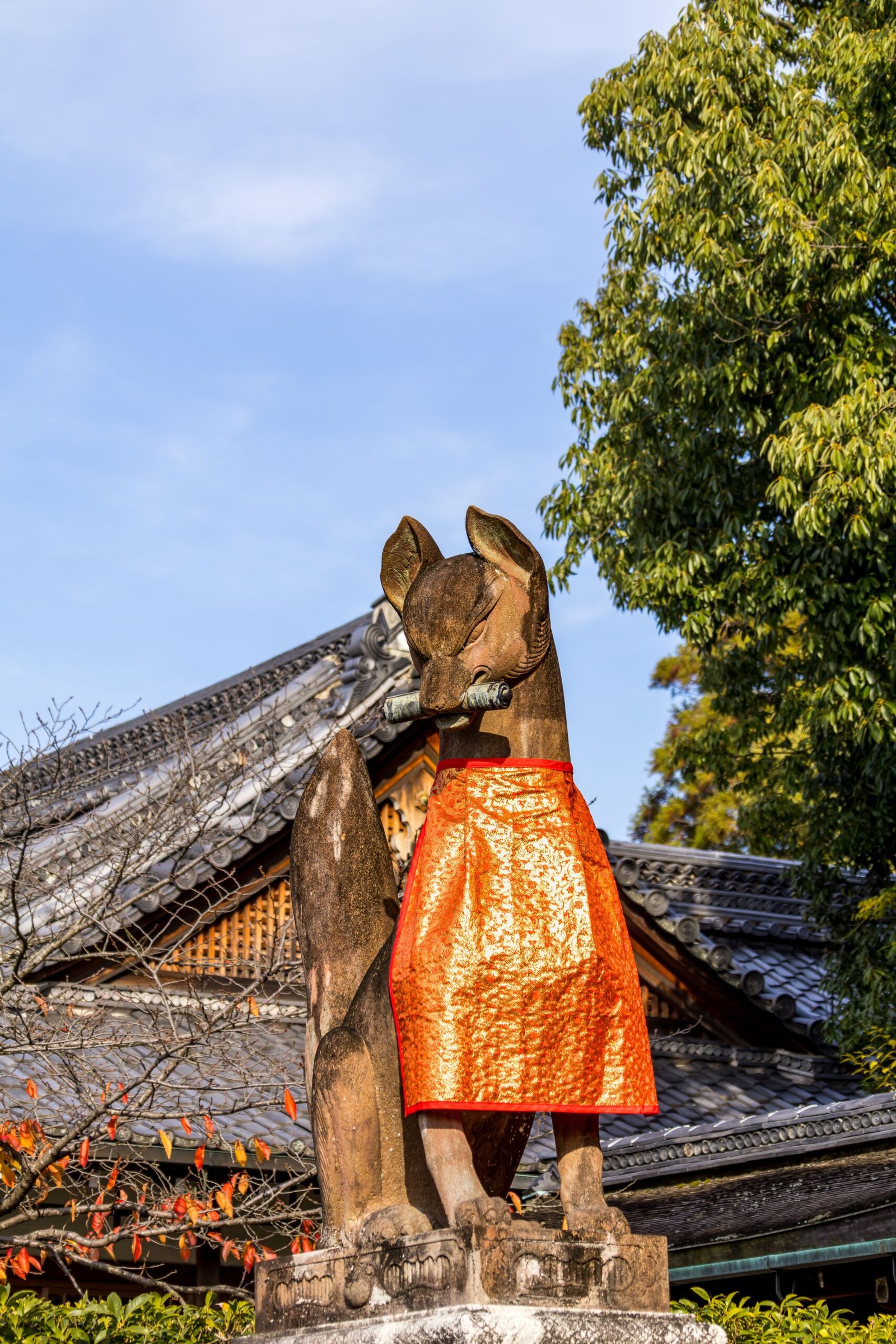
Keep an eye out for the fox statues as you go. Most hold something in their mouths: a key, a jewel, a sheaf of rice, or a scroll, each with its own symbolism tied to Inari. It’s a small thing, but noticing which one each statue holds turns a crowded stretch of path into something worth slowing down for.
If you want to make a half-day of it, Fushimi is also Kyoto’s historic sake-brewing district. Our guide to the Fushimi sake district covers the Gekkeikan museum, the canal boat ride, and the rest of the breweries within walking distance of the shrine, pairing naturally with a morning at the gates and an afternoon tasting sake a few minutes away.
Where to Stay Nearby
If Fushimi Inari is the anchor of your trip rather than a half-day stop, basing yourself in the Fushimi neighborhood puts you a five- to fifteen-minute walk from the gates, which makes the early-morning visit possible without a train ride first. It’s a quieter, more local area than central Kyoto, with fewer English menus and lower prices than Gion or Higashiyama. Our Kyoto neighborhood comparison guide covers the tradeoffs of Fushimi and the other base areas if you haven’t settled on one yet.
If you’d rather stay somewhere more central and treat Fushimi Inari as an early-morning excursion, that works fine too — it’s only five minutes from Kyoto Station by train, so a 6 a.m. wake-up from a station-area hotel still gets you there before the crowds. Either way, Booking.com makes it easy to compare what’s actually available by neighborhood on your dates.
Bottom Line
You don’t need a plan this complicated to enjoy Fushimi Inari. Most people show up, walk what feels right, and leave happy regardless. But if you want the quiet version of the photo everyone else is chasing, two things matter most: arriving before 7 a.m., and not feeling obligated to reach the summit. Senbon Torii gives you the icon. Yotsutsuji gives you the view. Everything past that is for people who want the mountain itself, not just its most famous ten minutes, and there’s no wrong answer among the three.