Imamiya Shrine: A Practical Guide to Kyoto’s Plague Shrine and Its Grilled-Mochi Rivalry
Just north of Daitoku-ji, past a weathered stone torii, sits a shrine with one of the stranger rivalries in Kyoto: two mochi shops that have faced each other across the same approach for centuries, each insisting it’s the better place to buy grilled rice cakes meant to ward off illness. That’s Imamiya Shrine, and the mochi stalls are really just the entry point to a place with a long history tangled up with plague, exorcism, and one of the city’s odder spring festivals. It’s an easy add to a Daitoku-ji or Kinkaku-ji morning, and worth stopping for even if you skip the snacks.
The Essentials at a Glance
| What | Details |
|---|---|
| Location | Murasakino, Kita-ku, just north of Daitoku-ji |
| Hours | grounds are generally open for worship at any time; a posted admission window of roughly 9:00am to 5:00pm is sometimes cited, so treat exact hours loosely |
| Admission | free |
| Enshrined deity | Ekijin Susano, an epidemic-warding deity, among others |
| Founded | a predecessor shrine stood on the site before the capital moved to Kyoto in 794; the shrine took its present name and location in 1001, after being moved here to help ward off an epidemic |
| Known for | the Yasurai Matsuri festival, the Ahokashi wishing stone, and two centuries-old aburi-mochi shops facing each other at the east gate |
| Access | city bus 46 to the Imamiya Jinja-mae stop, about a 1-minute walk, or buses to the Funaokayama stop, about 7 minutes on foot |
| Pairs well with | Daitoku-ji and its sub-temples, and Kinkaku-ji |
A Shrine Built to Stop an Epidemic
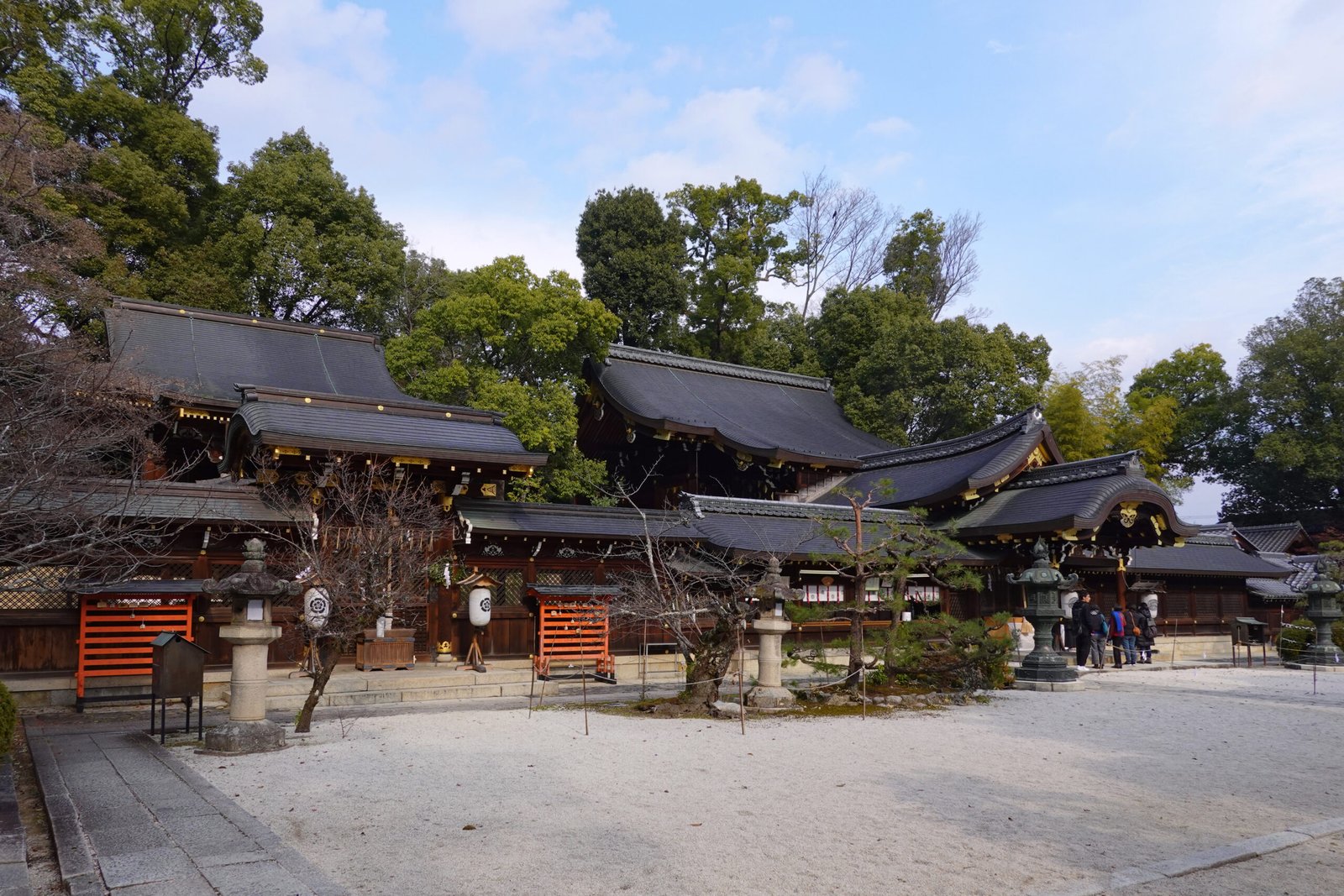
Before Kyoto became the capital in 794, a shrine called Eyamisha already stood on this ground, dedicated to Ekijin Susano, a deity associated with warding off disease. In 994, a serious outbreak of plague struck the city, and a Shinsen Goryo-e rite — a ritual meant to pacify restless or vengeful spirits believed to cause illness — was held in response. That event is generally considered the origin point of both the shrine’s identity and the Imamiya festival still celebrated today. A second epidemic in 1001 prompted a more permanent move: Ekijin Susano was relocated from nearby Mount Funaoka to the current site, and the shrine was given the name it still carries, Imamiya Shrine — literally “new shrine.” One account adds that the move followed a prophetic dream reported by the emperor, though that detail isn’t universal across sources, so it’s worth taking as color rather than settled fact.
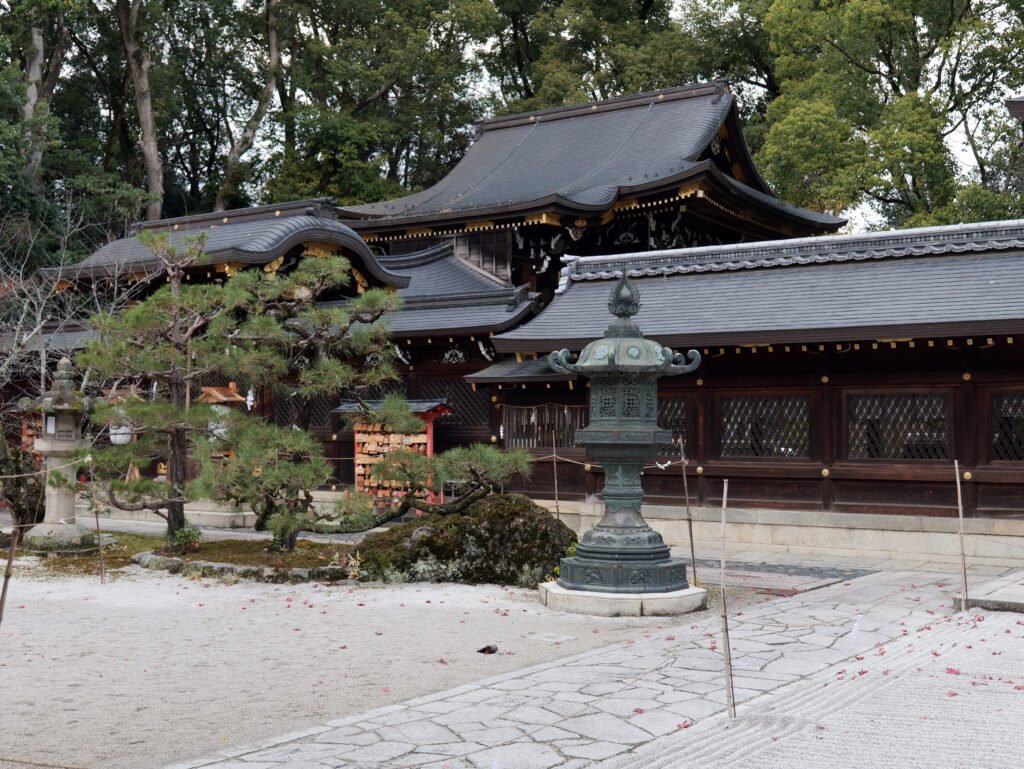
The shrine’s buildings have been rebuilt more than once since. Its main hall burned down in 1896 and was reconstructed in 1902, and the haiden worship hall also went through a rebuild in the Edo period under aristocratic patronage, though sources vary on the exact year. None of this is ancient architecture in the way some of Kyoto’s temple halls are, but the site’s continuous use as a place to pray against illness stretches back over a thousand years regardless of which specific building happens to be standing.
The Yasurai Matsuri: Kyoto’s Strangest Spring Dance
Imamiya’s best-known modern event is the Yasurai Matsuri, held every year on the second Sunday of April. Dancers made up as red-haired and black-haired demons perform under enormous flower-draped umbrellas, called hana-gasa, to the sound of taiko drums, hand gongs, and flutes, parading through the neighborhood before the procession is “subdued” back at Eyamisha Shrine on the grounds. The underlying idea traces back to the shrine’s founding crisis: in 994, portable shrines were carried up Mount Funaoka and paper effigies believed to draw sickness out of the body were floated away on the water, a practice this flower-dance festival is thought to echo and ritually continue. The custom hasn’t run uninterrupted the whole time — one account notes it was banned by imperial order in 1154 after the costumes and spectacle had grown too extravagant for the authorities’ taste, which says something about how seriously Kyoto once took crowd control at its festivals.
If you’re visiting outside of early April, you’ll miss the dancing, but the umbrellas and demon masks used in the festival are referenced throughout the shrine’s design and souvenirs, so the connection is easy to spot even off-season.
The Ahokashi Stone
Near the shrine’s grounds sits a smooth stone known as Ahokashi, kept in a small hut and, by some accounts, resting on a worn silk cushion. The custom is simple: tap the stone three times, lift it while making a silent wish, tap it three more times, then lift it again. If it feels lighter the second time, tradition holds that the wish will come true. A second use treats the stone as a healing charm — visitors stroke it and then touch the part of the body they want to heal, a gesture meant to speed recovery. It’s a low-key, almost playful ritual compared to the shrine’s heavier plague-warding history, and it tends to be a hit with visitors who might otherwise find a Shinto shrine a bit opaque to interact with.
Aburi-Mochi: A Thousand-Year Rivalry Over Grilled Rice Cakes
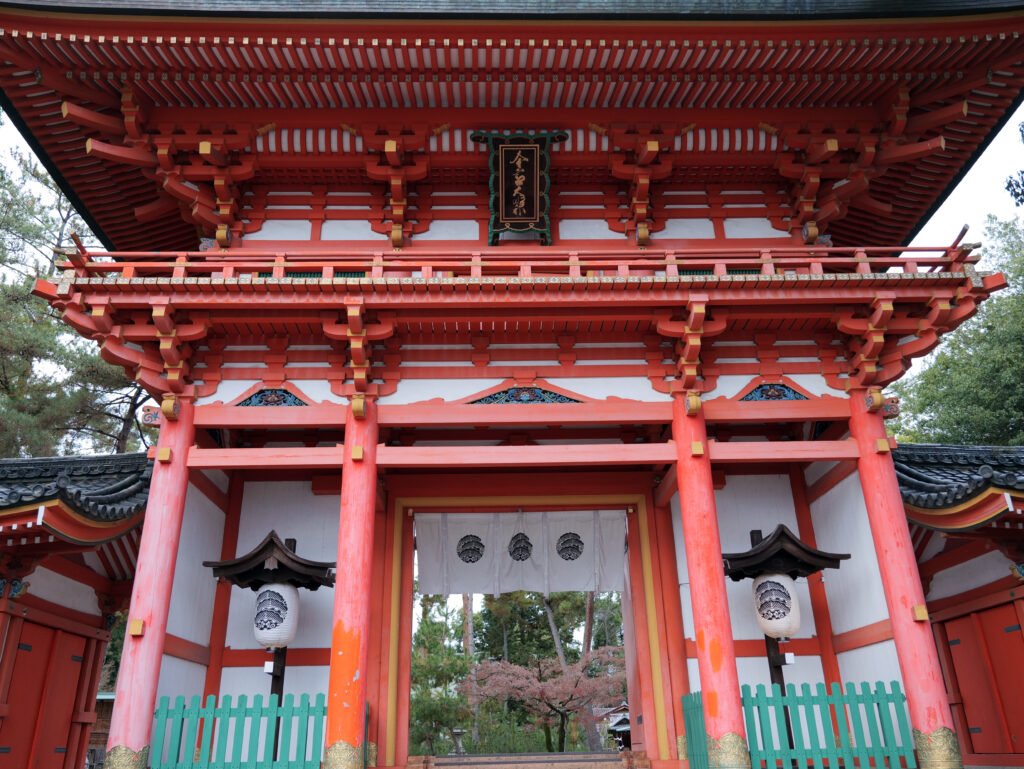
Step out the shrine’s east gate and you’ll find two shops, Ichiwa and Kazariya, sitting directly across from each other, both selling essentially the same thing: aburi-mochi, small thumb-sized rice cakes threaded onto bamboo skewers, dusted with roasted soybean flour, grilled over charcoal, and finished with a sweet white miso or soybean glaze. Ichiwa is generally regarded as the older of the two, with roots that some sources trace back close to the shrine’s own founding around 1001 to 1002, which would make it one of the oldest continuously operating food businesses anywhere in Japan. Kazariya’s founding is harder to pin down — accounts range from “early Edo period” to a specific date in the 1650s to a vaguer claim of roughly six hundred years — so take any single number with some skepticism and just accept that both shops have been grilling mochi here for a genuinely long time.
The food itself has a history tied to hardship as much as to snacking: during the Onin War in the late 1460s and the famine that came with it, aburi-mochi sold here is said to have been distributed to ordinary residents of the city, cementing its association with this particular shrine. Because the skewer itself is traditionally dedicated to the shrine’s protective deity, eating the mochi has long been framed as a way of warding off illness — a nice continuity with the plague-focused history of the shrine it’s sold outside.
Getting There
The simplest approach is by bus: city bus 46 stops at Imamiya Jinja-mae, right outside the shrine, or you can get off at the Funaokayama stop and walk about seven minutes. From Kyoto Station, bus 205 runs to Funaokayama, and if you’d rather combine the subway with a short bus ride, take the Karasuma Line to Kitaoji Station and transfer to bus 1. Because the shrine sits almost exactly between Daitoku-ji and Kinkaku-ji, it’s an easy stop to fold into a walk between the two rather than a special trip on its own — see our guides to Daitoku-ji and Kinkaku-ji for how to plan that stretch, and our guide to getting around Kyoto for IC cards and bus basics generally.
Bottom Line
Imamiya Shrine is a good example of a Kyoto stop that rewards knowing the backstory — without it, it’s a pleasant but unremarkable neighborhood shrine with a couple of mochi shops out front; with it, it’s a thousand-year-old plague-warding site with a genuinely strange spring festival and a snack rivalry older than most countries. If you’re already working through the Daitoku-ji sub-temples or stopping by Koto-in, add fifteen or twenty minutes here and try the mochi from both shops — comparing them is half the point.