Kyoto National Museum: A Practical Guide to Kyoto’s Treasure House
Most people who end up at the Kyoto National Museum didn’t plan to go there. They were headed to Sanjusangendo across the street for the thousand gilded statues, noticed the museum’s long stone facade while crossing Shichijo-dori, and thought: maybe later. Later is worth it. What’s easy to miss is that the museum isn’t one building with one history — it’s two buildings from two different centuries sitting on the same grounds, and the one you’ll actually walk through only opened in 2014.
The Essentials at a Glance
| What | Details |
|---|---|
| Admission | ¥700 for the collection galleries (adults); ¥300 for garden-only days when the galleries are closed between exhibitions; special exhibitions are ticketed separately and priced per show |
| Hours | Generally 9:30am–5:00pm, with later closing on some Friday evenings — worth checking the museum’s English site for the current schedule before you go |
| Closed | Mondays (the following Tuesday if Monday is a public holiday), the New Year holidays, and short stretches between exhibitions |
| Visit length | 45 minutes for the permanent collection alone; closer to two hours if a special exhibition is running |
| Access | About a 10-minute walk from Keihan Shichijo Station; City Bus 100 or 206 from Kyoto Station stops right at Sanjusangendo-mae |
| Nearby | Sanjusangendo is directly across the street; Toji is a 15–20 minute walk south |
A Museum With Two Faces
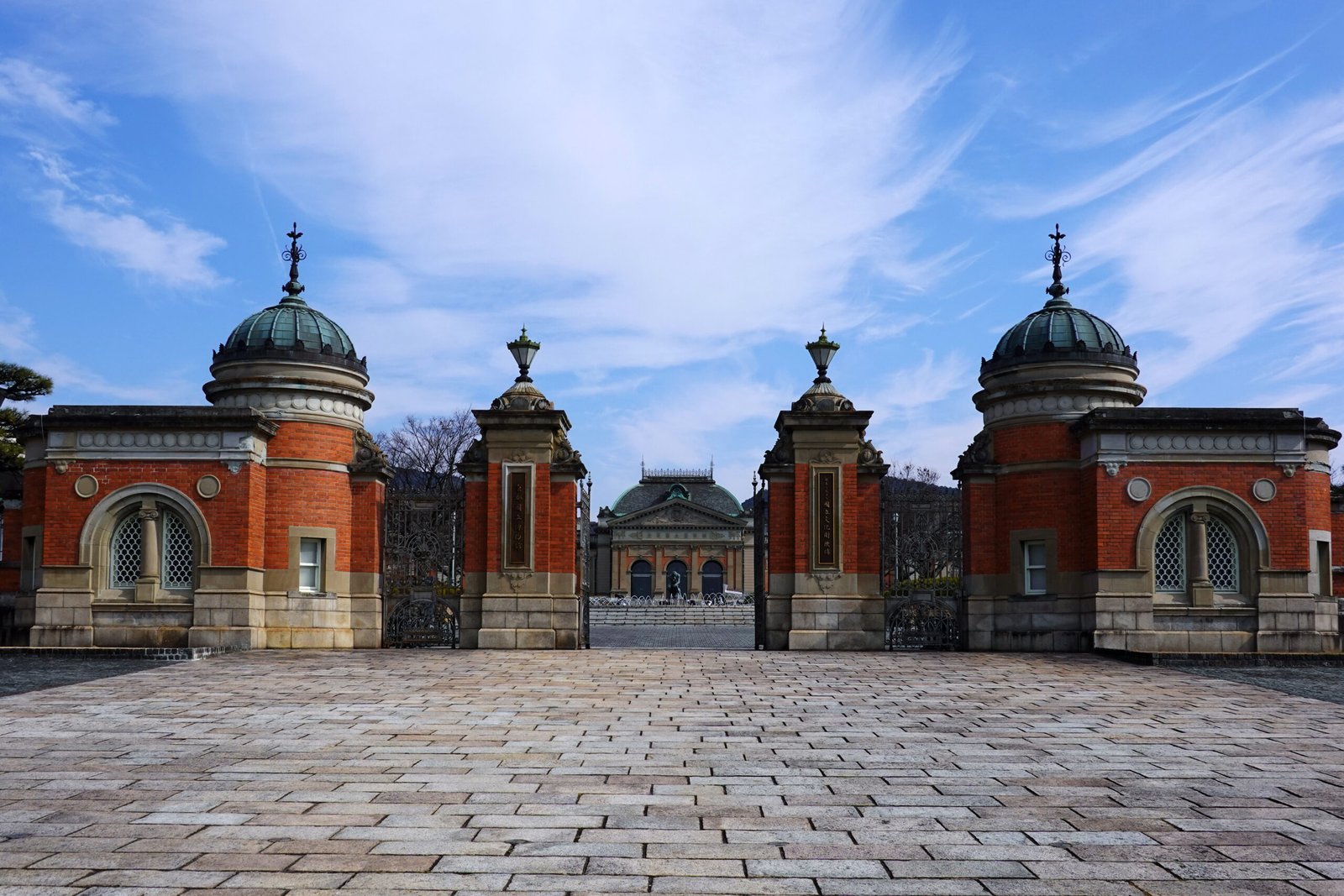
The museum was founded in the late 19th century and opened to the public on May 1, 1897, as the Imperial Museum of Kyoto. The building most visitors photograph from the street — the one with the ornate stone facade facing Shichijo-dori — is that original structure, now known as the Meiji Kotokan Hall. It was designed by Katayama Tokuma, one of the leading architects working for the Imperial Household Ministry at the time, and it blends French Renaissance and Baroque detailing with a layout that feels distinctly Japanese underneath: a symmetrical plan built around a central foyer and hall, with exhibition galleries arranged around courtyards. Both the Main Hall and the Main Gate were designated an Important Cultural Property in 1969.
Here’s the part that catches people off guard: the Meiji Kotokan Hall has been closed for seismic retrofitting since 2015, and there’s no firmly confirmed date for when it reopens to the public. The ornate main gate facing the street isn’t currently in use either. So the building you photograph on your way in is, for now, a very handsome exterior and not much else — still worth the photo, just not the entry point.
The Wing You’ll Actually Walk Through
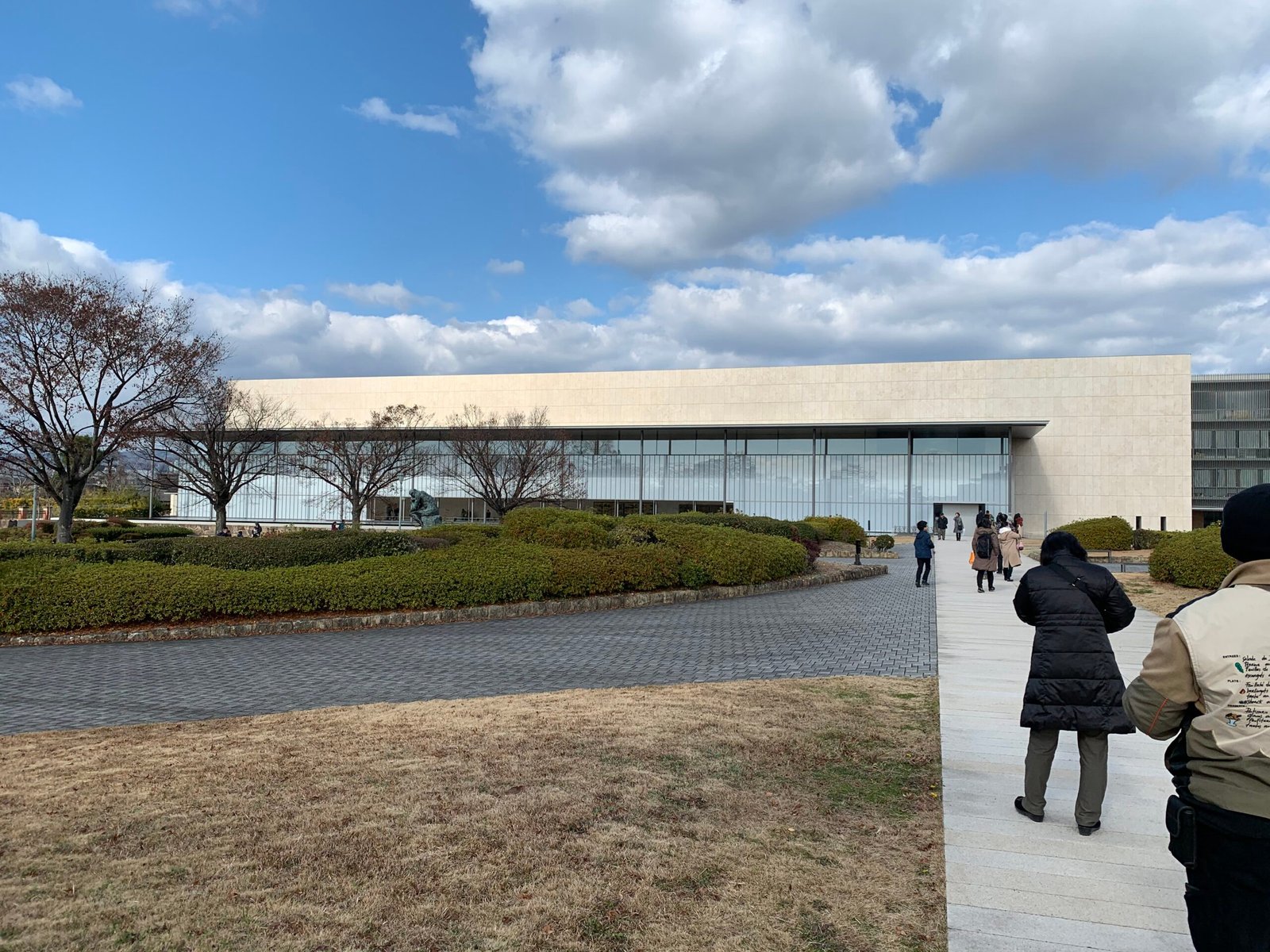
The building that functions as the museum today is the Heisei Chishinkan Wing, set back from the street behind the old Meiji Kotokan Hall. It was designed by Taniguchi Yoshio — the same architect behind the Gallery of Horyu-ji Treasures at the Tokyo National Museum and the redesign of New York’s Museum of Modern Art — and construction finished in July 2013, with the wing opening to the public in September 2014. The design is deliberately linear, drawing on the spatial logic of traditional Japanese architecture rather than imitating its ornament. Inside, there’s a spacious front lobby filled with natural light, an auditorium with up-to-date projection equipment, built-in earthquake mitigation systems (a detail that reads a little differently once you know why the old building next door is closed), and a restaurant overlooking the West Garden. It’s a genuinely large building — about 5,568 square meters of footprint and nearly 18,000 square meters of total floor area — so this isn’t a side wing bolted onto a bigger museum. It is the museum, for all practical purposes, until the Kotokan Hall reopens.
What’s Inside, and Why It Changes
The museum organizes what it shows into a few distinct categories, and knowing the difference saves some confusion at the ticket counter. Collection exhibitions draw on works the museum owns or holds on long-term loan, grouped by genre — ceramics, archaeology, painting and calligraphy, textiles, metalwork, lacquerware, sculpture — and they don’t sit still. Painting and calligraphy rotate roughly every month, decorative arts about every six weeks, and ceramics, sculpture, and archaeology every few months. Visit twice in a year and you’re genuinely seeing different works, not the same gallery with new wall text.
Special exhibitions are a different animal entirely: large loan shows that take over nearly all of the Heisei Chishinkan Wing’s galleries, with the regular collection exhibitions pulled from view for the duration. These need a separate ticket, priced per show, and if a major one happens to be running during your trip it’s worth checking ahead — opening days and weekends tend to draw the heaviest crowds. There’s also a quieter, cheaper option worth knowing about: during the short installation periods between exhibitions, when the galleries themselves are closed, the museum sometimes stays open as a garden-only visit for a reduced fee.

Small Buildings Worth a Second Look
Walk the grounds and you’ll pass a few smaller structures that most visitors never register. Tan’an is a sukiya-style teahouse built in 1958 and moved to its current spot in 1966; it’s a Registered Tangible Cultural Property and still hosts tea gatherings, with the room available for rental. The Technical Archives Hall, recognizable by its scratch-tile facade, went up in 1930 as an art storage facility and picked up its own cultural property designation in 2008 — it’s normally closed to visitors, but it’s worth a glance from outside. There’s also a Conservation Center for Cultural Properties, open since 1980, where the museum’s conservation and replication work actually happens; it isn’t open to the public either. None of these are destinations on their own, but they’re a reminder that the museum grounds function more like a small campus than a single building, with most of the real work happening somewhere you’ll never see.
Right Next Door
The obvious pairing here is Sanjusangendo, directly across Shichijo-dori and sharing the same Sanjusangendo-mae bus stop — most people do both in a single afternoon, and it’s hard to think of a better order than statues first, museum second, since the museum’s collection galleries give some useful context for what you’ve just seen. Toji is a further 15 to 20 minutes on foot if you want to stretch the visit into a longer south Higashiyama afternoon built around temples and museums rather than the more crowded central sights. If you’re trying to keep costs down across a multi-day trip, Kyoto on a Budget has some broader ideas for balancing paid sights like this one against the free ones.
Getting There
Keihan Shichijo Station is the closest train stop, about a 10-minute walk away. From Kyoto Station, City Bus 100 or 206 drops you right at the Sanjusangendo-mae stop, directly outside. The address is 527 Chaya-cho, Higashiyama-ku, if you’re using a map app instead. There’s paid parking near the entrance on Shichijo-dori with a discount for museum visitors, and bicycle or motorcycle parking is free. If you’re still getting oriented with buses and IC cards generally, Getting Around Kyoto covers the basics.
Bottom Line
The Kyoto National Museum is the kind of stop that’s easy to skip and easy to regret skipping. The historic building you photograph from the street is currently just that — a photograph — but the modern wing behind it holds a collection that rotates often enough to reward a second visit, and it sits close enough to Sanjusangendo that adding it costs you an hour, not a detour. If you’re already standing in line for the thousand statues, the museum next door is worth the extra time.