Rakushisha: A Practical Guide to Kyoto’s Haiku Poet’s Hut in Arashiyama
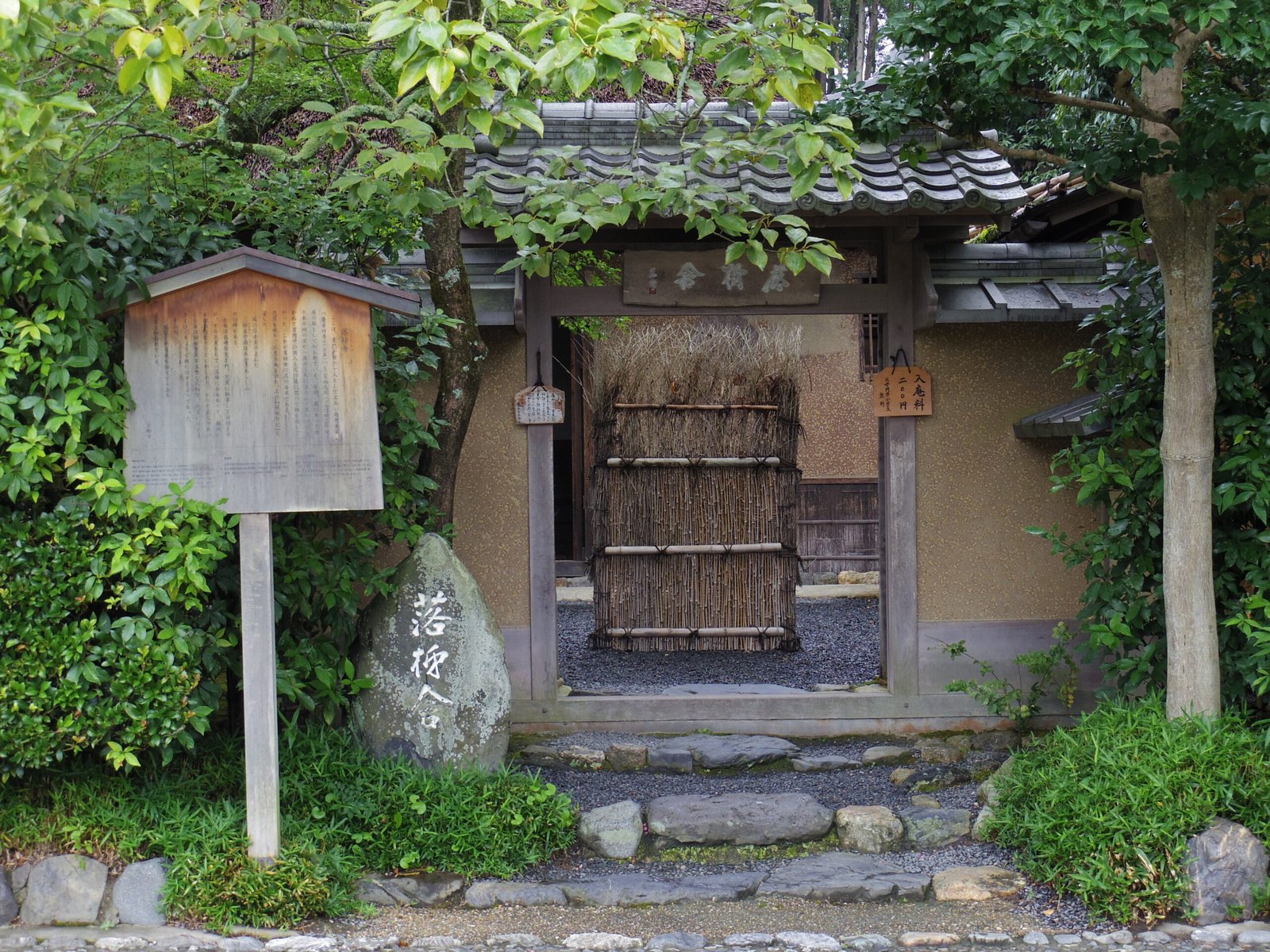
Walk far enough past Nonomiya Shrine and away from the bamboo grove crowds, into the quieter backstreets of Saga, and you’ll find a small thatched hut behind a low fence. There’s no grand gate, no gift shop, and most tour groups walk right past it. Rakushisha — the “Hut of Fallen Persimmons” — belonged to one of the most important poets in the Basho circle, and it’s one of the few spots in Arashiyama where you can stand in the actual room a 17th-century haiku master wrote in, rather than a reconstruction built to resemble one.
The Essentials at a Glance
| What | Details |
|---|---|
| What it is | The preserved hermitage of Mukai Kyorai, a chief disciple of haiku master Matsuo Basho |
| Name | “Hut of Fallen Persimmons,” after a storm that knocked the fruit from Kyorai’s trees overnight |
| Built | Around the early 1680s, a few years after Kyorai withdrew from public life in his late twenties |
| Hours | 9:00am–5:00pm (March–December); 10:00am–4:00pm (January–February) |
| Closed | December 31 and January 1 |
| Admission | ¥300 |
| Address | 20 Hinomyojin-cho, Saga Ogurayama, Ukyo-ku, Kyoto |
| Getting there | About 15 minutes on foot from JR Saga-Arashiyama Station, or about 6 minutes from Torokko Arashiyama Station |
The Poet Who Named It After a Storm
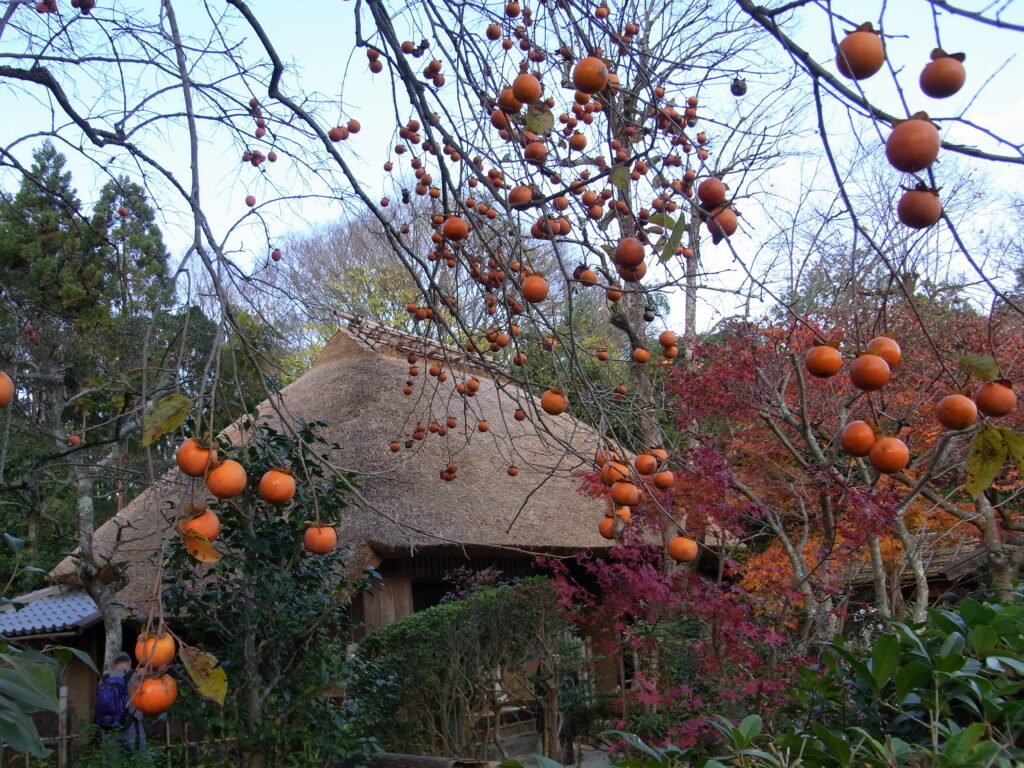
Mukai Kyorai (1651–1704) was one of Basho’s closest and most senior students, well regarded enough in his own right that he’s remembered today as one of the “ten philosophers” of the Basho school. He withdrew from public life around age twenty-seven and built this hut in Saga a few years later, apparently intending it as a quiet retreat rather than anything grand. The name comes from an episode Kyorai wrote about himself: he woke one morning to find that an overnight storm had knocked the persimmons off nearly forty trees on his property, scattering the fruit across the ground. Rather than treat it as a loss worth dwelling on, he turned it into the hut’s name — Rakushisha, the hut of fallen persimmons — and the story has stuck to the place for more than three centuries.
Basho himself never lived here, despite a popular assumption to the contrary, but he visited more than once and stayed for an extended spell in 1691, during which he kept a short travel diary known as the “Saga Nikki.” It’s a slim, personal record of about two weeks spent at his student’s hut, and it closes with a poem written as he was leaving, reflecting on the torn poem cards left hanging on the wall behind him — a small, specific image that’s stayed associated with this particular building ever since.
What’s Inside the Fence
The hut itself is small and deliberately plain — a thatched-roof hermitage rather than a temple building, with none of the carved ornamentation you’d find at a major sightseeing stop nearby. A straw raincoat and hat hang by the door, a small, old-fashioned signal that the host is home, and ink-brushed poems are displayed along the interior walls. Admission lets you walk the garden grounds rather than just look through the fence, and it’s a genuinely pleasant one to wander: around a hundred species of trees and seasonal plants are set along the paths, chosen with the kind of attention a haiku poet would bring to a garden, since the seasonal word, or kigo, is central to the form. Stone tablets inscribed with haiku by both Kyorai and Basho are scattered among the plantings, along with Kyorai’s own grave, tucked into a corner of the grounds. Visitors who want to try their hand at writing a haiku of their own will usually find materials on hand to do exactly that.

A Quiet Counterpoint, Not a Detour
Rakushisha sits off the main sightseeing path through Saga and Arashiyama, in the backstreets southwest of Nonomiya Shrine, a short walk from both that shrine and the Arashiyama Bamboo Grove. It isn’t the kind of place that needs an hour on its own — fifteen to twenty minutes is usually enough to read the information boards, walk the garden, and look over the haiku stones — which makes it an easy, uncrowded add-on for anyone who’s already done the main Sagano loop and wants a quieter stop before or after Okochi Sanso Villa or the walk up toward it. Because the hut sits fairly close to Torokko Arashiyama Station, it also works well as a last stop before boarding the Sagano Scenic Railway back toward Kameoka, if you’re building a day that includes the train.
When to Visit
Given the hut’s name, autumn has an obvious appeal: the grounds still include persimmon and other fruiting trees that turn and drop through the season, and the story behind the name reads a little differently when you’re standing under the same kind of trees in November. It’s also simply a good season for the garden generally, as part of the broader koyo season that draws people to Arashiyama in the first place, though Rakushisha’s small scale and quiet reputation mean it rarely gets the crowds that the bamboo grove or Tenryu-ji do at the same time of year. That relative quiet holds in most other seasons too, which makes it a reasonable stop whenever you’re in the neighborhood rather than something to plan a special trip around.
Before You Go
Admission is a flat ¥300, hours run 9:00am to 5:00pm from March through December and shrink slightly to 10:00am–4:00pm in January and February, and the hut closes only for New Year’s Eve and New Year’s Day. There’s little to no English signage to rely on, so it helps to already know a bit of the Kyorai-and-Basho backstory going in, which is most of what this guide is for. It’s a cash-only, small-scale stop, and a short one, so it fits easily into a morning or afternoon built around the rest of Saga and Arashiyama rather than needing a dedicated visit.
Bottom Line
Rakushisha won’t be the highlight of anyone’s Kyoto trip, and it isn’t trying to be — it’s a small, specific, well-preserved piece of Japanese literary history tucked into a corner of Arashiyama that most visitors walk straight past on their way to the bamboo grove. If Basho and the haiku tradition mean anything to you, or you just want fifteen quiet minutes away from the Sagano crowds, it’s worth the short detour.