Kurama-dera: A Practical Guide to Kyoto’s Tengu Mountain Temple
Most people who make the trip out to Kurama are really going for the combination — the temple on the way up, the shrine on the way down, with an hour of forest trail in between. Our Kurama and Kifune day trip guide covers that whole route. This one slows down on just the temple itself, Kurama-dera, which turns out to have more going on than a quick stop on a longer itinerary usually allows for — a founding legend involving a white horse, a treasure hall full of art rescued from repeated fires, and a reputation as the training ground of Japan’s most famous tengu.
The Essentials at a Glance
| What | Details |
|---|---|
| Location | Mount Kurama, in the valley town of Kurama, Sakyo Ward, roughly 30 minutes north of central Kyoto by train |
| Tradition | Its own independent faith, Kurama-kokyo, since 1949; before that it belonged to the Tendai sect |
| Founded | Traditionally dated to 770, by a monk named Gantei (also written Gantoku); the earliest details are uncertain |
| Known for | Tengu legends and the Minamoto no Yoshitsune training story, the Reihoden treasure hall, and the hiking trail onward to Kifune |
| Hours | Roughly 9:00am–4:15pm for the grounds; the Reihoden closes earlier, shuts on Tuesdays, and is closed entirely from mid-December through January |
| Admission | ¥500 mountain-entry fee, plus a separate small fee to enter the Reihoden |
| Access | Eizan Railway Kurama Line to Kurama Station, then a 30–45 minute walk up, or a short cable car partway |
A Monk, a White Horse, and a Vision on the Mountain
The story Kurama-dera tells about its own founding starts in 770, with a monk from Nara named Gantei (sometimes rendered Gantoku) looking for somewhere remote enough to meditate undisturbed. According to the temple’s account, he followed a white horse into the valley below Mount Kurama and, once there, had a vision of a guardian deity that convinced him this particular mountainside was worth settling on permanently. Like a lot of temple founding stories from this period, it’s passed down as tradition rather than documented history, and the exact sequence of events in the decades right after is hazy. What’s clearer is that the site burned down repeatedly over the following centuries — a recurring hazard for wooden temples built this high up a forested mountain — and that each time, the resident monks apparently managed to save the statues and artwork rather than the buildings. Several of those rescued pieces are now registered National Treasures, which is part of why the temple eventually built a dedicated, more fire-resistant hall to store them.
Three Deities Known as the Sonten
Kurama-dera’s main objects of worship are three figures the temple collectively calls the Sonten, or “spiritual kings of the world”: Bishamonten, a guardian deity associated with the sun; the thousand-armed Kannon, associated with love and compassion; and a third figure, sometimes called Mao-son or Gohomao-son, associated with power and said to have descended to the mountain in ancient times. The actual statues are kept hidden from view as is common practice at many Japanese temples, with replicas displayed in the main hall in their place. For most of its history, Kurama-dera was administered as a subordinate temple of the Tendai sect, specifically under Shoren-in in Kyoto. That changed in 1949, when the temple’s abbot broke away to found an independent religious body, Kurama-kokyo, built around devotion to the Sonten and incorporating older yamabushi mountain-worship traditions that didn’t always sit comfortably within mainstream Buddhist institutions. It’s worth knowing going in that some of the temple’s own literature makes fairly expansive claims about the mountain’s spiritual significance — these are the temple’s beliefs and traditions rather than established historical fact, but they’re part of what makes the atmosphere here different from a typical Kyoto temple.
Tengu Country
Mount Kurama’s other reputation, running alongside its Buddhist history, is as tengu territory — the mountain is traditionally associated with Sojobo, said to be the king of the tengu, a race of mountain spirits usually pictured with birdlike or long-nosed faces and a talent for martial arts. The best-known legend tied to the mountain involves Minamoto no Yoshitsune, who would later become one of the most famous generals of the late twelfth century. As a boy known as Ushiwakamaru, sent to Kurama-dera after his father’s clan was defeated in battle, he’s said to have slipped away at night to train in swordsmanship with Sojobo and the other tengu in a forested area called Sojo-ga-dani, deep in the hills behind the temple’s main hall. The area, sometimes called Okunoin, still has a small shrine, Yoshitsune-do, marking the spot where tradition says he trained, along with a stretch of path called Kinone Michi, where tree roots run exposed along the surface because the mountain soil underneath is too hard and rocky for them to grow down into.
Climbing to the Main Hall
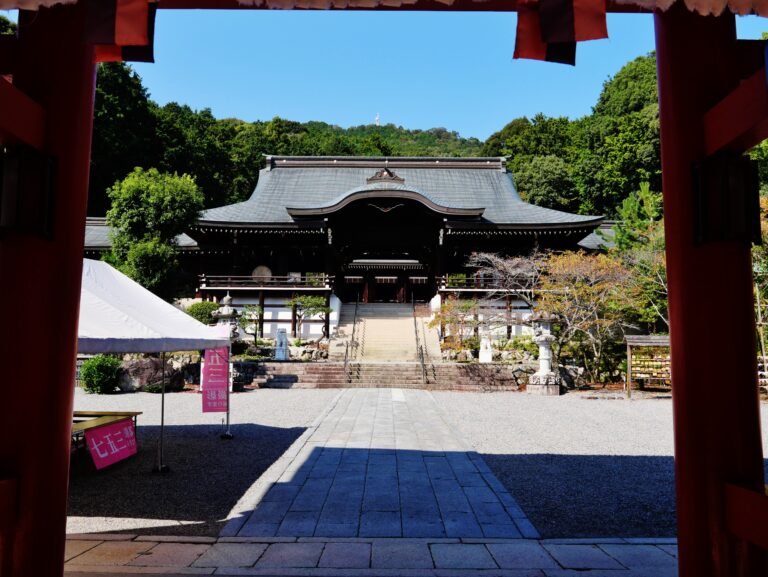
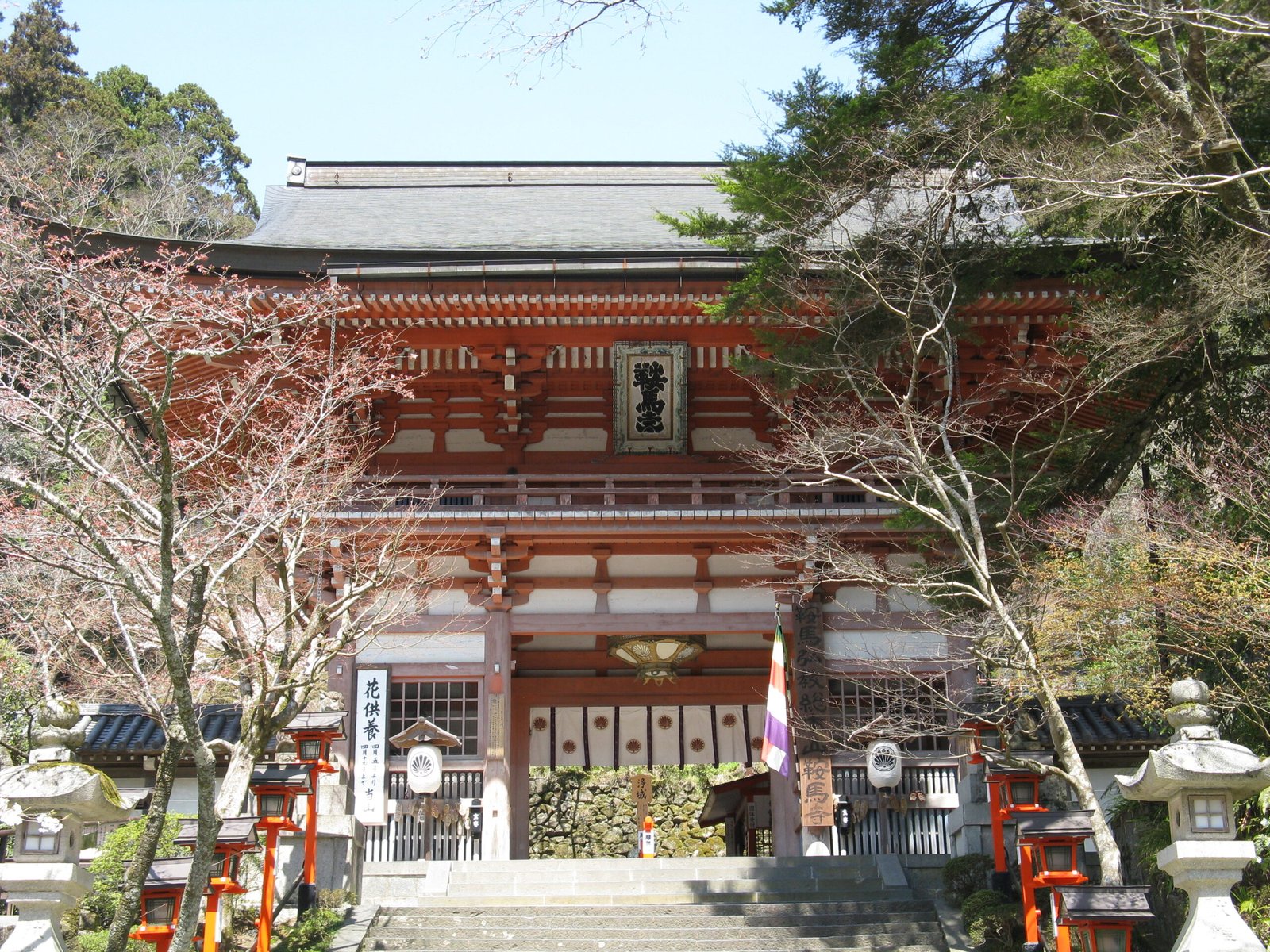
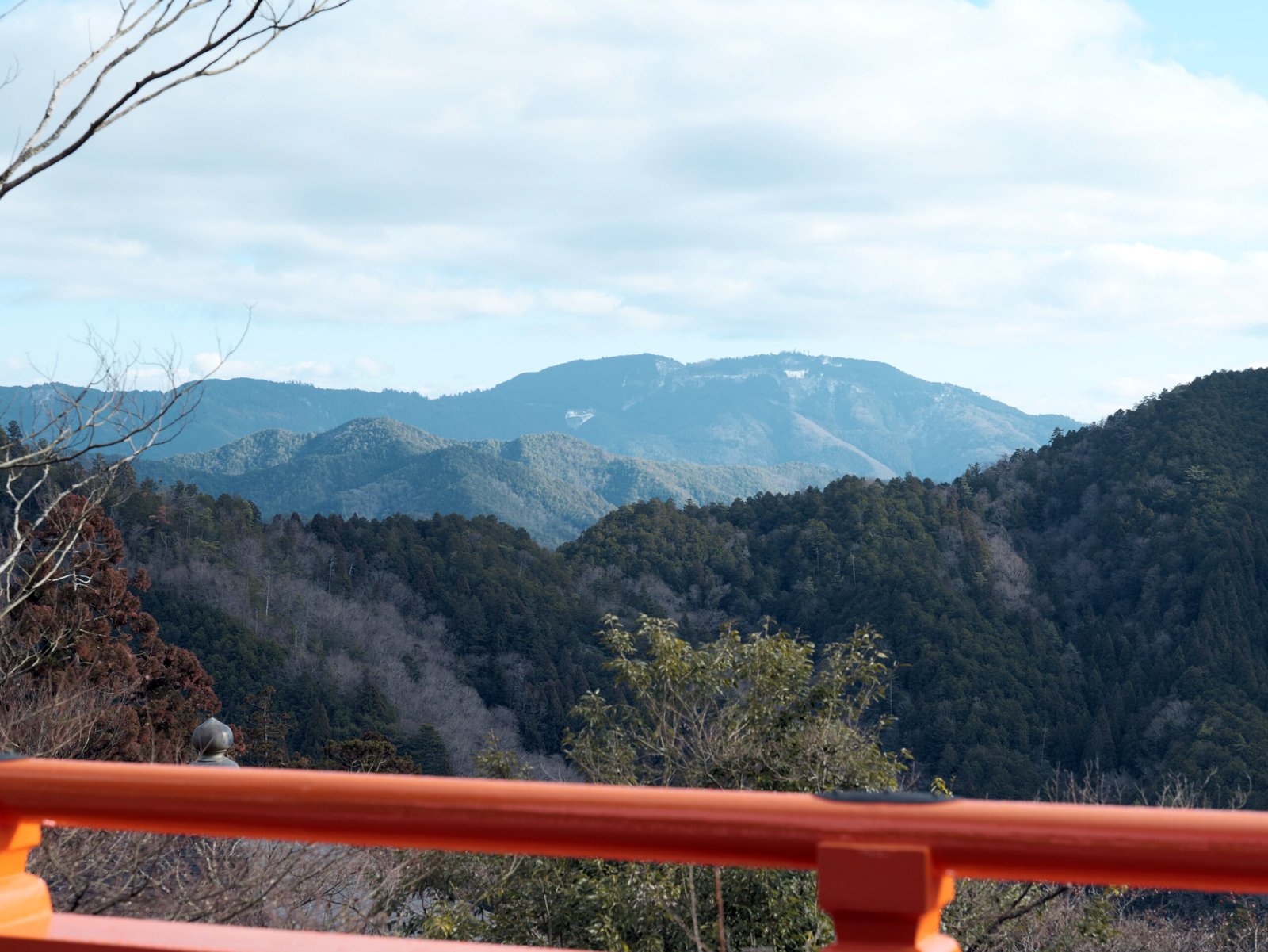
From the Nio-mon gate at the base, most visitors either walk the winding path up through the cedar forest, which takes somewhere around 30 to 45 minutes at a steady pace, or ride the short Kurama-dera cable car partway up for a small fare and shorten the climb considerably. Either way, the payoff is the same: the Honden-Kondo, Kurama-dera’s main hall, sitting on an open terrace with a clear view out over the wooded valley. There’s a hexagonal platform in front of the hall marked out as a particularly concentrated spot of the mountain’s spiritual energy, and it’s common to see visitors pause there before continuing on. The air throughout this upper section tends to smell strongly of incense, and the cedar trees lining the path are old and tall enough that the whole approach feels noticeably cooler and darker than the town below, even on a sunny day.
The Reihoden and Yuki-jinja
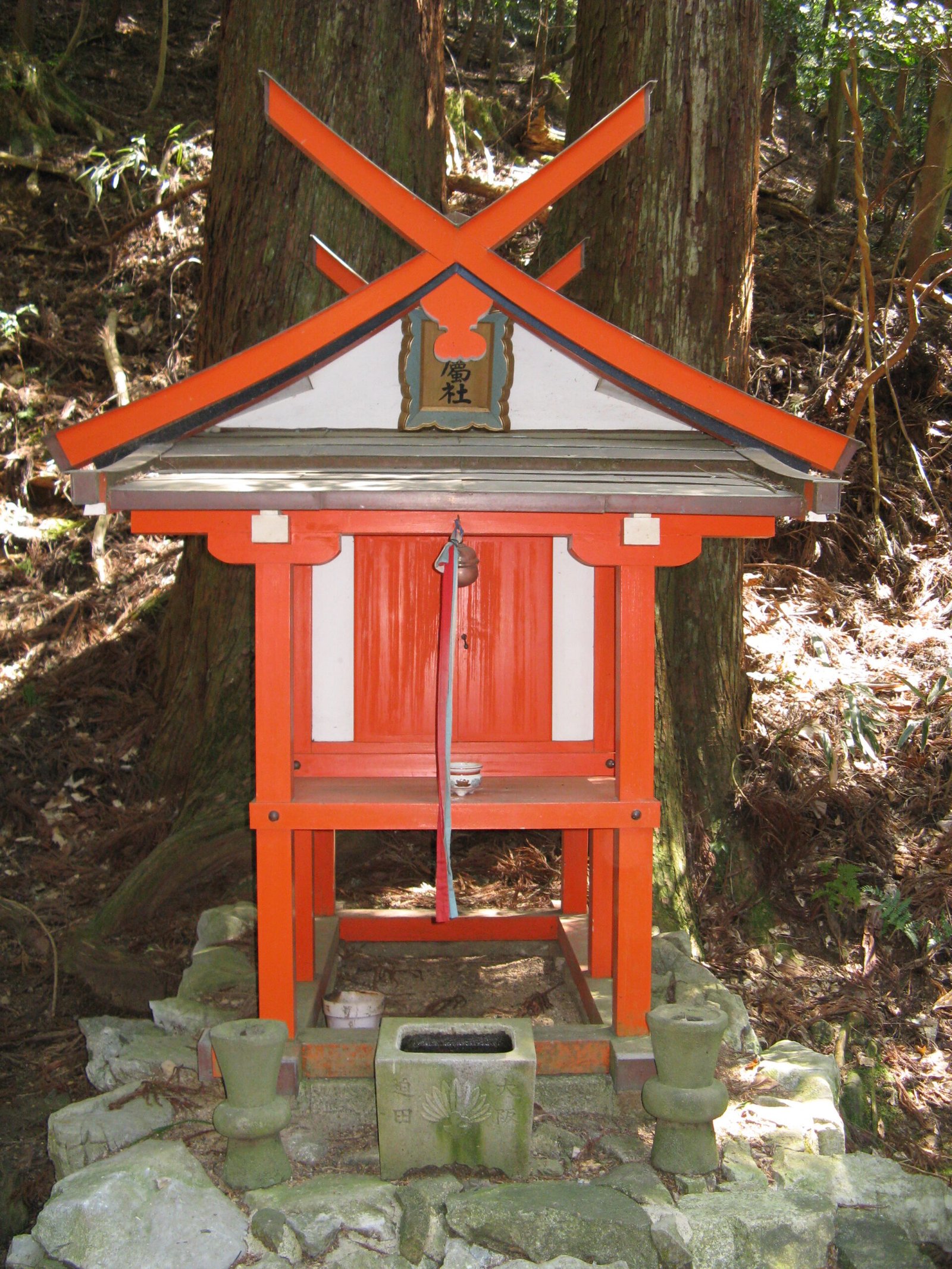
A short walk from the main hall, the Reihoden houses the temple’s rescued art and historical items, including several of those National Treasure-designated pieces mentioned earlier. It keeps shorter hours than the rest of the grounds, closes on Tuesdays, and shuts down completely from mid-December through the end of January, so it’s worth checking before you make a special trip just to see it. Lower down the mountain, along the ascent from the entrance, Yuki-jinja is a separate shrine best known for the Kurama Fire Festival held there every October 22nd, when a torchlight procession winds down from the shrine to the village below and draws a large crowd. If your visit lands outside that date, the shrine itself is still worth a quick stop on the way up — it’s easy to miss if you’re focused on reaching the main temple.
Continuing the Trail to Kibune
Behind the main hall, a forest trail continues on through Sojo-ga-dani and past a small building called Mao-den, where tradition says the third of the Sonten deities descended to the mountain, before descending into the neighboring valley and the town of Kibune. The hike takes roughly an hour from the main hall, with some genuinely steep, root-crossed sections, and ends right at the approach to Kifune Shrine. It’s a one-way route rather than a loop — most people either start at Kurama and finish at Kibune or do it the other way around, then take the train back from whichever station they end up closest to. Our combined Kurama and Kifune day trip guide lays out the logistics for doing both in one outing.
Getting There and Best Time to Visit
The simplest route from central Kyoto is to reach Demachiyanagi Station, then take the Eizan Railway’s Kurama Line directly to Kurama Station, a ride of about half an hour with trains running every 15 to 20 minutes; see our Getting Around Kyoto guide for how to reach Demachiyanagi from other parts of the city. The Eizan trains on this line are short and tend to fill up, especially in cherry blossom and autumn foliage season, so boarding earlier in the line at Demachiyanagi rather than a later stop improves your odds of a seat. Spring and autumn are the two seasons Kurama-dera is most associated with, and in November the Eizan Line itself becomes part of the draw: a stretch of track near Kibune-guchi Station is lined with maples that turn color and get illuminated after dark for a couple of weeks, which our Eizan Railway guide and our broader Kyoto Autumn Foliage guide both cover in more detail. Summer is quieter and noticeably cooler up on the mountain than down in the city, though the forest brings its share of mosquitoes along with the relief.
Bottom Line
Kurama-dera rewards treating it as more than a transit point between the train station and the Kibune trail. Budget at least an hour and a half if you want to see the main hall, the Reihoden, and Yuki-jinja without rushing, longer if the tengu legends and the Sojo-ga-dani training grounds have you curious enough to walk the extra stretch behind the main hall. Go in spring or autumn if the season allows, bring a layer even in summer, and treat the climb itself — cedar-shaded, incense-scented, genuinely a little eerie in the quieter stretches — as part of what you came for rather than something to get through on the way to the view.