Adashino Nenbutsu-ji: A Practical Guide to Kyoto’s Field of Forgotten Buddhas
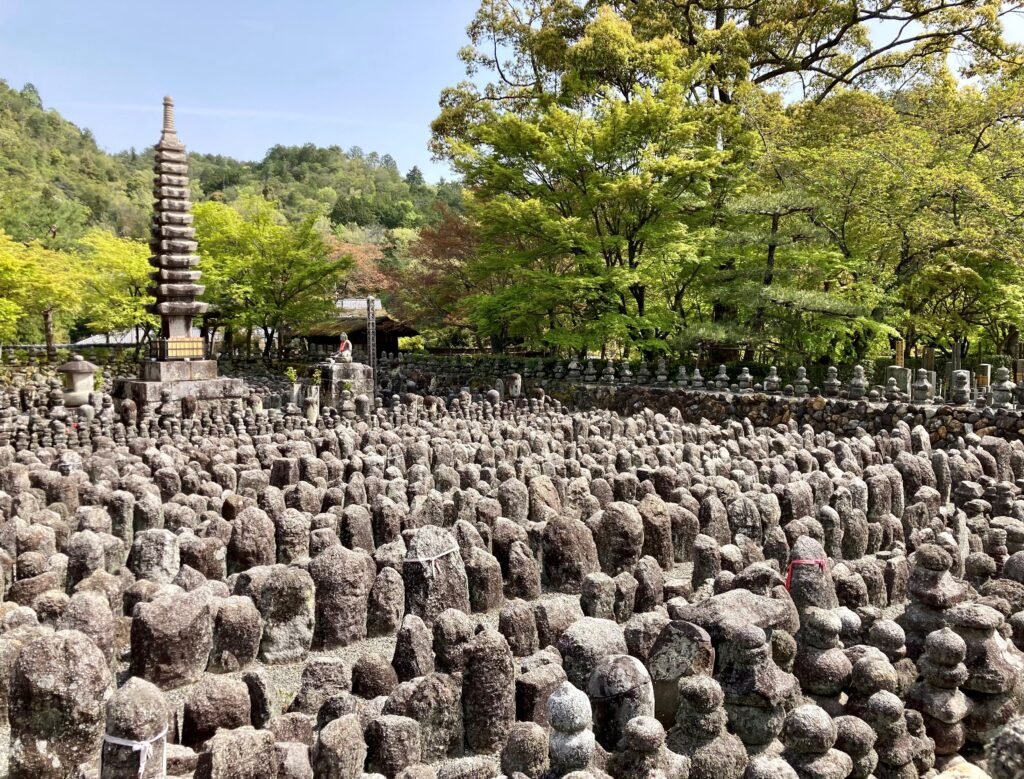
Most visitors who make it to the far end of Sagano stop at Otagi Nenbutsu-ji, catch their breath after the hill up from Arashiyama, and turn back. A ten-minute walk further down the road, past the thatched houses of Saga-Toriimoto, sits a quieter and considerably older temple that most of them never see. Adashino Nenbutsu-ji has no golden pavilion and no famous garden. What it has is a courtyard of roughly eight thousand small stone Buddhas, gathered here over more than a century, standing in for people nobody was left to remember.
The Essentials at a Glance
| What | Details |
|---|---|
| Hours | 9:00 a.m.–4:30 p.m. (last entry 4:00 p.m.); closes around 3:30 p.m. from December through February |
| Admission | Around ¥500 for adults, somewhat less for students; young children are usually admitted free |
| Getting there | Kyoto Bus (a separate operator from the city bus) to the Toriimoto stop, then about a 5-minute walk; or roughly 25 minutes on foot from Torokko Arashiyama Station |
| Visit length | 20–30 minutes for the statue field itself; longer if you linger on the Toriimoto street |
| Photography | Not permitted inside the Sai-no-Kawara statue enclosure, out of respect for the site |
| Best paired with | Otagi Nenbutsu-ji, the Saga-Toriimoto preserved street, and the Arashiyama Bamboo Grove |
A Graveyard Turned Temple
The name Adashino refers to the area itself, an old burial ground on the northwestern edge of the city that was already in use by the Heian period. Kyoto’s poor and unclaimed dead were laid to rest here rather than in a family plot, and tradition credits the monk Kukai, also known as Kobo Daishi, with founding a temple on the site in 811 to look after the souls buried without anyone to pray for them. Several centuries later, in the Kamakura period, Honen — the founder of Pure Land Buddhism in Japan — reworked the temple around the nenbutsu, the chanted invocation of Amida Buddha’s name that gives the temple its current name.
For most of its history the temple’s grounds were less tidy than they are now. Grave markers and small stone images had been placed around Adashino for centuries by families and monks who could rarely afford anything more elaborate than a roughly carved figure. Left out in the open and scattered across the hillside, many were damaged or knocked over with time. It wasn’t until around 1903 that the scattered statues — by then numbering close to eight thousand — were gathered from the surrounding area and arranged together in the temple’s central courtyard, known as Sai-no-Kawara.
What You’re Actually Looking At
The name Sai-no-Kawara borrows from a piece of Buddhist folklore about a dry riverbed where the souls of children who died before their parents are said to gather, endlessly stacking small stones as an act of devotion. Adashino Nenbutsu-ji’s version is closer to a mass memorial than a folk tale: the roughly eight thousand statues stand in for ordinary Kyoto residents who died with no family left to hold memorial services for them during Obon, the midsummer festival when Japanese households traditionally welcome back the spirits of their ancestors. Gathering the statues in one place let the temple hold a single collective rite on their behalf, rather than leaving each one forgotten where it originally stood.
Up close, no two statues look quite alike. Some are carved with real detail — a recognizable Buddha or bodhisattva face, folded hands, a lotus base — while others have worn down to little more than a rounded silhouette after centuries outdoors. Many wear the same small red cap or bib you’ll see on jizo statues elsewhere in Kyoto, added by visitors as a small act of care. Walking the perimeter of the courtyard rather than trying to inspect every statue individually tends to leave more of an impression than close study of any single one.
The Sento Kuyo Lantern Ceremony
Once a year, on the evenings of August 23 and 24, the temple holds Sento Kuyo, a candlelit memorial service in which thousands of small lights are placed among the statues after dark. It’s the one time the courtyard is deliberately lit up rather than left in plain daylight, and it draws a steady stream of visitors who come specifically for the atmosphere rather than the temple’s ordinary opening hours. If your trip falls outside that one weekend, the statue field is still worth the walk in daylight — just quieter and starker rather than candlelit.
Getting There and What’s Nearby
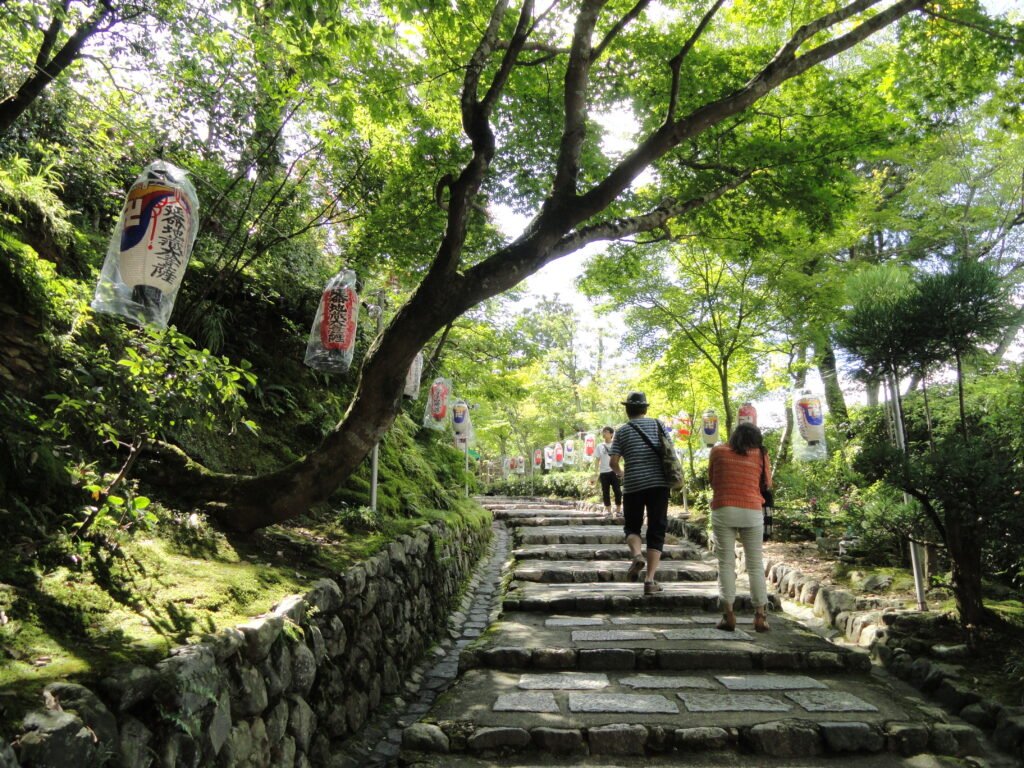
Adashino Nenbutsu-ji sits at the far northern end of the Saga-Toriimoto preserved street, well beyond where most day-trippers to Arashiyama turn around. The most straightforward approach is the Kyoto Bus — a separate operator from the city bus network — to the Toriimoto stop, followed by a short uphill walk; on foot, it’s about 25 minutes from Torokko Arashiyama Station, past the thatched-roof houses of Toriimoto and the base of the hill leading up to Otagi Nenbutsu-ji, the temple known for its 1,200 hand-carved rakan statues. The two temples are often visited together, and doing so in that order — Adashino first, then the climb to Otagi — makes for a natural loop back down toward the Arashiyama Bamboo Grove and Tenryu-ji.
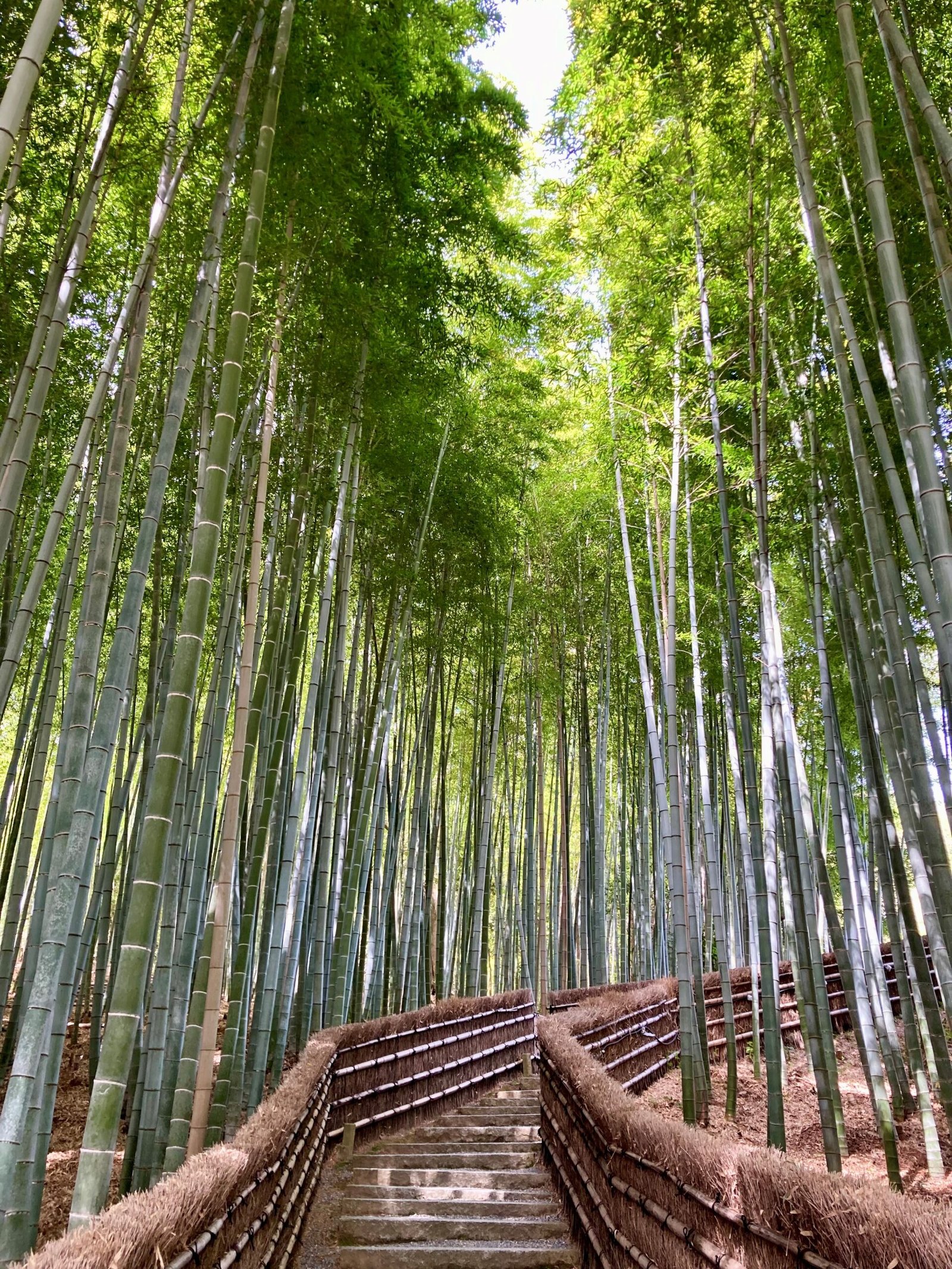
If you have half a day rather than just an hour, this end of Sagano rewards slowing down. Daikaku-ji and its pond are a reasonable walk or short bus ride further north, and the quiet lane connecting Adashino Nenbutsu-ji back toward central Arashiyama passes its own small bamboo grove — smaller and far less crowded than the famous one, but a nice five minutes on a hot day.
Visiting Respectfully
This is a working memorial site, not a photo backdrop, and the temple has tightened its rules accordingly: photography inside the Sai-no-Kawara enclosure has been prohibited since 2014, largely because visitors were treating the statues as a novelty rather than what they represent. Keep voices down, stay on the marked paths around the statues, and save photos for the temple’s outer grounds, where photography is generally fine. It’s a small ask, and it matches the spirit of a place that exists to give forgotten people a measure of ongoing attention.
Bottom Line
Adashino Nenbutsu-ji isn’t a highlight-reel stop, and that’s more or less the point — it rewards the kind of traveler willing to walk another ten minutes past where the crowds turn back. Pair it with Otagi Nenbutsu-ji and the quieter end of the bamboo grove for an afternoon in Sagano that looks nothing like the postcard version of Arashiyama, and give the statues the same quiet you’d want for someone remembering you.