Kyoto Temple and Shrine Etiquette: A Practical Guide to Visiting Respectfully
Nobody is going to stop you at the gate and hand you a rulebook. Most of Kyoto’s temples and shrines are remarkably relaxed about first-time visitors fumbling through the basics, and nobody expects a tourist to bow with the same precision as a regular. But a handful of small habits — how you wash your hands at the fountain, which side of the path you walk on, what you do with your shoes — make the difference between feeling like you’re intruding on someone else’s sacred space and feeling like you’re a welcome, if slightly unpracticed, guest in it. None of it is complicated once you’ve seen it once.
The Essentials at a Glance
| Situation | What to do |
|---|---|
| Shrine approach | Walk along the sides, not the center — the middle is traditionally reserved for the resident deity |
| Purification fountain | Rinse left hand, then right hand, then rinse your mouth and spit discreetly beside the basin — never swallow or drink from the ladle |
| Shrine prayer | Toss a coin, ring the bell if there is one, bow twice, clap twice, pray, bow once more |
| Temple prayer | Toss a coin, bow, and pray quietly in front of the main hall — no clapping, which is a Shinto custom, not a Buddhist one |
| Shoes | Remove them wherever there’s a raised floor or a shelf of shoes already waiting at the entrance |
| Photography | Usually fine outdoors; check for signs or ask staff before photographing inside a hall |
Shrines and Temples Aren’t the Same Etiquette
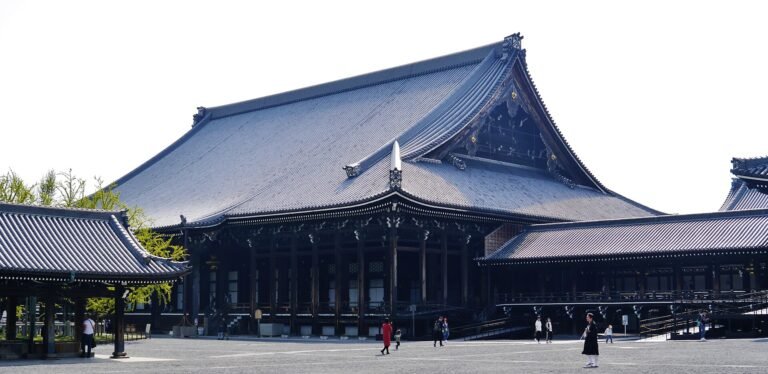
It trips up a lot of visitors that Shinto shrines (jinja) and Buddhist temples (tera or -ji) run on different customs, even though they can sit a five-minute walk apart and get lumped together as “temples” in casual conversation. Shrines are Shinto sites dedicated to kami, and the rituals around them — the purification fountain, the clapping, the torii gates — are specifically Shinto practices. Temples are Buddhist, and the overlapping but distinct customs there involve incense, quiet prayer without clapping, and usually a more enclosed, roofed-over approach to the main hall rather than an open gate and courtyard. You’ll pick up the difference quickly just by visiting a few of each — Fushimi Inari Taisha is as Shinto as it gets, while Kiyomizu-dera is a working Buddhist temple despite also having a shrine on its grounds, which is its own very Kyoto kind of complication.
At the Purification Fountain
Most shrines, and some temples, have a chozuya or temizuya near the entrance — a small roofed fountain with a row of long-handled ladles. The idea is to purify yourself symbolically before approaching the main hall: take a ladle in your right hand, fill it, and pour a little water over your left hand; switch the ladle to your left hand and rinse your right; switch back, pour a little water into your cupped left palm, and use that to rinse your mouth, spitting the water out beside the basin rather than into it. Never drink straight from the ladle, and never let used water run back into the main basin. It looks more elaborate written out than it is in practice — most visitors manage it in under thirty seconds after watching one other person go first.

You’re not required to use the fountain, and plenty of Japanese visitors skip the mouth-rinsing step too, especially in cold weather. What does stand out, and is worth avoiding, is treating the fountain like a drinking station or a place to fill a water bottle.
Praying at the Main Hall
At a shrine, the standard sequence at the offering hall is: toss a coin into the box, ring the bell above it if there is one, bow twice, clap twice, hold a brief silent prayer or wish, then bow once more. At a temple, the equivalent is quieter — toss a coin, bow, and pray without clapping, since clapping to get a deity’s attention is a Shinto gesture that doesn’t carry over to Buddhist practice. If incense is available, as it is at many temples, the usual approach is to light a bundle at the central flame, let it burn for a moment, then extinguish it by waving your hand rather than blowing it out, before placing it in the burner and praying briefly in the rising smoke. None of this is mandatory for a visitor who’s just there to look around, but if you do want to participate, doing it in roughly the right order is more welcome than skipping it out of politeness.
One more shrine-specific habit: when you walk up the approach path to a shrine, especially a long one with a formal gate at the start, Japanese custom holds that the center of the path is reserved for the deity passing through, so regular visitors walk slightly to one side. It’s a small thing, and nobody will say anything if you forget, but it’s one of those details that locals notice precisely because so few tourists know about it.
Ema, Omikuji, and Other Offerings
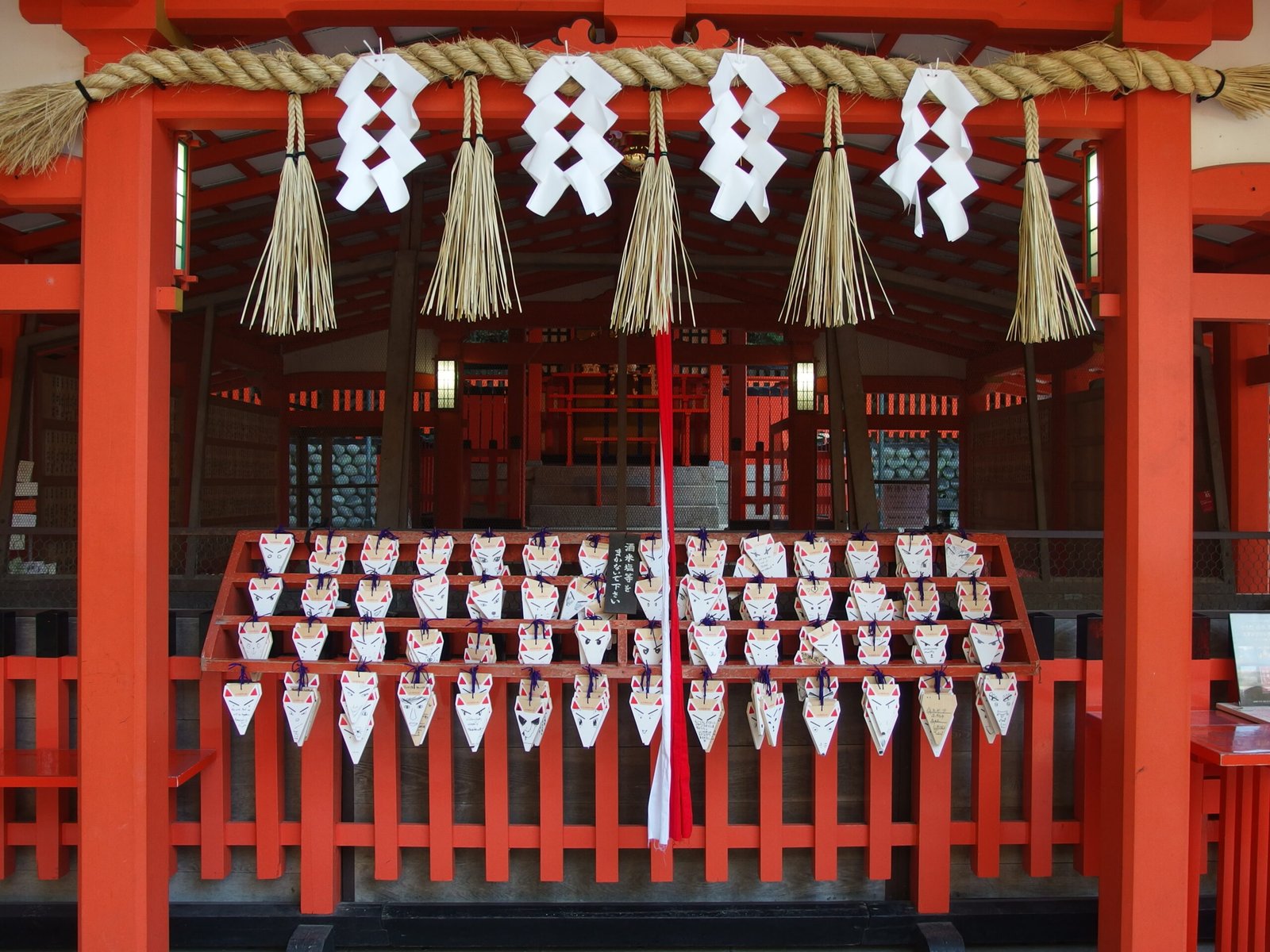
The small wooden plaques hanging in racks near a shrine’s main hall are ema — visitors write a wish on the back and leave them for the shrine to eventually burn in a purifying ritual, which is why thousands accumulate at a popular site like Fushimi Inari or Kitano Tenmangu. Omikuji, the folded paper fortunes sold from small boxes or dispensers, work on a similar principle: if you draw one you don’t like, tie it to a designated rack or tree branch near the drawing spot instead of taking it home, which is meant to leave the bad luck behind. Both cost a few hundred yen and are genuinely meant for visitors to join in — unlike the honden, the main sanctuary building, which is off-limits at most shrines and not something to approach or peer into.
Gion and the Geiko Question
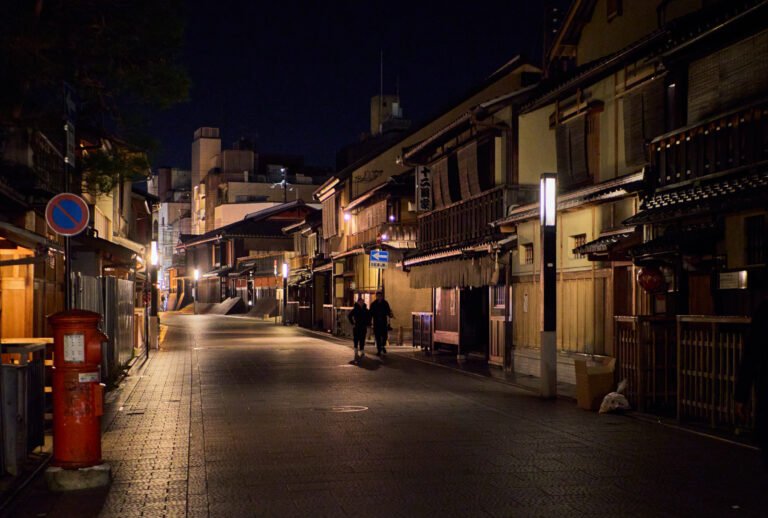
Gion deserves its own mention because the etiquette there has gotten noticeably stricter in recent years. Geiko and maiko walking between appointments were being stopped, crowded, and in some cases grabbed by tourists trying to get a photo, enough that the Southern Gionmachi district council introduced formal restrictions on the private side streets leading to the teahouses, with signage marking the affected roads and real fines attached — reporting at the time of the rule’s introduction cited penalties into the tens of thousands of yen for blocking someone’s path, and considerably more for physical contact. The restrictions apply specifically to those private lanes, not to Gion as a whole: Hanamikoji, Yasaka Shrine, and the main public streets remain open and photographable as always.
The practical version of the rule is simple: if you see a geiko or maiko on the street, admire from a normal distance the way you would any stranger, and don’t approach, follow, or photograph them up close without being invited to. If you want a posed photo with someone in full geiko or maiko dress, book a studio experience or a paid photo session — several operate around Gion and Higashiyama — rather than treating a working performer on her way to an appointment as a photo opportunity.
A Few More Everyday Manners
Public trash cans are genuinely scarce in Kyoto, including around popular temples, so carry a small bag for your own wrappers and bottles until you pass a convenience store or train station, both of which reliably have bins. Keep your voice down inside halls and gardens even when they’re crowded — these spaces were designed for quiet contemplation, and Kyoto locals notice volume more than almost anything else tourists do. Queue in the order you arrive rather than crowding toward the front, particularly at smaller shrines with no formal line. Traditionally, visitors who are seriously ill or in mourning are advised to skip a shrine visit, since these states are considered ritually impure in Shinto belief — a nuance most tourists will never need, but worth knowing if it comes up.
Putting It Together on a Temple-Hopping Day
None of this requires memorizing a script before you go — watching the person ahead of you at the fountain or the offering box will teach you more in ten seconds than any list will. If you’re mapping out a day that mixes several shrines and temples, our guide to getting around Kyoto covers the transit side, and our season-by-season guide is useful for figuring out when the crowds — and the etiquette pressure points like crowded fountains and packed approach paths — are at their calmest.
Bottom Line
Kyoto’s temples and shrines are far more forgiving of an imperfect bow than most visitors expect, but the small gestures — washing your hands properly, staying quiet in the halls, giving geiko and maiko the same space you’d want for yourself — are what separate a respectful visitor from one who’s just passing through. Learn the handful of habits above and you’ll be more prepared than most people walking through the gate next to you.