Jojakko-ji: A Practical Guide to Kyoto’s Hidden Pagoda on Mount Ogura
Most visitors to Arashiyama walk straight through the bamboo grove, snap a photo, and head back toward the station without ever turning off onto the quieter paths that climb the slopes of Mount Ogura just behind it. Jojakko-ji is one of the reasons that’s worth not doing. It’s a small Nichiren temple with a thatched gate, a two-story pagoda, and a maple-shaded hillside that stays almost empty outside of peak autumn weekends — a genuinely calm spot that sits only a few minutes’ walk from one of the most photographed places in Kyoto.
The Essentials at a Glance
| What | Details |
|---|---|
| Admission | ¥500 |
| Hours | 9:00am–5:00pm daily, last entry at 4:30pm |
| Visit length | About an hour, including the climb to the pagoda |
| Access | About a 15-minute walk from JR Saga-Arashiyama Station, or roughly 5–10 minutes on foot from the Arashiyama Bamboo Grove |
| Best time | Quiet most of the year; busiest from mid-November into early December when the maples turn |
| Nearby | Okochi Sanso Villa, Gio-ji, and Nison-in are all within a short walk on the same hillside |
A Nichiren Temple on the Slopes of Mount Ogura
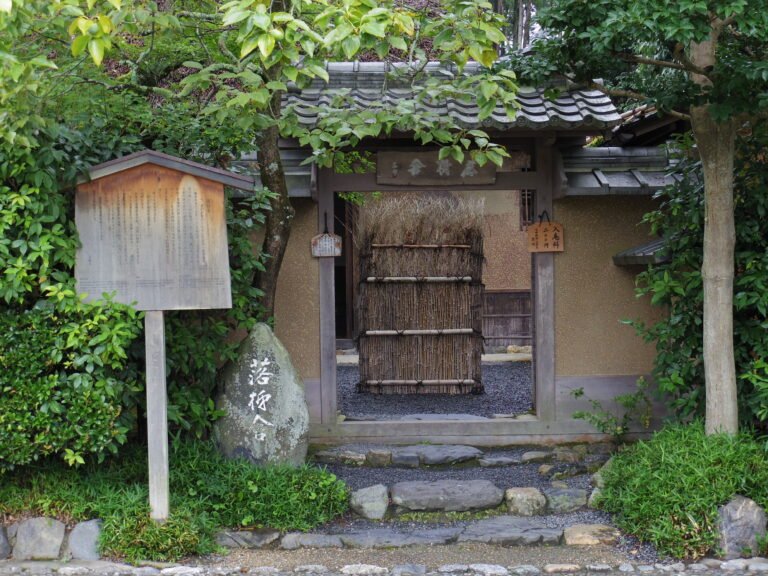
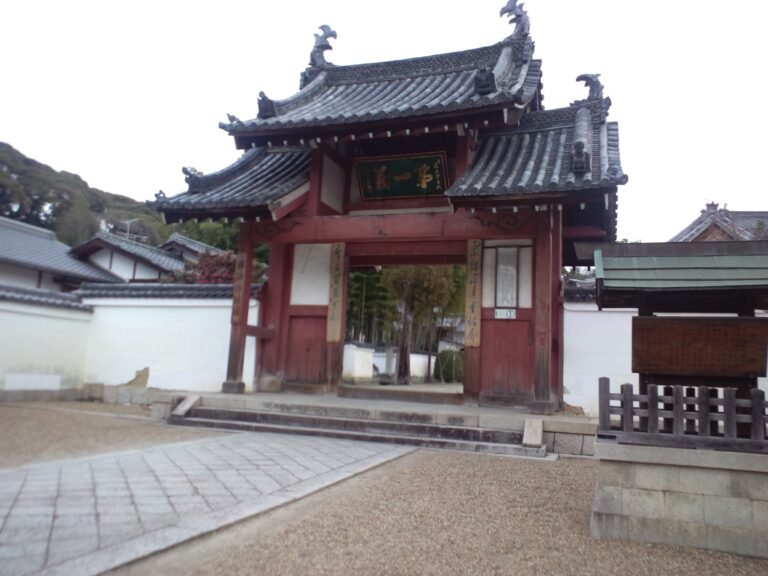
Jojakko-ji was founded in 1596 as a temple of the Nichiren school, tucked into the lower slopes of Mount Ogura in what was then a quiet corner of Saga, well outside the city proper. The approach hasn’t changed much since: a thatched Niomon gate marks the entrance, and it’s said to predate the temple itself by a couple of centuries, with roots going back to the 14th century — the kind of detail that suggests the gate was brought here from somewhere older rather than built fresh for this site. The main entrance itself was renovated toward the end of the Edo period, so what greets you today is a layered mix of eras rather than a single moment frozen in time.
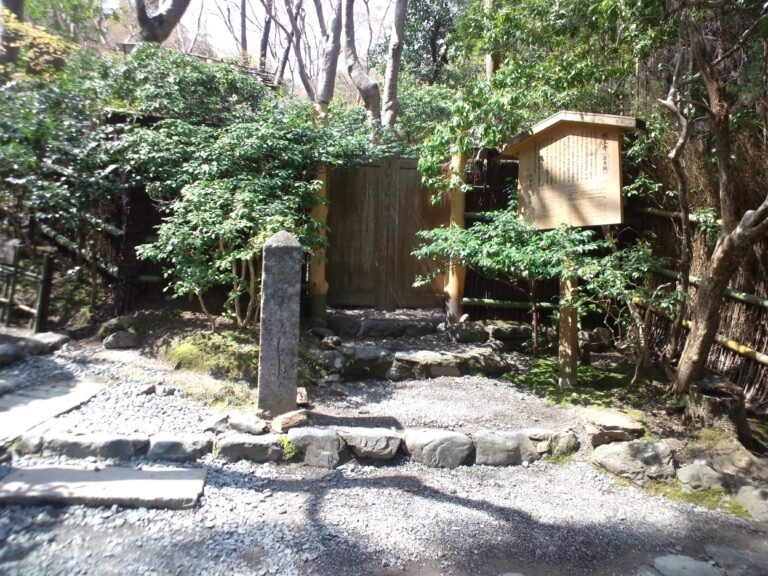
Past the gate, the grounds climb rather than spread out. Stone stairways and narrow paths connect a handful of pavilions set into the hillside: the Hondo (Main Hall) reached by the first flight of stairs, and further up, Myokendo, a small hall dedicated to Myoken, the Buddhist bodhisattva associated with the North Star. None of the buildings are large, and that’s part of the point — this was built as a place to climb through slowly, not to take in at a glance.

Climbing to the Two-Story Pagoda
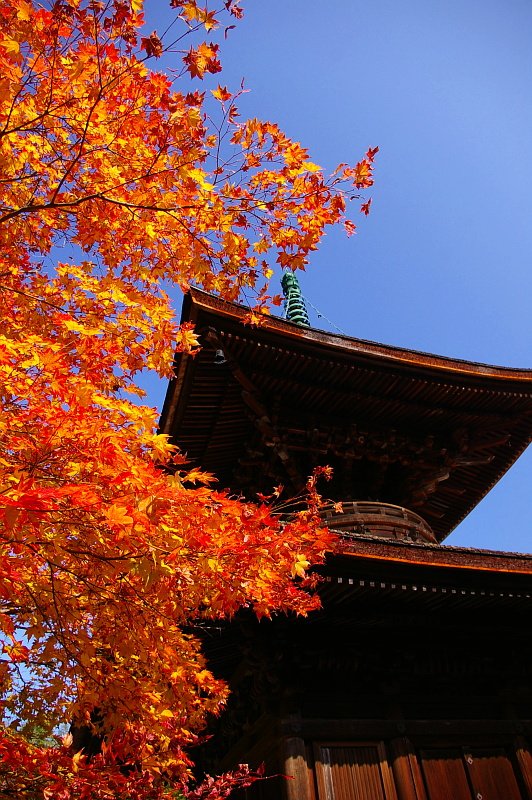
The climb pays off at the Tahoto, a two-story pagoda at the highest point on the grounds. It’s not an especially large structure, but the position is the whole reason to come: from up here you get a clear view back over the rooftops of Saga and, depending on the season, a foreground of red maple crowns that makes the view look almost staged. A Japanese maple forest surrounds the approach to the temple, and the paths leading up are bordered the rest of the way by moss beds and more maples, with a small pond and a stand of bamboo adding to the scenery lower down. A separate path, the Sueyoshi trail, loops back down to the Niomon gate if you’d rather not retrace your steps.
Because the temple is built on a slope rather than a flat compound, there’s more walking involved than at most of the smaller temples in this part of Kyoto — nothing strenuous, but worth knowing if you’re doing this as one stop among several on a longer walk through Arashiyama and Sagano. The stairways are uneven stone in places, so flat, grippy shoes make more of a difference here than at most temple visits, and the grounds aren’t wheelchair accessible given the climb involved. There’s no elevator or paved shortcut to the pagoda — the stairs are the whole point.
Nison-in, a larger temple with its own maple-lined approach, sits just a few minutes further along the same path, and plenty of visitors combine the two into one stop since they share a parking area and a general direction of travel. If you only have time for one, Jojakko-ji’s smaller scale and the pagoda view make it the more memorable half hour, but there’s no real reason to choose between them if your legs are willing.
When to Visit
For most of the year, Jojakko-ji is genuinely quiet — the kind of temple where you might have a stretch of the path to yourself even on a weekend. That changes from around mid-November into early December, when the maple canopy around the pagoda turns and the temple becomes one of the better-known koyo spots on the Ogura hillside; our guide to Kyoto’s autumn foliage season has the citywide timing if you’re planning a trip around the color. Outside that window, plan on closer to twenty or thirty minutes rather than a full hour, since there’s simply less reason to linger when the maples are green. The site is a non-smoking area throughout, which is worth knowing if that’s part of your routine elsewhere in the city.
Weekday mornings are the easiest time to have the pagoda to yourself, even during the color season, since most tour groups build their Arashiyama stop around the bamboo grove and the handful of major temples closer to the station. If you’re specifically chasing a quiet photo of the Tahoto against red maples, arriving right at the 9:00am opening on a weekday is a reasonable bet; weekend afternoons in late November are the one stretch of the year where this place genuinely fills up.

Getting There
The simplest approach is on foot from JR Saga-Arashiyama Station, about 15 minutes away, or from Arashiyama Station on the Keifuku Randen line, which takes closer to 20 minutes. If you’re already in the area, the walk from the Arashiyama Bamboo Grove is shorter and more direct: head north past the grove, cross the Torokko Sagano sightseeing train tracks, and follow the path along Ogura Pond to the entrance. It’s an easy add-on to a morning that starts at the bamboo grove or at Okochi Sanso Villa, which sits at the top of the same stretch of path.
Pairing Jojakko-ji With Nearby Sights
Jojakko-ji sits in a cluster of smaller temples on the Mount Ogura hillside that most visitors never reach because they stop at the bamboo grove and turn back. If you keep going, Gio-ji and its moss garden are a short walk further in, and the deeper temples of Adashino Nenbutsu-ji and Otagi Nenbutsu-ji are reachable the same day if you’re up for a longer walk. Treat Jojakko-ji as the hinge point between the busy, postcard version of Arashiyama near the station and the much quieter version a little further up the hill.
Bottom Line
Jojakko-ji isn’t a must-see in the way the bamboo grove is, and that’s exactly its appeal — a short, quiet detour with a real pagoda view at the top, sitting close enough to the main Arashiyama circuit that there’s no good reason to skip it. Build in the extra half hour if you can.