Nison-in: A Practical Guide to Kyoto’s Twin-Buddha Temple and Maple Approach
Keep walking past Jojakko-ji’s thatched gate and the moss gardens of Gio-ji, and the path along the base of Mount Ogura leads to a much larger temple with its own claim on this hillside: Nison-in. It doesn’t get the crowds that pile up at the bamboo grove ten minutes south, but its approach avenue — a long, straight corridor of maples leading up to the main gate — is one of the better-known autumn sights in this part of Arashiyama once word gets around. The rest of the year it’s a quiet, slightly overlooked stop, which is arguably when it’s most worth the detour.
The Essentials at a Glance
| What | Details |
|---|---|
| Admission | ¥500 |
| Hours | 9:00am–4:30pm daily |
| Visit length | 30–45 minutes; longer during peak autumn color |
| Access | About a 10-minute walk from JR Saga-Arashiyama Station or the Keifuku Arashiyama terminus |
| Best time | Mid-November into early December for the maple approach; June for hydrangeas |
| Nearby | Jojakko-ji, Gio-ji, and the Arashiyama Bamboo Grove are all within a short walk |
A Temple Named for Two Buddhas
Nison-in’s full name is Ogura-yama Nison-kyoin Keidai-ji, but almost everyone just calls it by the short version, which already tells you the most important thing about the place: “nison” means “two revered images,” and it refers to a pair of Heian-period statues enshrined side by side in the main hall — Shaka Nyorai, the historical Buddha, and Amida Nyorai, the Buddha of the Pure Land. Most temples in Kyoto build around a single central image. Nison-in built around two, which is part of why it ended up with its own name rather than something more generic.
The temple traces its roots back to the ninth century as a Tendai-sect foundation, though like most buildings this old in Kyoto, almost nothing from that period survives directly. The Onin War (1467–1477), which leveled large stretches of the city over a decade of factional fighting, destroyed Nison-in’s original buildings along with a great deal else in this part of town. What stands today came later, rebuilt with support from the priest Honen, the founder of Jodo-shu Buddhism — an interesting detail, since Honen’s own school and Nison-in’s Tendai affiliation aren’t the same lineage. It’s a reminder that temple history in Kyoto is rarely a straight line from one sect to the next; reconstruction funding came from wherever it could, including across sectarian lines.
Nison-in’s standing in the city went well beyond its own neighborhood. It was one of four Kyoto temples that performed Buddhist ceremonies for the imperial court, a role it held right up until 1868, when the Meiji Emperor relocated to Tokyo and the old court-temple relationships in Kyoto began to fade. The temple’s cemetery, tucked up the hillside behind the main hall, still holds the graves of a number of emperors and court nobles from that era — a quieter, less-visited counterpart to the more famous imperial tombs scattered around the city.

The Maple Avenue and the Poet Who Worked Here
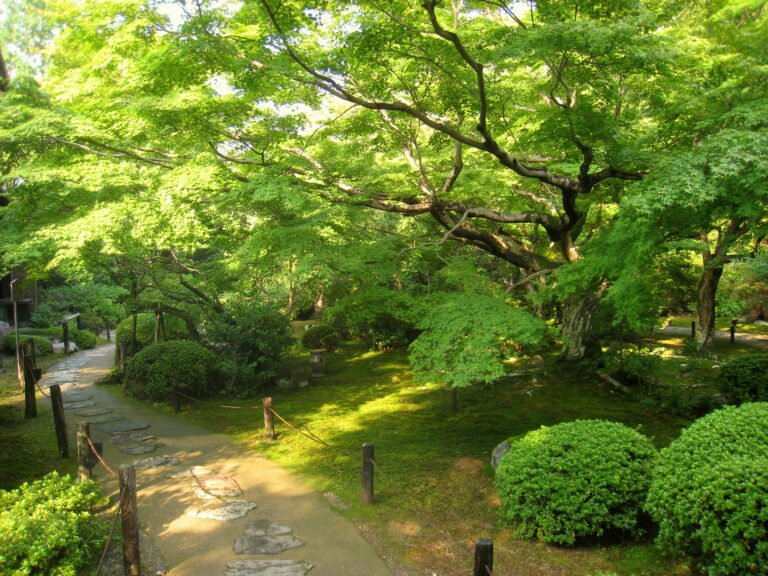
The reason most visitors come is the approach avenue leading up to the Somon, the temple’s main gate — a long, gently sloping corridor lined on both sides with maples old enough to form a near-complete canopy by late autumn. Locally it’s sometimes called the Momiji-no-Baba, roughly “the maple riding ground,” a name that hints at its past use as a path wide enough for horses rather than the pedestrian approach it is today. From mid-November into early December, when the color peaks, the avenue turns into a tunnel of red and gold that’s genuinely worth planning a morning around; our guide to Kyoto’s autumn foliage season has the citywide timing if you’re trying to sequence several spots in one trip.
Nison-in has a literary claim to fame as well. The poet and courtier Fujiwara no Teika (1162–1241) is closely associated with the temple, and tradition holds that he completed the Ogura Hyakunin Isshu here — the anthology of one hundred poems by one hundred poets that later became the basis for a card game still played across Japan today, especially around New Year’s. The exact site of Teika’s hillside retreat, sometimes called the Shigure-tei, is debated among local historians, and more than one spot in the area has been proposed as the “real” location over the centuries. Nison-in’s version of the story is the most prominently marked, with a trail behind the main buildings leading up toward where the hermitage is said to have stood, but treat the precise spot as tradition rather than settled fact.
Autumn isn’t the only season Nison-in is known for. The grounds fill with hydrangeas in June, a quieter and far less crowded alternative to the maple season for anyone visiting in early summer, and the temple hosts a small festival each May recreating a Heian-period court pastime, with participants in period dress. Neither event draws anything like the autumn crowds, which is exactly the appeal if you’d rather see the place without a line at the gate.
Inside the Grounds
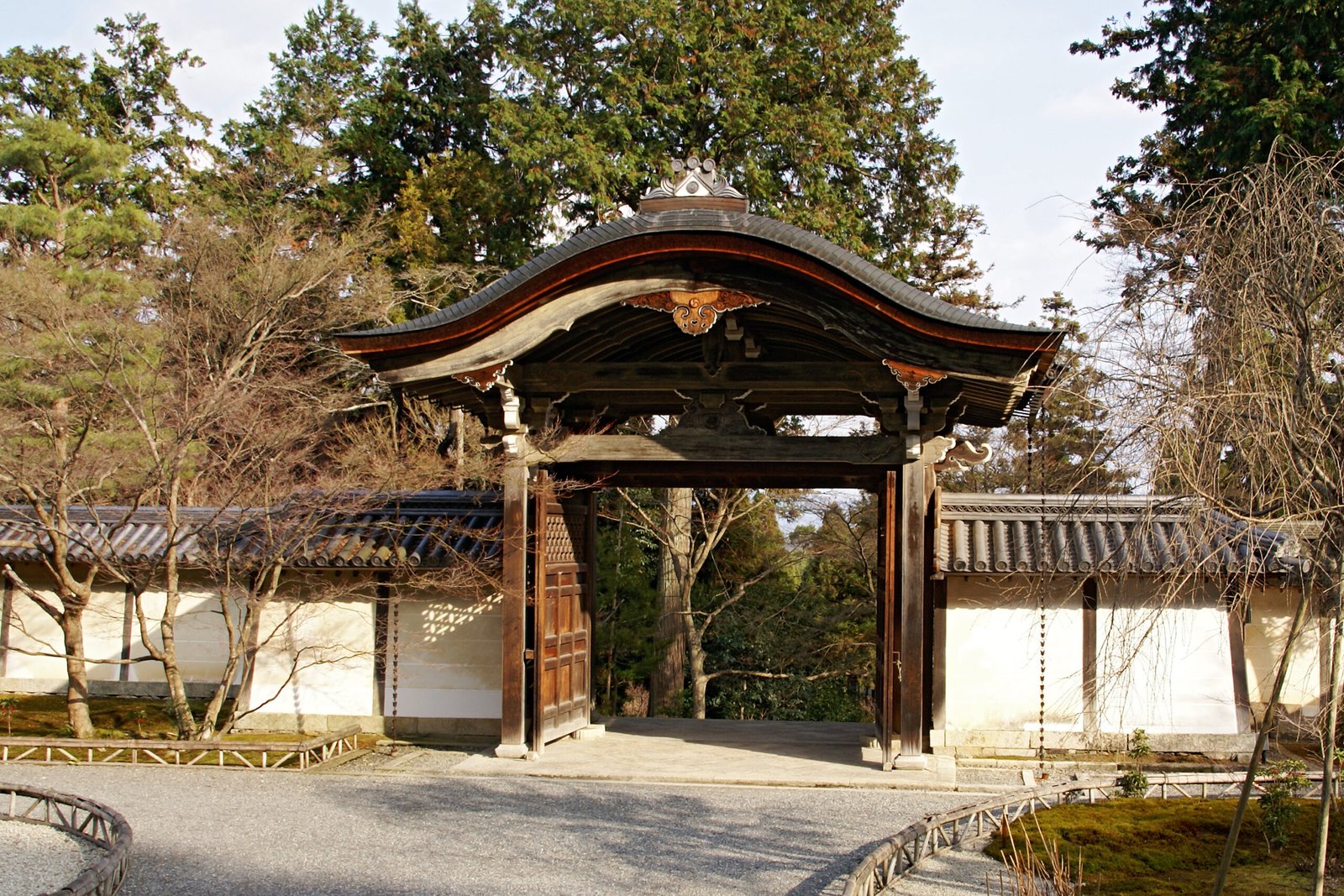
Past the Somon gate, the main hall sits at the heart of a compound that’s larger and flatter than most of its hillside neighbors, which makes Nison-in an easier walk than Jojakko-ji or Gio-ji if stairs aren’t your favorite part of temple-hopping. The Hondo houses the twin Buddha statues the temple is named for, and a separate hall nearby is dedicated to Jizo, the bodhisattva associated with travelers and children. Behind the main buildings, paths climb gradually into the cemetery and toward the wooded upper slopes, where the pace slows considerably and the maple avenue below becomes a view rather than a path underfoot.
Because the compound spreads out rather than stacking up a hillside, Nison-in rewards slow walking more than hard climbing. Give yourself time to circle the main hall grounds before heading back down the maple avenue the way you came — the avenue looks different walking downhill toward the gate than it does arriving, with the light generally better in the afternoon for photos facing back up the slope.
When to Visit
Outside of the maple season, Nison-in is genuinely one of the calmer stops in this corner of Sagano, with long stretches where you’ll have the approach avenue mostly to yourself. That changes fast once the color turns: weekend afternoons from mid-November through late November can get crowded enough that the avenue feels more like a queue than a quiet walk, so weekday mornings right at the 9:00am opening are the best bet if a peaceful photo of the maples matters more than convenience. The temple doesn’t run a special night illumination of its own most years, which keeps the daytime crowds a notch lower than at some of the bigger-name autumn spots closer to the city center.
If you’re coming for the hydrangeas instead, June is close to the opposite experience — soft light, damp stone paths, and almost no one else around. It won’t match the drama of the maple avenue in full color, but it’s a legitimate reason to visit Arashiyama in a month most itineraries skip entirely.
Getting There
Nison-in sits north of the main Arashiyama station cluster, about a 10-minute walk from either JR Saga-Arashiyama Station or the Keifuku Randen line’s Arashiyama terminus. If you’re coming from the Arashiyama Bamboo Grove and Tenryu-ji, it’s a straightforward extension of the same walk: continue north past the grove, follow the path along Ogura Pond, and Nison-in’s gate is a few minutes further on, with Jojakko-ji branching off just before it. There’s no need to backtrack to the station between stops — this whole stretch of Sagano is designed to be walked as one loop.
Pairing Nison-in With Nearby Sights
Nison-in anchors the cluster of smaller temples that most bamboo-grove visitors never reach. Jojakko-ji, with its two-story pagoda and hillside views, sits just a few minutes further along the same path, and Gio-ji‘s moss garden is reachable the same morning if you keep going. Treat Nison-in as the natural midpoint between the busy, postcard version of Arashiyama near the station and the much quieter temple cluster further up Mount Ogura.
Bottom Line
Nison-in doesn’t need the bamboo grove’s crowds to justify the walk — a genuine maple corridor, a direct line to one of Japan’s most famous poetry anthologies, and a flatter, easier compound than most of its neighbors make it worth the extra fifteen minutes on foot, especially outside of peak color when you might have the avenue to yourself.