Zuiho-in: A Practical Guide to Daitoku-ji’s Secret Christian Garden
Walk through Daitoku-ji‘s wooded compound past the sub-temples already covered on this blog, the maple-shaded approach at Koto-in, the borrowed-view garden out at Shoden-ji, and there’s a smaller, stranger one worth adding to the list. Zuiho-in was built by a Christian warlord as his family temple, and tucked behind its main hall is a Zen dry garden whose stones, viewed from the right spot, resolve into the shape of a cross.
The Essentials at a Glance
| What | Details |
|---|---|
| Location | within the Daitoku-ji complex, Murasakino, Kita-ku |
| Tradition | Rinzai Zen, Daitoku-ji school |
| Founded | 1546, by the daimyo Otomo Sorin as his family temple |
| Known for | Shigemori Mirei’s 20th-century dry gardens, including one with a hidden cross of stones honoring the founder’s Christian faith |
| Hours | roughly 9:00am-5:00pm daily |
| Admission | around ¥400 for adults, ¥300 for students; tea service an extra ¥400 |
| Access | city bus 205 or 206 to the Daitokuji-mae stop, or the Karasuma subway line to Kitaoji Station and a 15-minute walk |
A Christian Lord’s Family Temple
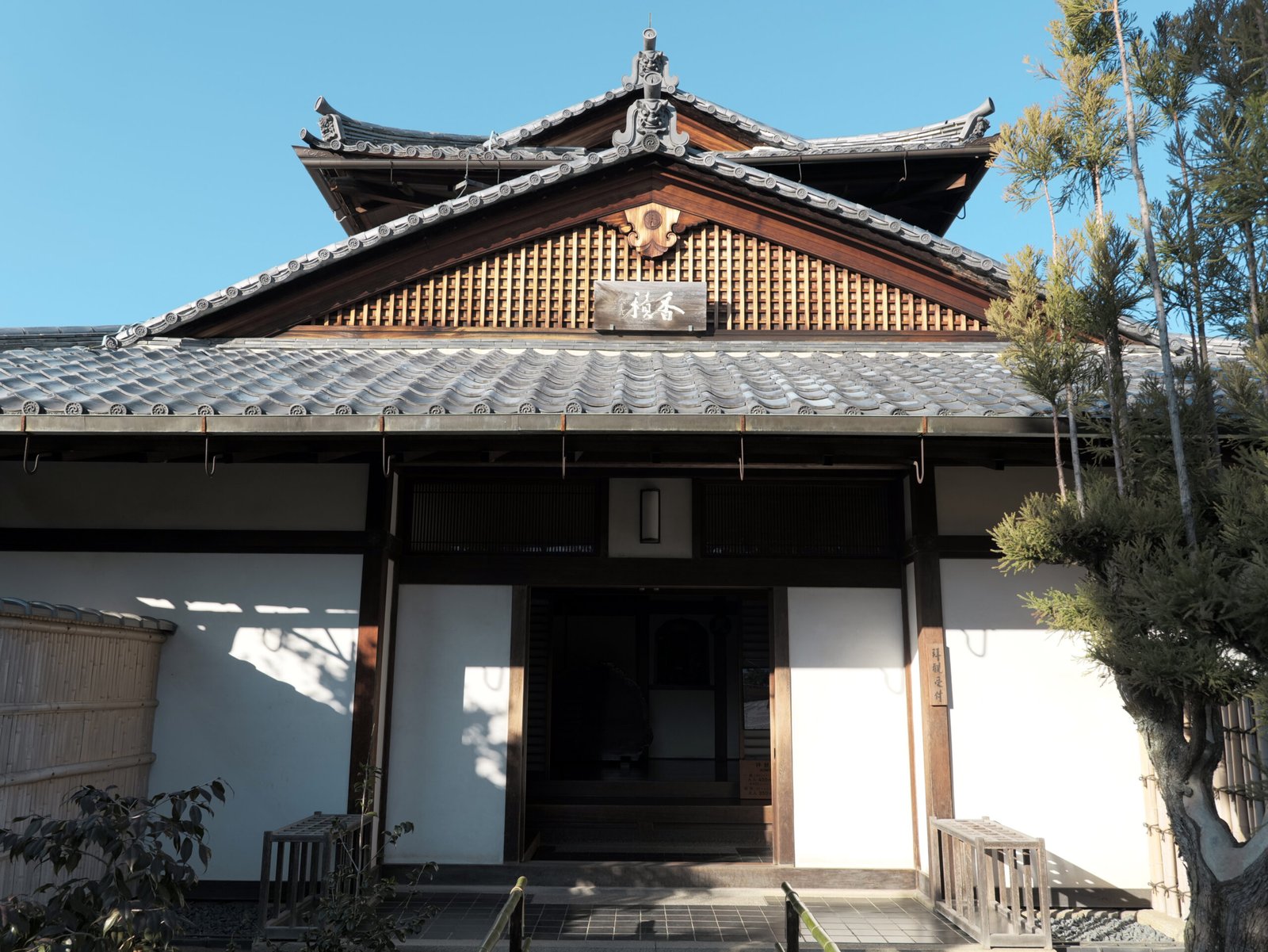
Zuiho-in was founded in 1546 by Otomo Sorin, a daimyo who ruled the Bungo domain in Kyushu and spent years studying Zen under one of Daitoku-ji’s abbots before his life took an unusual turn. In his late forties he was baptized by a Jesuit missionary and took the Christian name Francisco, becoming one of the more prominent Christian daimyo of the Sengoku period, at a time when that was a genuinely dangerous thing to be. Zuiho-in remained his family temple regardless, and it’s where he and his wife are buried, a Zen temple built by a man who, by the end of his life, had converted away from the religion it belongs to.
Dokuza-tei, the Mountain in a Sea of Gravel
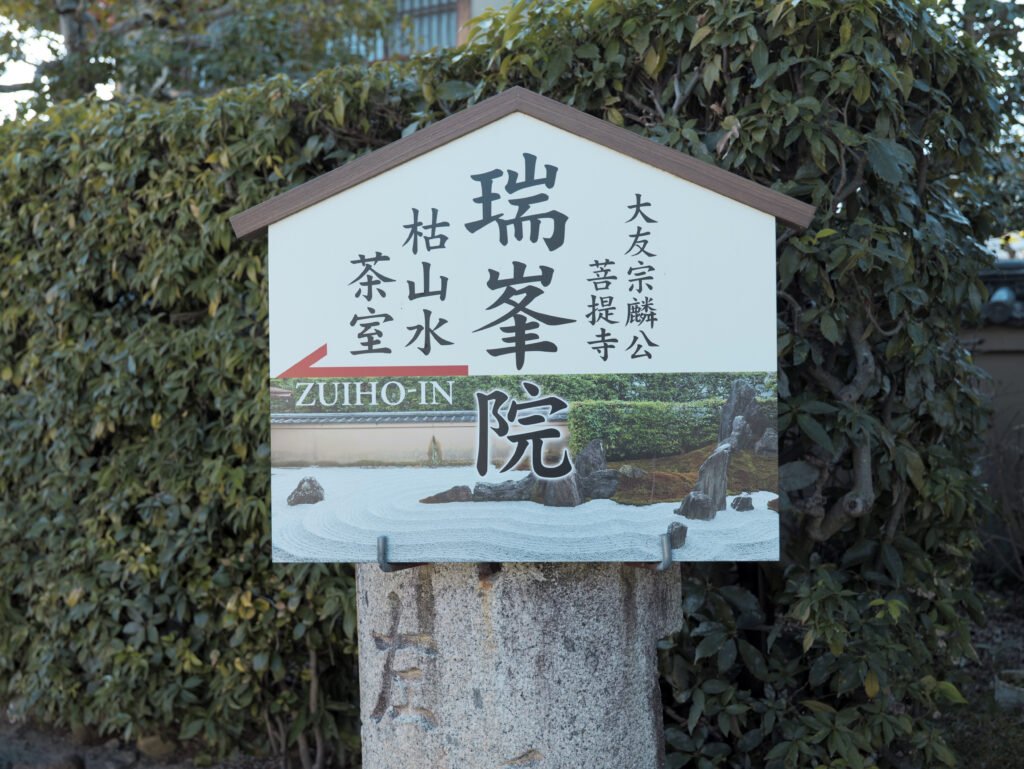
The main garden, south of the Hojo main hall, looks like a conventional dry landscape at first glance, raked gravel standing in for water, rock groupings standing in for land, but it’s doing something specific. The stones in the far corner represent Horai, the mythical mountain of the immortals from Chinese legend, with a narrow stone peninsula running out from it into the gravel sea and a single rock standing alone further out, meant to read as an island holding firm against the waves. It was laid out by Shigemori Mirei, the twentieth-century garden designer behind a good share of the modern dry gardens around Kyoto, including the work at Shoden-ji and several other gardens already covered on this blog.
Kanmin-tei, the Garden of the Cross

Behind the main hall is the garden Zuiho-in is actually known for. Kanmin-tei looks at first like any other small dry courtyard, raked gravel, a scattering of rocks, until you notice that the stones are arranged, deliberately, into the shape of a cross. It’s a quiet tribute to Otomo Sorin’s Christian faith, built into a Zen temple garden at a time when practicing that faith openly could get you killed; Christianity was banned in Japan for roughly two and a half centuries starting not long after Sorin’s death, and this garden reads like a coded way of honoring him regardless. There’s nothing else around it explaining what you’re looking at, which is rather the point: it was never meant to announce itself to anyone who hadn’t been told what to look for.
The Rest of the Grounds
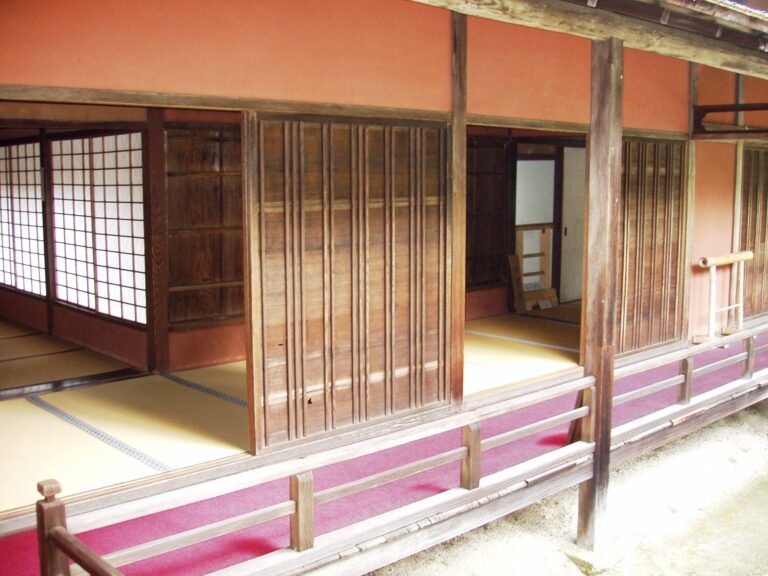
Zuiho-in is small enough that the two dry gardens don’t take long to see, but there’s a tea garden and a smaller courtyard between the main hall and the living quarters that reward slowing down rather than walking straight through. The temple also serves matcha and a sweet for an extra ¥400 if you’d like to sit with the garden rather than just look at it from the veranda, in a plain room without a direct view out, a different kind of experience than the tea services some other Kyoto gardens arrange, but a calmer one. A goshuin temple seal is available for those collecting them, and the temple is not wheelchair accessible.
Pairing It With Daitoku-ji’s Other Sub-Temples
Daitoku-ji isn’t one admission ticket, it’s a walled compound of more than twenty sub-temples, most of them charging separately and on their own schedules, with only a handful open to the public on any given day. Zuiho-in sits close enough to Koto-in that the two are easy to combine on the same visit, and the main Daitoku-ji compound itself is worth walking even if you don’t pay to enter every individual garden. If you’ve already made the trip out to Shoden-ji in the Nishigamo hills, it’s a reasonable comparison point: both gardens were shaped by Shigemori Mirei, and both ask you to read a specific idea into an arrangement of rocks and gravel. Before visiting any of these halls, it’s worth a quick look at our Temple and Shrine Etiquette guide, since several of Daitoku-ji’s sub-temples are stricter than average about photography and behavior inside the buildings.
Getting There and Best Time to Visit
Daitoku-ji sits in Kita-ku, north of the city center, and is best reached by city bus 205 or 206 to the Daitokuji-mae stop, or by taking the Karasuma subway line to Kitaoji Station and walking about 15 minutes west. There’s no train station directly at the complex, so budget a bit more travel time than you would for somewhere like Kinkaku-ji. Zuiho-in’s dry gardens read well in any season, since neither depends on flowers or foliage for its effect, though the temple does single out late April into early May as when the moss between the stones looks its best. The dry landscape garden is described as a year-round draw except for August, when the heat makes lingering outdoors considerably less pleasant.
Bottom Line
Zuiho-in isn’t going to rival Ryoan-ji for garden fame, and that’s part of its appeal: a small sub-temple with a genuinely odd piece of history built into its stones, in a part of Daitoku-ji that most day-trippers walk straight past. If you’ve already done the big-name gardens elsewhere in the city and want something with a story attached rather than just a view, it’s worth the short detour.