Tenryu-ji: A Practical Guide to Arashiyama’s First-Ranked Zen Garden
The combined guide to Arashiyama’s Bamboo Grove and Tenryu-ji already on this blog treats the temple mostly as what you walk through on the way out of the bamboo path, which undersells it. Tenryu-ji is the highest-ranked of Kyoto’s Gozan, the medieval system of officially ranked Zen temples, and its pond garden is one of the few things in the city that’s survived, more or less as laid out, since the 1340s. It has its own entrance fee, its own history involving a dead emperor’s uneasy spirit, and enough to see that it’s worth treating as a destination rather than a hallway. Here’s the longer version.
The Essentials at a Glance
| What | Details |
|---|---|
| Location | Arashiyama/Sagano district, Ukyo-ku, right where the bamboo grove ends |
| Tradition | Rinzai Zen, head temple of the Tenryu-ji school; ranked first among Kyoto’s Gozan (Five Great Zen Temples) |
| Founded | 1339, commissioned by the shogun Ashikaga Takauji |
| Known for | Sogenchi, a 14th-century pond garden designed by Muso Soseki; a cloud dragon painted across the Hatto’s ceiling |
| Hours | roughly 8:30am-5:00pm daily for the garden and main buildings; the Hatto’s dragon ceiling keeps shorter, more limited hours |
| Admission | around ¥500 for the garden, plus ¥300 for the main buildings, and a separate ¥500 for the Hatto’s dragon ceiling |
| Access | about a 10 to 15-minute walk from JR Saga-Arashiyama Station, or the Arashiyama Tenryuji-mae bus stop; the north gate opens directly onto the bamboo grove |
A Temple Built to Settle a Ghost’s Grievance
Tenryu-ji’s origin story starts with a civil war. Through the 1330s the shogun Ashikaga Takauji and the Emperor Go-Daigo went from allies to enemies, and by 1339 Go-Daigo was dead, having spent his final years as a rival claimant to the throne running a parallel court in Yoshino after Takauji’s faction pushed him out of Kyoto. Takauji, reportedly uneasy about how that rivalry had ended, commissioned a temple on the site of a former imperial villa in Arashiyama and dedicated it to Go-Daigo’s spirit, part genuine remembrance and part reasonable medieval-era insurance against an angry ghost. He installed the Zen monk Muso Soseki, already a respected teacher and garden designer, as the temple’s first head priest. According to temple legend, the name Tenryu, meaning “heavenly dragon,” came from a dream in which a golden dragon was seen rising from the river beside the construction site, taken at the time as a sign that the arrangement had Go-Daigo’s blessing.
Sogenchi, the Garden That Outlasted Everything Else

Muso Soseki designed the temple’s pond garden, Sogenchi, and it’s the main reason Tenryu-ji is worth the detour even after you’ve already seen a dozen other Kyoto gardens. The design leans on shakkei, borrowed scenery, pulling the wooded slopes of Arashiyama and Kameyama into the view beyond the pond so the garden reads as far larger than its actual footprint. A rock arrangement on the far bank is traditionally read as a carp mid-leap, turning into a dragon as it clears the current, an image popular in garden design of the period and borrowed from an old Chinese legend about koi that transform if they can fight their way far enough upstream. What makes Sogenchi unusual isn’t only the design, it’s the survival: Tenryu-ji’s buildings have burned down and been rebuilt more than once across the centuries, and most of what’s standing today dates from the Meiji era, but the garden is widely believed to preserve its 14th-century layout more or less intact. That’s also a large part of why the temple carries UNESCO World Heritage status, as one of the sites listed under Historic Monuments of Ancient Kyoto since 1994.
Ranked First Among Kyoto’s Five Great Zen Temples
Tenryu-ji sits at the top of the Kyoto Gozan, a ranking of five officially sponsored Rinzai Zen temples that the Ashikaga shogunate set up in the 14th century, modeled on a similar system already running in Kamakura. The other four, in descending order, are Shokoku-ji, Kennin-ji, Tofuku-ji, and Manju-ji, two of which already have their own guides on this blog. The ranking wasn’t purely ceremonial. It came with shogunate patronage, administrative duties, and a level of institutional weight that shaped how much land and how many sub-temples these places eventually accumulated, which is part of why Tenryu-ji had the resources to rebuild itself after every fire, even if it took a while each time.
The Hatto’s Cloud Dragon
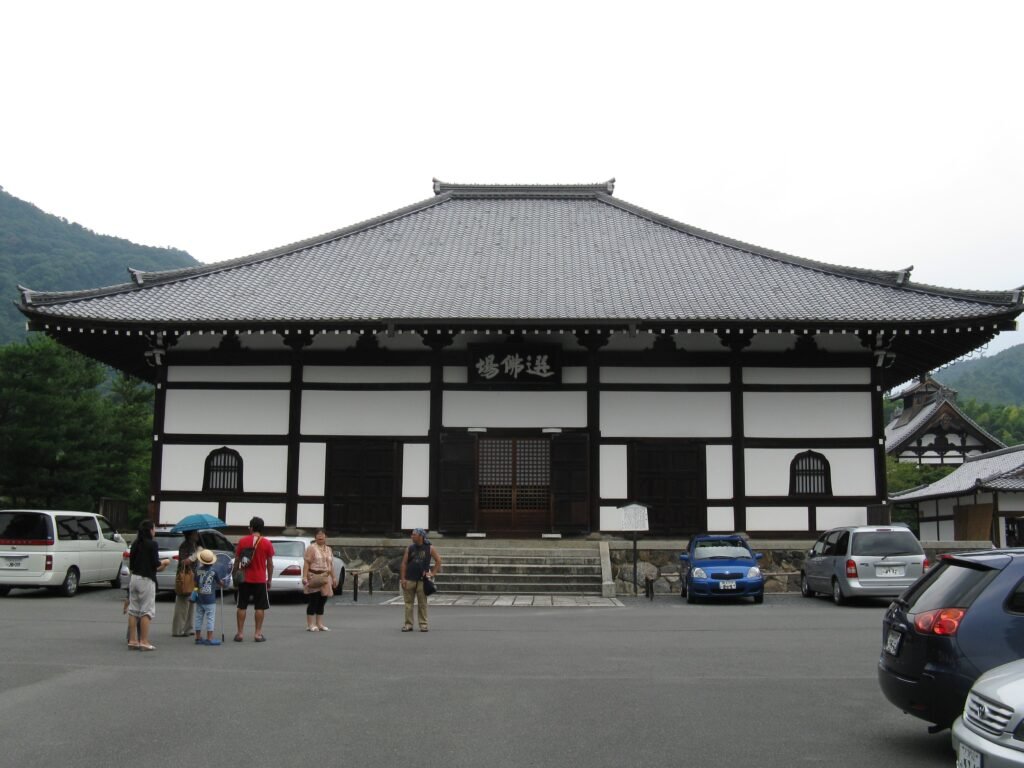
Tenryu-ji’s Hatto, or Dharma Hall, holds a large circular dragon painted across its ceiling, coiled and glaring down at anyone standing underneath it. The original version was painted in 1899, and the one visitors see today replaced it in 1997 after decades of wear. Seeing it requires a separate ticket from the garden admission, and the Hatto doesn’t necessarily keep the same hours as the rest of the temple, open on a more limited schedule than the garden grounds, so if the dragon ceiling is the whole reason for your visit, it’s worth confirming it’s open that day rather than assuming.
Pairing It With the Rest of Sagano
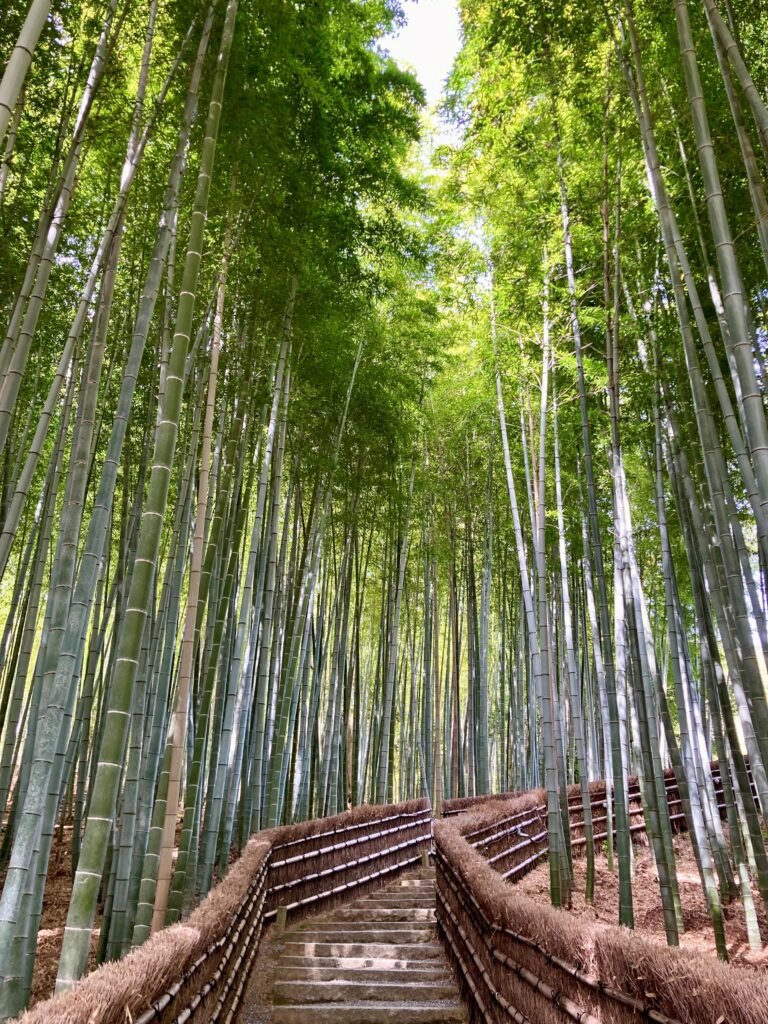
Tenryu-ji’s north gate opens directly onto the Arashiyama Bamboo Grove, so the two are almost always visited together, as covered in our combined Bamboo Grove and Tenryu-ji guide. From there it’s a short climb up to Okochi Sanso Villa for a quieter, pricier garden with its own hilltop views, and the whole district fits naturally into our One Day in Sagano itinerary if you want to see the area properly rather than rushing through on a day trip from somewhere else. If you’re planning around the colors, our Kyoto Autumn Foliage guide covers how Arashiyama’s koyo season timing compares with spots elsewhere in the city.
Getting There and Best Time to Visit
Tenryu-ji sits at the western edge of the Arashiyama Bamboo Grove, a walk of around 10 to 15 minutes from JR Saga-Arashiyama Station, or a short ride to the Arashiyama Tenryuji-mae bus stop on several city bus lines. Because the garden doesn’t depend on flowers or foliage to work, it’s a reasonable visit in any season, but mid-to-late November brings the hills visible behind Sogenchi into color, and that borrowed-scenery design is built specifically to take advantage of exactly that kind of backdrop. Arashiyama is one of the more heavily visited parts of Kyoto, so arriving close to opening time is the easiest way to see the garden without a crowd in every photo.
Bottom Line
Tenryu-ji gets treated as an add-on to the bamboo grove more often than it deserves, when it’s really the more substantial of the two: a UNESCO-listed, first-ranked Zen temple with a centuries-old garden design that still does roughly what it was built to do. If you’ve only ever walked past it on the way to the bamboo path, it’s worth doubling back and actually going in.