Koto-in: A Practical Guide to Daitoku-ji’s Maple-Lined Hidden Sub-Temple
Daitoku-ji is less a single temple than a walled-off village of them — more than twenty sub-temples behind one set of outer gates, most of them closed to the public for all but a few weeks a year. Our guide to the Daitoku-ji complex covers the handful that keep regular visiting hours, and Koto-in is the one we send people to first. It’s smaller than some of its neighbors and doesn’t try to impress you with scale. What it has instead is a four-hundred-year-old approach path that photographers set alarms to catch at opening time, a garden built by a warrior who spent his later years studying tea, and one of the quieter corners of northwest Kyoto to sit with it all.
The Essentials at a Glance
| What | Details |
|---|---|
| Location | Murasakino, Kita-ku — a sub-temple inside the Daitoku-ji complex, northwest Kyoto |
| Founded | 1601, as a family temple for the Hosokawa clan |
| Founder | Hosokawa Tadaoki, a warrior-lord and tea ceremony disciple of Sen no Rikyu |
| Known for | its moss-and-maple approach path, a garden built for quiet viewing, and the graves of Tadaoki and his wife |
| Hours | roughly 9:00am–4:30pm, with last entry around 4:20pm |
| Admission | in the ¥400–500 range; worth confirming at the gate, since sub-temple fees shift from year to year |
| Access | city buses 101, 204, 205, and 206 to Daitokuji-mae, then a short walk into the complex |
A Warlord’s Retirement Project
Koto-in was founded in 1601 by Hosokawa Tadaoki, a military leader who by most accounts put as much energy into tea ceremony as he did into the battlefield. He studied under Sen no Rikyu, the figure most responsible for shaping how tea ceremony is still practiced today, and like a number of Rikyu’s senior students, he eventually built himself a sub-temple at Daitoku-ji to serve as a family temple. That was a fairly standard move for Momoyama-era elites who wanted a dedicated place for memorial services and, not incidentally, a dignified spot to be buried — it’s a large part of why Daitoku-ji ended up with so many separately run sub-temples behind one perimeter wall in the first place. Tadaoki and his wife are buried together in a quiet corner of the grounds; she’s better known to history by her baptismal name, Hosokawa Gracia, one of the more prominent Christian converts among the daimyo class before the shogunate cracked down on the religion. Rikyu himself had been forced to take his own life a decade earlier, on orders from Hideyoshi, which makes Tadaoki’s open devotion to his old teacher’s practice here at Daitoku-ji feel like something closer to loyalty than hobby. The Hosokawa name didn’t stop being notable after the Edo period ended, either — the family remained a significant clan for centuries, down to a 20th-century prime minister who shares it.
The Path Everyone Stops to Photograph
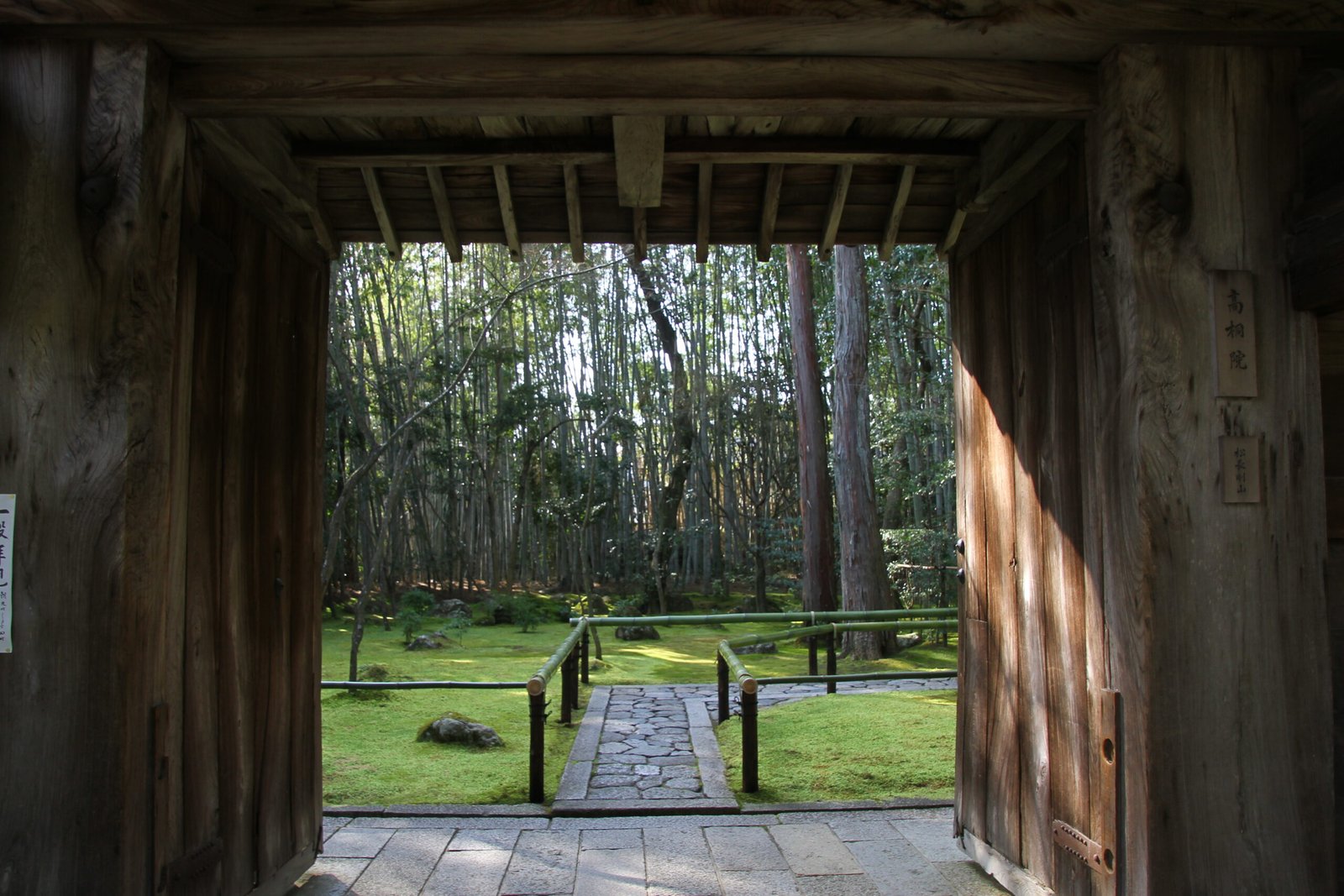
The approach from Koto-in’s gate to the main hall is a straight run of stepping stones through a corridor of moss, pine, and maple, planted close enough on both sides that even a short walk feels like passing through a tunnel. It’s one of the most photographed single stretches of ground in Kyoto, and if you’ve seen a postcard-style shot of a red-leafed path somewhere in Daitoku-ji, there’s a decent chance it was taken here. Regular visitors know to arrive right at opening, since the path draws a steady line of tripods once the morning light gets going, and the colors are obviously at their best once the maples turn in November.
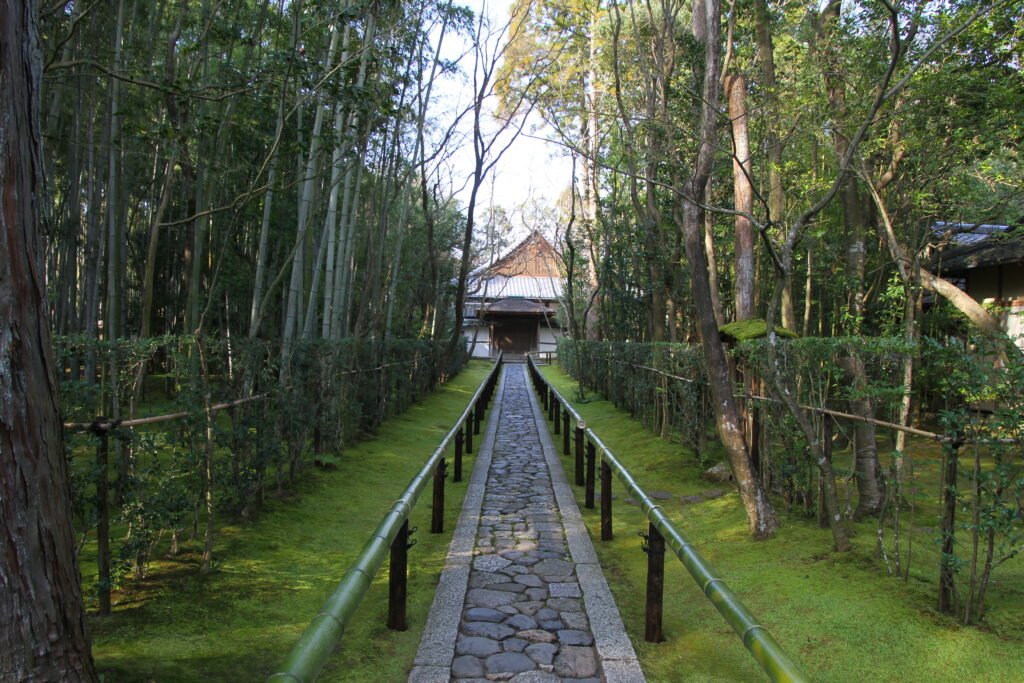
Even outside peak foliage, the moss carpet underneath stays green and photogenic for most of the year, which is part of why the path has a following independent of autumn.
Two Teahouses and a Garden Built for Sitting Still
Past the entry path, Koto-in’s main hall opens onto a garden built for looking at from the veranda rather than walking through — moss, maples, and a scattering of stone lanterns arranged with enough restraint that nothing competes for attention. The grounds also hold two teahouses, Shoko-ken and Horai, reminders that this was built by a man who took tea ceremony seriously enough to want dedicated spaces for it on his own family’s temple.
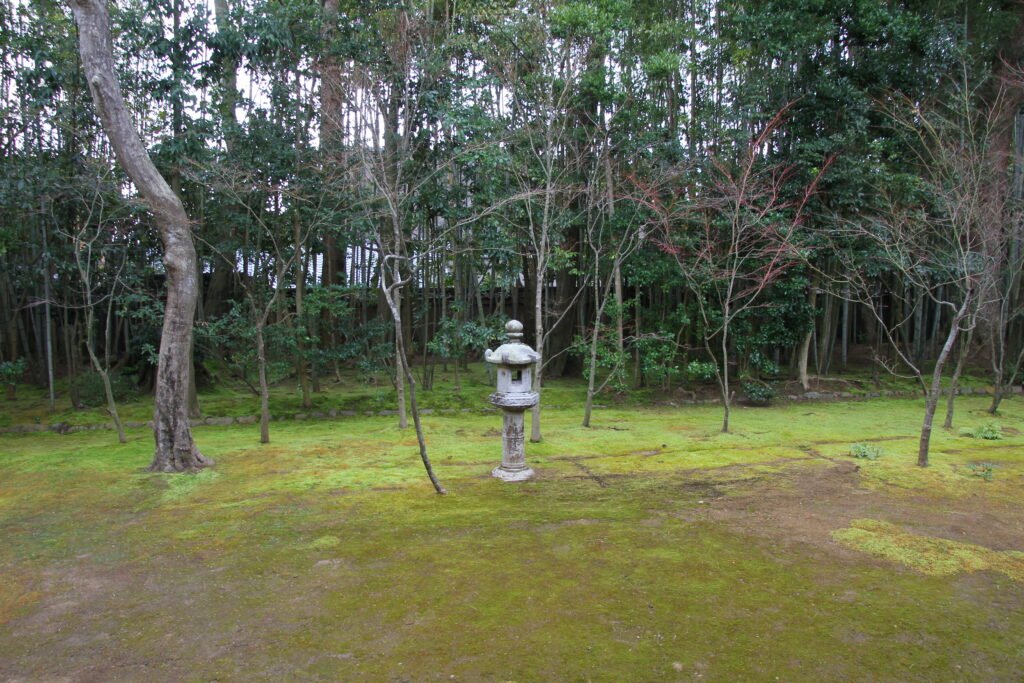
Neither teahouse is generally open for a look inside on a standard visit, but their presence is part of what makes Koto-in feel more like a lived-in retreat than a museum piece. It’s worth sitting on the veranda for a few minutes rather than treating the stop as a quick walk-through.
A Few Practical Notes Before You Go
Koto-in doesn’t take reservations for a standard visit — you buy a ticket at the gate the same as at most Daitoku-ji sub-temples, and the price and exact hours have shifted a little over the years, so it’s worth treating any number you read online, including ours, as a rough guide rather than gospel. Large tour groups are rare here, which is part of the appeal, but that also means there’s no English signage to speak of beyond the basics, so a little reading beforehand helps. Photography is generally fine along the outdoor path and in the garden, but flash and tripods can draw a polite request to stop if the path gets crowded, and the teahouses themselves are off limits to casual photos anyway since they’re not open for entry.
Getting There and Best Time to Visit
Koto-in sits inside the Daitoku-ji complex in Kita-ku, a part of the city with no train station of its own, so the bus is the practical way in. City buses 101, 204, 205, and 206 all stop at Daitokuji-mae, a few minutes’ walk from the complex’s outer gate; from there it takes a little wayfinding to reach Koto-in’s own gate on the western side of the grounds, since the sub-temple entrances aren’t always obvious from the main path. November is when most people plan the trip, timed to the maple path’s peak color, and our Kyoto Autumn Foliage and Kyoto in November guides cover how that timing tends to shift from year to year. If you’d rather skip the tripod crowd, an early weekday morning tends to be the quieter option, and the moss along the path is reason enough to come even before the leaves turn. Our Kyoto Temple and Shrine Etiquette guide is worth a look too, since sub-temples like this one are still active religious sites rather than open-air museums, whatever the crowd on the path might suggest.
Bottom Line
Koto-in rewards slowing down more than most stops inside Daitoku-ji. Budget twenty to thirty minutes if you’re only doing the path and a look at the garden, longer if you want to sit on the veranda and let the place settle in. It’s not a long detour from Daitoku-ji’s larger, more famous sub-temples, and pairing it with one or two of those in the same visit is an efficient way to spend an afternoon in this corner of the city — just don’t let Koto-in be the one you rush through.