Sento Imperial Palace: A Practical Guide to Kyoto’s Reservation-Only Retirement Garden
Walk through Kyoto Gyoen on a quiet weekday morning and you’ll pass right by the entrance without necessarily noticing it. Sento Gosho sits just south of the Kyoto Imperial Palace, inside the same broad park, and a lot of visitors never realize there’s a second reservation-only garden back there at all. Unlike its neighbor, Sento Gosho isn’t really a palace anymore in any meaningful sense — the buildings that gave it the name burned down in 1854 and nobody ever got around to rebuilding them. What’s left is the garden they were built to overlook, and it’s one of the better strolling gardens in the city for anyone willing to deal with the reservation process to see it.
The Essentials at a Glance
| What | Details |
|---|---|
| Location | Kyoto Gyoen (Kyoto Imperial Palace Park), Kamigyo-ku — the same park as the Kyoto Imperial Palace, a short walk further south |
| Built | 1630, as a retirement residence for Emperor Go-Mizunoo |
| Administered by | The Imperial Household Agency (Kunaicho) |
| What’s actually there | A strolling garden with north and south ponds, plus a handful of structures such as the Seikatei teahouse; the original palace buildings burned in 1854 and were never rebuilt |
| Visit format | Free guided tour, roughly 50 minutes to an hour, conducted mainly in Japanese with English-language materials available |
| Reservations | Online in advance, in person at the Imperial Household Agency’s Kyoto office, or a limited number of same-day spots |
| Closed | Mondays (shifting to the next day if Monday is a public holiday), and around the New Year period |
| Access | Karasuma Line subway to Marutamachi or Imadegawa Station, then about a 15-minute walk |
A Retirement Home for an Emperor Who Wasn’t Finished Yet
Sento Gosho was built in 1630 as a residence for Emperor Go-Mizunoo after he abdicated — “sento,” in fact, is simply the term for a retired emperor’s residence, so the name describes the building’s function rather than naming a specific place. Go-Mizunoo didn’t exactly fade into quiet retirement: he remained an influential figure in Kyoto court life for decades afterward, and the garden he commissioned reflects that — it was built to be enjoyed, not just occupied. Later retired emperors used the palace as well, and the grounds were expanded and rebuilt more than once over the following two centuries as fires took their toll, which was a fairly routine hazard for wooden palace buildings in Kyoto.
The palace’s luck ran out for good in 1854, when a fire swept through and destroyed the main residential buildings. This time nobody rebuilt them. The Imperial Household Agency maintained the garden instead, and in 1867 added Omiya Palace on an adjacent section of the grounds, which is still used today when the emperor or other imperial family members stay in Kyoto. Omiya Palace itself isn’t open to visitors on the standard garden tour, so what you’re actually touring when you book a Sento Gosho visit is the landscape that once surrounded a palace rather than the palace itself — which, once you know that going in, reframes the visit less as sightseeing inside a historic building and more as a walk through a very deliberately composed 17th-century garden.
A Garden Built for Walking, Not a Building Built for Living
The garden is laid out as a kaiyu-shiki, a strolling garden meant to be experienced as a sequence rather than viewed from one fixed vantage point, with the path curving around a north pond and a larger south pond connected by a stream. Along the way the path passes the Seikatei teahouse, a rustic building set right at the water’s edge with a pebble “beach” in front of it that’s been laid out, stone by stone, in a way that’s meant to evoke a real shoreline. It’s a small building, but it’s one of the more photographed spots on the tour, mostly because the setting does so much of the work — simple structure, water right up to the walls, mountains in the distance behind it.
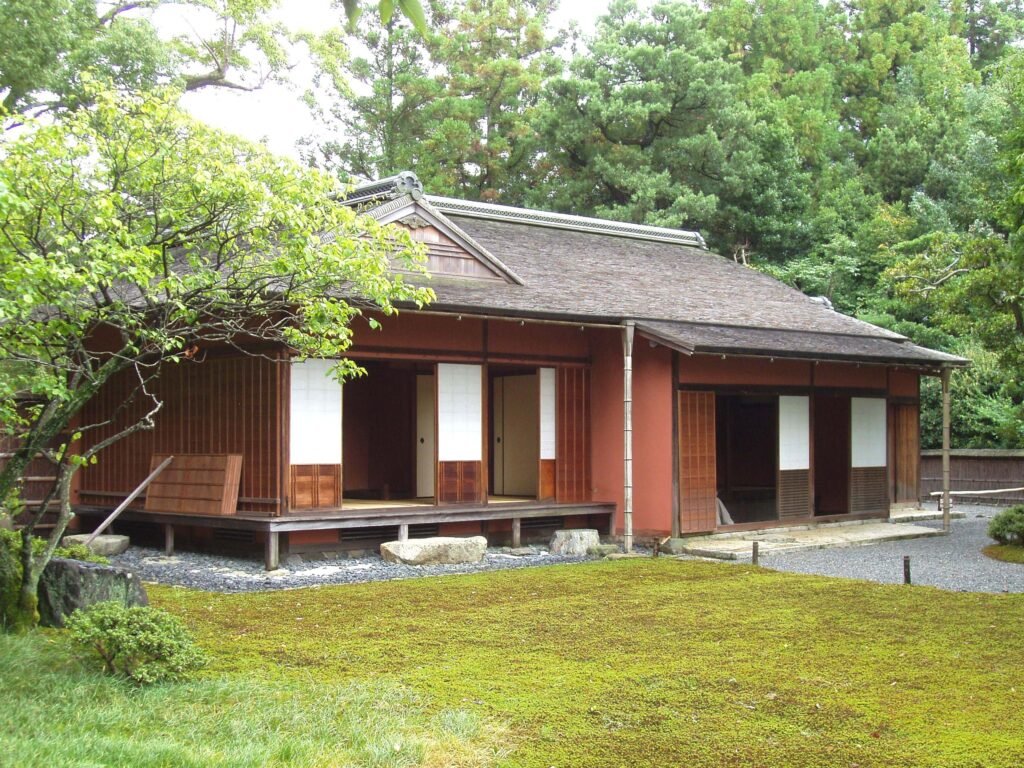
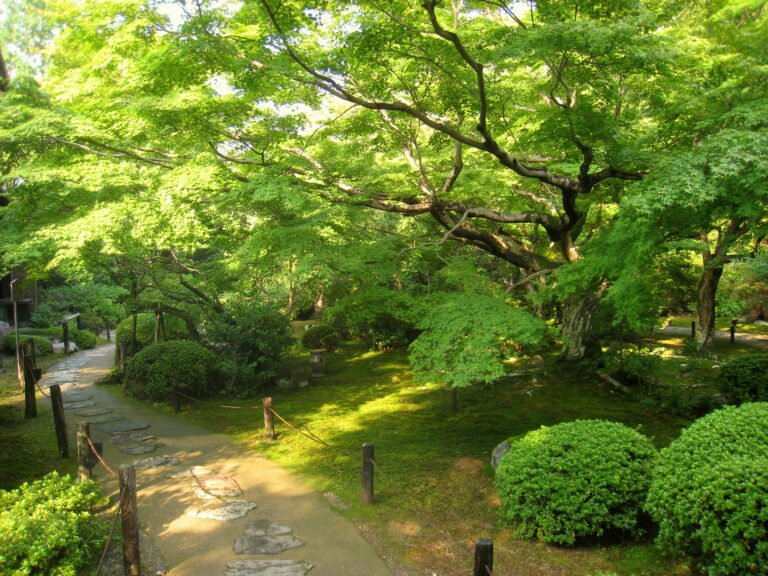
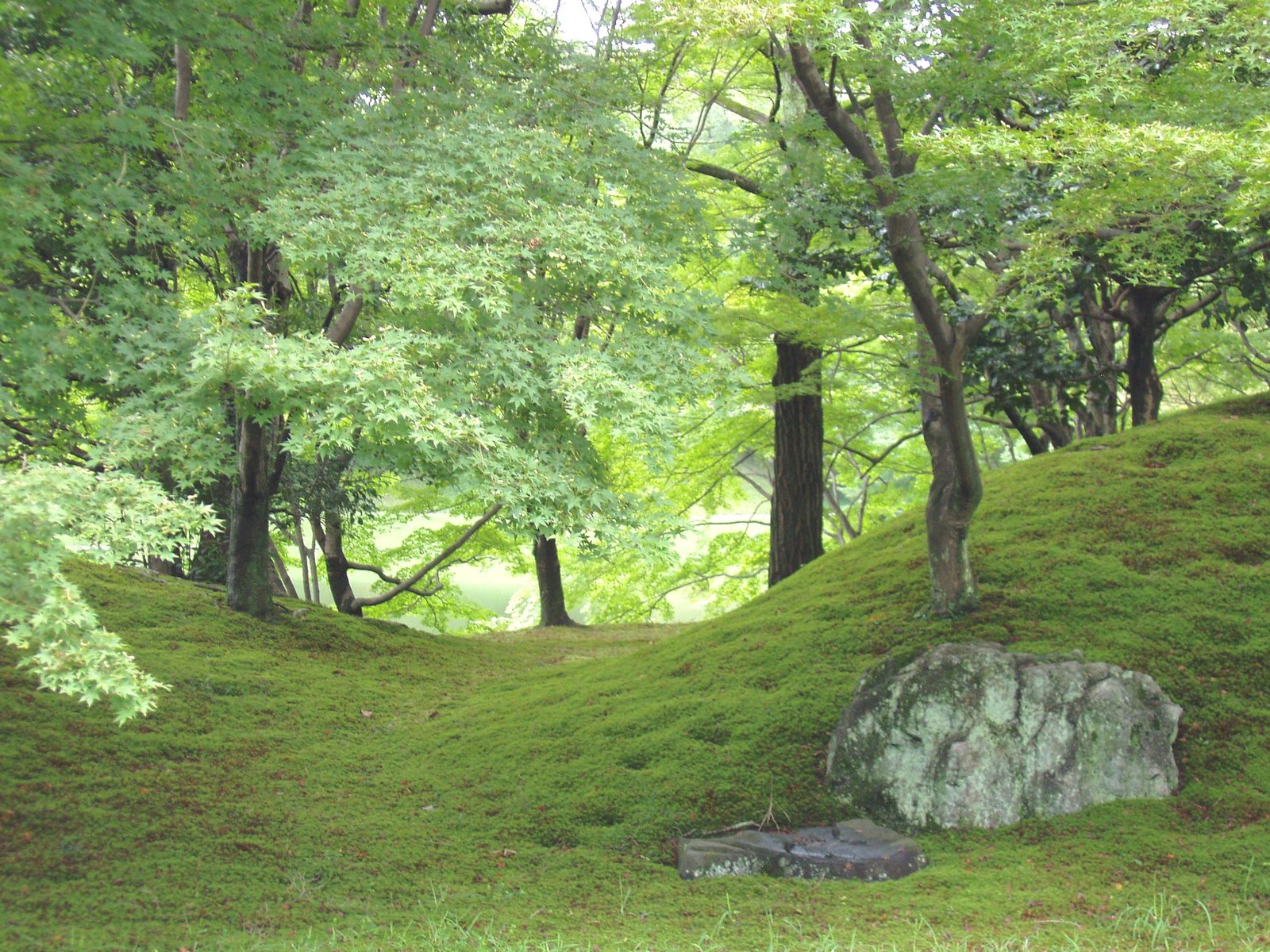
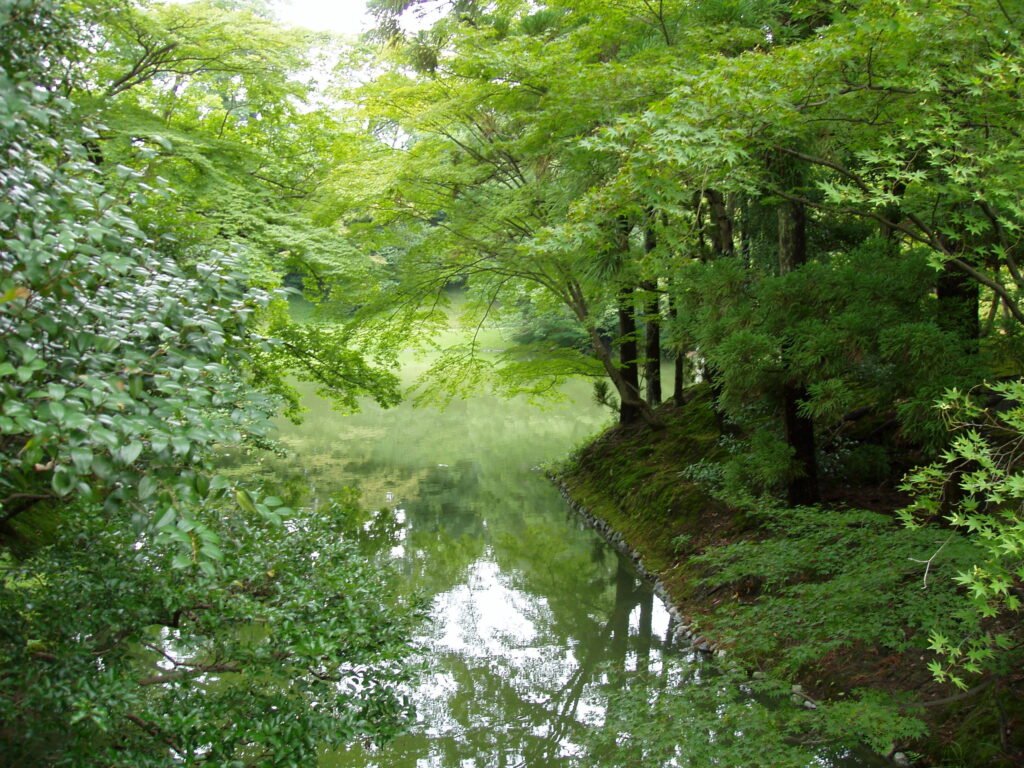
Further along, the path climbs through mossy, tree-covered rises before dropping back down toward the water, and the whole route is designed so that the view keeps changing — a pond framed by maples here, a stone bridge there, a glimpse of Omiya Palace’s rooftops through the trees from a distance you’re not meant to get any closer than. None of it is especially grand in scale compared to somewhere like Katsura, but that’s part of the appeal: it’s a garden sized for an afternoon walk rather than a formal procession, and the guides tend to let the group linger at the better viewpoints rather than hustling everyone through.
Getting a Reservation Without Losing an Afternoon to It
Tours run several times a day, except Mondays, and there are three realistic ways to get on one. The most reliable is applying online in advance through the Imperial Household Agency’s Kyoto Gyoen website, though the number of online slots is limited and they can sell out, so it’s worth applying several days to a couple of weeks ahead if your travel dates are fixed. The second option is to apply in person at the Imperial Household Agency’s office inside Kyoto Gyoen, bringing your passport; the office is open from 8:40am to 5:00pm and closed Mondays, same as the tours themselves. The third option is a small allotment of same-day tickets handed out at the office starting at 8:40am, first come first served — workable if you’re flexible and happen to be in the area early, but not something to count on if Sento Gosho is the main reason for your trip to Kyoto.
Whichever route you use, arrive a little early. Tours gather at the agency’s visitor building, bags go through a light security check, and the guide typically runs through a short safety briefing before the group sets out. The walking itself is easy — flat paths with a few gentle slopes — but the gravel surfaces aren’t ideal for anyone using a wheelchair or a stroller, so it’s worth checking current accessibility details with the agency directly if that’s a concern.
How It Compares to Katsura and Shugakuin
If you’ve already looked into visiting Katsura Imperial Villa or Shugakuin Imperial Villa, the reservation process at Sento Gosho will feel familiar — all three are run by the same agency under broadly similar rules. What differs is the character of each garden. Katsura is the most architecturally refined of the three, built around a sequence of teahouses meant to be seen under moonlight. Shugakuin climbs up into the hills northeast of the city and trades intimacy for sweeping, borrowed-view panoramas over the whole Kyoto basin. Sento Gosho is the most centrally located and, in a lot of ways, the most approachable of the three — a pond garden on a human scale, a short walk from the subway, without the half-day commitment that a trip out to Shugakuin or Katsura usually involves.
That makes it a reasonable choice if you only want to fit one reservation-only imperial garden into a trip, or if your schedule’s tight and a half-day excursion to the western or northeastern edges of the city isn’t realistic. It’s also a sensible pairing with the Kyoto Imperial Palace tour just across the park, since you’re already in the area and the two sites couldn’t be more different in what they show you — one’s a working imperial compound, the other’s a garden that outlived the palace it was built for.
When to Go
The garden doesn’t get singled out as a major cherry blossom or autumn foliage destination the way some of Kyoto’s temples do, and that’s arguably a point in its favor — it holds up well across seasons without turning into the kind of crowd scene you’ll find at the city’s famous maple spots in November. Plum and cherry trees bloom here in spring same as everywhere else in Kyoto, the ponds and moss stay green and calm through the humid summer months, and the maples along the path color up in autumn without drawing the kind of lines that form outside Eikan-do or Tofuku-ji at the same time of year. If autumn color is specifically what you’re after, it’s worth checking our Kyoto Autumn Foliage guide for better-timed, higher-color alternatives — but as a calm, reasonably central walk that doesn’t ask for a special season, Sento Gosho works pretty much any time of year the tours are running.
Pairing It With the Rest of the Park
Since you’ll already have crossed Kyoto Gyoen to get here, it makes sense to combine the visit with the Kyoto Imperial Palace next door, which these days can usually be toured without the same reservation hurdle. If you’re curious how the reservation process compares at the other two imperial sites, our guides to Katsura Imperial Villa and Shugakuin Imperial Villa walk through what each one actually involves, and our guide to getting around Kyoto covers the subway and bus basics for getting to and from all three.
Bottom Line
Sento Gosho asks a little paperwork of you up front and gives back a genuinely pleasant hour in return — a pond garden built for a retired emperor who clearly had no intention of living quietly, maintained long after the palace it surrounded burned down and was never replaced. It’s not going to compete with Kinkaku-ji for name recognition, and that’s rather the point: if you want a calm, central, uncrowded imperial garden without committing half a day to get there, this is the one to book.