Shugakuin Imperial Villa: A Practical Guide to Kyoto’s Reservation-Only Mountain Garden
At the foot of Mount Hiei, well north of the temples most visitors spend their time in, there’s a garden built for an emperor who had just given up the throne. Shugakuin Imperial Villa is still owned and managed by the Imperial Household Agency, and getting inside takes more planning than almost anywhere else in Kyoto — a reservation, an ID check, and a fixed appointment time rather than just showing up with a ticket. The payoff is a sprawling hillside garden built around long views of the city and the surrounding hills, laid out with a patience that’s rare even by Kyoto standards.
The Essentials at a Glance
| What | Details |
|---|---|
| Admission | Free, but a guided tour and advance reservation (or same-day numbered ticket) are required |
| Tour times | 9:00, 10:00, 11:00, 13:30, and 15:00 daily (adjusted to fewer slots in July–August); guided in Japanese, around 80 minutes |
| Reservations | Online, opening 3 months ahead on the 1st and closing 3 days before your date, or by same-day numbered ticket from 8:40 a.m. at the entrance (limited to 50 visitors a day) |
| ID required | Passport for overseas visitors, Residence Card for Japan residents — for every visitor, no exceptions |
| Age restriction | 18 and up only; children, including infants, aren’t permitted entry |
| Closed | Mondays (or Tuesday if Monday is a national holiday), and December 28–January 4 |
| Access | About a 15-minute walk from Shugakuin Station on the Eizan Railway, or City Bus 5 to the Shugakuin Rikyu-michi stop |
A Retired Emperor’s Garden Retreat
Shugakuin was built between 1655 and 1659 for Emperor Go-Mizunoo, who had abdicated the throne roughly two decades earlier but remained deeply involved in cultural and artistic life at court. Rather than a single villa, he commissioned a retreat spread across a hillside, with a residence for his daughter added to the grounds about a decade later. The site had held a temple since the 10th century before that, and the surrounding rice paddies and farmland — which the Imperial Household Agency formally acquired in 1964 — are still cultivated by local farmers today, which means the walk between the villa’s sections passes real working fields rather than a manicured buffer zone. It’s an unusual arrangement that makes Shugakuin feel less like a museum and more like a functioning piece of countryside that happens to be owned by the imperial family.
Three Villas, One Long Walk
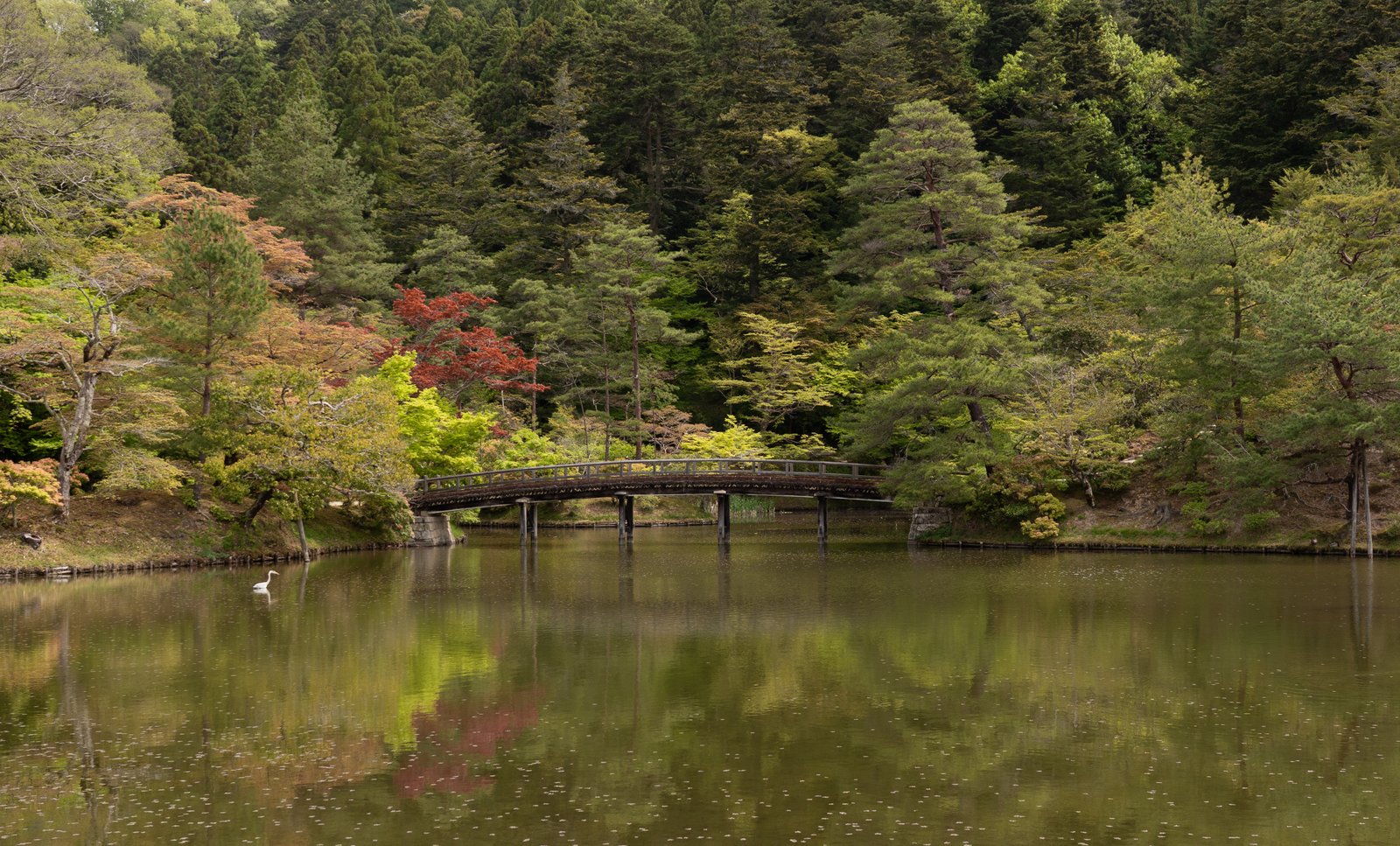
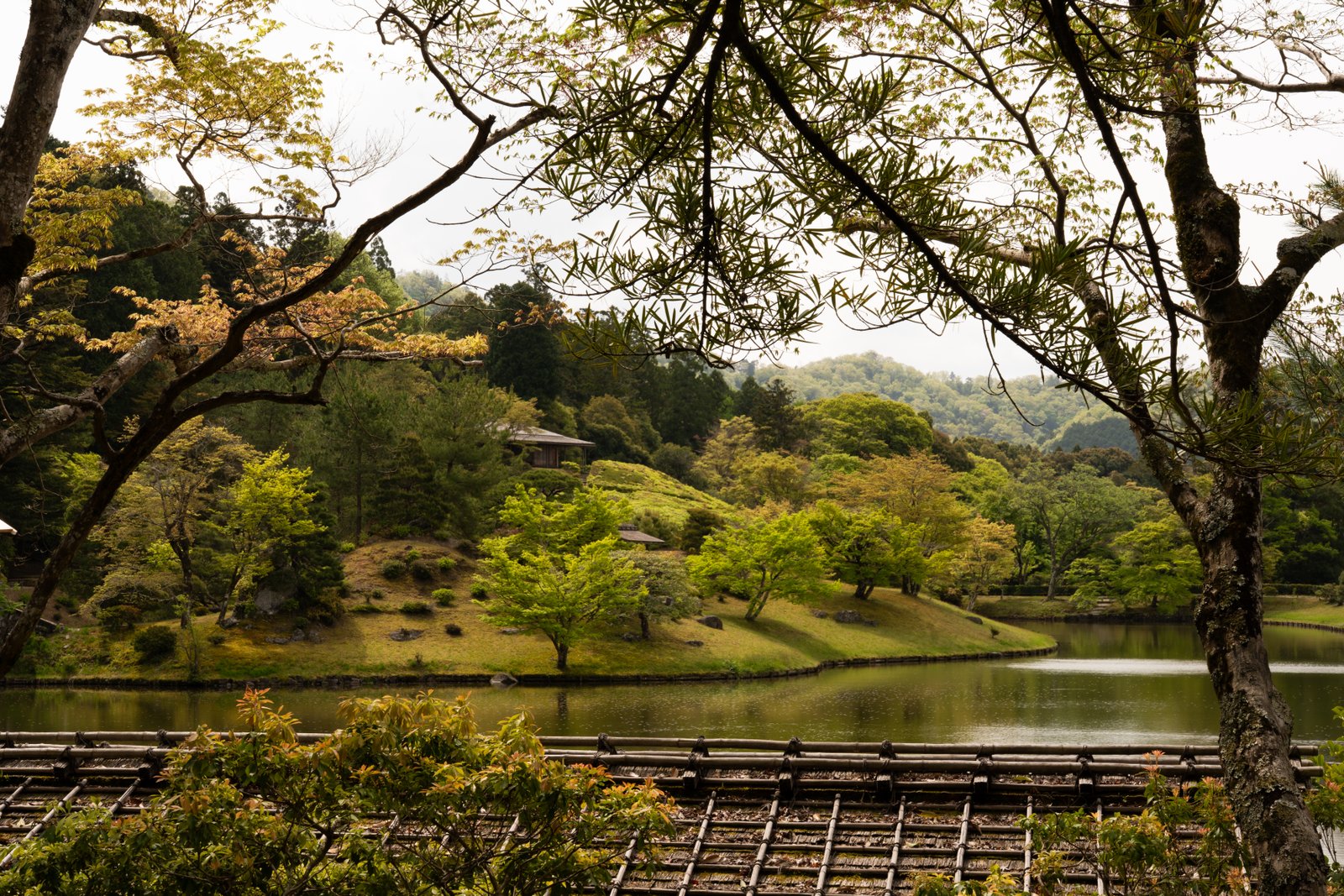
The grounds are split into Lower, Middle, and Upper sections, connected by tree-lined paths and those working rice fields rather than sitting side by side. Each section has its own buildings and garden character, and the tour moves through all three in sequence rather than letting visitors pick and choose. The Upper Villa, the last and largest stop, centers on a big reflecting pond built into the hillside, with paths that climb just high enough to look back down over the water toward the city and the hills beyond — the kind of long, deliberately composed view that Kyoto’s garden designers built entire villas around. It’s a slower, more expansive style of garden than the enclosed courtyards at most Kyoto temples, closer in spirit to a landscaped estate than a single contemplative rock garden.
How to Reserve a Spot
Shugakuin is the one entry on this list where you genuinely need to plan ahead. The Imperial Household Agency’s Kyoto office, inside Kyoto Imperial Park, handles online applications, which open three months in advance on the first of the month and close three days before your intended visit date — so a November 10 tour would open for booking on August 1 and close to new applications on November 7. If you didn’t plan that far out, same-day numbered tickets go on sale at the villa entrance starting at 8:40 a.m., first-come first-served, capped at ten people per tour slot and 50 visitors total for the day, so arriving early matters if you’re going this route. Whichever way you book, every visitor has to present a passport (or a Residence Card, for Japan residents) at entry, and the villa does not admit anyone under 18, including infants carried by a parent — a stricter rule than almost anywhere else covered on this site, so it’s worth checking before building a family itinerary around it.
What the Tour Is Like
Visits run as a single guided group tour lasting roughly 80 minutes, led in Japanese, with rental audio guides available in English, Chinese, French, Korean, and Spanish for anyone who needs the commentary translated. You won’t be able to step inside most of the buildings — visitors stay on the paths and view the interiors through open doors and sliding screens rather than walking through the rooms — but the guides point out architectural details along the way that are easy to miss without the context, from the choice of materials to the way certain buildings were positioned to frame a specific view. Because the whole group moves together, there’s no lingering at any one spot for as long as you’d like, which is a different rhythm than wandering a temple garden solo, but it does keep the visit efficient and predictable.
Getting There
The simplest route from central Kyoto is the Eizan Railway: catch it from Demachiyanagi Station, which itself connects to the Keihan Line, and get off at Shugakuin Station for a roughly 15-minute walk uphill to the entrance. Coming directly from Kyoto Station, that means the JR Nara Line to Tofukuji, a transfer to the Keihan Line to Demachiyanagi, and then the Eizan Railway — about 40 minutes total door to door. City Bus 5 is the other option, stopping at Shugakuin Rikyu-michi, also around a 15-minute walk from there. Either way, build in extra time beyond the walk itself, since you’ll want to arrive well before your appointment to check in and, if you’re going the same-day route, queue for a numbered ticket.
Nearby: Ichijoji, Yase, and Mount Hiei
Shugakuin sits at the northern edge of a part of Kyoto that rewards a full day rather than a single stop. The Ichijoji neighborhood just south holds two more reservation-free gardens worth combining with a Shugakuin visit: the moss-and-maple grounds of Shisen-do and the quiet, rarely crowded Manshu-in. The Eizan Railway line that gets you to Shugakuin continues north toward Yase and the cable car up to Mount Hiei and Enryaku-ji, so a early Shugakuin tour can lead straight into a mountain-temple afternoon if you’re willing to keep moving. Our one-day Eizan Railway itinerary lays out a version of this route in more detail if you’d rather follow a ready-made plan than string it together yourself.
Planning Your Visit
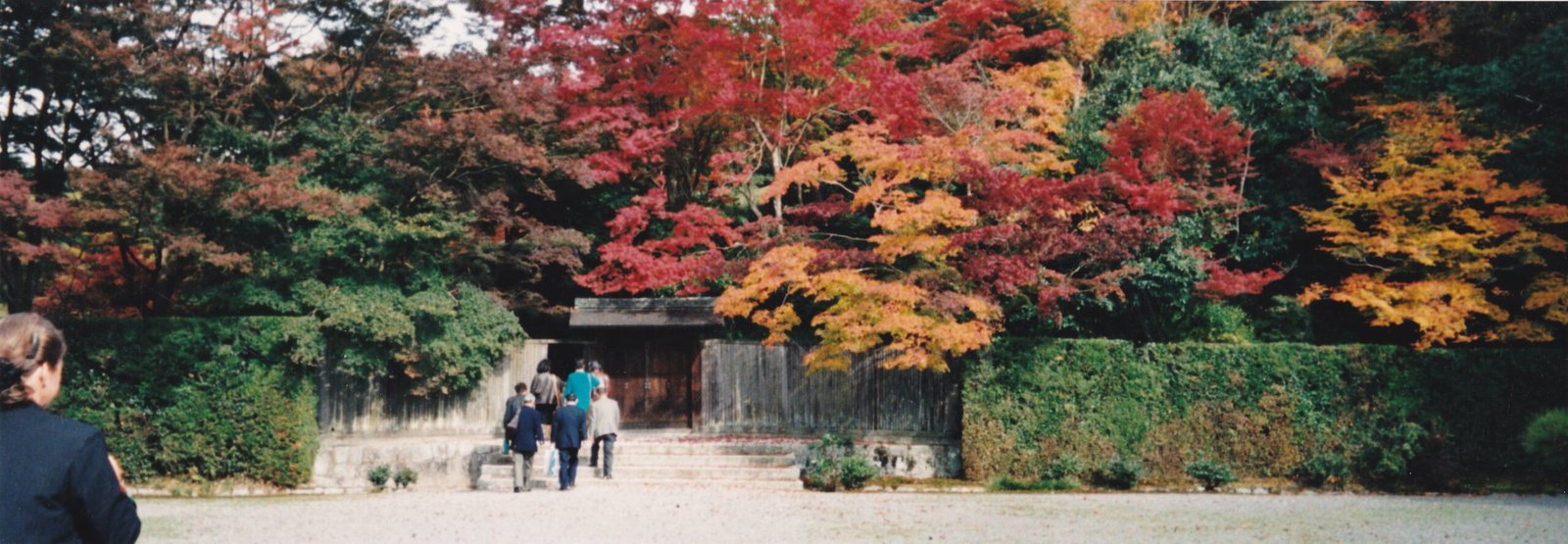
Book online as early as the three-month window allows if you have a specific date in mind, especially in November, when the maples around the Upper Villa’s pond turn and demand for the limited daily slots climbs accordingly — see our autumn foliage guide for how that season plays out across the rest of the city. Wear comfortable shoes, since the tour covers real distance between the three villa sections and includes some uphill walking, and bring your passport or Residence Card without fail — staff check it before letting anyone through the gate. If your travel dates or party include children under 18, this isn’t the stop to plan around; Kyoto has no shortage of other gardens without that restriction.
Bottom Line
Shugakuin asks more of visitors than almost anywhere else in Kyoto — a booked slot, an ID check, and an age limit that rules out families with young kids — but the payoff is a genuinely different kind of garden experience: wide hillside views, working rice fields as part of the walk, and none of the crowds that build up at the city’s ticket-at-the-gate temples. If you’re already spending a day around Ichijoji or Mount Hiei and can plan the reservation in advance, it’s worth building the rest of the itinerary around.