Sanzen-in: A Practical Guide to Ohara’s Imperial Moss-Garden Temple
Every guide to Ohara, including our own, points first toward Sanzen-in, and for once the obvious choice really is the right one. It’s the temple most visitors picture when they imagine this quiet valley north of the city: thick moss under old cedars, a hall of National Treasure statues older than most of Kyoto’s other famous sights, and gardens built for sitting with for a while rather than walking through quickly. If you’re only stopping in Ohara for one temple, this is it — and if you’re planning to see more than one, as most people do, it helps to know what actually makes Sanzen-in worth the climb before you arrive.
The Essentials at a Glance
| What | Details |
|---|---|
| Location | Ohara, Sakyo-ku, Kyoto — the main temple in the village |
| Sect | Tendai; a former monzeki temple once led by priests of imperial birth |
| Known for | The moss garden around the Ojo Gokuraku-in hall, a trio of National Treasure Amida statues, and the Shuhekien strolling garden |
| Hours | Roughly 9:00am–5:00pm, with slightly shorter hours in winter; last entry about 30 minutes before closing |
| Admission | ¥700 for adults, with reduced rates for junior/senior high and elementary students |
| Access | Kyoto Bus 17 direct from Kyoto Station (about an hour), or the Karasuma subway to Kokusaikaikan Station then Bus 19 to Ohara (about 20 minutes) |
A Monzeki Temple With Roots on Mount Hiei
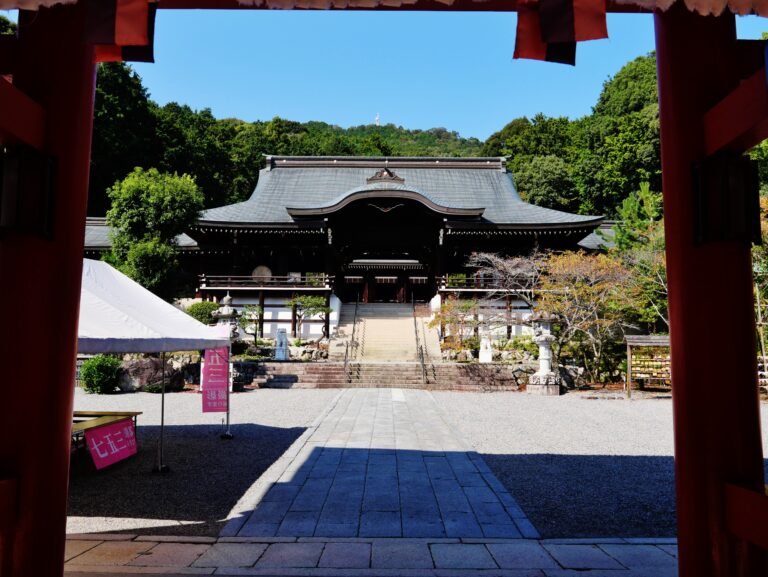
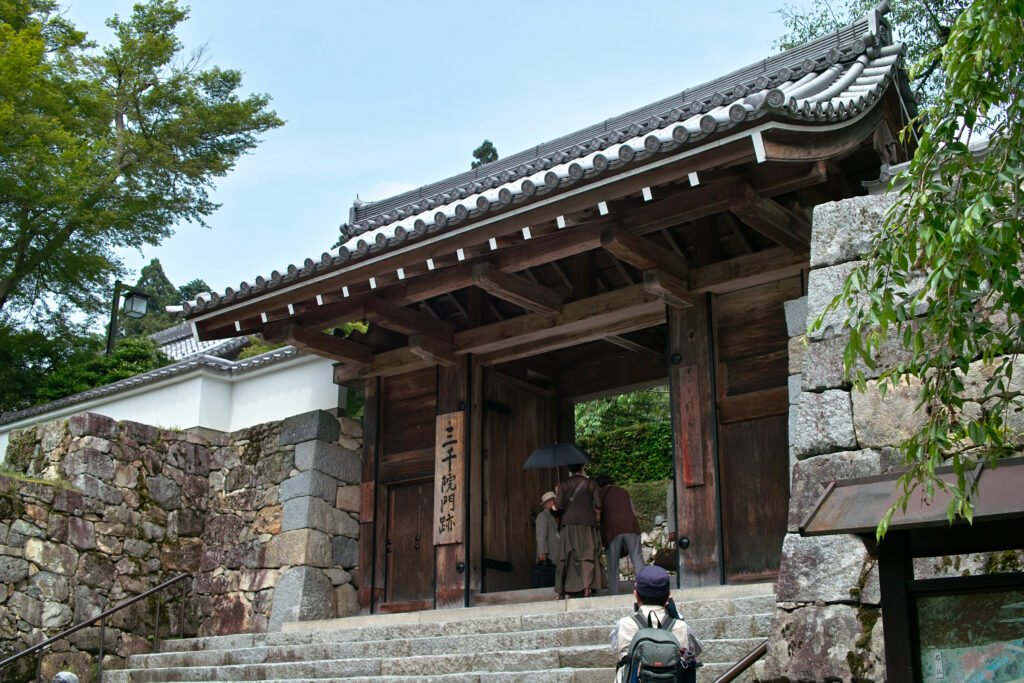
Sanzen-in traces its origins back to Saicho, the monk who brought the Tendai school of Buddhism to Japan in the early ninth century and founded the great temple complex of Enryaku-ji on Mount Hiei, overlooking the city from the northeast. The hall that eventually grew into Sanzen-in began life as a small retreat Saicho built up on the mountain rather than down here in Ohara, and it changed hands and locations more than once before finally settling at its current site in 1871 and taking the name Sanzen-in. By then the temple had already carried a more unusual distinction for centuries: it was a monzeki temple, meaning its head priest’s seat was traditionally filled by a member of the imperial family rather than an ordinary monk, a status it shared with only a small number of temples around the city. That history shows up in the grounds themselves, which feel a notch more formal and palace-like than most of Ohara’s smaller halls.
The Ojo Gokuraku-in and a Thousand-Year-Old Amida Triad
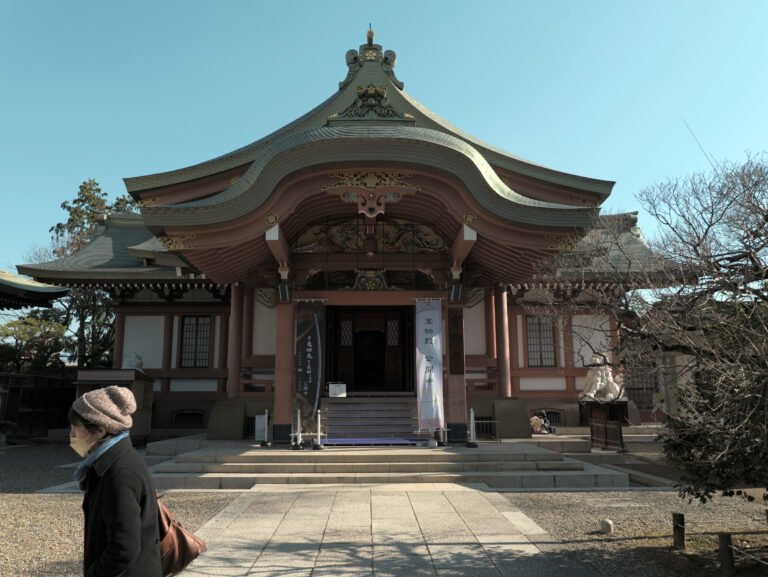
The oldest structure on the grounds is the Ojo Gokuraku-in, a hall built in the late tenth century specifically to hold three Buddhist statues that remain among the temple’s most valued possessions. At the center sits Amida Nyorai, flanked by the bodhisattvas Kannon and Seishi, all three carved in a style associated with the Heian period and now designated National Treasures. The building itself is almost as interesting as what it holds: the ceiling curves upward like the inside of a ship’s hull, a design built specifically to give the tall central Amida statue room to fit beneath it. Centuries of incense and candle smoke have darkened the original decorative paintings inside, and the hall has been repaired more than once over its long history, but the statues remain the reason most people linger here rather than moving straight through to the gardens.
Two Gardens, Two Moods
Sanzen-in’s grounds are really built around two separate gardens, and it’s worth telling them apart before you arrive so you don’t rush past one looking for the other. The Shuhekien is the more conventional of the pair: a pond-and-hill garden topped with a small stone pagoda, meant to be viewed while seated in the Kyakuden guest hall, where staff will bring you matcha and a sweet for an extra fee if you’d like to sit with the view for a while. The second, the moss garden surrounding the Ojo Gokuraku-in itself, is viewed from the Shinden hall and has a very different character — thick, deep-green moss spreads out under maple and cedar trees, with the hall’s dark wooden form rising out of it like something half-grown from the ground. It’s the greener, more atmospheric of the two, and the one most people end up photographing on their way out.
The Smiling Jizo Hidden in the Moss
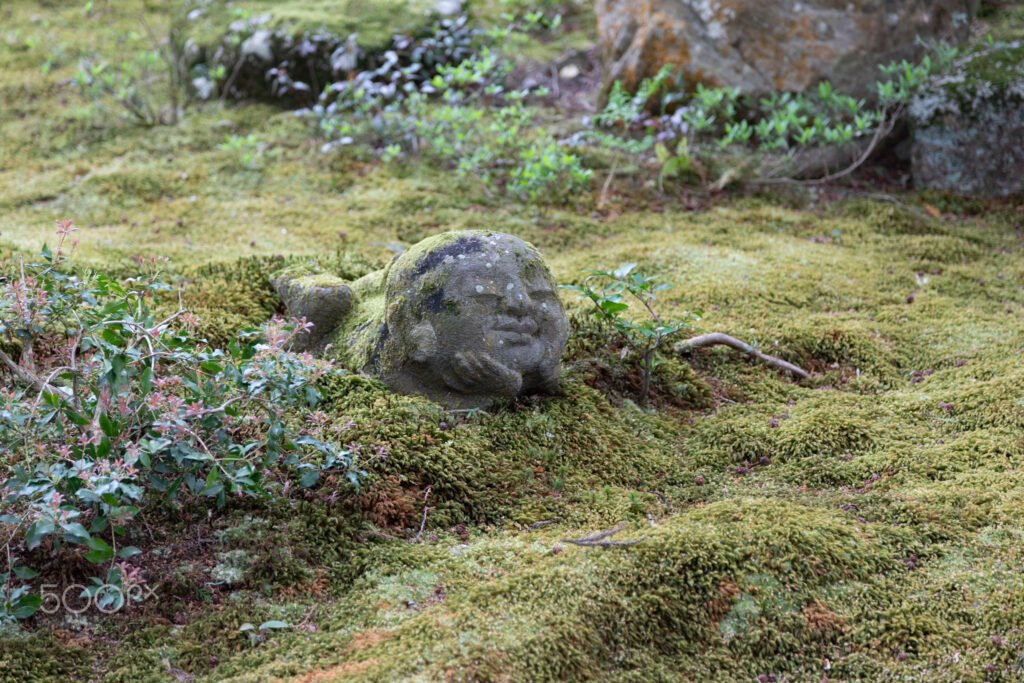
Look closely at that moss garden and you’ll start noticing small stone figures tucked between the roots and undergrowth: a scattered set of palm-sized jizo statues, carved with round, smiling faces, known informally to visitors as the temple’s “warabe jizo,” or child jizo. They’re the work of the sculptor Sugimura Takashi, and they’re placed deliberately out of the way rather than lined up for easy viewing, so that spotting a new one half-hidden in the moss becomes its own small activity during a slow walk through the garden. Kids in particular tend to treat it as a scavenger hunt, though plenty of adults end up doing the same thing without quite admitting to it.
When to Go
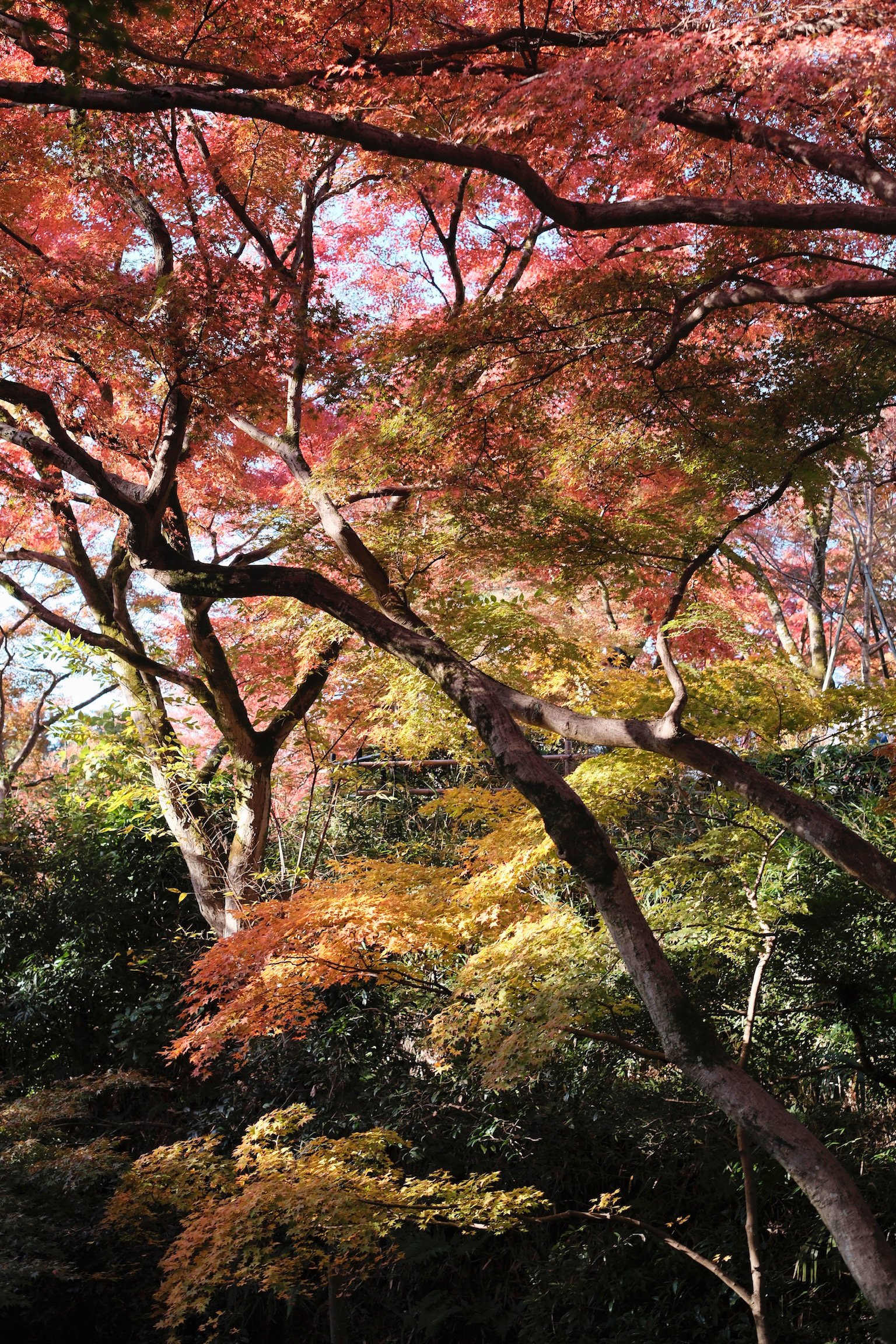
Sanzen-in stays open all year and doesn’t ask for the kind of seasonal planning that some of Arashiyama’s temples do, but its calendar does have real high points. Hydrangeas fill parts of the grounds through the rainy season in June and July, giving the moss garden a quieter, less-visited look than its autumn self. Maple color usually builds through much of November, and because Ohara sits at a slightly higher elevation than central Kyoto, it tends to turn roughly a week ahead of the city center — worth knowing if you’re using our Kyoto in November guide to plan a trip, since Ohara’s peak can land earlier in the month than advice focused on downtown spots would suggest. Our broader Kyoto Autumn Foliage guide covers how Ohara’s timing fits into the rest of the city’s koyo season if you’re mapping a route across several neighborhoods.
Pairing It With the Rest of Ohara
Sanzen-in is usually the first stop for anyone arriving in Ohara, and it’s an easy one to build the rest of a half-day trip around. Our Day Trip to Ohara guide lays out the village as a whole, including the smaller temples scattered around Sanzen-in’s base. A short walk further uphill brings you to Hosen-in, a much smaller temple built around a single framed garden view and an unexpectedly dark piece of samurai history, and the two make a natural pair if you only have time for two stops in the village. Since you’ll be removing your shoes and sitting on tatami in several of these halls, it’s also worth a quick look at our Kyoto Temple and Shrine Etiquette guide before you go, particularly if Sanzen-in is your first formal temple interior of the trip.
Getting There
The simplest option is Kyoto Bus 17, which runs directly from Kyoto Station to the Ohara stop in about an hour, passing through Shijo-Kawaramachi along the way, with departures roughly every 30 minutes. If you’d rather cut down the time spent on the bus, take the Karasuma subway line north to its final stop, Kokusaikaikan Station, then transfer to Kyoto Bus 19, which reaches Ohara in around 20 minutes. Neither route is covered by Kyoto’s one-day bus pass, so budget for the fare separately. From the Ohara bus stop, it’s about a 10-minute walk uphill to Sanzen-in’s gate, and the temple stops admitting visitors roughly 30 minutes before its posted closing time, so don’t plan on arriving right at the wire.
Bottom Line
Sanzen-in earns its reputation as Ohara’s headline sight without needing to oversell itself: a thousand-year-old Buddha hall, a moss garden you can spend half an hour just looking at, and enough imperial history in the background to make the whole place feel a notch more formal than its quiet, rural setting suggests. Most visits run somewhere between 45 minutes and an hour and a half depending on how long you linger over the gardens, and pairing it with Hosen-in or the rest of Ohara’s smaller temples turns a single stop into a genuinely full half-day out of the city.