Hosen-in: A Practical Guide to Ohara’s Picture-Frame Garden and Blood-Stained Ceiling
Ohara gets most of its foot traffic from Sanzen-in, the big moss-garden temple at the top of the village, and that’s fair enough — it’s the headline sight for a reason. But a five-minute walk further up the hill sits Hosen-in, a much smaller temple that pairs two things you wouldn’t expect to find under one roof: a garden framed so precisely by the hall’s own pillars that it’s been called the kind of place you’re reluctant to leave, and a ceiling stained with the blood of samurai who died four centuries ago. It’s an odd combination, and that’s exactly what makes it worth the extra few minutes past Sanzen-in’s gate.
The Essentials at a Glance
| What | Details |
|---|---|
| Location | Ohara, Sakyo-ku, Kyoto — a few minutes’ walk past Sanzen-in |
| Sect | Tendai; a sub-temple of the neighboring Shorin-in |
| Garden | Bankan-en, the “picture-frame garden,” built around a roughly 700-year-old five-needle pine |
| Known for | The framed garden view, a suikinkutsu water harp, and a “blood ceiling” from Fushimi Castle |
| Hours | 9:00am–5:00pm daily, last entry 4:30pm (extended evening hours during the November illumination) |
| Admission | Roughly ¥900 for adults, ¥800 for junior/senior high students, ¥700 for elementary students — includes a bowl of matcha and a sweet |
| Access | Kyoto Bus 17 from Kyoto Station or Bus 19 from Kokusaikaikan Station to the Ohara stop, then about a 10–15 minute walk uphill past Sanzen-in |
A Small Branch of a Bigger Temple
Hosen-in isn’t an independent temple in the usual sense. It’s a sub-temple of Shorin-in next door, which was founded in 1013 by the monk Jakugen, a follower of the Tendai priest Ennin credited with bringing shomyo — a style of Buddhist liturgical chanting — to Japan. Hosen-in grew up around the same period to house monks associated with that chanting tradition, which is part of why the place feels less like a tourist stop and more like a small, working religious community that happens to let visitors sit in its guest hall. You’re not touring a museum piece here; you’re sitting in a room monks have been using for the better part of a thousand years, which changes the pace of the visit whether you intend it to or not.
The Bankan-en: A Garden Framed Like a Painting
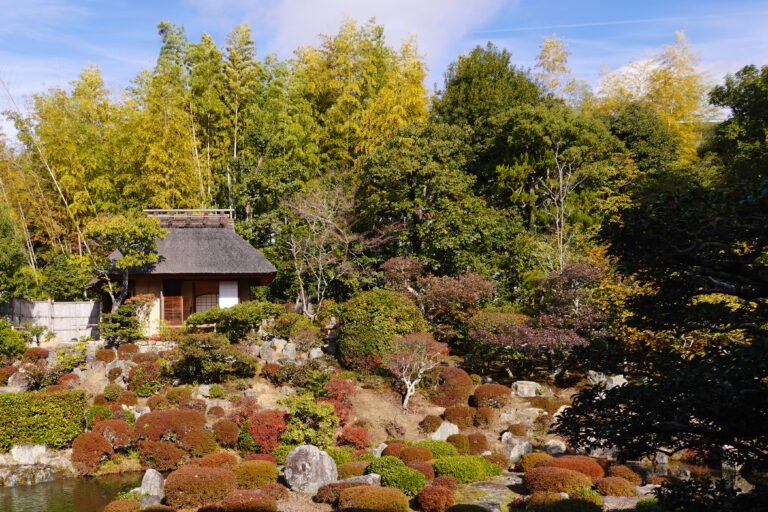
The reason most people make the trip is Bankan-en, the temple’s main garden, viewed while seated on the floor of the guest hall rather than walked through. The hall’s wooden pillars and beams crop the scene into a fixed rectangle, so the garden outside reads less like a yard and more like a hanging scroll that happens to move with the wind. The name is said to mean something close to “a place you’re reluctant to leave,” which is less a marketing line than a fair description of what it’s like to sit there for twenty minutes with a bowl of matcha and nowhere else to be.
The centerpiece is a five-needle pine (goyo-matsu) said to be around 700 years old, pruned over generations into a shape locally compared to Omi-Fuji, the nickname for Mount Mikami across in Shiga, with the wooded Ohara hillside behind it borrowed into the composition as a backdrop. A second, smaller garden at the temple, the Tsuru-Kame-en, takes its name from a pond and stone arrangement shaped to suggest a crane and a turtle — both traditional symbols of longevity in Japanese garden design — though most visitors spend their time with the pine rather than hunting for the crane shape in the stonework.

A Water Harp You Have to Listen For
Easy to miss if nobody points it out: Hosen-in keeps a suikinkutsu, a buried earthenware jar that turns dripping water into a faint, resonant chime. Water trickles down through bamboo pipes set into the veranda floorboards, falls into the hidden chamber below, and echoes back up as a sound closer to a distant bell than running water. You won’t hear it over conversation, so it’s worth sitting quietly for a moment and leaning toward the pipe rather than treating the garden as a photo stop and moving on. It’s a small, old-fashioned bit of garden design — a handful of Kyoto temples still have one — and one of the few sensory details in this guide you can’t get any sense of from a photograph.
The Blood-Stained Ceiling
Look up in the dimmer part of the hall and the mood shifts considerably. Part of Hosen-in’s ceiling is built from floorboards salvaged from Fushimi Castle, stained with the blood of the men who died defending it. In 1600, the castle’s commander, Torii Mototada, held the fortress for about eleven days against a vastly larger force, buying time for his lord, Tokugawa Ieyasu, to prepare elsewhere for what would become the decisive Battle of Sekigahara. When the castle finally fell, Mototada and his remaining garrison are said to have taken their own lives rather than surrender. Afterward, several Kyoto temples — Hosen-in among them — took in sections of the bloodstained floor and installed them as ceiling boards, turning the castle’s ruins into a quiet, permanent memorial rather than letting them rot or be discarded. A handful of other temples around the city, including Shoden-ji and Genko-an, carry the same story with boards from the same castle, which is why Kyoto guides sometimes group them together as the city’s “blood ceiling” temples.
It’s a genuinely strange thing to encounter in the same room as a carefully composed garden view, and the temple doesn’t do much to soften the contrast — there’s no dramatic lighting or signage pushing the story on you, just a dim ceiling and a small printed explanation if you look for one. Take a moment with it rather than rushing back to the garden side of the room.
When to Go
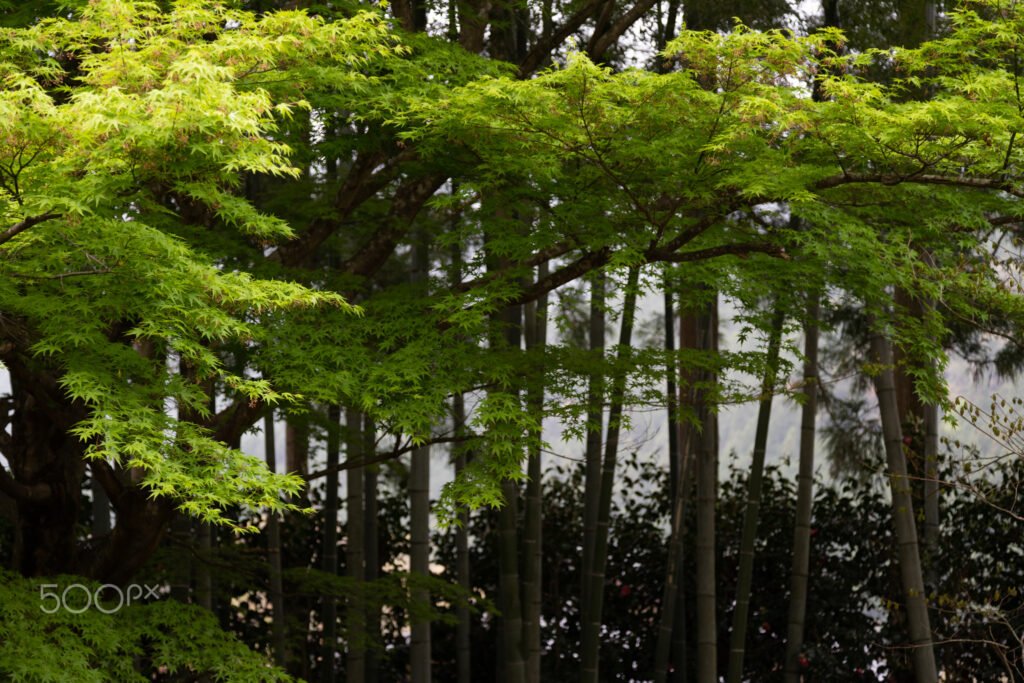
Hosen-in is open year-round and doesn’t require the special-season planning that some Arashiyama sub-temples do, but the garden does change with the calendar. Fresh green growth through May and June is one quiet high point, with far fewer visitors than autumn. Maple color typically builds through mid-to-late November, roughly in step with the rest of Ohara, which tends to turn slightly ahead of central Kyoto — our guide to Kyoto in November has the broader seasonal picture if you’re timing a trip around it. In recent years the temple has also run an evening illumination of Bankan-en for a few weeks around that peak, with reception for the night session closing well before the 9:00pm finish, so check current dates if a lit-up visit is the plan rather than a daytime one. Whatever the season, Ohara’s extra half hour of travel time from central Kyoto keeps crowds noticeably lighter here than at the better-known maple spots closer to the city center, and Hosen-in itself stays calmer still than Sanzen-in just down the path.
Pairing It With the Rest of Your Trip
Hosen-in is one stop on what should really be a half-day in Ohara rather than a quick detour; our Day Trip to Ohara guide covers Sanzen-in and the village’s other small temples, and lays out the bus routes and timing that get you here in the first place. If autumn color is part of the plan, our Kyoto Autumn Foliage guide places Ohara’s timing against the rest of the city’s koyo spots, and the Kyoto in November guide is worth a read if your trip falls in that window generally. And since you’ll be removing your shoes and sitting on tatami in a working religious space here, not just walking a garden path, it’s a good moment to brush up on Kyoto Temple and Shrine Etiquette if you haven’t already.
Getting There
The simplest route is Kyoto Bus 17 direct from Kyoto Station, a ride of about an hour to the Ohara stop. If you’d rather cut the bus time down, take the Karasuma subway line north to Kokusaikaikan Station and transfer to Kyoto Bus 19, which reaches Ohara in about 20 minutes from there. Either way, Ohara sits outside the zone covered by Kyoto’s one-day bus pass, so budget for the fare separately. From the Ohara bus stop, follow the same path up toward Sanzen-in; Hosen-in’s gate is a few minutes past Sanzen-in’s entrance, on a side lane that’s easy to miss if you’re focused on the main approach. Most of Ohara’s temples, Hosen-in included, stop admitting visitors about 30 minutes before their listed closing time, so don’t plan on arriving right at 4:45 for a 5:00 close.
Bottom Line
Hosen-in rewards the kind of visitor who’s willing to sit still for a while rather than tick off a list of sights. The framed garden and the pine are the obvious draw, the water harp is the detail most people miss, and the blood ceiling gives the place a layer of history that has nothing to do with gardening at all. None of it takes long to see — most visits run somewhere between twenty minutes and an hour — but it’s a genuinely different pace from the bigger stops in Ohara, and that contrast is reason enough to make the short extra walk past Sanzen-in’s gate.