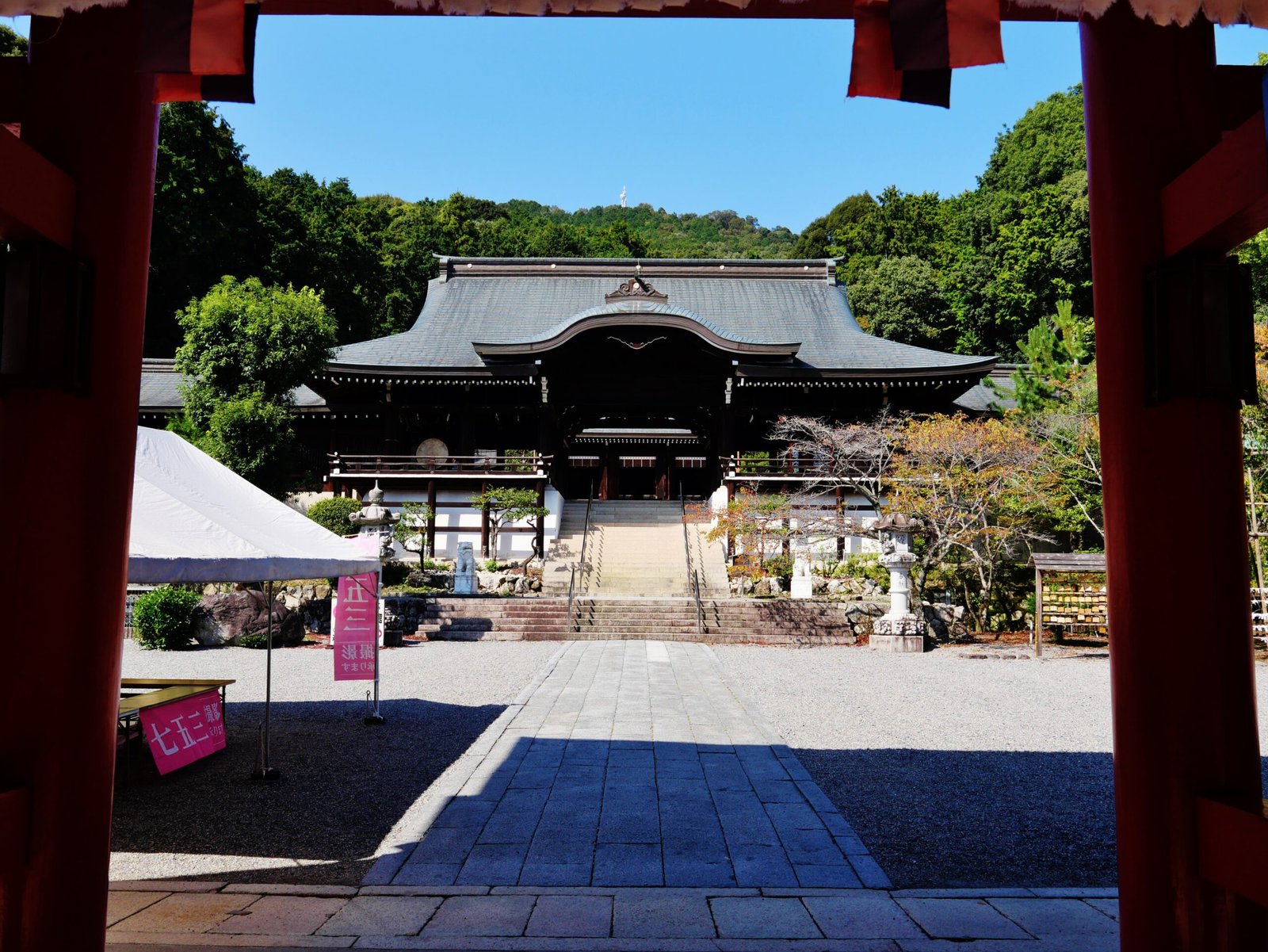
A Day Trip to Otsu and Lake Biwa: A Practical Guide to Shiga’s Lakeside Capital
Most of the day trips covered on this blog so far stay inside Kyoto Prefecture, but one of the easiest trips out of the city actually crosses the prefectural line into Shiga. Otsu, the city at the southern tip of Lake Biwa, was briefly the capital of Japan in the 7th century, and it’s close enough to central Kyoto that the whole outing is really more of an extension of a morning than a full expedition. Between a Tendai temple old enough to predate most of Kyoto’s famous ones, a shrine built around clocks and a card game, and Japan’s largest lake sitting right at the end of the platform, it’s a day trip that feels noticeably different from anywhere else on this list.
The Essentials at a Glance
| What | Details |
|---|---|
| Where | Otsu, Shiga Prefecture, on the southern shore of Lake Biwa |
| Getting there | JR Biwako Line from Kyoto Station to Otsu Station, about 9 minutes |
| Alternative route | Keihan/Tozai Line from Sanjo Station to Biwako-Hamaotsu Station, around 25 minutes |
| Main stops | Mii-dera (Onjo-ji), Omi Jingu, the Lake Biwa waterfront, optionally Hiyoshi Taisha in Sakamoto |
| Mii-dera admission | around ¥600 for adults, 8:00am-5:00pm (confirm current rates before you go) |
| Time needed | a full day if combining Mii-dera, Omi Jingu, and the lakeside; half a day for just one or two stops |
| Pairs well with | Mount Hiei and Enryaku-ji, on the Shiga side of the same mountain |
Mii-dera, One of Japan’s Largest Temple Complexes
Mii-dera, formally Onjo-ji, was founded in 672 by Emperor Tenmu in memory of his brother, which puts its origins in roughly the same era as several of Kyoto’s oldest temples, even though it sits just across the prefectural line. It’s the head temple of the Tendai-jimon school, a branch that split from the main Tendai sect centered on Mount Hiei’s Enryaku-ji after a dispute between rival factions of monks, and the complex has grown to more than forty buildings spread across its grounds, regularly described as one of the largest temple compounds in Japan. The Kondo, the main hall, is a National Treasure, and several other structures, including the Niomon Gate and the Kannon-do hall, carry Important Cultural Property status.

One of the temple’s best-known stories involves its bell, kept today in a small building on the grounds. According to the legend, the warrior-monk Benkei, best known as the loyal retainer of Minamoto no Yoshitsune, dragged the bell up to Mount Hiei after a conflict between the two temples. The bell, the story goes, refused to settle in its new home and rang out with a sound closer to a complaint than a chime until Benkei relented and hauled it back down to Mii-dera, supposedly leaving strike or drag marks on it that are still pointed out today. Separately, Mii-dera’s own bell is counted among the Eight Views of Omi and is said to rung in the early evening, with some accounts ranking it among the three finest-sounding temple bells in Japan. The grounds are known for cherry blossoms in early April and for autumn foliage that tends to peak around late November, which makes a November visit reasonably well timed either way.
Omi Jingu: A Shrine Built Around Clocks and Cards
Omi Jingu is a much newer shrine, built in 1940, but what it commemorates is considerably older. In 667, Emperor Tenji moved the imperial capital from Asuka to Otsu, in the old province of Omi, and ruled from a palace believed to have stood on or near the shrine’s current grounds before the court moved on again a few years later. Tenji is also credited with building Japan’s first water clock, and Omi Jingu has leaned into that legacy with a small clock museum and a collection of replica historical timepieces on display, along with an annual Clock Festival held every June.
The shrine has a second, less expected claim to fame: it’s considered the birthplace of karuta, the card game built around matching classical poems, and it hosts a nationally watched Karuta Championship each January that drew wider attention after the game featured prominently in the Chihayafuru manga and anime series. Between the clocks and the cards, Omi Jingu ends up being one of the more unusual single-purpose shrines in the Kyoto-Shiga area, and it’s a short, easy stop to add if Mii-dera is already on the day’s plan.
Lake Biwa Itself, and the Canal That Connects It to Kyoto
Lake Biwa is Japan’s largest freshwater lake, with a shoreline reported at over 120 kilometers, and much of Otsu’s waterfront is built around views across it rather than any single ticketed attraction. It’s worth simply walking the lakeside promenade near Otsu Port for a while, especially on a clear day when the far shore and the hills beyond are visible across the water.

The lake also connects to Kyoto in a more literal way, through the Lake Biwa Canal, a roughly 20-kilometer waterway built to carry lake water and, later, goods and passengers into the city. Construction began in 1885 under the engineer Tanabe Sakuro and took about five years to complete, and the canal’s arrival at Nanzen-ji, via the brick aqueduct known as the Suirokaku, is something many visitors photograph without necessarily knowing the backstory; our Nanzen-ji guide covers that side of it in more detail. A modern sightseeing cruise along part of the canal, running between a dock near Biwako-Hamaotsu and Keage in Kyoto, resumed in 2018 after a 67-year gap, passing through several short tunnels along the way; it runs on a limited schedule and requires advance reservation, so check availability well before you plan to go. A separate, larger sightseeing boat, the Michigan, operates lake cruises of about an hour or more directly from Otsu Port.
Hiyoshi Taisha and the Sakamoto Side of Mount Hiei
If there’s time for one more stop, Hiyoshi Taisha sits at the foot of Mount Hiei in the Sakamoto district, a short distance north of central Otsu, and is traditionally treated as a guardian shrine connected to Enryaku-ji on the mountain above it. The shrine’s grounds are dotted with monkey imagery, since the monkey is considered the shrine’s sacred messenger, and roughly 3,000 maple trees across the precinct turn a deep red in late autumn, making it one of the less crowded foliage spots in the wider Kyoto-Shiga area. The shrine has roots going back well over a thousand years, was burned during Oda Nobunaga’s 1571 campaign against Mount Hiei, and was later rebuilt. Sakamoto is also where the Hieizan cable car departs for Mount Hiei, which makes it a natural link to our separate Mount Hiei and Enryaku-ji guide if you’d rather approach the mountain from the Shiga side instead of the Kyoto side.
Getting There and Planning the Day
The simplest route from central Kyoto is the JR Biwako Line directly from Kyoto Station to Otsu Station, a ride of about nine minutes, which makes this one of the shortest “day trips” on this blog in terms of pure travel time. An alternative is the Keihan Keishin/Tozai Line from Sanjo Station to Biwako-Hamaotsu Station, roughly 25 minutes and a reasonable option if you’re already on that side of town or want to arrive closer to the lakefront and Omi Jingu. Mii-dera is about a 10 to 20-minute walk from either the Keihan Mii-dera stop or JR Otsu Station, depending on which line you take, so comfortable shoes are worth it regardless of route. Our Getting Around Kyoto guide covers IC cards and ticketing basics that carry over into Shiga without much adjustment.
Bottom Line
Otsu doesn’t get nearly the attention of Nara, Osaka, or Uji among day trips from Kyoto, which is part of what makes it worth going. A nine-minute train ride gets you to a temple complex that rivals anything inside Kyoto city limits, a shrine with a genuinely odd dual identity around clocks and card games, and a lakefront big enough to make the rest of the day feel unhurried. If you’ve already worked through the more obvious day trips on this blog, Otsu and Lake Biwa are a logical, low-effort next stop.