Zuiki Matsuri: A Practical Guide to Kitano Tenmangu’s Harvest Festival
Kyoto’s best-known festivals tend to be the ones with the biggest floats or the longest costume parades. Zuiki Matsuri doesn’t compete on either front, and that’s part of what makes it worth catching if you’re in the city in early October. Held at Kitano Tenmangu, the shrine dedicated to the scholar-deity Sugawara no Michizane, it’s a harvest festival built around portable shrines decorated almost entirely in vegetables, grains, and dried produce rather than gold leaf or lacquer — a display that’s as strange to look at as it sounds, in a good way.
The Essentials at a Glance
| What | Details |
|---|---|
| Dates | October 1–5 (this is an annual fixed-date festival; confirm the current year’s exact ceremony times on the shrine’s official announcements closer to your trip) |
| Cost | Free to view from the street; no ticket needed |
| Location | Kitano Tenmangu Shrine, with a temporary resting shrine (otabisho) in the Nishijin area during the middle days |
| Best viewing | Along the procession route on October 1 and 4, especially near the Kamishichiken geisha district, where geiko and maiko take part |
| Getting there | City bus 50 from Kyoto Station to the Kitano Tenmangu-mae stop; or subway to Imadegawa Station and a connecting bus or 20-minute walk |
| Good to pair with | A stop at Kitano Tenmangu itself, since the shrine and its grounds are worth seeing outside festival days too |
A Thousand Years of Saying Thanks for the Harvest
Zuiki Matsuri traces back roughly a thousand years, to a mid-10th-century procession organized to give thanks to the Kitano Tenmangu deity for a good harvest. That original purpose hasn’t really changed: the festival is still a harvest celebration first, built around carrying the god’s spirit out into the neighborhood it protects and back again, with several days of smaller ceremonies in between. It’s a different register from Kyoto’s more famous festivals — there’s no month-long buildup like Gion Matsuri, no sweeping historical costume parade like Jidai Matsuri, which falls later the same month. Zuiki Matsuri is smaller, more local, and centered on one genuinely odd piece of craftsmanship.
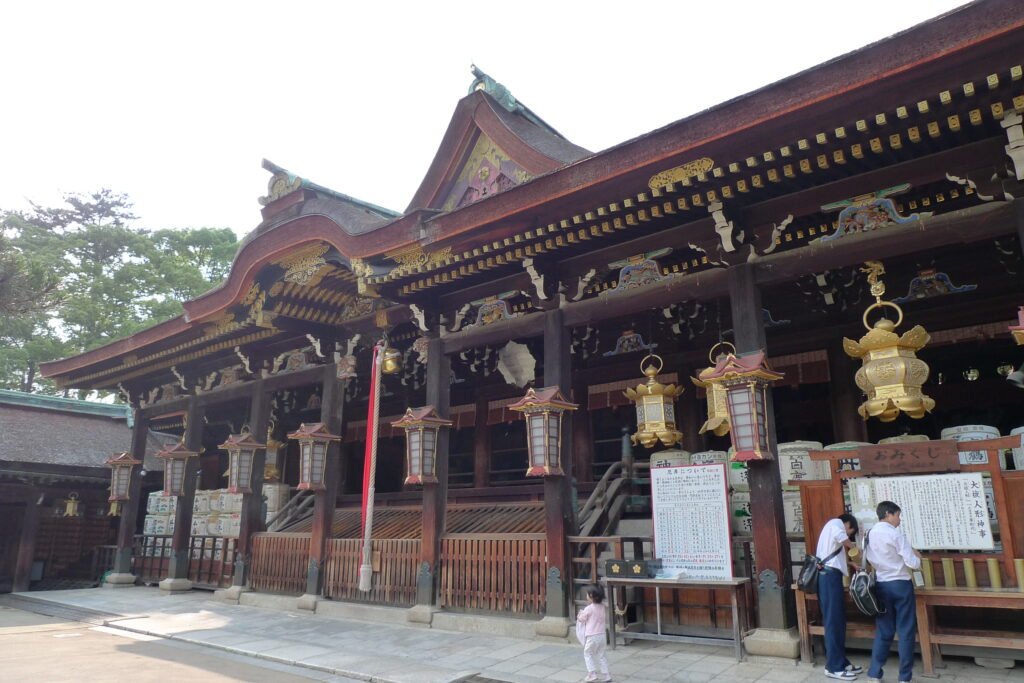
Kitano Tenmangu itself is dedicated to Sugawara no Michizane, a 9th-century scholar and statesman who was posthumously deified as the god of learning, which is why the shrine draws students year-round hoping for exam luck. Zuiki Matsuri predates that scholarly reputation by a stretch and has little to do with studying — it’s rooted in the shrine’s older role as protector of the surrounding farmland — but it’s a useful reminder that Kitano Tenmangu was a working neighborhood shrine long before it became known for ema plaques and plum blossoms.
The Vegetable Mikoshi
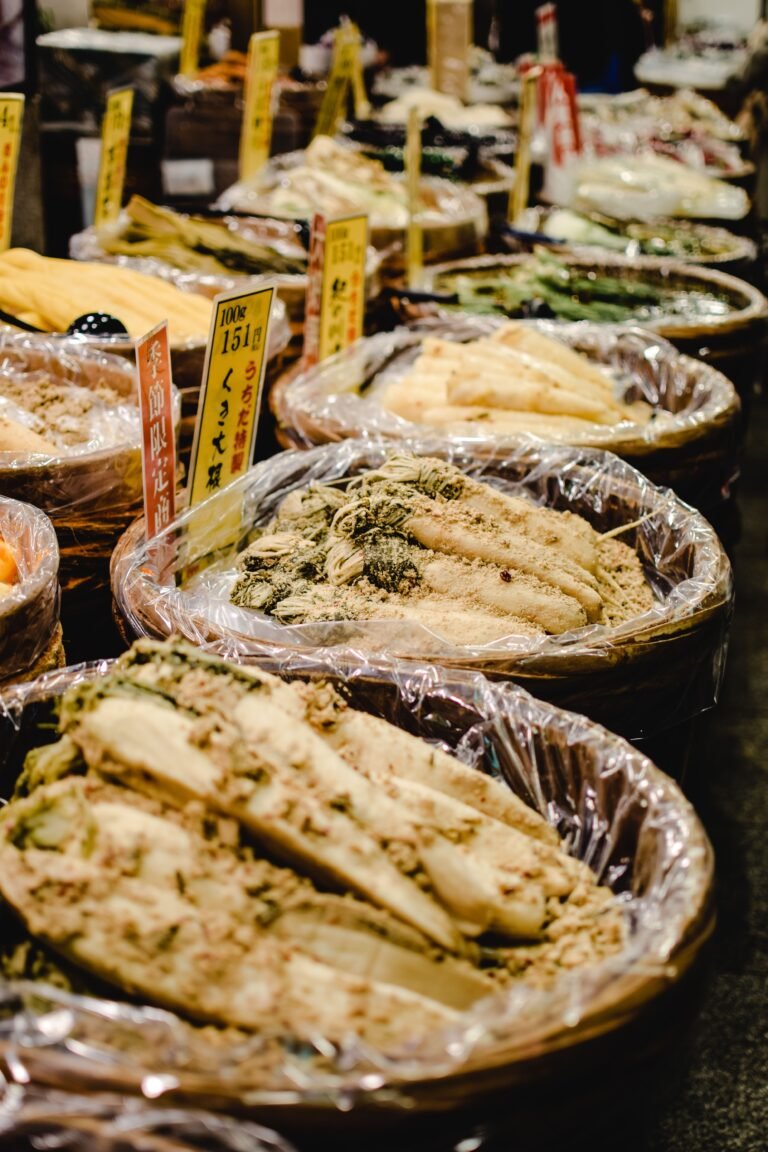
The festival takes its name from zuiki, the stalk of the taro plant, which forms the roof of one of the portable shrines carried in the procession. From there the decoration only gets more elaborate: dried greens, tofu skin, wheat, and marigolds cover the shrine’s surface, with strings of dried eggplant, citrus peel, and peppers hung around it, and decorative panels depicting legendary scenes are built entirely out of vegetables and grains rather than paint or lacquer. It’s a genuinely unusual object to see up close — more folk art installation than religious icon, though it serves as both. The mikoshi is assembled fresh each year by parishioners in the weeks leading up to the festival, using that year’s harvest, so no two years look quite identical even though the format stays the same.
What Happens Over the Five Days
The festival runs in roughly the same shape every year. On October 1, a departure ritual takes place at the shrine in the morning, followed by an afternoon procession that carries the mikoshi from Kitano Tenmangu to a temporary resting shrine, the otabisho, set up in the Nishijin neighborhood. The next two days are quieter, with ceremonies held at the otabisho rather than large public processions, including a formal tea offering. On October 4, the mikoshi make the return trip to Kitano Tenmangu, and on October 5 the festival closes with a final ceremony and a traditional Yaotome dance performed by shrine maidens. If you only have time for one day, the first and fourth are the ones with the actual procession moving through the streets; the middle days are for anyone who wants to see the mikoshi up close while it’s stationary.
Where to Watch
The procession route runs through the streets around Kitano Tenmangu, and the Kamishichiken district just east of the shrine is generally considered the best place to watch, partly because it’s Kyoto’s oldest geisha district and partly because geiko and maiko from the district traditionally take part in the procession in full traditional dress — a combination you don’t get at most of Kyoto’s other autumn festivals. There’s no admission fee and no reserved seating; it’s a street event, so arriving 20 to 30 minutes before a scheduled procession time gives you a reasonable spot without an early-morning wait.
What to Expect and What to Bring
Early October in Kyoto is generally mild, warmer than most visitors expect for autumn and still humid enough some afternoons that light layers work better than a heavy jacket, though evenings can turn cool once the sun is down. The processions go ahead in light rain, so an umbrella is worth carrying rather than assuming a wash-out; a serious downpour is one of the few things that changes the schedule, and even then it’s usually a delay rather than a cancellation. The streets around Kamishichiken are narrow, and the crowds on October 1 and 4, while nowhere near Gion Matsuri levels, are enough that comfortable shoes and a bit of patience go further than trying to plant yourself right at the front. If you’d rather look at the mikoshi without the crowd, the quieter days at the otabisho — October 2 and 3 — are the better window, and the shrine grounds themselves are unlikely to feel busy on any of the five days if all you want is to see them.
Getting There
City bus 50 runs directly from Kyoto Station to the Kitano Tenmangu-mae stop and is the simplest option if you’re starting downtown; our Getting Around Kyoto guide covers how the city’s bus network and IC cards work if this is your first time using one. The subway to Imadegawa Station is the alternative, followed by a connecting bus or a 20-minute walk north. Either way, plan for slower-than-usual bus traffic on procession days, since the routes near the shrine can be affected by the crowds.
Bottom Line
Zuiki Matsuri isn’t going to fill a whole day the way Gion Matsuri’s float displays can, but it’s one of the more distinctive smaller festivals in Kyoto’s autumn calendar, and it’s free, easy to reach, and rarely crowded compared to the city’s headline events. If your trip already lines up with early October, it’s worth building an afternoon around the October 1 or October 4 procession, or simply stopping by Kitano Tenmangu on any of the five days to see the vegetable mikoshi while it’s on display.