Entsu-ji: A Practical Guide to Kyoto’s Borrowed-View Garden Temple
Ichijoji’s little cluster of temples — Shisen-do, Manshu-in, Enko-ji — gets a reasonable trickle of visitors these days, enough that calling any of them hidden is a stretch at this point. Entsu-ji, a short way further north in the Iwakura neighborhood, hasn’t caught up. It holds one of the most carefully engineered garden views in the city, built specifically to make Mount Hiei look like it belongs inside the temple’s own hedge line, and it still gets described by the people who write about it as having relatively few visitors — mostly because the route getting there is thin on signage and the temple does very little to advertise itself.
The Essentials at a Glance
| What | Details |
|---|---|
| Admission | ¥500 adults, ¥300 students |
| Hours | 10:00am–4:30pm (until 4:00pm, December–March); closed Wednesdays by most accounts, plus occasional closures for ceremonies and at year-end — worth confirming locally since sources don’t fully agree on the weekly closing day |
| Visit length | About an hour |
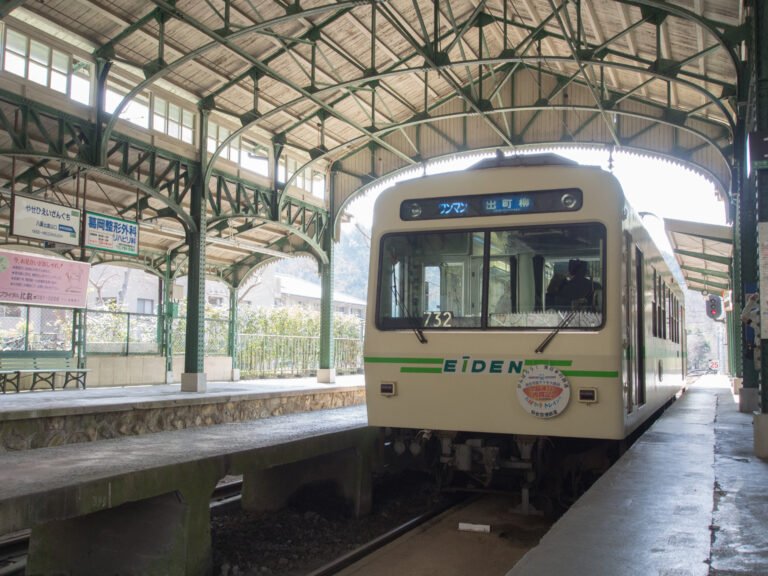
| Access | Kyoto city bus 45 to Entsuji-michi, then roughly a 10-minute walk; or the Eizan Railway to Takaragaike, then about a 35-minute walk |
| Best time | Autumn, when the foreground maples color up against Mount Hiei, though the garden holds its structure in other seasons too |
| Nearby | Shugakuin Imperial Villa, Shisen-do, and Manshu-in are all within a few kilometers to the south |
A Retirement Villa That Became a Temple
Entsu-ji’s land started out as a retirement villa rather than a temple. Emperor Go-Mizunoo — the same retired emperor who later built the much larger Shugakuin Imperial Villa in the hills nearby, and who is tied to the design of Katsura Imperial Villa’s garden as well — had a residence called Hataeda Palace built on the site in the seventeenth century. By most accounts he had a direct hand in laying out its garden himself, which is unusual; gardens at this level of refinement are more often credited to a professional designer than to the person who commissioned them. The villa stayed a private residence until 1678, when a nun named Enkoinbunei, who had previously served as an attendant to Go-Mizunoo’s mother, converted it into a temple. Myoshin-ji’s Rinzai Zen lineage took over as head priest shortly after, and Entsu-ji has stayed a quiet affiliate of that larger temple complex ever since.
The Garden That Borrows a Mountain
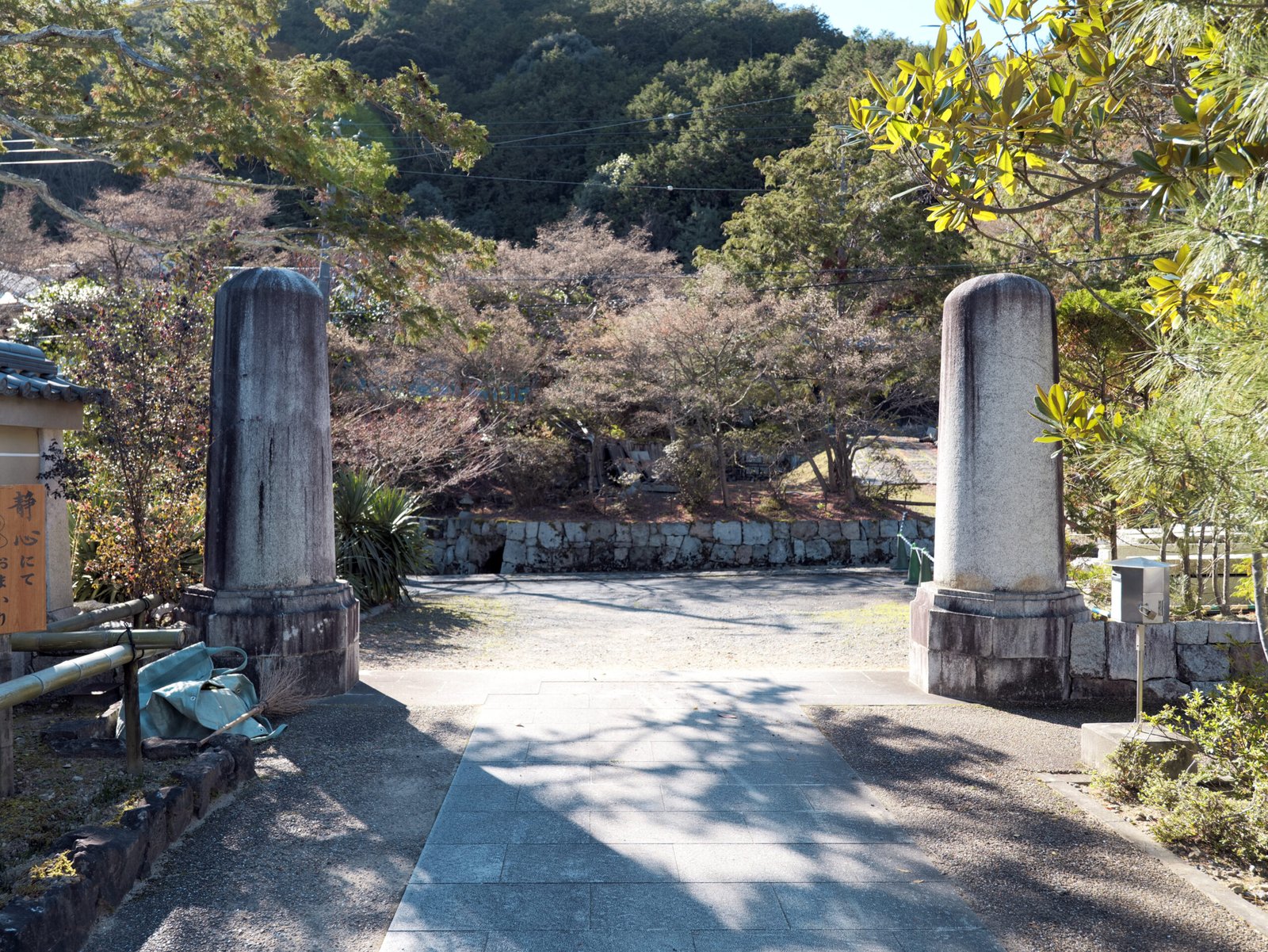
What makes Entsu-ji worth the trip out is a design technique called shakkei, or “borrowed scenery,” where a garden is laid out so that something well outside its own boundaries reads as part of the composition. Here that something is Mount Hiei. The dry garden uses roughly forty rocks set into beds of moss, arranged in three layers: rocks, moss, and maples in the foreground; a row of tall cedars and more than fifty varieties of camellia in the middle distance, planted specifically to frame the view without blocking it; and Mount Hiei itself rising behind everything, cropped by the hedge line so it reads less like a distant mountain and more like a backdrop built to order for the garden in front of it. The garden is designated a National Place of Scenic Beauty, and whatever that designation is worth to you walking in, the engineering behind the view is the kind of thing that’s hard to fully appreciate until you’re actually sitting on the veranda looking at it.

Why It’s Still Overlooked
The main reason Entsu-ji doesn’t draw the crowds its garden arguably deserves comes down to logistics more than quality. It isn’t directly on a train line — the closest Eizan Railway station is a genuine 35-minute walk away — and the bus connection, while shorter, still requires knowing which of several similarly named stops to get off at. Guides describe the walking route as poorly signed in places, which filters out a lot of casual visitors before they ever reach the gate. The upside of all that friction is a garden you can actually sit with for a while without someone else’s shoulder in the frame, which is a rarer experience than it should be at a site with this kind of reputation among garden specialists.
Visiting the Garden
Photography is allowed from the garden side of the hall, which is really the only angle anyone comes for, but cameras and phones are off-limits inside the Hondo itself, so don’t plan on photographing the interior on your way through. Most visitors spend their time simply sitting on the veranda facing the garden rather than moving through a sequence of rooms, which suits the pace of the place — there isn’t much else to see once you’ve taken in the main view, and that’s by design rather than an oversight. Autumn brings the clearest payoff, when the foreground maples color up against the camellia hedge and the mountain beyond, though the garden holds its structure well enough in other seasons that a visit outside peak koyo season is still worthwhile if you happen to be in the neighborhood. Our Kyoto Autumn Foliage guide has the wider picture on timing a trip around koyo season if autumn color is the goal.
Getting There
The most straightforward route is Kyoto city bus 45 to the Entsuji-michi stop, followed by about a 10-minute walk. The Eizan Railway option — getting off at Takaragaike and walking roughly 35 minutes, or about 3 km — really only makes sense if you’re already riding that line for another stop nearby, such as the temples covered in our One Day on the Eizan Railway itinerary. A taxi from the Ichijoji area is a reasonable shortcut if you’ve already spent the morning at Shisen-do or Manshu-in and don’t want to backtrack to a bus stop. Entsu-ji isn’t covered by the Japan Rail Pass, for what it’s worth, though that rarely matters for a bus-and-walk route like this one.
Pairing It With the Rest of Iwakura and Ichijoji
Entsu-ji sits close enough to Shugakuin Imperial Villa that the two can reasonably share a morning, provided you’ve already arranged Shugakuin’s advance reservation, though Entsu-ji’s quiet, sit-and-look pace makes a useful contrast to Shugakuin’s longer guided walking tour. It also fits naturally onto the end of a day that starts at Shisen-do and Manshu-in further south in Ichijoji — all three gardens share a similar philosophy of using the landscape beyond their walls, just at different scales, which makes comparing them back to back more interesting than visiting any one of them alone.
Bottom Line
Entsu-ji isn’t a temple you stumble into by accident, and that’s sort of the point. It takes a deliberate trip to a part of the city most visitors never have a reason to reach, in exchange for one of Kyoto’s most precisely composed garden views and the rare chance to sit with it in something close to silence.