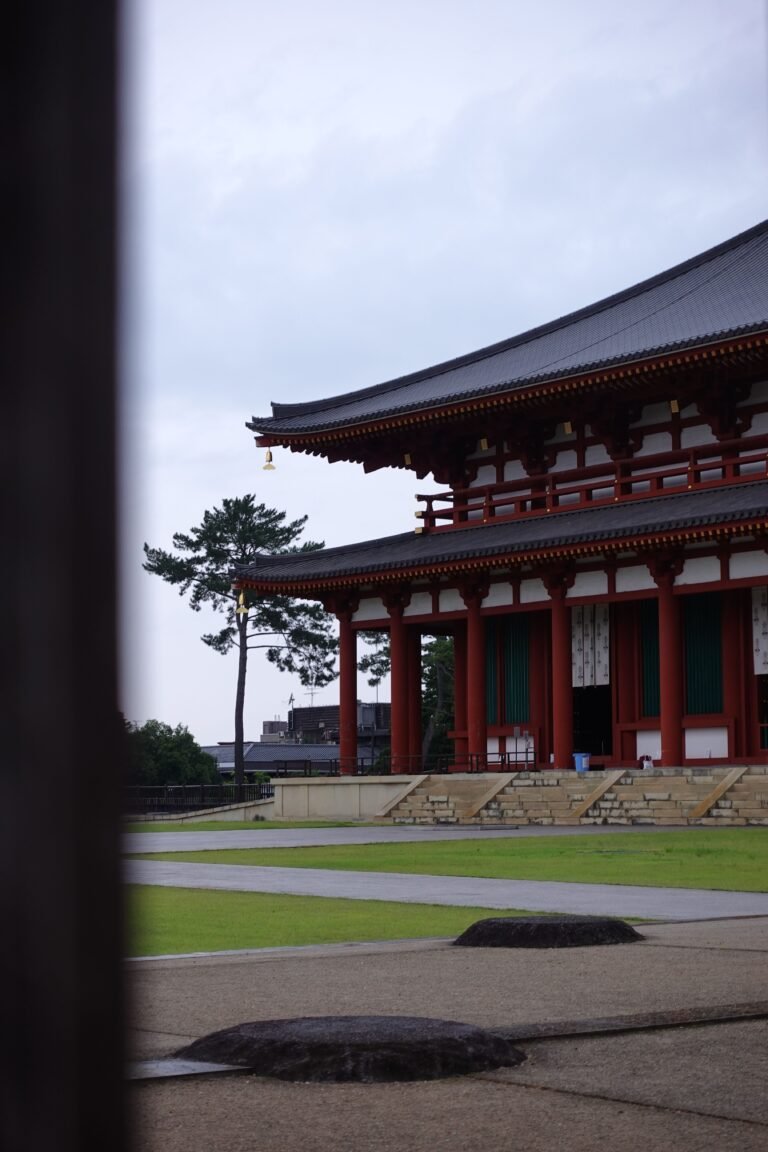
Toji-in: A Practical Guide to Kyoto’s Hidden Ashikaga Shogun Temple
Ryoan-ji’s rock garden and Kinkaku-ji’s gold leaf take nearly all of the attention in this corner of northern Kyoto, and Toji-in, sitting quietly between the two, gets almost none of it — despite being the funerary temple of the entire Ashikaga shogunate and home to a garden pond designed by the same monk who shaped Tenryu-ji and Saiho-ji. If you’ve already built a morning around Kinkaku-ji and Ryoan-ji, Toji-in is close enough, and quiet enough, to be worth the short detour.
The Essentials at a Glance
| What | Details |
|---|---|
| Location | Toji-in Kitamachi, Kita-ku, between Ryoan-ji and Kinkaku-ji, next to Ritsumeikan University’s Kinugasa campus |
| Hours | roughly 9:00am to 4:30pm, last entry around 4:00pm, with shorter hours reported around New Year’s — worth checking ahead |
| Admission | around ¥600 for adults and ¥300 for children, by most recent accounts |
| Founded | 1341, as the Ashikaga clan’s family and funerary temple |
| Garden designer | Muso Soseki, who also designed the gardens at Tenryu-ji and Saiho-ji |
| Access | Tojiin Station, on the Keifuku Kitano (Randen) Line, is named after the temple and sits right outside it |
| Pairs well with | Kinkaku-ji and Ryoan-ji, both within about a kilometer |
A Funerary Temple for a Shogunate
Toji-in’s founding is tangled up with the beginning of the Ashikaga shogunate itself. Ashikaga Takauji, the shogunate’s founder, had the monk Muso Soseki establish a temple on or near this site around 1341 — accounts differ slightly on the exact sequence of early renamings and relocations, so treat the date as approximate — intending it as the clan’s dedicated funerary temple. Takauji died in 1358 and was buried here, and the temple was renamed Toji-in in his honor not long afterward. For roughly two and a half centuries, it served as something like a spiritual home base for a shogunate that, however politically chaotic its later years became, kept returning to this particular patch of ground to honor its own.

The Garden Muso Soseki Left Behind
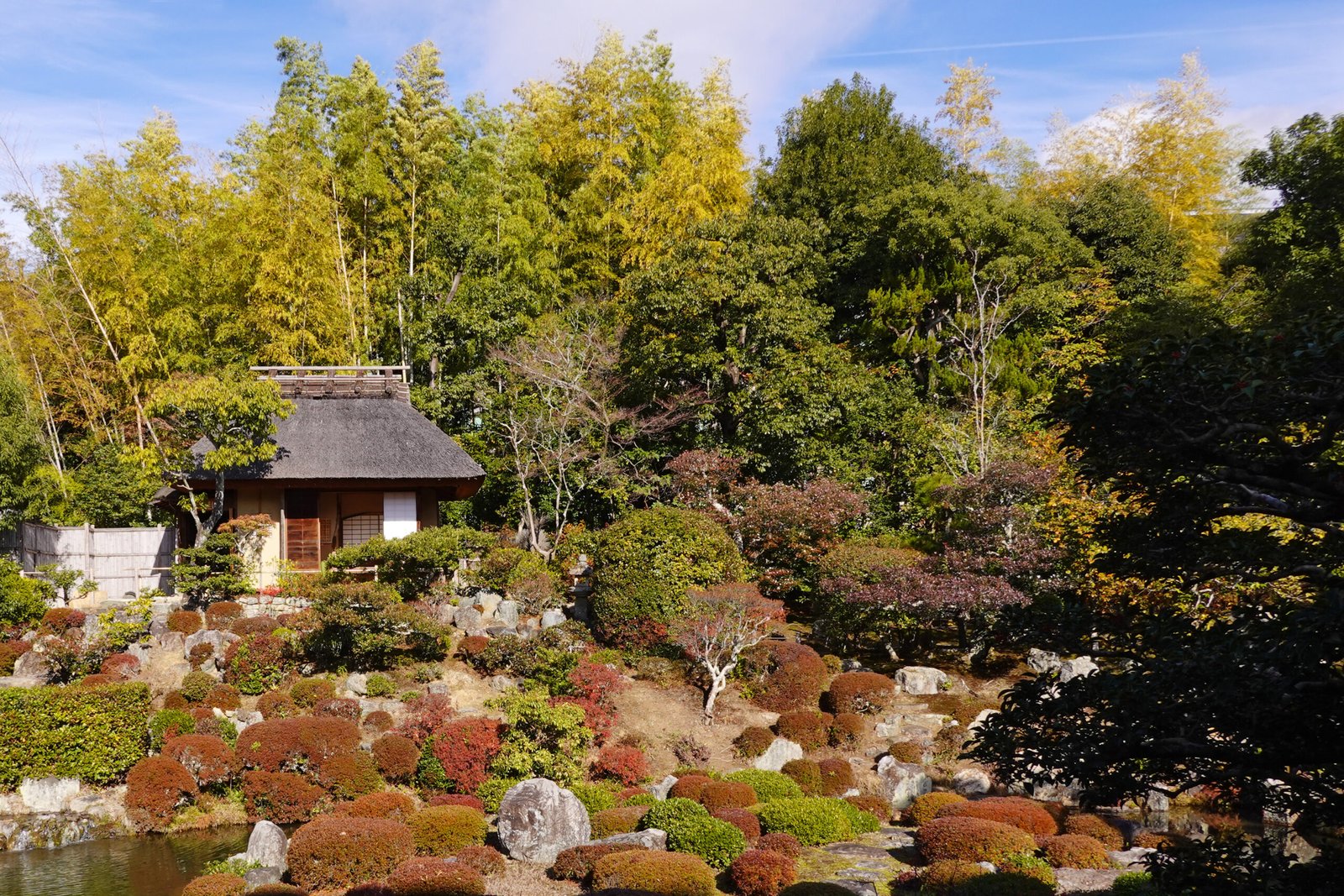
Muso Soseki is one of the most influential garden designers in Japanese history — his other credits include the pond garden at Tenryu-ji and the approach to Saiho-ji’s famous moss garden — and Toji-in’s garden is a quieter, far less visited example of the same hand. A pond sits below a thatched-roof teahouse known as the Seirentei, perched on an artificial rise, with Mount Kinugasa borrowed into the view behind it. The planting leans heavily on maples, which makes the garden worth timing deliberately: autumn color here runs on roughly the same calendar as the rest of the city’s koyo season, and because so few visitors make the trip out, it’s one of the more peaceful spots in the city to sit with a cup of matcha and watch the leaves turn, rather than angling for a clear sightline through a crowd. If you’re planning around Kyoto’s autumn foliage generally, or working from our Kyoto in November guide specifically, Toji-in is worth penciling in as the quiet alternative to the city’s bigger-name maple spots.
A Hall Full of Shoguns
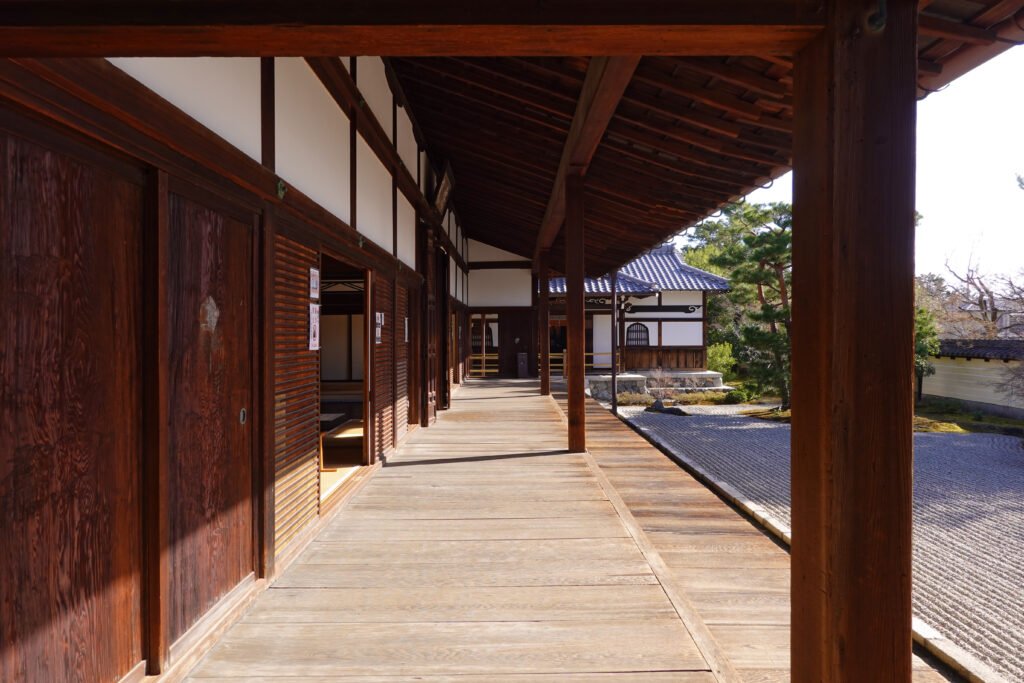
The temple’s other distinctive feature is the Reikoden, a hall holding a long procession of seated wooden statues — close to fifteen in all — representing most of the Ashikaga shoguns, lined up on either side of the room, with a statue of Tokugawa Ieyasu included among them. Accounts differ on exactly how many shoguns are represented and whether a couple are missing from the set, which feels appropriate for a dynasty whose own internal history isn’t always agreed upon either. By one older account, visitors were once permitted to touch the statues for good luck, though whether that’s still practiced today is unclear, and it’s the kind of detail worth asking about on arrival rather than assuming.
When to Visit
Maple season is the obvious draw, but Toji-in isn’t strictly a one-season temple. The garden’s plum and azalea plantings give it a quieter early-year and early-summer character too, and because the grounds rarely feel crowded at any time of year, it’s a reasonable place to visit on a rainy day when the bigger sights nearby are uncomfortably packed under a sea of umbrellas. The one period worth building in some flexibility around is the stretch over New Year’s, when hours are shortened and the schedule can shift — if you’re visiting in late December or early January, it’s worth confirming the day’s hours before setting out rather than assuming the usual 9:00am start applies.
One more thing worth knowing before you go: because Toji-in sits in a residential neighborhood next to a university campus rather than along a main sightseeing road, there isn’t much in the way of shops or restaurants directly outside the gate. It’s better treated as a dedicated stop on a loop with Kinkaku-ji and Ryoan-ji — where food options are easier to find — than as a place to linger over lunch on its own.
Getting There
Toji-in has the rare advantage, for an old Kyoto temple, of a train station named directly after it: Tojiin Station, on the Keifuku Kitano Line (part of the Randen tram network), sits right outside the main gate, which makes this one of the easier temples in the city to reach without a bus transfer. If you’re coming by bus instead, city bus 205 runs from Kyoto Station toward the Kinugasa-ko-mae stop, followed by a walk of a few hundred meters. Either way, the walk from Ryoan-ji or Kinkaku-ji takes well under fifteen minutes, which makes a loop through all three temples in one morning a realistic plan rather than an ambitious one.
Bottom Line
Toji-in doesn’t have the gold leaf or the raked gravel that draws crowds to its two famous neighbors, but it has something they don’t: a genuinely old, genuinely important garden that you can usually enjoy without anyone else in the frame. For a temple that spent roughly two and a half centuries as the resting place of Japan’s ruling shogunate, that kind of quiet feels almost like an oversight on the part of Kyoto’s tourist maps — and a pretty good reason to use it while it lasts.