Shinsen-en: A Practical Guide to Kyoto’s Oldest Surviving Garden
Most visitors walk right past Shinsen-en on their way to Nijo Castle, and it’s easy to see why — from the street it looks like a modest neighborhood garden with a red bridge, not the oldest surviving piece of the city that stood here before Kyoto was even the capital’s name. It predates the castle next door by eight centuries, and what’s left today is a shrunken fragment of an imperial garden that once covered a meaningful stretch of the Heian capital. It’s also free, rarely crowded, and takes about twenty minutes to see properly, which makes it one of the easiest stops to fold into a Nijo Castle visit rather than a destination most people plan a special trip around.
The Essentials at a Glance
| What | Details |
|---|---|
| Location | Nakagyo-ku, just south of Nijo Castle, in central Kyoto |
| Affiliation | Shingon Buddhism, a sub-temple of Toji |
| Founded | 794, as part of the original Heian Palace grounds |
| Known for | Kyoto’s oldest surviving garden; a rain-making legend tied to Kobo Daishi (Kukai); a 9th-century ritual often cited as a root of the Gion Matsuri |
| Hours | roughly 8:30am to early evening daily; worth confirming locally, since sources vary slightly |
| Admission | free |
| Access | a few minutes’ walk from Nijojo-mae Station (Tozai subway line), or about 10 minutes on foot from Nijo Station (JR Sagano Line) |
A Pond Older Than the City Built Around It
When Emperor Kanmu moved the capital to Heian-kyo in 794, Shinsen-en was laid out as the palace’s private garden, built around a large pond fed by a natural spring that, as far as anyone could tell, never ran dry. The name itself translates to roughly “sacred spring garden.” Heian-period nobles used it for exactly the leisure you’d expect from a palace garden — boating parties on the pond, moon-viewing in autumn, and, in 812, what’s recorded as one of the earliest documented cherry blossom viewing parties in Japanese history, hosted by Emperor Saga. At its largest, the garden is thought to have stretched roughly 500 meters north to south and 240 meters east to west, an area that today would cover a meaningful chunk of the blocks between Nijo and Sanjo streets. Almost none of that scale survives; what’s left is a small fraction of the original footprint, boxed in on all sides by the modern street grid.
The Rain Contest That Put Toji in Charge
Because the pond never dried up, it became the city’s go-to spot for rainmaking rituals during droughts, and the garden’s best-known legend comes directly out of that reputation. In 824, with the capital suffering through a dry spell, the court reportedly staged a rain-prayer contest at Shinsen-en between Kukai — founder of Toji, better known by his posthumous name Kobo Daishi — and a rival priest from a competing temple. Accounts differ on some of the finer details, but the outcome is consistent across sources: Kukai’s prayers were credited with bringing the rain, and the garden came under Toji’s jurisdiction as a result. Shinsen-en has stayed tied to Toji ever since, which is why a small hall on the grounds today still enshrines an image of Kobo Daishi, alongside the garden’s official main image, a Sho-Kannon statue. If you already know the Heian court’s habit of pitting rival religious specialists against each other from Seimei Shrine‘s stories about the diviner Abe no Seimei, this is the same world, just with rainfall instead of exorcism as the prize.

A Plague, a Procession, and the Origin of the Gion Matsuri
Shinsen-en’s second claim to fame is less about serenity and more about civic crisis management. In 863, a plague swept through the capital, and the court responded with a purification ceremony held at the garden, meant to appease the vengeful spirits blamed for the outbreak. Sixty-six halberds — one for each province of Japan at the time — were planted at the garden’s southern end, and mikoshi were brought over from Gion-sha, the shrine known today as Yasaka Shrine. That 863 ceremony is widely cited as the direct ancestor of the Gion Matsuri, the festival that now shuts down whole sections of downtown Kyoto every July. It’s a strange thing to stand in a quiet, nearly empty garden and realize you’re looking at the birthplace of the city’s biggest annual event, but Shinsen-en’s role in that story is one of the better-documented threads connecting the Heian period to the Kyoto most visitors actually recognize today.
How Nijo Castle Ate Most of the Garden
Shinsen-en’s slow shrinkage started well before the Edo period — a storm in 1180 and centuries of inconsistent upkeep had already left it well short of its original size — but the garden’s modern footprint really dates to 1602, when Tokugawa Ieyasu began building Nijo Castle immediately to the north. Most of Shinsen-en’s remaining land was absorbed into the castle grounds, and the spring that had fed the pond for eight centuries ended up feeding Nijo Castle’s inner moat instead. What survived was re-established as a Shingon temple starting in 1607, with the Tokugawa shogunate granting it a modest annual rice stipend to keep the place running. Even that reduced version hasn’t had an easy run since: the Tenmei fire of 1788 burned through the garden’s pagoda and other buildings, and what visitors see today — the Main Hall, moved here from Toji in 1847, along with a shrine, gate, and offering hall dating to 1813 — is largely a 19th-century rebuild of a site that’s been through the wringer more than once. The garden was designated a National Historic Site in 1935, about as close as it comes to formal recognition for surviving this long in such reduced form.
What You’ll Actually See
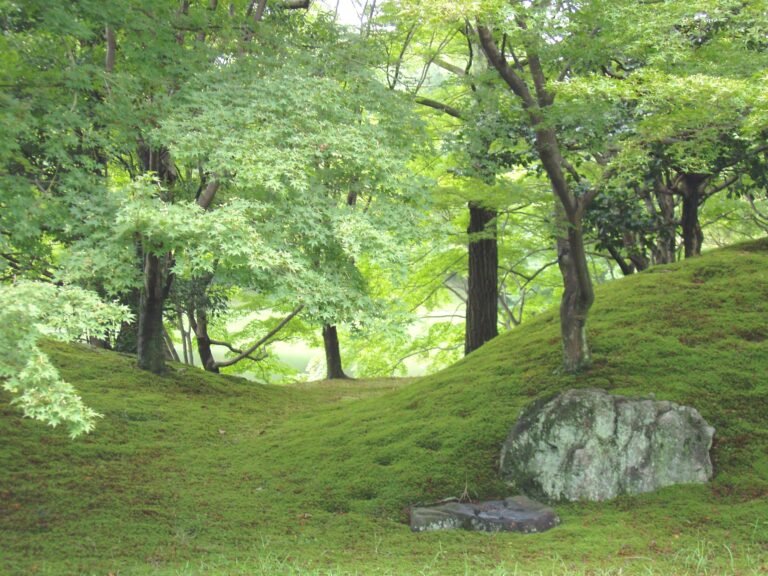
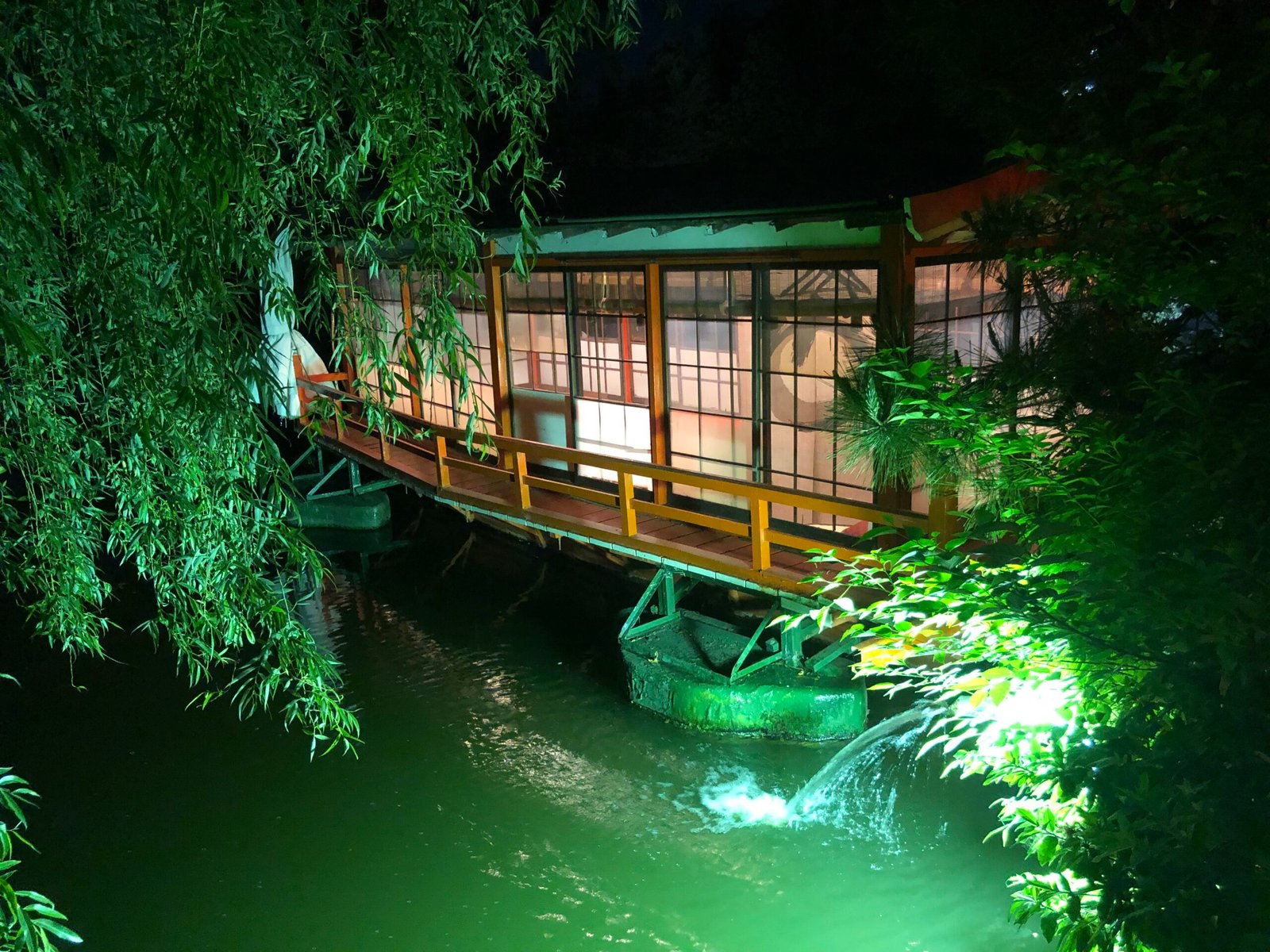
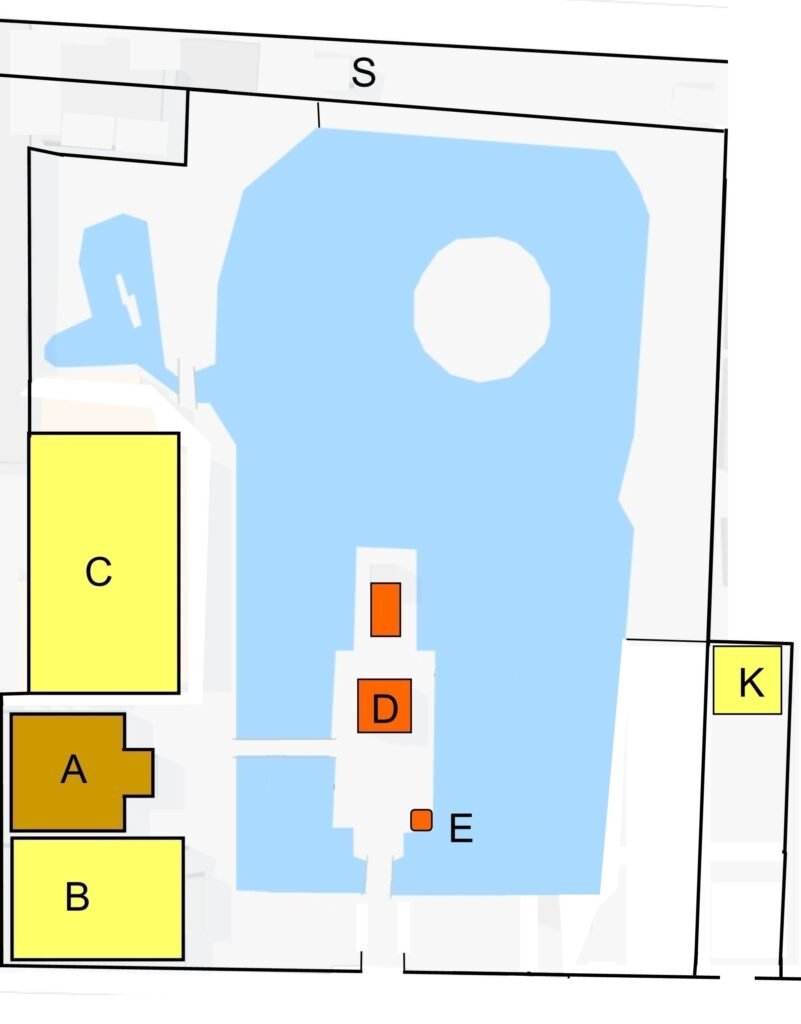
The pond, Hojuko-ike, is still the centerpiece, with a small island at its middle reached by a stone causeway and a curved, vermilion-lacquered bridge that’s the most photographed spot on the grounds. The island holds a shrine to a dragon deity, Zennyo Ryuo, tied to the garden’s rainmaking history, and two smaller shrines nearby are dedicated to Benzaiten, goddess of water and the arts, and to Inari. None of this is large-scale by the standards of Kyoto’s bigger temple gardens — you can walk the entire site in well under half an hour — but the density of history packed into that small footprint is hard to match anywhere else in the city.
Pairing It With Nearby Sights
Beyond the obvious pairing with Nijo Castle, Shinsen-en fits naturally into a wider Heian-history loop if you’re willing to cross town a little. Toji, the temple Kukai founded and the one that still administers Shinsen-en today, sits about twenty minutes south by subway and bus, and seeing both in the same day connects the rain-contest legend to the man at the center of it. If Heian-era ritual and folklore is what drew you here, Seimei Shrine, dedicated to the court diviner Abe no Seimei, covers a different corner of the same world and makes an easy add-on if you’re already exploring central Kyoto on foot or by bus.
Visiting Shinsen-en
Shinsen-en sits just a short walk south of Nijo Castle, close enough that it’s easy to fold into the same trip without adding much to your schedule — most people see it in the twenty or thirty minutes before or after a castle visit rather than planning a separate outing. It’s a few minutes’ walk from Nijojo-mae Station on the Tozai subway line, or about ten minutes on foot from Nijo Station if you’re coming by JR. Admission is free, and the garden sees nowhere near the foot traffic of its famous neighbor, so there’s rarely a reason to time your visit around crowds the way you might for Nijo Castle itself. Spring brings cherry blossoms in keeping with the garden’s history as a hanami spot since the Heian period, and the maples along the pond’s edge color up modestly in autumn, though neither season turns this into the kind of must-see stop that demands advance planning — it’s more the kind of place you’re glad you wandered into than one you build an itinerary around.
Bottom Line
Shinsen-en won’t take up much of your day, and that’s rather the point — it’s a five-minute detour from Nijo Castle that happens to be older than almost anything else standing in the city, with a pond that supposedly settled a rain contest between rival priests and sparked a ritual that grew into the Gion Matsuri. Add it to a Nijo Castle morning, take the ten minutes to read the signboards near the vermilion bridge, and you’ll leave knowing more Heian-period history than most of the crowds filing past it toward the castle gate.