Kawai Kanjiro’s House: A Practical Guide to Kyoto’s Potter’s Home and Kiln
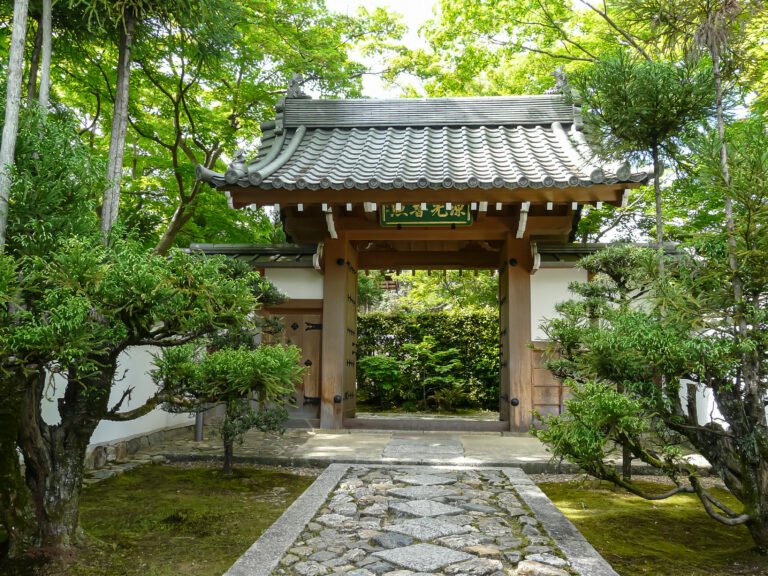
The slope below Kiyomizu-dera has been Kyoto’s pottery district for centuries — it’s where the Kiyomizu-yaki glaze style gets its name — and most visitors walk straight through it on the way up to the temple without noticing much beyond the shops selling tourist-grade teacups. A few minutes further down, toward Gojo-zaka, a plain wooden gate opens onto something different: the house where the potter Kawai Kanjiro actually lived and worked, kept close to how he left it when he died in 1966. It’s one of the few places in Higashiyama where you can see a real working potter’s life up close, kiln included, rather than a staged version of one.
The Essentials at a Glance
| What | Details |
|---|---|
| Location | Gojozaka, Higashiyama-ku, a short walk below Kiyomizu-dera and Sannenzaka, near Sanjusangendo |
| Type | Former home and workshop of potter Kawai Kanjiro (1890–1966), now a memorial museum run by his descendants |
| Built | 1937, designed and largely built by Kanjiro himself |
| Known for | Preserved living quarters with furniture he carved, a working studio, and a wood-fired climbing kiln (noborigama) behind the house |
| Hours | Daily except Monday, roughly 10:00am–5:00pm (last entry around 4:30pm) |
| Closed | Mondays (the following day if Monday is a holiday), a stretch around the New Year holiday, and occasional maintenance days — worth checking before a special trip |
| Admission | Roughly ¥900–1,000 for adults, less for students and children; exact pricing is worth confirming on-site |
| Access | About a 10-minute walk from Kiyomizu-Gojo Station on the Keihan line, or a couple of minutes from the Gojo-zaka/Umamachi bus stop |
A Potter Who Kept Turning Down the Honors
Kawai Kanjiro was born in 1890 in what’s now Shimane Prefecture and decided early that he wanted to be a potter, after watching a neighboring farmer work clay in his spare time. He trained at the Tokyo Higher Technical School, graduated in 1914, and took a job at Kyoto’s municipal ceramics research institute before setting out on his own. In 1920 he built an eight-chamber climbing kiln in Kyoto and started exhibiting under the name Kawai Factory, earning an early reputation for elaborate glazes modeled closely on old Chinese and Korean ware. By his own account, that early success left him unsatisfied.
What changed his direction was a chance meeting with the philosopher Yanagi Soetsu and the potter Hamada Shoji, who were starting to define what they called mingei, or folk craft — the idea that everyday, unsigned, functional objects made by ordinary hands held as much value as fine art. Hamada moved to Kyoto to work alongside him, and the two reportedly ran through more than 10,000 glaze tests together, trading early technical sophistication for the simpler copper reds, iron browns, and chrome and cobalt glazes he’s known for today. Kawai never signed his pieces; he said the work itself was signature enough. He also turned down just about every honor Japan tried to give him over the years, including the Living National Treasure designation and the Order of Culture, on the grounds that he had no use for titles.
The House He Built Himself
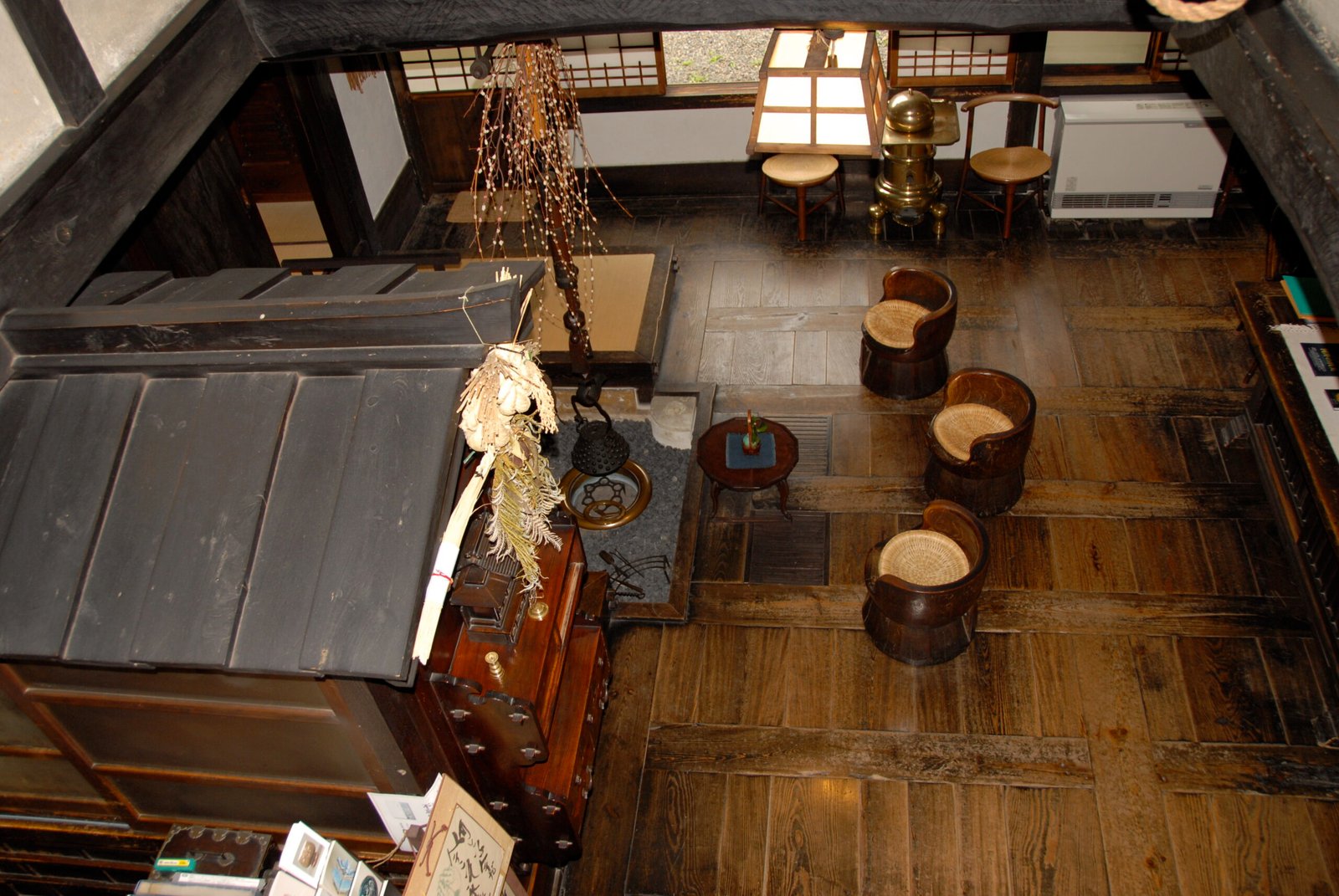
Kawai designed and largely built the two-story house in 1937, and it’s considered one of his most personal works, on the same footing as his ceramics. The main living room has an open, atrium-like ceiling with heavy exposed beams and pillars, a combination that reads as more farmhouse than the refined temple architecture surrounding it in Higashiyama. At the entrance, a traditional sunken hearth sits near a small carved sculpture of a pointing finger by the sliding door — a modern, almost playful touch against an otherwise traditional entranceway that catches most first-time visitors off guard.
Inside: A Workshop Left Mid-Project
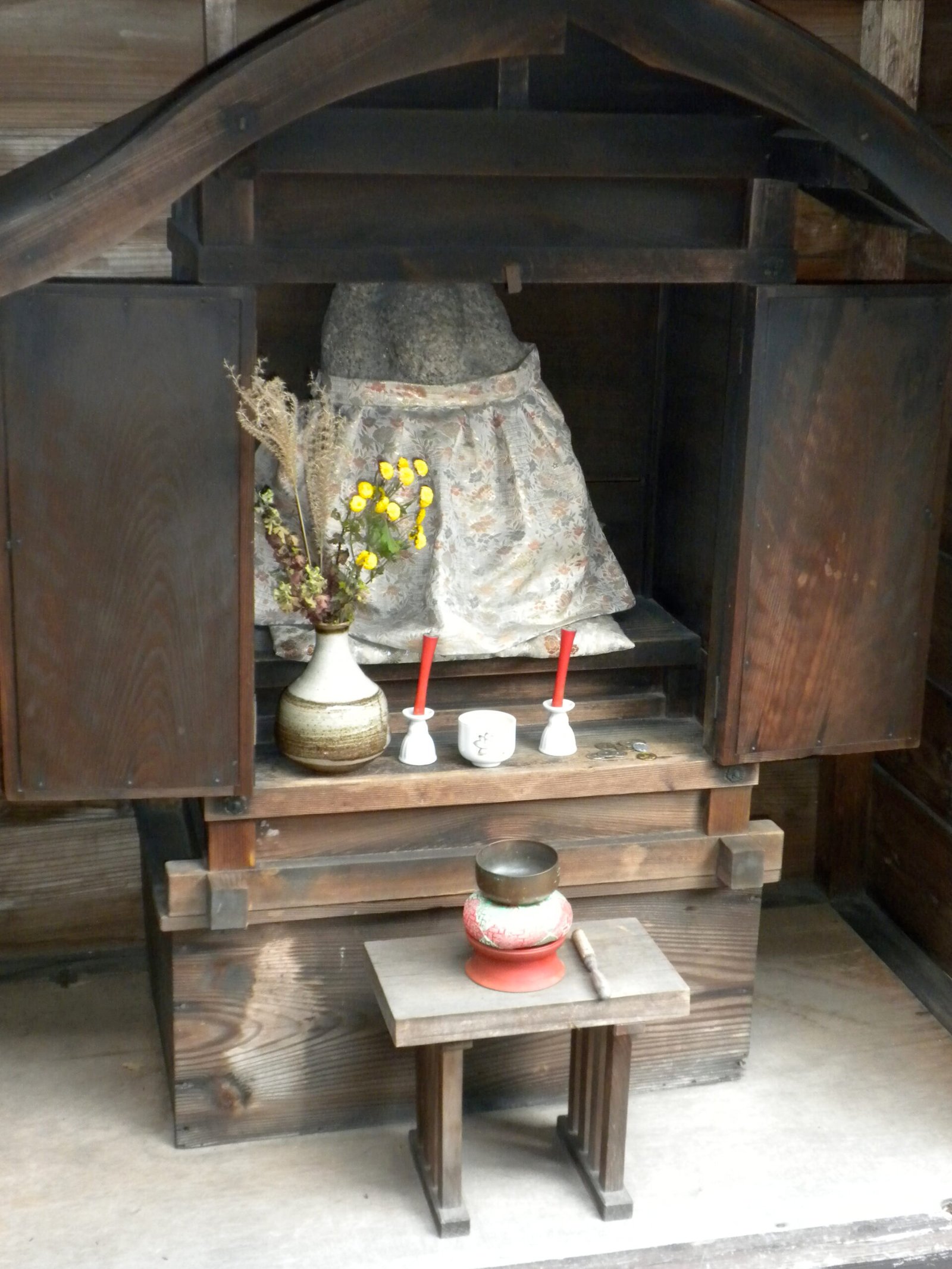
Unlike most house museums, this one lets you sit down. The wooden chairs and low tables in the living room were carved by Kawai himself, and visitors are welcome to use them rather than just look. A wooden chair faces the hearth; across the room, a raised tatami platform is built at just the right height for someone sitting there and someone sitting in the chair to meet eye to eye. A double-sided shelf and a small household shrine tucked into the wall make efficient use of a fairly compact room, and glass cases around the house hold his ceramics alongside wood carvings and calligraphy. It’s a house clearly designed by someone who thought as much about how a room gets used as how it looks.
The Kiln Out Back
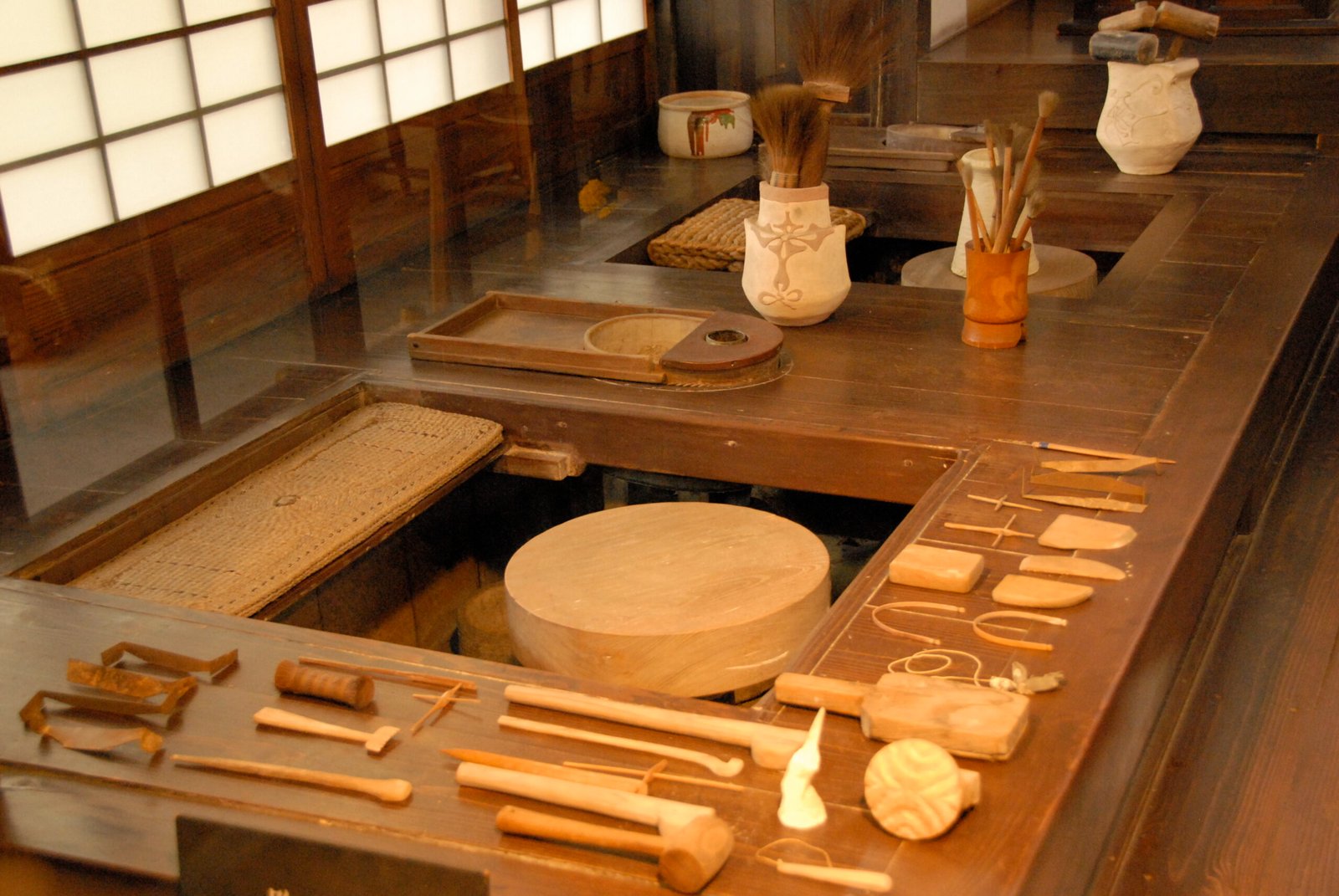
Cross the inner courtyard behind the house and you reach the actual workshop, with a noborigama — a wood-fired climbing kiln built on a slope so flame and heat draw naturally upward through a series of connected chambers — that Kawai shared with neighboring potters on the same hillside. A full firing was a multi-day operation, reportedly running close to 48 hours and burning through more than 2,000 bundles of firewood to push the chambers well past 1,000°C. Some of the workshop rooms are closed off, but the narrow alleys between them are left with unfinished pieces still sitting where they were last worked on, which does more than any label to make the place feel lived-in rather than curated.
Visiting: Pairing It With Kiyomizu-dera and the Slope
Most people reach the house on foot, either down from Kiyomizu-dera and the Sannenzaka and Ninenzaka slope, or up from Kiyomizu-Gojo Station on the Keihan line, which makes it an easy add-on to a Higashiyama day rather than a separate trip — our One Day in Higashiyama itinerary covers the rest of that walk if you want to build a full day around it. Plan on about an hour inside if you want to see the house and the workshop properly rather than rush through. It’s also a useful stop if you’ve read our Kyoto’s Traditional Crafts guide and want to see where one of the city’s best-known craft movements actually took shape, rather than just reading about it in a shop display.
Bottom Line
Kawai Kanjiro’s House works precisely because it isn’t trying to impress you the way the big temples up the hill do. It’s a small, quiet record of how one stubborn, well-regarded craftsman actually lived and worked, chairs you can sit in and all, and it pairs naturally with a Higashiyama walk that would otherwise be entirely about temples. Go slow, sit down in the chairs, and take the time to walk all the way back to the kiln — that’s the part most people skip, and it’s the part that makes the visit worth the short detour off the main slope.