Seiryo-ji: A Practical Guide to Arashiyama’s National Treasure Buddha
Most visitors who walk from Saga-Arashiyama Station toward the bamboo grove pass directly by Seiryo-ji without realizing it’s there, which is a bit of a shame, since just off the approach to Tenryu-ji sits a temple quietly holding one of Kyoto’s more unusual National Treasures. Seiryo-ji — known locally as Saga Shakado — isn’t dramatic in the way the bamboo grove or Tenryu-ji’s garden are, but its main hall houses a thousand-year-old standing Buddha with a genuinely strange backstory, and the grounds themselves sit on what used to be a Heian-period aristocrat’s villa. If you’re already working from our One Day in Sagano itinerary, it’s an easy, uncrowded stop to fold in.
The Essentials at a Glance
| What | Details |
|---|---|
| Location | Saga Shakado-Fujinoki-cho, Ukyo-ku, a few minutes’ walk north of Tenryu-ji |
| Hours | generally around 9:00am to 4:00pm, with some sources noting a later closing in spring and autumn — worth confirming locally on the day |
| Admission | roughly ¥400 for adults to enter the main hall, with a separate fee when the treasure hall is open |
| Main draw | a National Treasure standing Shaka Buddha statue said to have been carved in China around 985 |
| Treasure hall | opens only for limited stretches in spring and autumn; check before planning a visit around it |
| Access | about a 10-minute walk from JR Saga-Arashiyama Station, or roughly 12 minutes from Randen Arashiyama Station |
| Pairs well with | Tenryu-ji, Nonomiya Shrine, and Rakushisha, all within easy walking distance |
From a Prince’s Villa to Saga’s Shakado
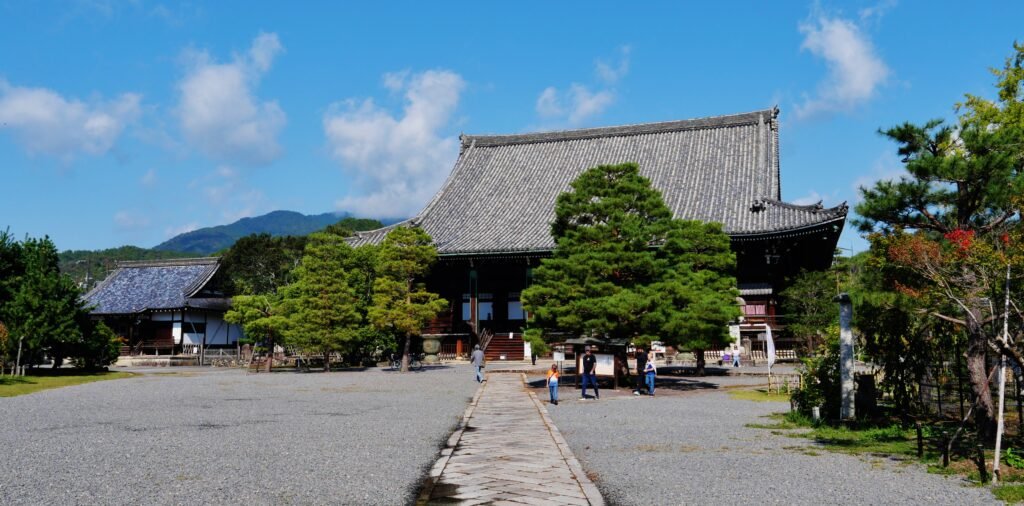
The temple’s history starts before it was a temple at all. The site originally belonged to Minamoto no Toru, a Heian-period prince sometimes named as a real-life model for Hikaru Genji, the central character of The Tale of Genji — a connection Kyoto brings up whenever it reasonably can, Seiryo-ji included. After Minamoto no Toru died in 895, his son converted part of the villa into a temple and installed a statue of Amida Buddha the following year. A separate hall built for a Shaka (Shakyamuni) Buddha followed about fifty years later, in 945, and it’s that hall that gave the area its long-standing nickname, Saga Shakado, well before the temple took the name Seiryo-ji.
The Buddha That Traveled From China
The statue Seiryo-ji is actually known for arrived later, and by a much longer route. A Todai-ji monk named Chonen traveled to Song-dynasty China in the tenth century and, while there, arranged for a standing Shaka Nyorai to be carved — according to temple tradition, as a faithful copy of an older statue believed, by legend rather than by any evidence that would hold up today, to be a true likeness of the historical Buddha made during his lifetime. Chonen brought the finished statue back to Japan, and after his death in 1016 it was installed in what became Seiryo-ji’s main hall. It was later designated a National Treasure, and a subsequent examination of the statue turned up something unusual sealed inside it: silk replicas of internal organs, placed there as part of its original construction, a detail that has made this particular Buddha a recurring subject of art-historical study well beyond its religious significance. The statue’s distinctive style was influential enough that temples elsewhere in Japan commissioned their own copies, now referred to collectively as Seiryoji-style Shaka statues — worth knowing if a similar-looking Buddha turns up at another temple later in your trip.
The Otaimatsu Fire Festival
If you’re in Kyoto in mid-March, Seiryo-ji hosts one of the city’s more offbeat fire rituals. On March 15, alongside a Nehan-e memorial marking the Buddha’s death, the temple burns three giant torches — reportedly around seven meters tall each — representing early, mid-season, and late rice. How the fire burns is traditionally read as a forecast for that year’s harvest, a rather different kind of fortune-telling than the paper omikuji slips sold at most shrines. The same season has also featured Saga Dai-Nenbutsu Kyogen, an old, silent, masked form of performance recognized as an intangible cultural property, though its exact scheduling can shift from year to year, so it’s not something to count on seeing without checking ahead.
Elsewhere on the Grounds
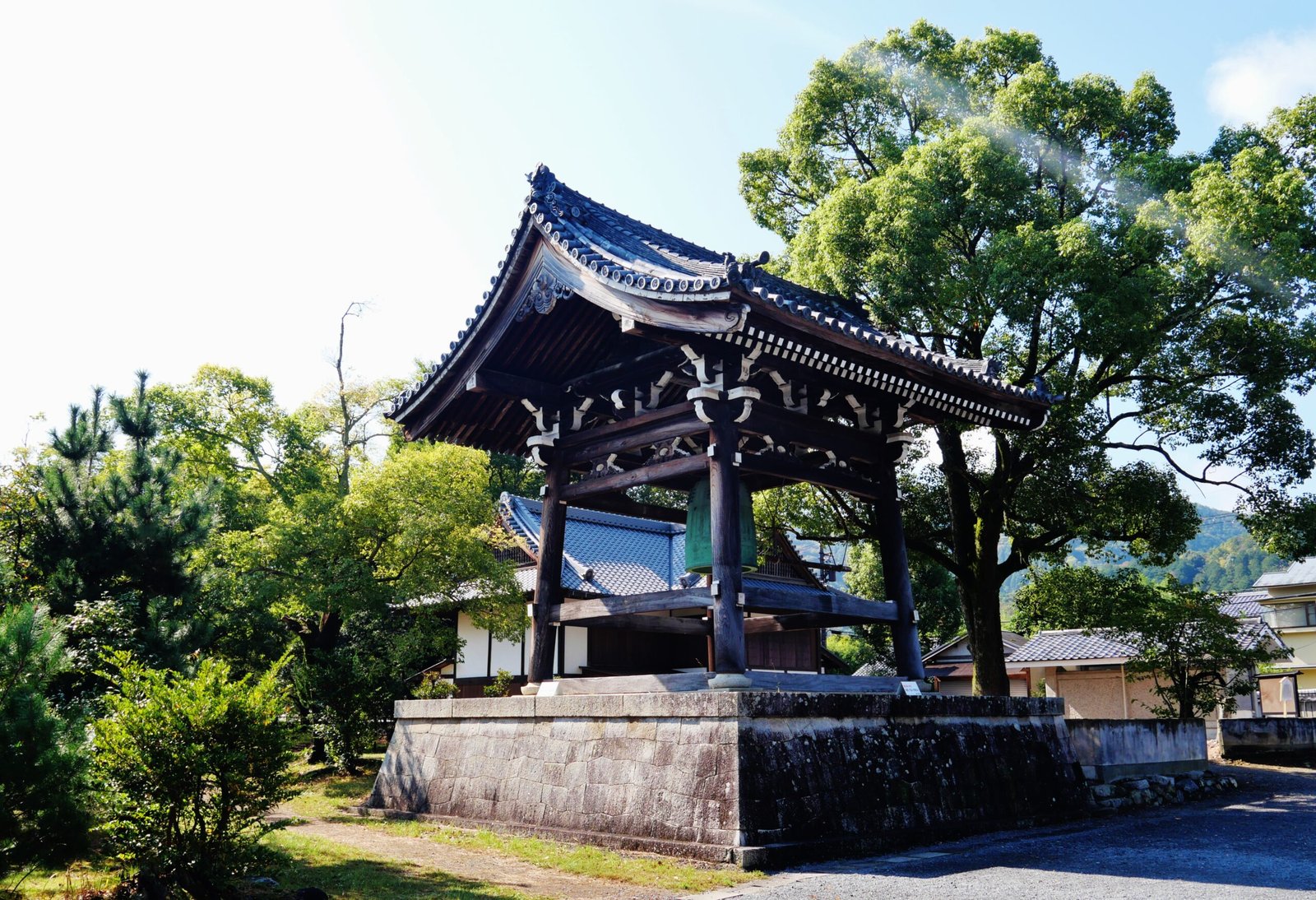
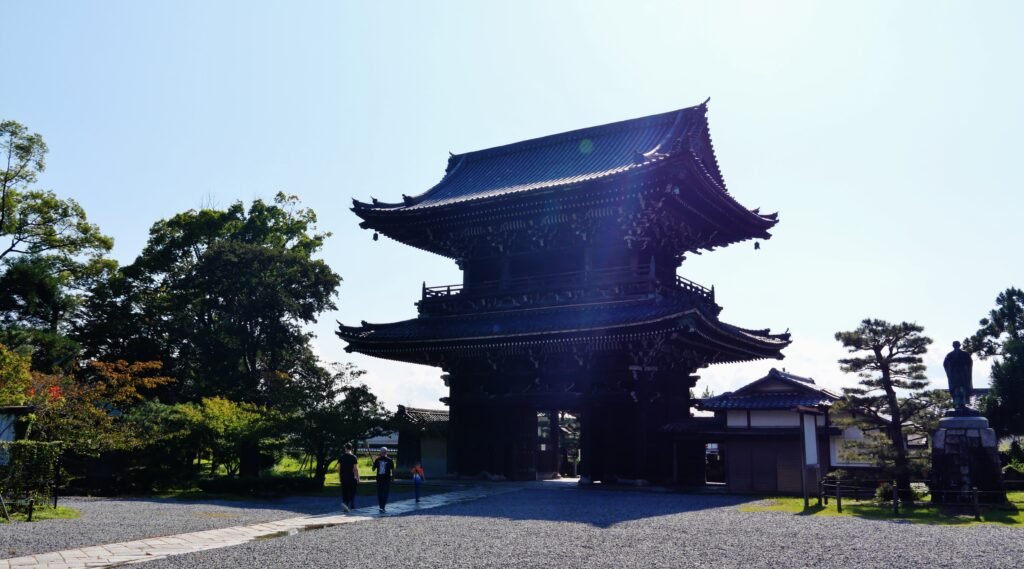
Beyond the main hall, the grounds hold a few smaller things worth a slow look if you have the time. A two-story pagoda, rebuilt around 1700 during a renovation partly sponsored by the shogunate, stands near the entrance, and a seated Jizo statue from the Kamakura period is kept inside the main hall alongside the Shaka. Smaller shrines and memorial markers are scattered through the rest of the compound — a reminder that, like most old Kyoto temples, Seiryo-ji has accumulated more than a thousand years’ worth of odd fragments of history, most of which come with no signage and no mention in guidebooks.
Getting There and What to See Alongside It
Seiryo-ji sits close enough to the main Sagano sights that it rarely needs its own dedicated trip. From Kyoto Station, the JR Sagano Line reaches Saga-Arashiyama Station in around 15 minutes, and the temple is about a 10-minute walk from there — closer, in fact, than the bamboo grove itself. Coming from the Randen tram line, it’s a slightly longer walk from Arashiyama Station, though still well under 15 minutes. Because it sits a bit back from the main flow of foot traffic between the station and Tenryu-ji, Seiryo-ji tends to stay noticeably quieter than its neighbors even in peak season. Nonomiya Shrine and Rakushisha, the haiku poet’s cottage, are both close enough to work into the same walk, which makes for a loop that touches a shrine, a temple, and a literary site without much backtracking.
Bottom Line
Seiryo-ji isn’t going to compete with Kinkaku-ji or the bamboo grove for photographs, and that’s rather the point. It’s a short, unhurried stop built around one genuinely remarkable object — a thousand-year-old statue with organ replicas sewn inside it, and a founding story tied to a prince who may have inspired one of Japan’s most famous novels — tucked just a few minutes off the path most visitors are already walking. If you’re spending a morning around Tenryu-ji and the bamboo grove, it costs you almost nothing to add.