Kinkaku-ji: A Practical Guide to Kyoto’s Golden Pavilion
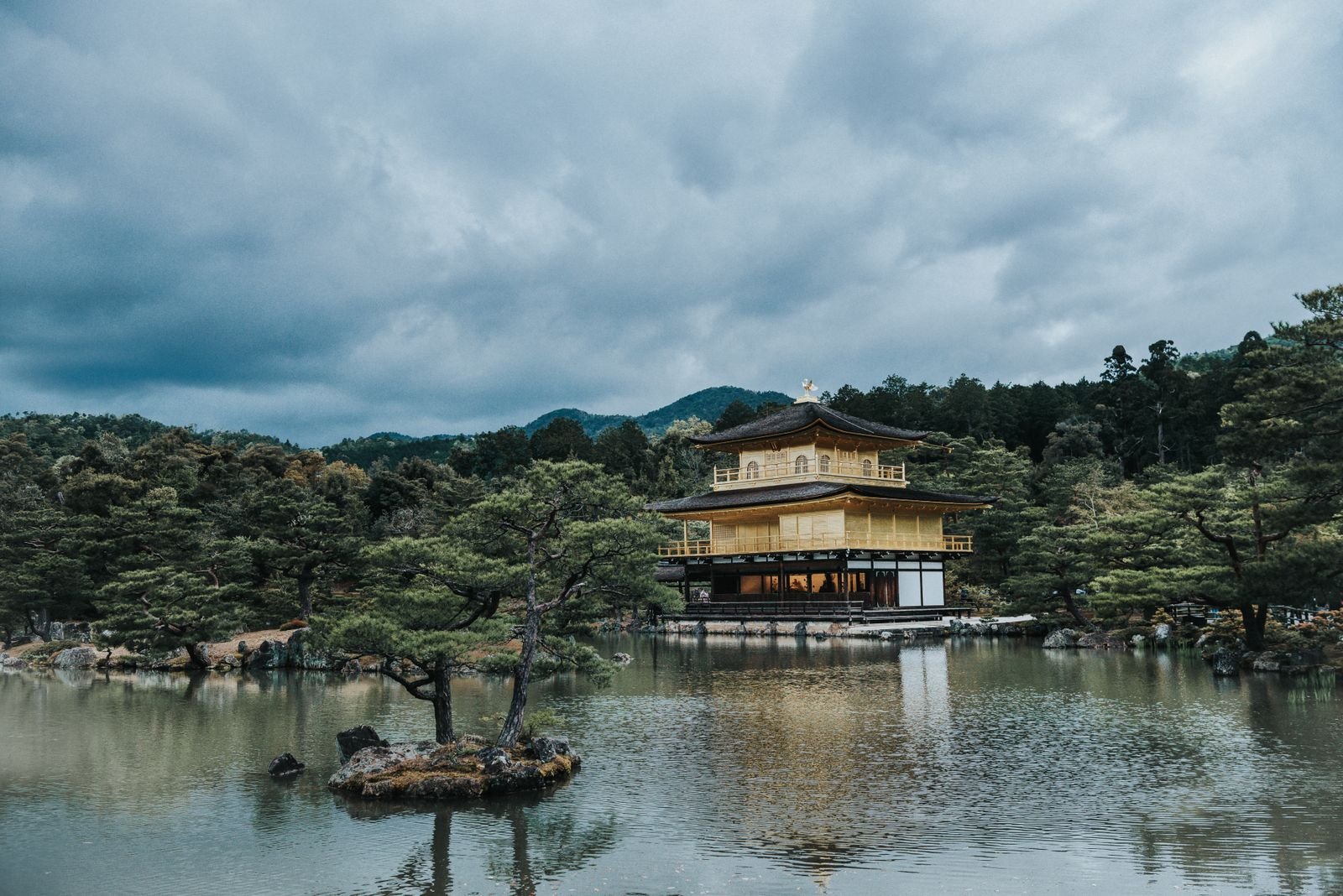
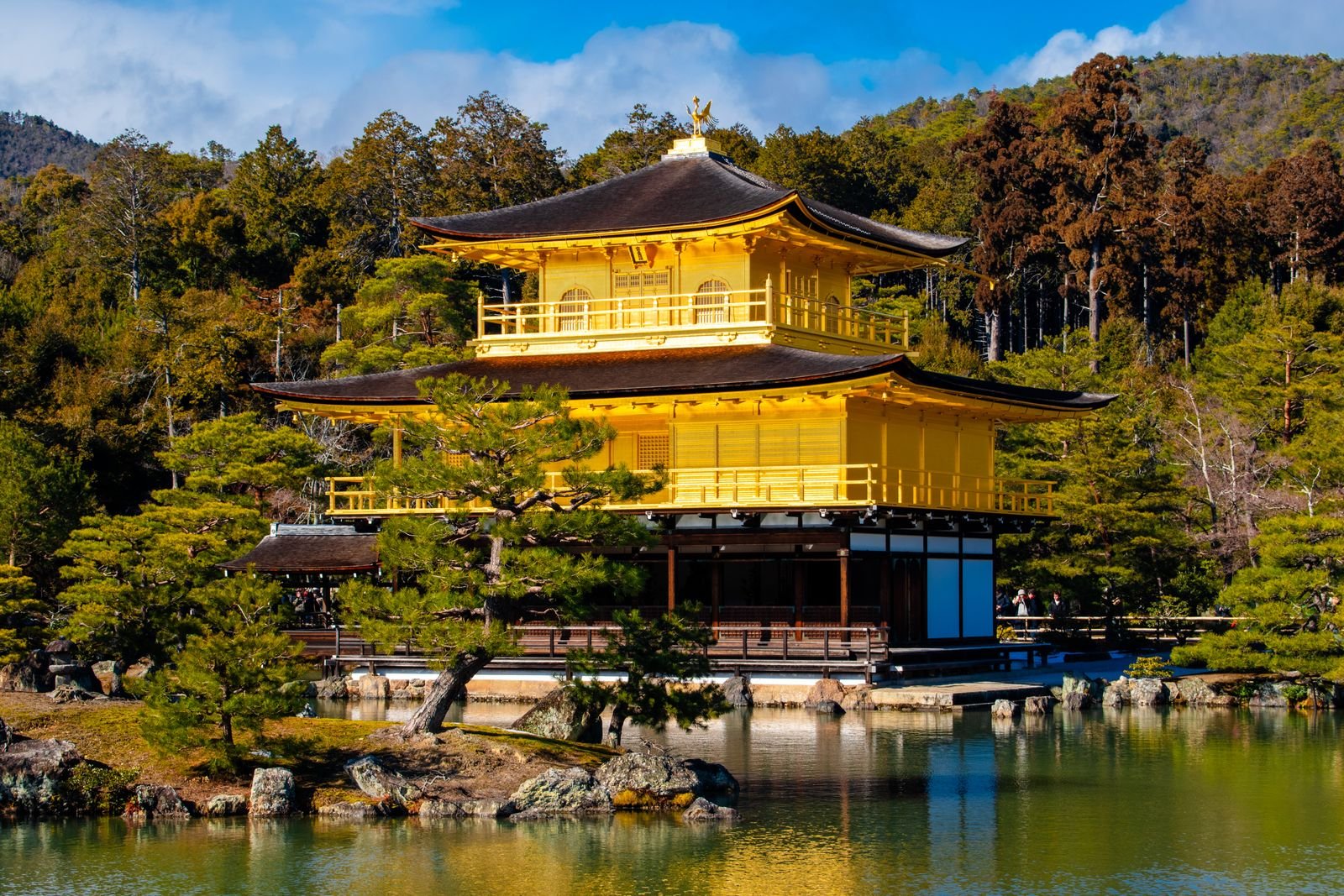
The gold-covered pavilion floating over its own reflection is one of the most reproduced images of Japan anywhere, and the strange thing is that it’s almost exactly what you’ll see in person. There’s little gap between the photo and the reality here, which is rare for a sight this famous. What the photos don’t prepare you for is that you can’t go inside, and that the whole visit, done properly, takes less than an hour.
Kinkaku-ji, officially Rokuon-ji, is a former shogun’s retirement villa turned Zen temple, and it’s one of the most straightforward stops in Kyoto: one path, one direction, no side decisions to make. What catches people off guard is the timing. Unlike a lot of Kyoto’s big sights, there’s no early-morning trick that gets you a quiet version of this one, because it doesn’t open until 9.
Here’s the short version for a first visit: what you’re actually paying for, how to handle timing without a real quiet window, and the handful of small details worth slowing down for on what’s otherwise a quick walk.
The Essentials at a Glance
| What | Details |
|---|---|
| Admission | ¥500 — the ticket itself is a small printed paper talisman, meant to be taken home as a charm |
| Hours | 9:00 a.m.–5:00 p.m., open every day of the year |
| Typical visit length | 30–45 minutes for the full loop |
| Interior access | None — the pavilion is viewed from across the pond only |
| By bus from Kyoto Station | Bus 205, about 40 minutes, 230 yen |
| By subway + bus | Karasuma Line to Kitaoji Station (15 min, 260 yen), then bus 204 or 205 (10 min, 230 yen) |
| Least crowded time | Right at 9:00 a.m. opening, or the last hour before close |
Getting There
There’s no train station within easy walking distance, which is unusual for a sight this famous. The most direct option from Kyoto Station is bus 205, a straight 40-minute ride for 230 yen. It’s slow, but you don’t have to think about it. If you’d rather cut the time down, take the Karasuma subway line to Kitaoji Station and transfer to bus 204 or 205 for the last stretch — a bit more complex, but it shaves off real time compared to sitting in traffic the whole way.
If you’re coming from Kinkaku-ji’s near-neighbors Ryoan-ji or Ninna-ji, both worth combining into the same trip if you’re out this way, there are direct buses connecting the three. Looping through all of them is a common half-day itinerary for northwest Kyoto.
Taxis are a reasonable option here specifically, since none of the bus routes are fast. From Kitaoji Station it’s about 10 minutes and roughly 1,500 yen, worth it if you’re short on time or traveling with people who’d rather not stand on a crowded bus.
When to Go
This is the one honest exception to the “go early” advice that works everywhere else in Kyoto. Kinkaku-ji doesn’t open until 9 a.m., so there’s no real pre-dawn window like there is at Fushimi Inari or Kiyomizu-dera. What you can do is be there right at opening. The first 20–30 minutes after the gate opens are noticeably calmer than what follows, since it takes tour groups a little time to arrive.
By mid-morning, tour buses are in full swing and the viewing platform across from the pavilion gets properly crowded, especially on weekends and during cherry blossom and autumn foliage season. It stays busy through the afternoon and eases off in the last hour before the 5 p.m. close, a decent second option if the morning doesn’t fit your schedule.
For photos specifically, overcast days are underrated here. The gold leaf and the reflection both read better without harsh direct sun bouncing off the water, which is the opposite of what you’d expect.
What You’re Actually Walking Through
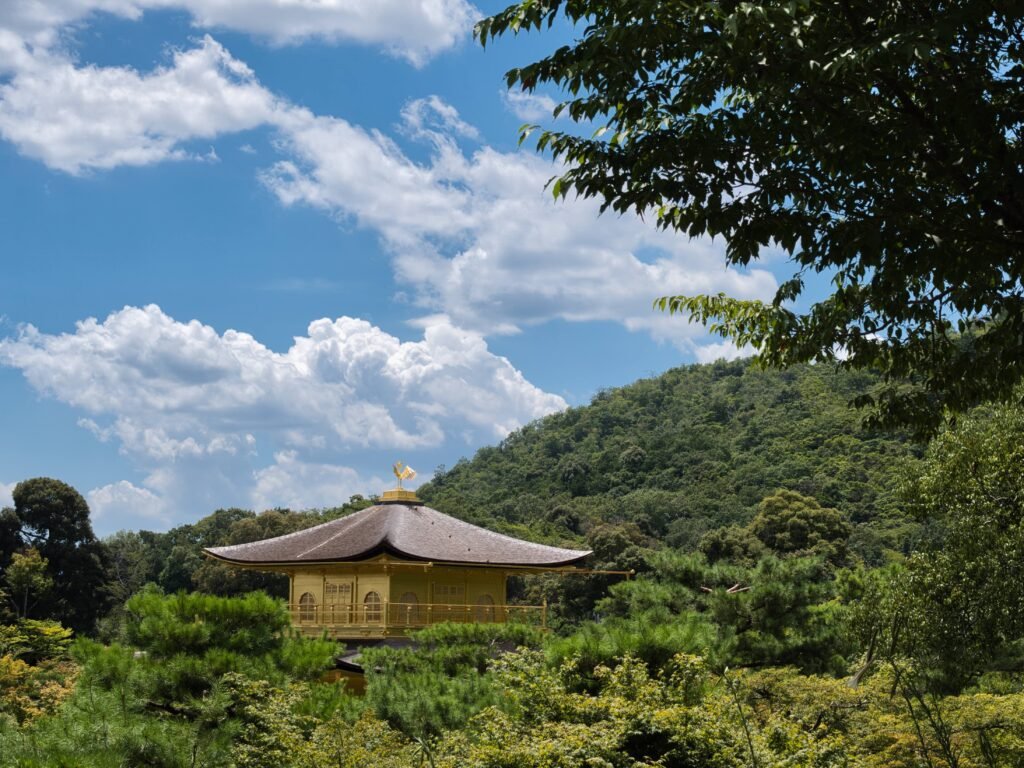
The pavilion and the pond. Kyoko-chi, the “mirror pond,” is the whole point of the layout. The path runs along the shore specifically so the gold-leafed top two floors reflect in the water. Those top two floors are covered in real gold leaf; the ground floor, built in a different architectural style, is left in natural wood, a deliberate contrast from Ashikaga Yoshimitsu’s original 14th-century design. The current building is a 1955 reconstruction — the original burned down in 1950, an incident that later inspired Yukio Mishima’s novel of the same name.
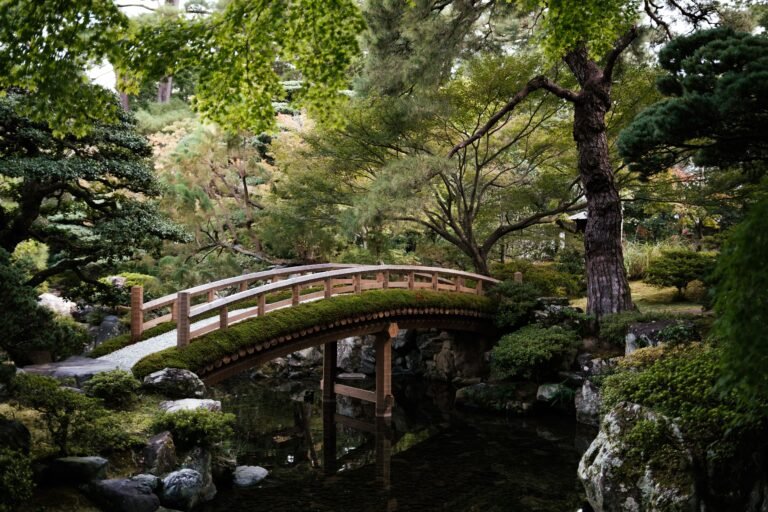
The rest of the loop. Past the pavilion, the one-way path climbs gently through a garden that hasn’t changed layout much since Yoshimitsu’s time, past a small waterfall and pond features with their own names and legends, up to Sekkatei, a rustic teahouse near the top of the route. There’s a gift shop and a small stand selling matcha and amulets near the exit, a natural stopping point since the loop doesn’t let you backtrack.
The whole thing, unhurried, is a genuine 30–45 minute visit. Plan the rest of your day accordingly rather than budgeting a full morning for it.
Nearby, If You Have More Time
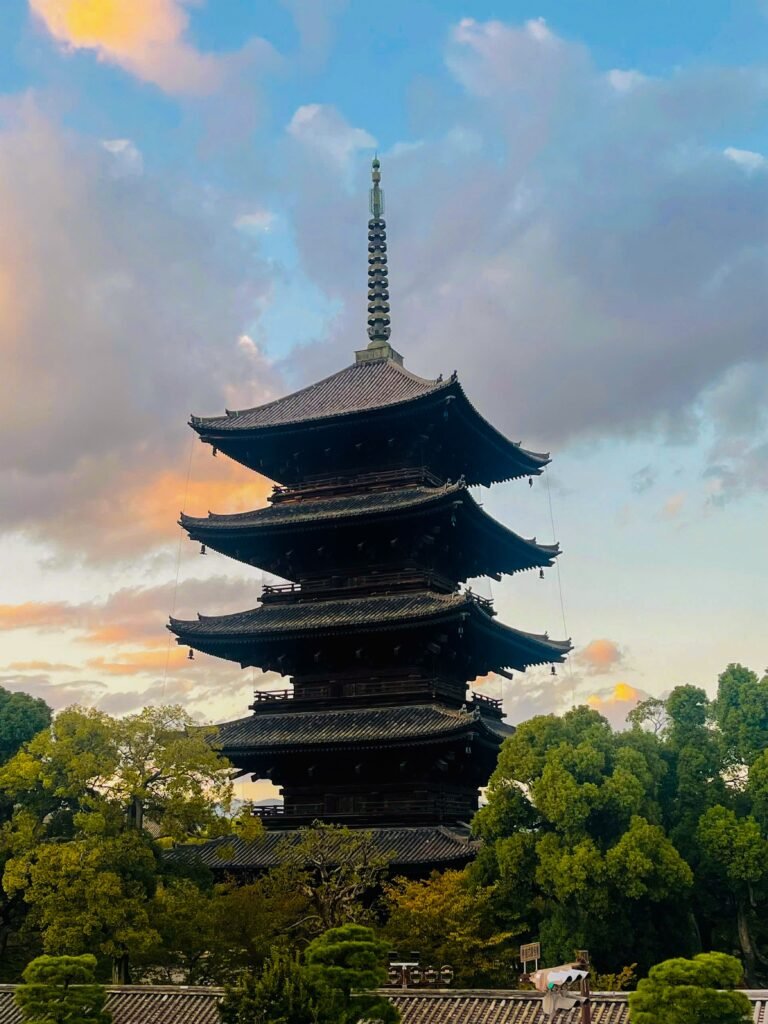
Ryoan-ji, famous for its rock garden, and Ninna-ji, a quieter World Heritage temple with a five-story pagoda, are both a short bus ride away and pair naturally with Kinkaku-ji into a northwest Kyoto temple loop. None of the three takes long individually, so combining two or three into a single morning is realistic.
Where to Stay Nearby
Kinkaku-ji sits in a quieter, more residential part of Kyoto, away from the main hotel clusters, so most visitors treat it as a stop on a day out from Higashiyama, Gion, Kyoto Station, or Kawaramachi rather than a base itself. Our Kyoto neighborhood comparison guide compares those main areas; any of them puts Kinkaku-ji within a manageable bus or subway ride.
If you want to be closer for an early start, there are a handful of small hotels and guesthouses around Kitaoji and Kinugasa, though the selection is much smaller than central Kyoto. Booking.com makes it easy to check what’s actually available near northwest Kyoto on your dates.
Bottom Line
Kinkaku-ji doesn’t reward complicated planning the way some Kyoto sights do. There’s no secret early-morning window, no long hike with tiers of commitment, just one straightforward 30–45 minute loop around a genuinely beautiful pond. Show up right at 9 a.m. if you can, pick an overcast day if you’re choosing between dates, and don’t over-schedule around it. This is a stop, not an afternoon.