Togetsukyo Bridge: A Practical Guide to Arashiyama’s Moon-Crossing Bridge
Most visitors to Arashiyama cross Togetsukyo Bridge in under two minutes, phone already out, already thinking about the bamboo grove on the far side. That’s a shame, because the bridge itself is the one thing in Arashiyama that’s been drawing visitors for well over a thousand years, long before anyone had heard of the grove. Spanning the river at the foot of Mount Arashiyama, Togetsukyo takes its name, meaning “moon-crossing bridge,” from a legend involving a retired emperor out boating on a clear night. It’s free, it’s open around the clock, and it rewards a slow walk far more than the thirty-second crossing most people give it.
The Essentials at a Glance
| What | Details |
|---|---|
| Location | Arashiyama, Ukyo-ku, spanning the river at the foot of Mount Arashiyama |
| Hours | Open 24 hours; no gate, no ticket booth |
| Admission | Free |
| Length | Around 155 meters |
| Named for | A legend involving Emperor Kameyama and a moon that seemed to cross the bridge |
| Best for | Cherry blossoms in spring, maple color through most of November, and quiet shots early in the morning |
| Access | 1-2 minute walk from Saga-Arashiyama Station (JR) or Arashiyama Station (Randen tram) |
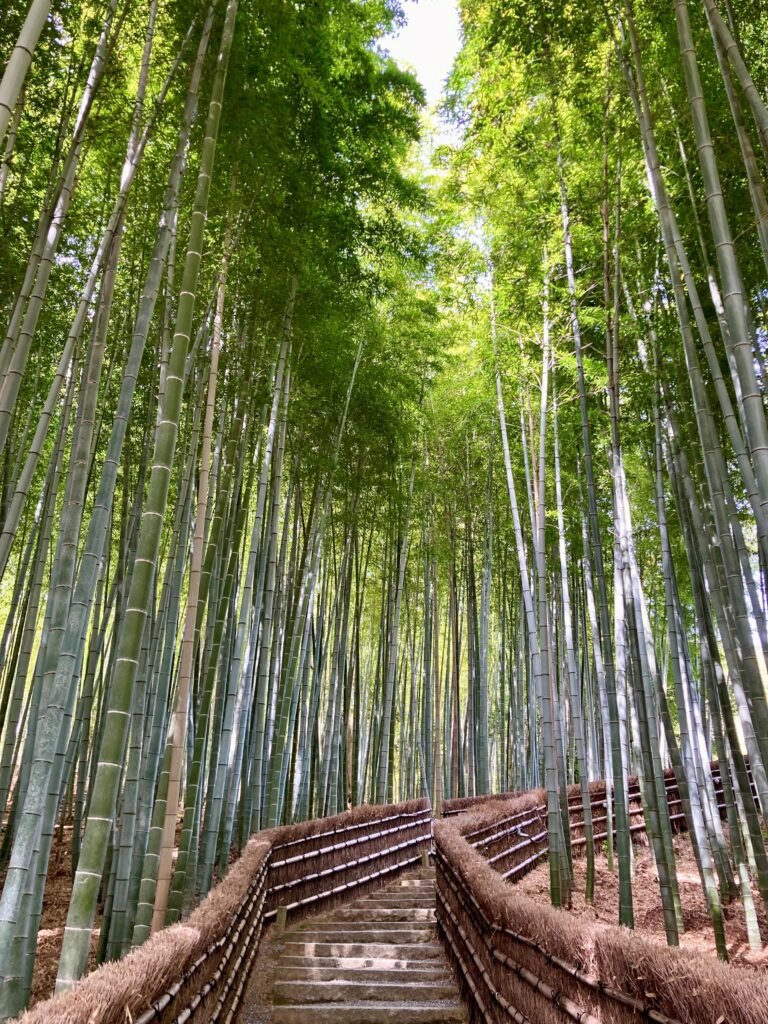
| Pairs well with | Arashiyama Bamboo Grove and Tenryu-ji, Okochi Sanso Villa, and the Hozugawa river boat, which ends its run near the bridge |
A Bridge Almost as Old as Kyoto Itself
Local history traces a bridge at this crossing back to around 836, in the early Heian period, when it’s said to have first spanned the river a short distance upstream from where it stands today. Togetsukyo has been rebuilt many times since then, including a major reconstruction in 1934 that replaced the old wooden piers with a reinforced structure while keeping the wooden-look handrails and the gently arched silhouette familiar from old ukiyo-e prints, including one by Katsushika Hokusai. What you actually walk across today is, underneath the surface, a twentieth-century bridge wearing a Heian-period costume, which is part of why it still photographs as timeless rather than modern.
The river itself changes names along its course, which trips up a lot of first-time visitors reading about it online: it’s the Oi River further upstream, the Hozugawa through the gorge that the Sagano Scenic Railway and the Hozugawa river boat both follow, and the Katsura River by the time it slides under Togetsukyo and continues south through the city. Locals mostly just call it the river and let the maps sort out the rest.
Where the Moon-Crossing Name Comes From
The name Togetsukyo, written with characters for “crossing” and “moon,” is usually traced to the Kamakura period, when the retired Emperor Kameyama is said to have gone out on the river during a boating party and remarked that the moon looked like it was crossing the bridge as it tracked across the night sky. It’s a nice enough story that it’s been retold for roughly seven hundred years, and whether or not it happened exactly that way, the image stuck hard enough to become the bridge’s permanent name.
A second, much less official legend has attached itself to the bridge more recently: the claim that couples who cross it together shouldn’t look back partway across, or their relationship will end. There’s no historical pedigree behind that one, but it’s become part of the bridge’s pop-culture life, including a cameo in a Detective Conan film, and it’s the kind of thing a Kyoto guide will mention with a straight face while admiring the view, so you may as well know it’s there.

Nakanoshima Park and the View From Both Banks
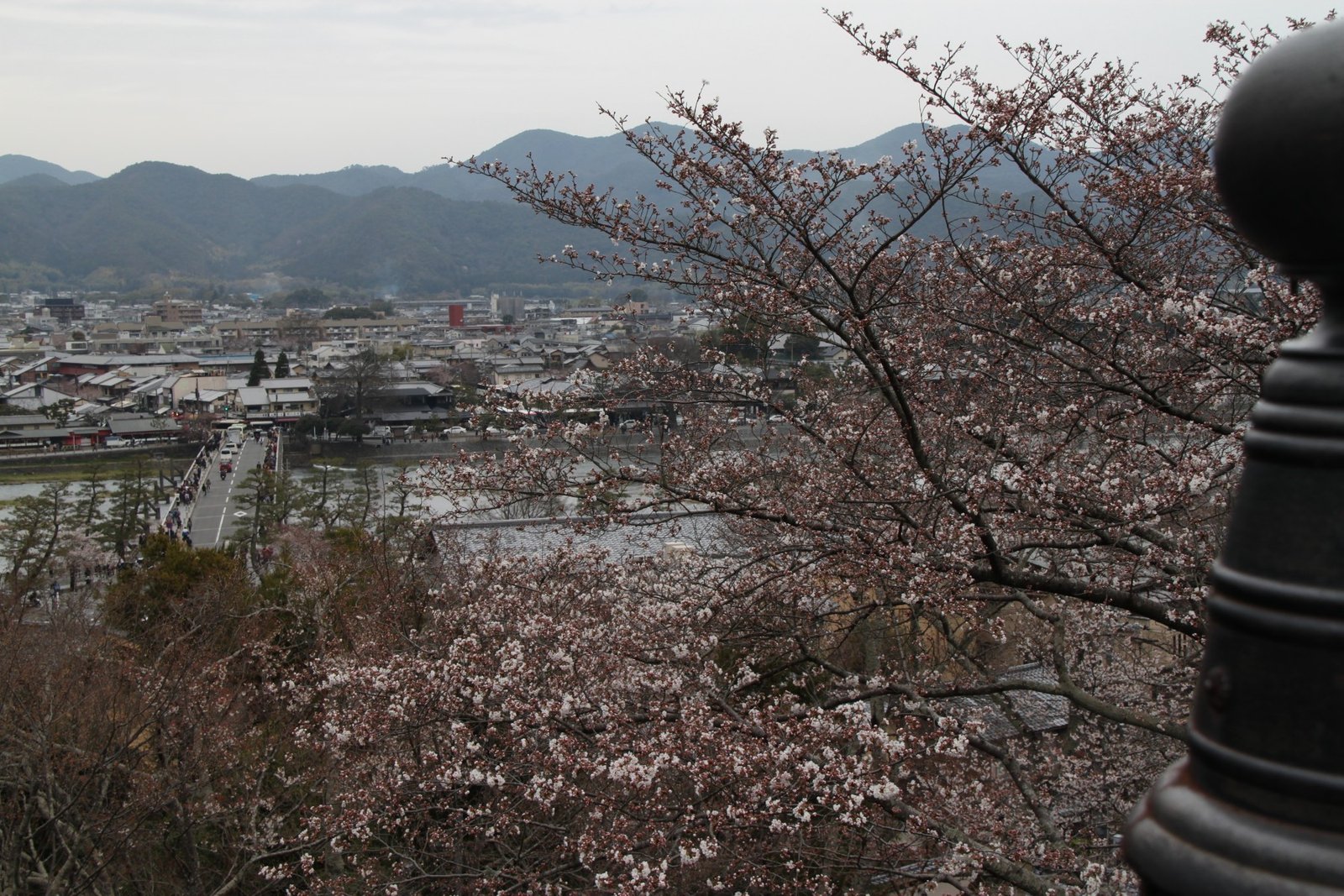
Togetsukyo actually crosses a small midstream island, Nakanoshima, planted with cherry and pine trees and linked to both banks, which is worth knowing because it means the crossing is really a short park walk rather than a straight hop from one side to the other. A second, smaller bridge, the Togetsu-kobashi, continues the path onward toward Arashiyama Station on the Randen tram line, and cafes with river views are scattered along both banks near the main bridge if you want to sit with the scenery rather than just photograph it and move on.
If you’ve just come off the Hozugawa river boat from Kameoka, this is also where that ride ends, with boatmen poling the last stretch into view of the bridge, so Togetsukyo makes a natural final stop after drifting down through the gorge rather than somewhere you’d plan a special trip to on its own.
Best Times to Visit
Togetsukyo earns its reputation twice a year. Cherry trees frame both the bridge and Nakanoshima in spring, and the maples covering Mount Arashiyama behind it color up through most of November, which is when our guide to koyo season puts this stretch of the river close to its peak. Midday crowds can be heavy in either season, especially on weekends, so arriving before 9am gets you the mountain backdrop with a fraction of the foot traffic and far fewer people drifting into your photos. The bridge is also lit up for Arashiyama’s winter Hanatouro light-up in December, covered in our guide to Kyoto in December, for anyone visiting outside the autumn rush.
Getting There
The bridge sits one to two minutes on foot from both Saga-Arashiyama Station on the JR Sagano Line and Arashiyama Station on the Randen tram line, so however you arrive in the district, you’ll almost certainly pass it anyway. It also works well as the hinge of a short loop: the path north of the bridge leads toward the Arashiyama Bamboo Grove and Tenryu-ji, and from there a trail climbs up to Okochi Sanso Villa in the hills above the grove.
Bottom Line
Togetsukyo isn’t really a destination so much as the hinge that the rest of Arashiyama turns on, and most people cross it without a second look on their way to the bamboo grove. Give it an extra five minutes, walk out as far as Nakanoshima and back rather than straight across, and it holds its own as one of the better views in the district, no ticket required.