Koshoji: A Practical Guide to Uji’s Soto Zen Temple and Its Maple-Tunnel Approach
Most visitors who make it out to Uji spend the whole afternoon on one side of the river, shuttling between Byodo-in’s reflecting pond and the tea shops lining the main street, then head straight back to the station. Cross to the opposite bank and keep walking for about twenty minutes, though, and you’ll reach Koshoji, a working Soto Zen temple with one of the more dramatic approaches in the city: a steep, maple-shaded slope that turns into a tunnel of red and orange for a few weeks each November. It’s not usually on anyone’s Uji shortlist, but if you’re building out a longer day beyond our Day Trip to Uji guide, the extra half hour is worth it.
The Essentials at a Glance
| What | Details |
|---|---|
| Location | North bank of the Uji River, about a 20–25 minute walk from JR Uji Station, or roughly 10 minutes on foot from Byodo-in across the river |
| Sect | Soto Zen |
| Founded | 1233 in Fukakusa, Kyoto, by Dogen; rebuilt at its current Uji site around 1648 |
| Known for | Its maple-lined stone approach and a ceiling said to be salvaged from Fushimi Castle |
| Hours | Daily, roughly 10:00am–4:00pm (last admission 30 minutes before closing) |
| Admission | ¥500 for the main hall; the entrance garden is free |
| Access | 20–25 min walk from JR Uji Station, or about 10 min from Byodo-in on foot |
Dogen’s First Temple, Rebuilt on a Hillside
Koshoji’s history starts a long way from Uji. The temple was founded in 1233 in the Fukakusa area of Kyoto by Dogen, the monk who had just returned from several years of study in China and would go on to become the founding figure of Soto Zen in Japan. Koshoji is sometimes described as Dogen’s first dedicated training temple, predating the far more famous Eihei-ji in Fukui, where he later relocated his teaching and which remains one of Soto Zen’s two head temples today. The original Fukakusa temple didn’t survive — like a lot of Kyoto’s early religious institutions, it was lost to the periodic waves of war and fire that swept through the city over the following centuries. The Koshoji you can visit now is a rebuilding, moved to this riverside hillside in Uji around 1648 under the patronage of Nagai Naomasa, the local lord at the time. It has operated as an active training temple ever since, and it still holds zazen meditation sessions that outside visitors can join, generally free of charge but by advance phone booking, on the first and third Sunday of each month.
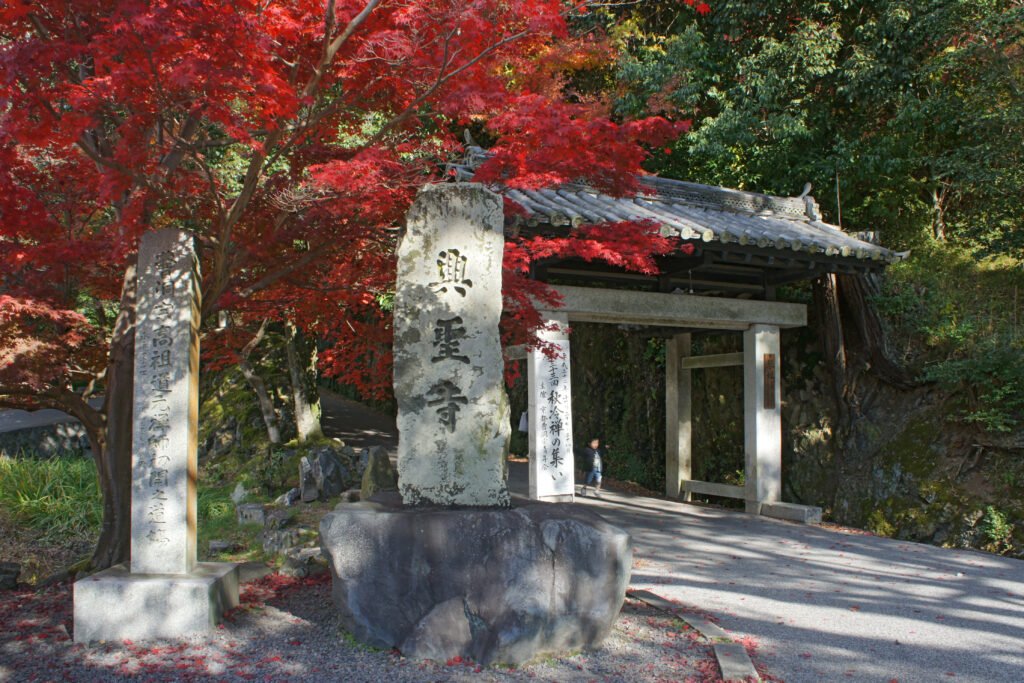
The Koto-zaka: A Slope Built for Autumn
The approach that gives Koshoji its reputation is a set of stone steps locally called the koto-zaka, climbing steeply from the riverside road up to the temple’s gate. For most of the year it’s simply a quiet, tree-lined path; for a few weeks around late November, the maples planted along both sides turn deep red and orange and close in overhead, turning the whole climb into something close to a tunnel. At the top, the main gate itself is worth a look before you go any further — it’s built with a rounded, Chinese-influenced frame rather than the squared gates more common at temples elsewhere in Kyoto, a small reminder of how much Zen temple architecture in Japan borrowed from Chinese models. Just past the gate is a small entrance garden with a koi pond, which is free to wander even if you don’t continue on to the paid inner hall.
A Ceiling Board from a Fallen Castle
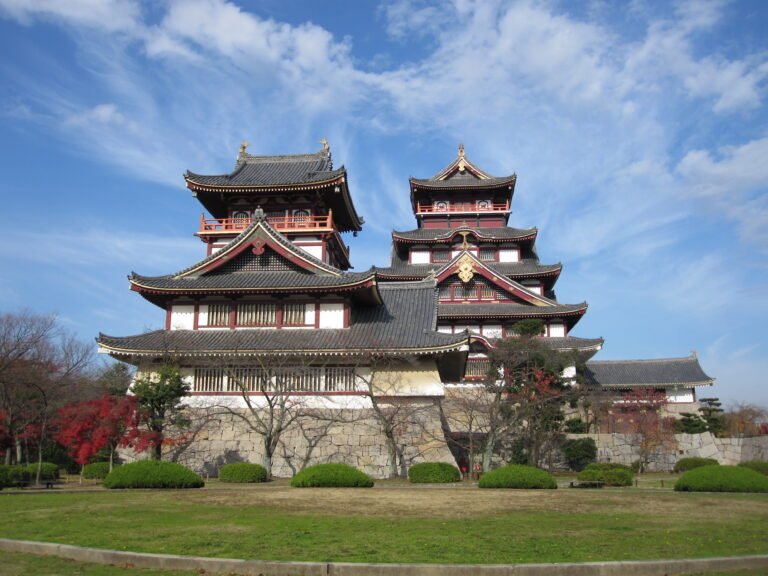
Inside the hatto, Koshoji’s main hall, look up: the wooden ceiling boards in one section are said to have been salvaged from Fushimi Momoyama Castle after its garrison was wiped out defending it in 1600, and some of the boards are still visibly discolored by what’s traditionally identified as bloodstains from that siege. It’s a grim detail, but not a unique one — Kyoto has around five of these so-called chi-tenjo, or “blood ceilings,” scattered across different temples that each received a portion of the castle’s salvaged timber after it fell, including Hosen-in in Ohara, which we’ve covered separately. If you’ve already read our guide to Fushimi Momoyama Castle, the rebuilt keep standing on that hill today, Koshoji’s ceiling boards are a strange, quiet coda to that story: physical pieces of the original building that ended up more than ten kilometers away, repurposed into a temple’s roof.
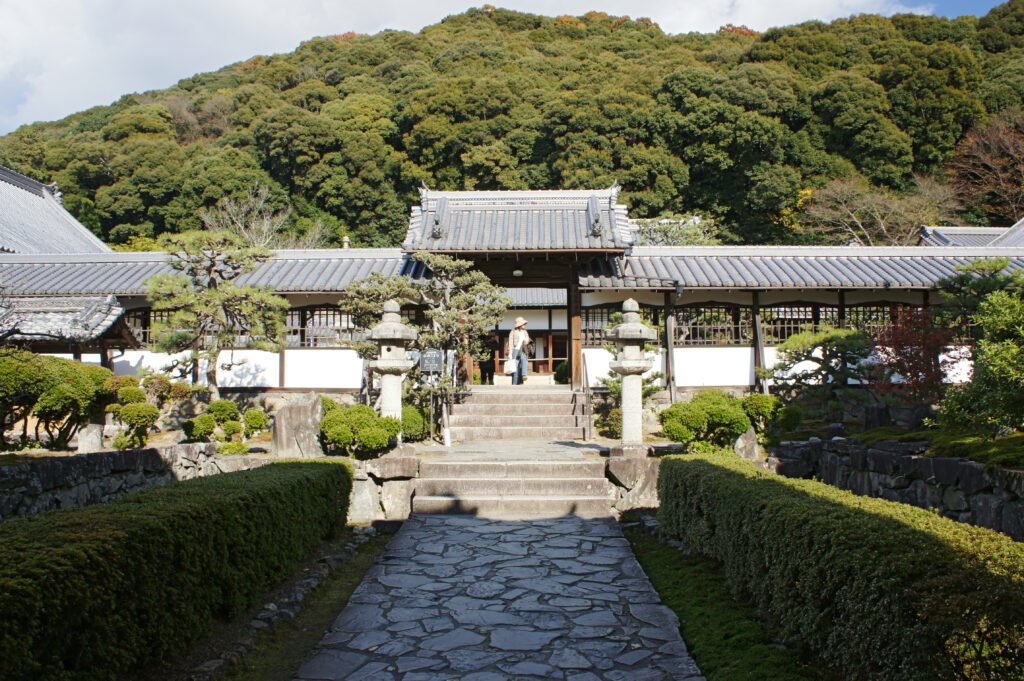
Inside the Grounds
Past the ceiling boards, the inner hall opens onto a central garden with a five-story stone pagoda and carefully pruned shrubs and trees, a more conventional Zen-temple composition than the dramatic approach outside might lead you to expect. One room along the visiting route holds a statue of Kannon with one toe slightly raised off its base, a detail the temple explains as a sign of the bodhisattva’s readiness to rise and help anyone in need at a moment’s notice. The route usually ends in a bare room set aside for zazen practice, a reminder that Koshoji isn’t primarily a sightseeing stop — it’s a functioning training monastery that happens to also be open to visitors.
Getting There
From JR Uji Station, it’s about a 20 to 25 minute walk, mostly along the river on the opposite bank from Byodo-in and the main tourist street. If you’re coming from Byodo-in itself, the shortcut is to cross the Uji River directly — it’s roughly a 10 minute walk from there. Hours and fees can shift slightly between sources, but plan to arrive between 10:00am and 4:00pm, when admission to the main hall is ¥500 and a visit takes about 20 to 30 minutes. The entrance garden with the koi pond is free to enter regardless of whether you pay to go further in.
Pairing It With the Rest of Uji
Koshoji works best as an extension of a longer Uji day rather than a destination by itself. Our Day Trip to Uji guide covers the main loop around Byodo-in and the tea district, and our dedicated Byodo-in guide goes deeper into the phoenix hall just across the river. If you’re also stopping at Ujigami Shrine, on the same side of the river as Byodo-in, Koshoji makes sense as the detour you save for once you’ve crossed over to the quieter bank. And if the blood ceiling catches your interest, our guide to Fushimi Momoyama Castle — the building these boards were reportedly taken from — fills in the rest of that story.
Bottom Line
Koshoji isn’t going to compete with Byodo-in for name recognition, and that’s more or less the appeal: a working Zen temple with a genuinely striking autumn approach, a handful of unusual details inside, and almost none of the crowds gathered across the river. Visit in late November for the maple tunnel at its best, budget 30 to 40 minutes including the walk from the station, and treat it as the quiet half of a Uji day that’s otherwise built around one very famous building.