Ujigami Shrine: A Practical Guide to Uji’s Thousand-Year-Old National Treasure
Our Day Trip to Uji guide usually gets as far as Byodo-in’s phoenix hall and the tea shops along the river, and most visitors never make the extra ten minutes across the bridge to the shrine tucked into the hillside behind it. That’s a shame, because Ujigami Shrine is, by the best physical evidence anyone has, the oldest surviving Shinto shrine building in Japan, and it’s also one of the quietest, least-visited stops on Uji’s entire World Heritage list. If you’ve already mapped out a day around Byodo-in, this is the one genuinely significant extra stop worth tacking on before you head back to the station.
The Essentials at a Glance
| What | Details |
|---|---|
| Location | Uji-yamada, Uji City, on the north bank of the Uji River, roughly a 10-minute walk from Keihan Uji Station and about a 10-minute walk from Byodo-in |
| Enshrines | Emperor Ojin, Emperor Nintoku, and Prince Uji no Waki-iratsuko |
| Known for | The oldest Shinto shrine building known to survive in Japan, with both its honden and haiden designated National Treasures |
| Hours | 9:00am–4:00pm, no regular closing days |
| Admission | Free |
| Access | About a 10-minute walk from Keihan Uji Station, or roughly 15–20 minutes from JR Uji Station |
The Oldest Shrine Building in Japan
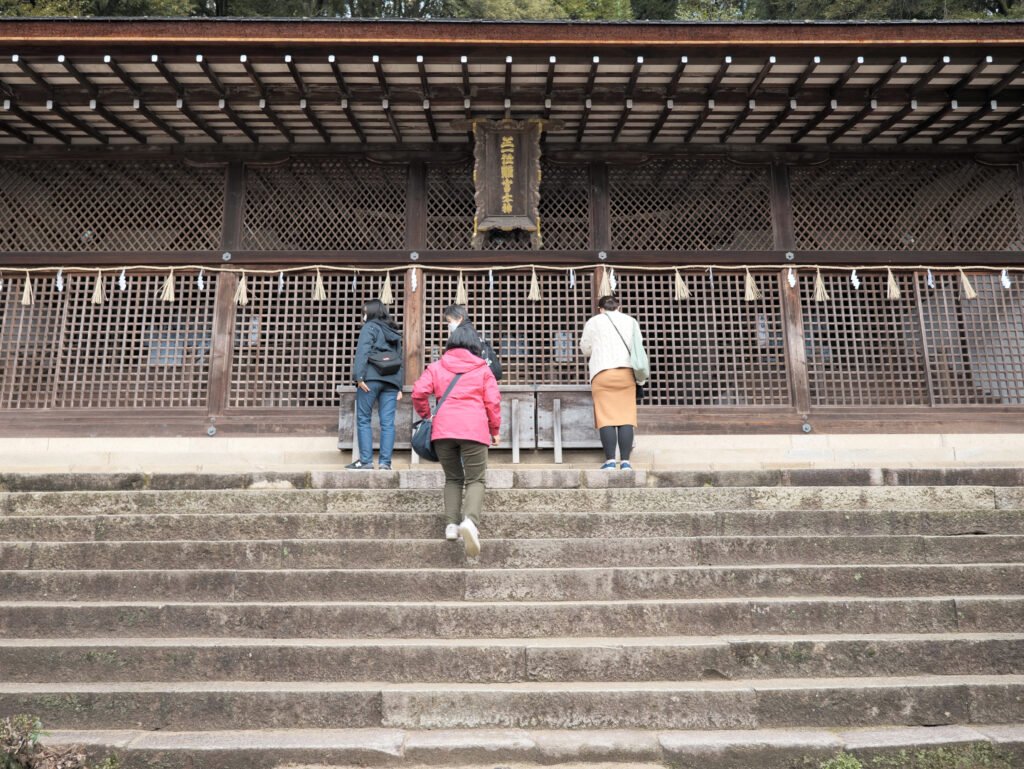
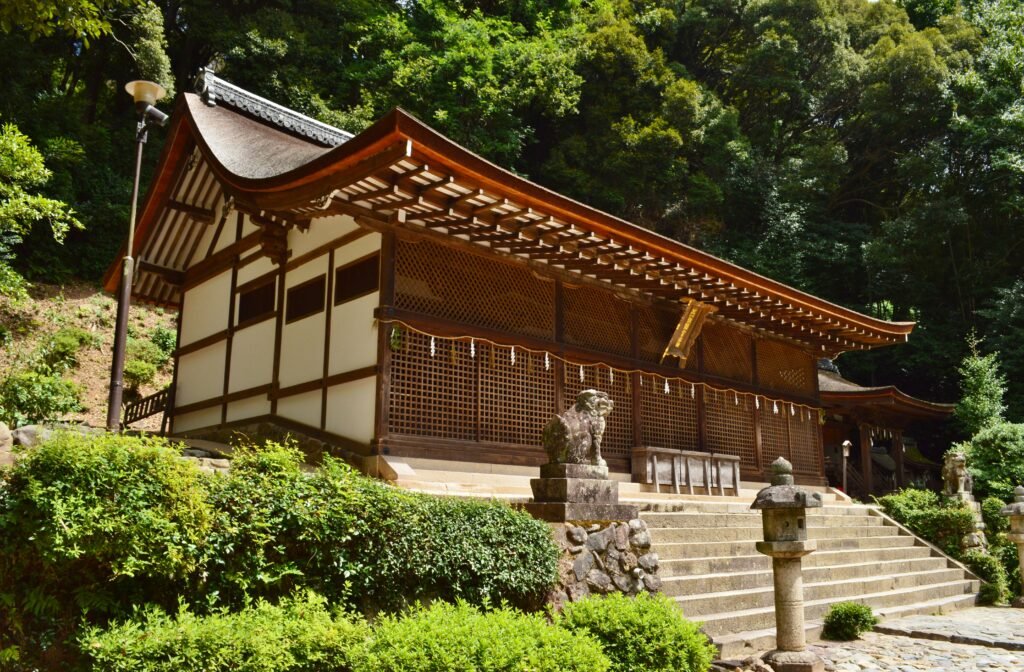
No written record states exactly when Ujigami’s honden, or main sanctuary, was built, and Kyoto’s shrine and temple founding dates are often tradition rather than fact. What sets Ujigami apart is that the building has actually been tested: a dendrochronological study of its timber dated the wood to around 1060, placing its construction solidly in the Heian period and making it, as far as anyone has currently demonstrated, the oldest extant shrine building in the country. The honden is built in an early form of nagare-zukuri style, generally considered the style’s first known example, with three small individual shrine buildings lined up side by side and sheltered under a single asymmetrical roof that extends further over the worshippers’ side than the back, a design meant to shelter people approaching to pray. Both the honden and the haiden (oratory) in front of it are designated National Treasures, a rare distinction for a shrine this modest in scale. The haiden itself dates to the Kamakura period and borrows shinden-zukuri, the residential style used in Heian-era aristocratic mansions, right down to its extended gabled awning, which makes it look more like a noble’s house than most people’s mental image of a shrine.
Guardian Shrine, Then Two Shrines
Ujigami’s history is tied up with Byodo-in, the temple whose phoenix hall sits a short walk away across the river: for centuries, Ujigami functioned as Byodo-in’s guardian shrine, the local tutelary deity watching over the grander temple down the hill. For most of its history it also wasn’t considered separate from Uji Shrine, a smaller shrine about 100 meters to the south; the two were treated as one site, referred to informally as the upper and lower halves of the same complex. It was only in the Meiji period, after 1868, when the government moved to disentangle Shinto shrines from the Buddhist temples they had long been fused with, that Ujigami and Uji Shrine were formally split into the two independent shrines you can visit today. Ujigami, along with Byodo-in and more than a dozen other sites across the city, was recognized in 1994 as part of the UNESCO World Heritage listing for the Historic Monuments of Ancient Kyoto — one of the smallest and least conspicuous entries on that list, easy to walk past if you aren’t specifically looking for it.
Three Princes and a Succession Story
The deities enshrined at Ujigami are Emperor Ojin, his son Emperor Nintoku, and another son, Prince Uji no Waki-iratsuko, and the prince is the one whose story actually explains the shrine’s name. According to the Kojiki and Nihon Shoki, Japan’s earliest chronicles, Emperor Ojin designated Uji no Waki-iratsuko, his younger son, as heir over his older half-brother Osazaki. When Ojin died, each half-brother insisted the other should take the throne, and the standoff dragged on for years before the prince removed himself from the equation so Osazaki could become Emperor Nintoku. It’s a legend rather than verified history, as is true of most of Japan’s early imperial chronology, but it’s the reason the prince is remembered here as a figure of self-sacrifice rather than ambition. He’s also, indirectly, the reason Uji has a rabbit as its local mascot: at the neighboring Uji Shrine, the lower half of what was once a single complex, local legend holds that a rabbit guided the prince when he lost his way traveling to the area, repeatedly looking back to make sure he was following. That looking-back rabbit decorates Uji Shrine’s charms and fortune slips rather than Ujigami’s, but the two shrines still share the same enshrined deities and the same old story.
Kirihara Spring and the Quiet Grounds
Within Ujigami’s modest precinct is Kirihara-sui, a natural spring that locals count among the Uji Shichimeisui, the historic seven famous waters of Uji, and by most accounts the only one of the seven still flowing today. The rest of the grounds are correspondingly understated: no sweeping gravel courtyards or long approaches, just a wooded hillside site with the honden and haiden close together, almost always empty apart from a handful of visitors who came looking for it specifically. That quiet is really the point. After the crowds that gather around Byodo-in’s reflecting pond, Ujigami offers a few minutes of a much older, much plainer kind of sacred space, with nothing between you and a building that has been standing in roughly its current form since before the Kamakura shogunate existed.
Getting There
From Keihan Uji Station, it’s about a 10-minute walk north along the river and up toward the wooded hillside; from JR Uji Station, allow 15 to 20 minutes. If you’re coming from Byodo-in, the shrine is roughly a 10-minute walk away, crossing the Uji River via the Asagiri Bridge and the small island at its center. Ujigami is open from 9:00am to 4:00pm with no fixed closing days, admission is free, and most visitors are in and out within 10 to 15 minutes, so it pairs easily with almost any other stop in Uji without reshaping your schedule.
Pairing It With the Rest of Uji
Ujigami makes the most sense as an add-on to a longer Uji visit rather than a destination on its own. Our Day Trip to Uji guide covers the full itinerary around Byodo-in and the tea district, and our dedicated Byodo-in guide goes deeper into the phoenix hall itself, the building whose guardian deity Ujigami has watched over for roughly a millennium. If you have time for one more stop beyond the two, Manpuku-ji, Kyoto’s Chinese-style Obaku Zen temple, is a short bus or taxi ride further out and gives the day an entirely different architectural flavor to close on. And since Ujigami is a Shinto shrine rather than a temple, it’s worth a quick look at our Kyoto Temple and Shrine Etiquette guide if the small differences between the two — how to bow, where to wash your hands, whether to clap — aren’t already second nature.
Bottom Line
Ujigami Shrine won’t overwhelm you with scale or color, and that’s exactly why it’s worth the short detour: this is the real, physically tested oldest shrine building in Japan, sitting quietly a few minutes from one of Kyoto’s most photographed temples, visited by a fraction of the people who photograph that temple. Budget 15 to 20 minutes including the walk from Byodo-in, and go in expecting something closer to a historical artifact you happen to be allowed to stand next to than a conventional sightseeing stop.