Toei Kyoto Studio Park: A Practical Guide to Kyoto’s Samurai Movie Village
Most of Kyoto’s sights are centuries old. This one is different: a working film backlot dressed up as an Edo-period town, where staged samurai duels and ninja acrobatics happen a few times a day, and where an actual TV crew might be shooting a scene a few streets over from where you’re eating shaved ice.
For decades this was known as Toei Kyoto Studio Park, or by its Japanese name Toei Eigamura (“movie village”). In March 2026, to mark the park’s 50th anniversary, it began rebranding as Uzumasa Kyoto Village, the first phase of a larger renewal that’s added new dining, cultural workshops, and evening hours on top of the sets and stunt shows longtime visitors already know. Both names still circulate, so don’t be thrown off if you see the park referred to either way.
Here’s how to plan a visit.
The Essentials at a Glance
| What | Details |
|---|---|
| Location | Uzumasa, Ukyo-ku, next to Toei’s working film studio and close to Arashiyama |
| What it is | A theme park built around a real, still-active Edo-period movie set, with shows, costume dress-up, and family attractions |
| Admission (1-day) | Adults around ¥2,800, students around ¥1,800, children (3 and up) around ¥1,600; a cheaper evening ticket is also sold |
| Hours | Typically 10:00 a.m.–9:00 p.m., last entry an hour before closing; hours and closed days shift seasonally, so check the official calendar before you go |
| Getting there | Keifuku Randen line to Uzumasa-Koryuji Station (about 5 minutes on foot) or JR Sagano Line to Hanazono Station (about 15 minutes on foot) |
| Visit length | Half a day covers the sets and a show or two; longer if you add costume dress-up or a workshop |
| Note | Rebranded from Toei Kyoto Studio Park to Uzumasa Kyoto Village starting March 2026, as the first phase of a renewal marking the park’s 50th anniversary |
What It Actually Is
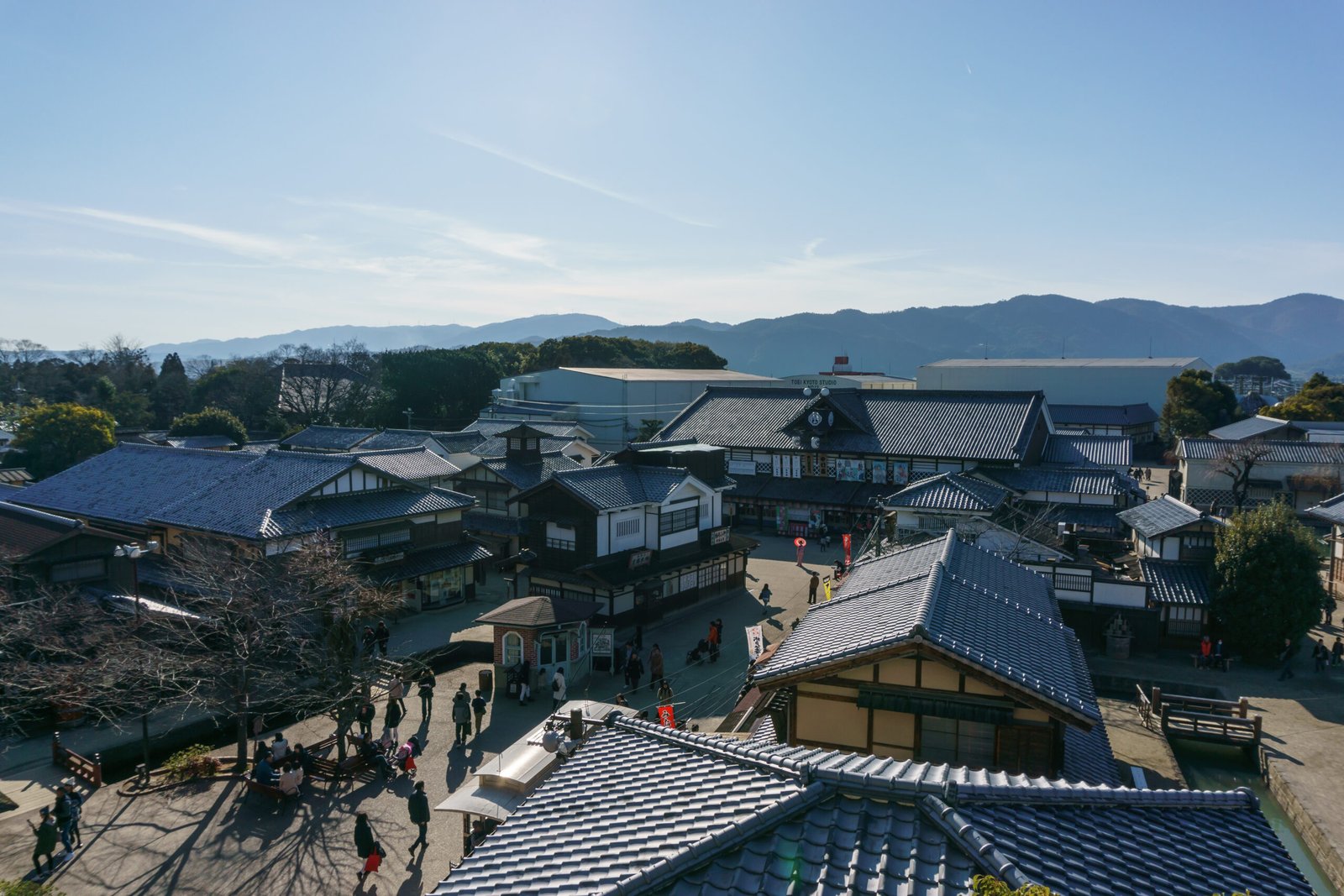
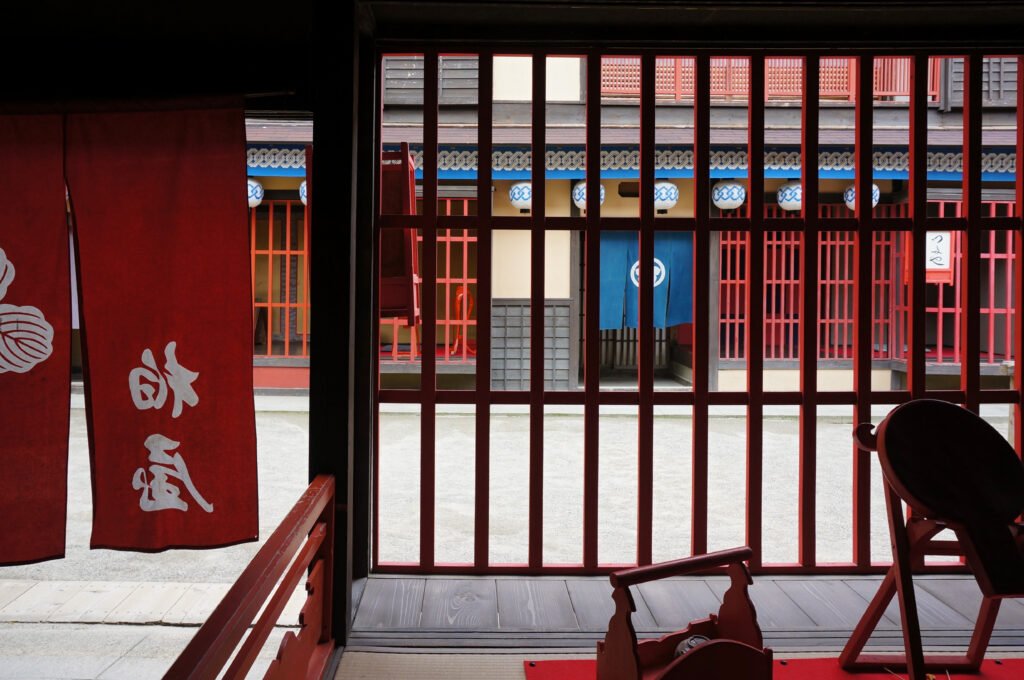
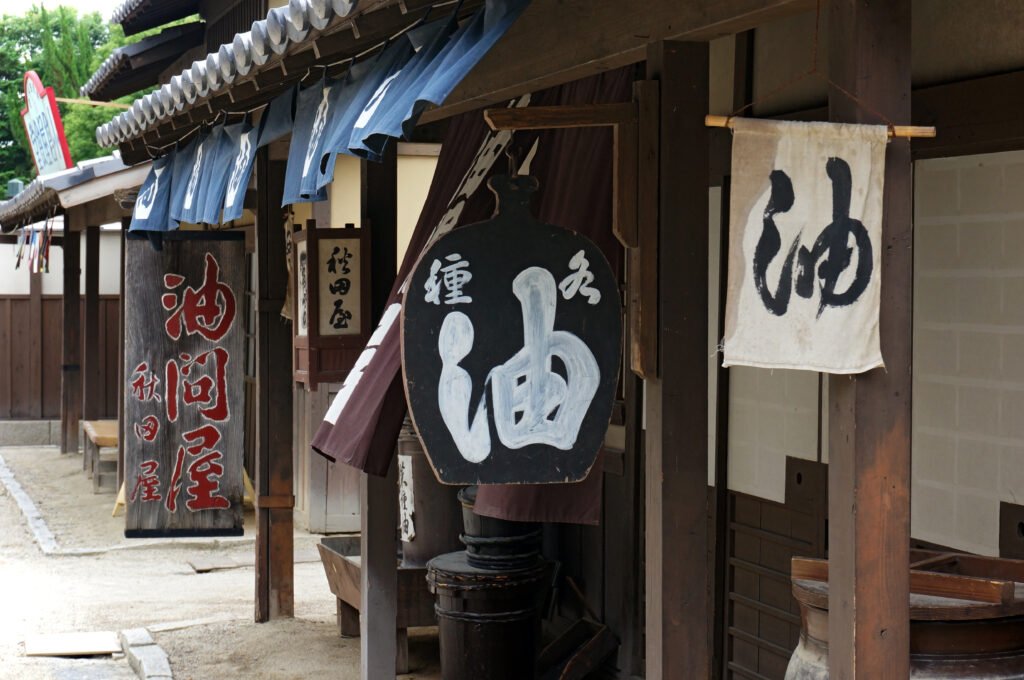
The site began in 1926 as a working Toei film studio, and it opened its gates to the public as a theme park in 1975, built around the same sets used to film period dramas (jidaigeki). That dual identity is still the whole draw: the wooden shopfronts, bridges, and back alleys you walk through are genuine standing sets, not replicas built purely for tourists, and the park is still used for real productions. On a good day you might round a corner and find a film crew mid-shoot; on any day, you’ll get scheduled stunt and ninja shows staged on the same streets.
Getting There
The easiest route is the Keifuku Randen tram line to Uzumasa-Koryuji Station, about a five-minute walk from the entrance; if you’re coming from Kyoto Station, that usually means the JR Sagano/San-in Line to Emmachi or a transfer via Shijo-Omiya. Alternatively, JR trains run directly to Hanazono Station, roughly a 15-minute walk away. City buses (Kyoto City Bus 75, or Kyoto Bus 73, 76, and 83) also connect from Kyoto Station in about 30 minutes. The park sits close enough to Arashiyama that the two make an easy combined day out.
What’s Inside
The heart of the park is the Edo-period town itself: a long street of wooden storefronts, teahouses, and a replica bridge modeled on Tokyo’s old Nihonbashi, all built to double as a functioning film set. Scheduled live shows run through the day, most notably a ninja stage show with acrobatics and stunt work, along with samurai sword-fighting demonstrations on an outdoor stage.
Costume dress-up is one of the park’s signature experiences: choose from dozens of samurai, ninja, and oiran (courtesan) outfits, get styled at a proper hair-and-makeup counter, and have photos taken in character on the period sets. It’s a more theatrical, film-set version of the kimono rental walks popular elsewhere in the city. Beyond the sets and shows, there’s a haunted house, a ninja-themed escape room and maze, and, reflecting Toei’s other big line of business in tokusatsu and anime franchises, a dedicated Evangelion-themed area with a large EVA-01 statue. Since the 2026 renewal, the park has also added hands-on cultural programs, such as tea ceremony, alongside a wider range of dining options.
Planning Your Visit
Base admission gets you into the park and its sets and covers the scheduled stage shows, but several attractions, the costume dress-up included, charge separately on top of that, so it’s worth budgeting extra if you want to do more than walk around and watch shows. Costume rental in particular takes real time, often 30 to 60 minutes between choosing an outfit and getting styled, so plan around it rather than squeezing it in at the end of the day.
Mornings and weekdays tend to be quieter than weekend afternoons, when tour groups arrive in bulk. If you’d rather skip the crowds entirely, the discounted evening ticket is worth considering: the park stays open into the evening, and the sets take on a different atmosphere after dark with fewer visitors around. Whichever ticket you choose, it’s a genuinely kid-friendly stop, and one of the few places in Kyoto where a rainy day doesn’t necessarily ruin the plan, since much of the park’s indoor programming carries on regardless of weather.
Pairing It With the Rest of Your Trip
Uzumasa sits close enough to Arashiyama Bamboo Grove and Tenryu-ji and the Arashiyama Monkey Park that all three fit comfortably into one day, especially if you’re already planning to be in the area. If the costume dress-up here appeals to you, it’s worth comparing notes with our Kimono Rental in Kyoto guide, which covers the more traditional street-side rental shops downtown. And since getting here involves a specific combination of train lines and buses, our Getting Around Kyoto guide is worth a look before you set out.
Bottom Line
This isn’t a temple or a shrine, and it doesn’t try to be: it’s a genuinely working film set turned theme park, and after its 2026 renewal into Uzumasa Kyoto Village, it’s a livelier stop than the old Toei Studio Park name might suggest. If your Kyoto itinerary is starting to feel like an unbroken run of temples, this is a solid way to break it up, especially if you’ve got kids in tow or you’re already headed out to Arashiyama for the day.