Arashiyama Momiji Matsuri: A Practical Guide to Kyoto’s Autumn Boat Festival
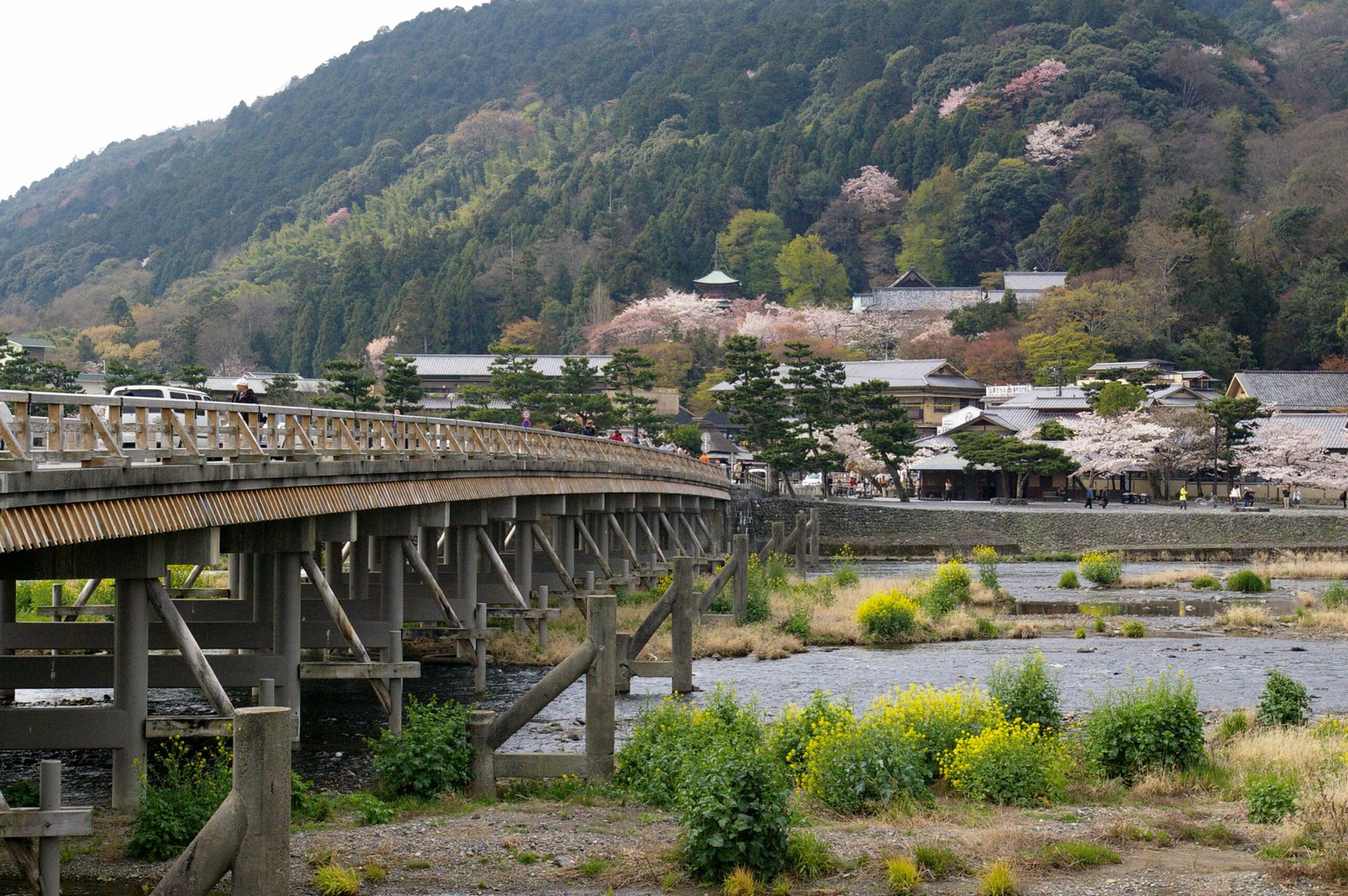
This blog has already walked through most of the regular ways to spend a day in Sagano: the bamboo grove and Tenryu-ji, a slower float down the river on the Hozugawa boat ride, and a full walking itinerary beyond the usual bamboo photo. The Arashiyama Momiji Matsuri is a different kind of visit entirely: a single afternoon, once a year, when the stretch of the Oi River just below Togetsukyo Bridge fills with decorated boats, musicians in Heian-period dress, and a crowd lined up along both banks to watch. It’s free, it’s loud in the best way, and it happens right in the middle of the neighborhood’s best foliage season, which makes it an easy add to a day you were probably already planning.
The Essentials at a Glance
| What | Details |
|---|---|
| Location | the Oi (Katsura) River around Togetsukyo Bridge, Arashiyama |
| When | annually, by tradition on the second Sunday of November (November 8 this year) |
| Typical hours | roughly 10:00am to 3:00pm, reportedly in a morning and an afternoon session |
| Cost to watch | free from the riverbanks and bridge; limited reserved seating is sometimes available in advance for a fee |
| History | said to date back to 1947, framed as a revival of Heian-era aristocratic boating parties |
| Access | Hankyu Arashiyama Station, Randen (Keifuku) Arashiyama Station, or JR Saga-Arashiyama Station, all a short walk away |
| Pairs well with | the bamboo grove, Tenryu-ji, and a walk along the river beforehand |
A Heian-Costumed Procession on the Water
The idea behind the festival is to recreate the kind of river outing Kyoto’s Heian-period aristocracy supposedly enjoyed on the Oi River, and the boats are built to match: wide, flat-bottomed, and loaded with performers in layered court robes rather than the simple sightseeing passengers you’d see on a normal day. Accounts of exactly how old the tradition is vary, but it’s commonly dated to 1947, which makes it a postwar revival of an older aristocratic pastime rather than a direct, unbroken thousand-year-old custom, whatever the costumes suggest at a glance. Reports differ on exactly how many boats take part, with some putting the number above a dozen, each one apparently following its own loose program rather than a single unified script.

What Happens on and Around the Boats
Different accounts of the festival emphasize different performances, which suggests the lineup varies somewhat by boat and by year rather than following one fixed program. Koto music comes up most consistently, alongside gagaku, the slow, formal court music that accompanies Shinto ritual and imperial ceremony, and bugaku, the matching court dance performed in heavy brocade costume with deliberately unhurried movement. A few sources also mention imayo, a style of Heian-period song, and Saga Dainenbutsu Kyogen, a form of silent, masked comic theater with roots in the Sagano area specifically. Don’t go in expecting a single continuous show from a fixed seat; it’s closer to a series of overlapping vignettes drifting past on the water, and part of the fun is simply not knowing which boat will pass next or what it will be doing.
Where and How to Watch
Watching from the riverbank or from Togetsukyo Bridge itself costs nothing, and that’s how the vast majority of the crowd experiences the festival. Kameyama Park, on the rise just above the river’s north bank, is another spot worth knowing about if the bridge and the immediate riverside are already packed, since it gives a slightly elevated view over the same stretch of water. A small number of reserved seats are sometimes made available for a fee, apparently requiring advance arrangement, but the details and availability seem to shift from year to year and aren’t something to count on without checking closer to the date. For most visitors, arriving early and claiming a spot along the bank is the simpler and more reliable plan.

Timing It With Kyoto’s Autumn Colors
Arashiyama’s maples usually reach their deepest color in the second half of November into early December, which means a festival held on the second Sunday of the month can land a little ahead of the absolute peak in some years and closer to it in others. It’s worth treating the festival and the foliage as two separate things to track rather than assuming one guarantees the other: come for the boats regardless, and treat full color as a bonus if the timing lines up. Our Kyoto Autumn Foliage guide has more on how the season typically progresses across the city if you want to plan a broader trip around it.
Getting There and Avoiding the Worst of the Crowds
Arashiyama is reachable by the Hankyu Arashiyama Line, the Randen (Keifuku) tram to its own Arashiyama terminus, or the JR San-in/Sagano Line to Saga-Arashiyama Station, with city buses 28, 73, and 76 as slower alternatives. On festival day, expect the whole neighborhood, not just the riverbank, to be busier than usual, with trains into the area especially crowded around midday. Arriving in the morning, before the first session gets underway, is the most reliable way to find a decent viewing spot and to see the surrounding streets and the bamboo grove before the day’s crowds peak. Street stalls selling tea and seasonal snacks tend to appear along the approach on the day itself, which is a reasonable sign you’re headed the right way even without a map.
Pairing It With the Rest of Arashiyama
Because the festival runs for a few hours in the late morning and afternoon rather than all day, it fits naturally alongside an early visit to the bamboo grove and Tenryu-ji before the crowds build, or a longer loop drawn from our One Day in Sagano itinerary. If you’d rather watch the river from on it rather than beside it, the regular Hozugawa River Boat Ride runs separately from the festival and is worth checking for its own schedule if you want a river outing on a different, quieter day.
Bottom Line
The Arashiyama Momiji Matsuri isn’t a hidden secret, and on the day itself the neighborhood is about as crowded as Arashiyama gets. What it offers in exchange is something you can’t arrange for yourself on an ordinary visit: boats full of musicians and dancers in court dress drifting past one of Kyoto’s most photographed bridges, for free, once a year, right in the middle of maple season. If your trip happens to land on the right Sunday in November, it’s worth rearranging the day around it.