One Day in Fushimi: A Practical Itinerary Through Inari, the Sake District, and Momoyama Castle
Fushimi-ku already has three separate write-ups on this blog — Fushimi Inari Taisha, the sake district, and Momoyama Castle — and that’s exactly what makes it the easiest full-day loop in southern Kyoto. All three sit on roughly the same transit corridor, with both the JR Nara Line and the Keihan Main Line running the length of it, so none of this requires backtracking into central Kyoto between stops. It’s also a day with real pacing built in: a crowded, uphill morning, a flat and social midday, and a quiet, low-key finish. Here’s how to put the three together.
The Essentials at a Glance
| What | Details |
|---|---|
| Where | Fushimi-ku, southern Kyoto |
| Stops, in order | Fushimi Inari Taisha → the sake district (Chushojima / Fushimi-Momoyama) → Fushimi Momoyama Castle |
| Transit | JR Nara Line or Keihan Main Line — both connect all three stops without returning to central Kyoto |
| Time needed | A full day, roughly 6–8 hours door to door including travel |
| Rough cost | Shrine and castle are free; sake museum admission around ¥600; train fares typically ¥500–700 total |
| Best start time | 6:30–7:00am at Fushimi Inari, to see the gates before the tour groups arrive |
Why These Three Belong in One Day
Each of these three sights works fine as a stand-alone visit, but they’re strung along the same few kilometers of railway, and the differences between them end up complementing each other rather than feeling repetitive. Fushimi Inari is free, famous, and genuinely crowded by mid-morning, with a real uphill climb if you go looking for it. The sake district a few stops south is flat, slower, and built around sitting down — a museum, a tasting, maybe a canal boat ride — which makes it a natural place to recover before the day’s second half. Momoyama Castle, the last stop, asks for one more short uphill walk but rewards it with a park that’s rarely crowded even on weekends, a deliberate change of pace after a day that otherwise runs through two of Fushimi’s busier attractions.
Morning: Fushimi Inari Before the Crowds
Start here, and start early. Fushimi Inari Taisha is always free and never closes, which means it also never gets the natural crowd control a ticketed site has — by mid-morning the famous Senbon Torii tunnel is shoulder to shoulder, and it stays that way well into the afternoon. Arrive by 6:30 or 7:00am instead and you’ll get something close to the empty-tunnel photo everyone’s seen online. The dense tunnel of gates is only the first 10 to 15 minutes from the entrance; most visitors push on to the Yotsutsuji intersection, 30 to 45 minutes up, for a real view over the city before turning back. Our full Fushimi Inari Taisha guide covers the full summit hike, timing, and what to look for in the fox statues along the way, if you want more than the short version here.

Midday: Sake, a Canal Boat, and Lunch in the Brewing District
A short ride further down the same JR or Keihan line brings you to one of Japan’s three major sake-producing districts, a grid of canals and white-walled kura warehouses that’s been brewing for roughly four centuries on Fushimi’s famously soft groundwater. The Gekkeikan Okura Sake Museum (¥600, including a tasting, open 9:30am–4:30pm) is the anchor stop, with English explanations and an active brewery next door. If the Jikkokubune canal boat is running — it operates late March through early December, with a short gap in late November — a roughly 55-minute ride along the Horikawa canal past the breweries and willow trees is worth building the timing around; tickets are ¥1,900 for adults and same-day seats go first-come, first-served starting at 9:30am. Teradaya Inn and Kizakura’s restaurant make reasonable stops for lunch in between. Our Fushimi sake district guide has the full rundown of hours, prices, and the walking route between all of it.

Afternoon: A Quiet Hilltop Finish at Momoyama Castle
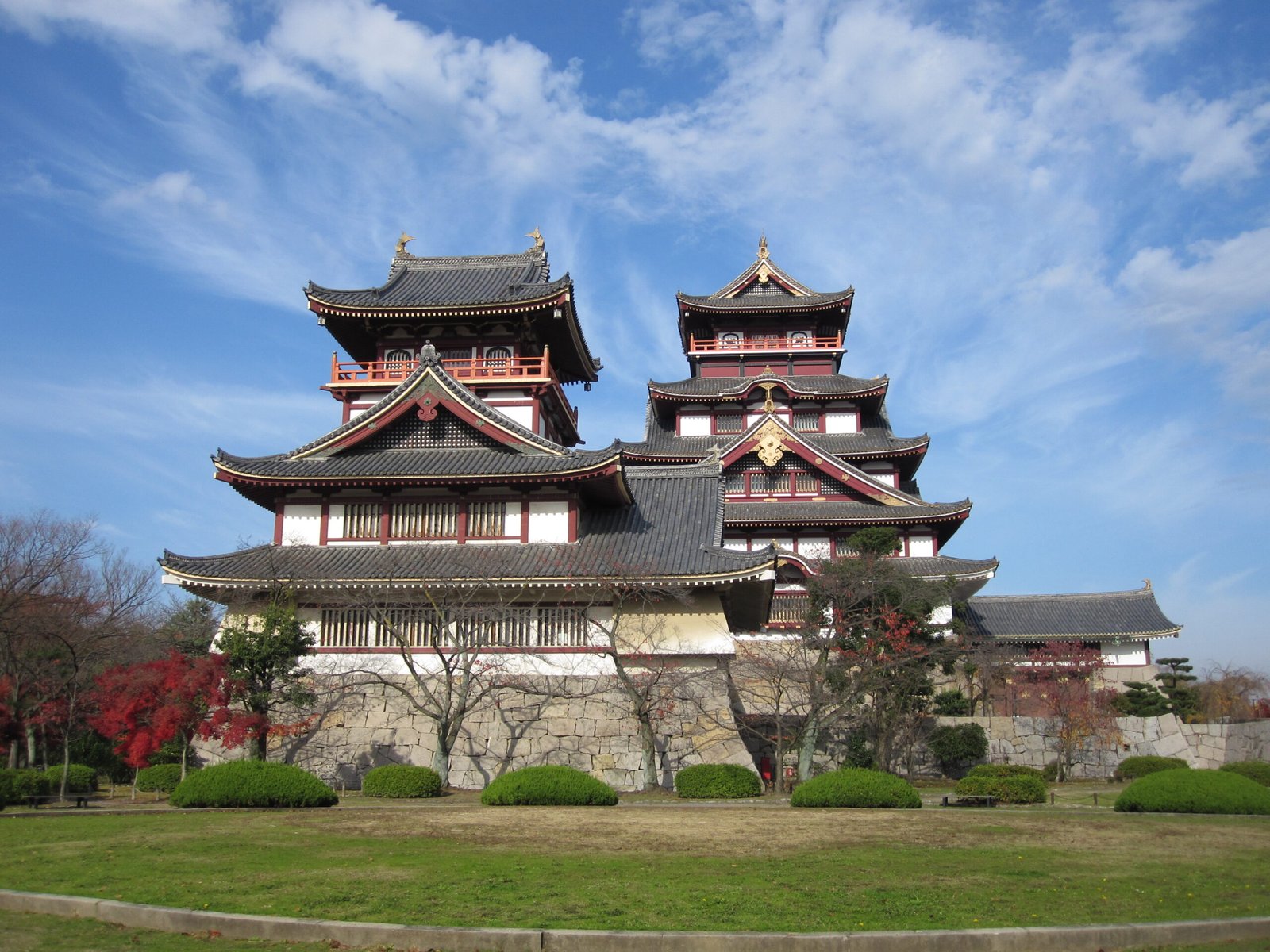
Close the day at Fushimi Momoyama Castle, about a 15–20 minute walk uphill from JR Momoyama Station, Keihan’s Fushimi-Momoyama Station, or Kintetsu-Tambabashi Station — whichever is closer to wherever the sake district left you. It’s worth knowing going in that the castle you’re looking at is a 1964 concrete reconstruction, not the original 16th-century fortress built by Toyotomi Hideyoshi and besieged in the dramatic 1600 siege that preceded the Battle of Sekigahara; there’s no interior to tour, just the exterior and the hillside park around it. That park, though, is the real draw for a day that’s already included two busier stops: it’s free, rarely crowded, and the walk up past pine and cherry trees toward the Meiji Emperor’s mausoleum is a genuinely quiet way to end the afternoon. Our full Fushimi Momoyama Castle guide has the history and more on getting there.
How to Move Between the Three Stops
Two train lines run this whole route, and you can pick whichever is more convenient without losing much either way. On the JR Nara Line, Inari Station sits a few minutes from Kyoto Station, and Momoyama Station — a short walk from both the sake district and the castle — is a few stops further down the same line, no transfer required. On the Keihan Main Line, Fushimi Inari Station connects to Chushojima or Fushimi-Momoyama Station, both within a 5–10 minute walk of the sake district, with Tambabashi Station nearby as another option for the castle. Either line keeps you moving in one direction for the whole day; there’s no need to double back toward central Kyoto until you’re ready to head home.
A Sample Timeline for the Day
6:30–8:30am: Fushimi Inari, up to Yotsutsuji and back down before the crowds build. 9:00am: train a few stops south. 9:15am–12:30pm: the sake museum, a canal boat ride if the schedule lines up, and lunch at Teradaya or Kizakura. 1:00pm: walk or short train ride to Momoyama Castle. 1:15–2:15pm: the castle grounds and a slow walk through the hillside park. 2:30pm onward: head back into central Kyoto, with most of the afternoon and evening still free. It’s a loose plan rather than a strict schedule — the canal boat’s timing and how long you linger at Inari will shift things around — but it keeps the day from running long.
Bottom Line
Fushimi rewards travelers willing to treat it as a full day rather than a quick stop at the gates. Inari gets you the famous photo and the morning workout, the sake district slows things down with a tasting and maybe a boat ride, and Momoyama Castle closes things out with a quiet park that most visitors to the neighborhood skip entirely. None of it needs advance booking, all of it sits on the same train line, and the whole loop costs less than a single ticketed attraction elsewhere in the city. For more on getting around the wider city beyond this corridor, our guide to getting around Kyoto covers the rest of the bus and train network.