Jakko-in: A Practical Guide to Ohara’s Convent of a Fallen Empress
Our Day Trip to Ohara guide and our closer look at Sanzen-in both center on the cluster of temples on the eastern side of the village, where Sanzen-in, Hosen-in, and a couple of smaller temples sit within a few minutes’ walk of each other. Jakko-in is on the other side of Ohara entirely, a separate 20-minute walk through farmland that most of the tour groups skip. That is partly why it stays quiet, and partly why its story is worth the detour: this is a convent older than most of Kyoto itself, and the place where one of Japanese history’s most tragic figures spent her final decades grieving everything she had lost.
The Essentials at a Glance
| What | Details |
|---|---|
| Location | Kusao-cho, Ohara, Sakyo-ku — on the western side of the village, roughly a 20-minute walk from the main Ohara bus stop and separate from the Sanzen-in cluster |
| Sect | Tendai (historically also associated with Pure Land practice) |
| Known for | Its connection to Kenreimon-in, a Taira-clan empress who retired here as a nun, and a 2000 arson fire that destroyed and then rebuilt the main hall |
| Hours | 9:00am–5:00pm (March–November); 9:00am–4:30pm (December–February); 10:00am–4:00pm (January 1–3); no regular closing days |
| Admission | Around ¥600 for adults, ¥350 for junior high school students, ¥100 for elementary school students |
| Access | Kyoto Bus 17 from Kyoto Station, or Kyoto Bus 19 from Kokusaikaikan Station on the Karasuma subway line, both to the “Ohara” stop, followed by a roughly 20-minute walk |
A Convent Older Than Most of Kyoto
Temple tradition dates Jakko-in’s founding to 594, when Prince Shotoku is said to have established it in memory of his father, Emperor Yomei, with a woman known as Tamayori-hime (later the nun Ezen-ni) serving as its first chief abbess. Dates that old are more legend than documented record, as is true of a lot of Kyoto’s oldest religious sites, but the temple has been continuously associated with the Tendai sect for most of its history, with periods where it was also linked to Pure Land practice. For a convent that most visitors have never heard of, it has an origin story that predates Kyoto’s own founding as the imperial capital by two centuries.
Kenreimon-in’s Final Years
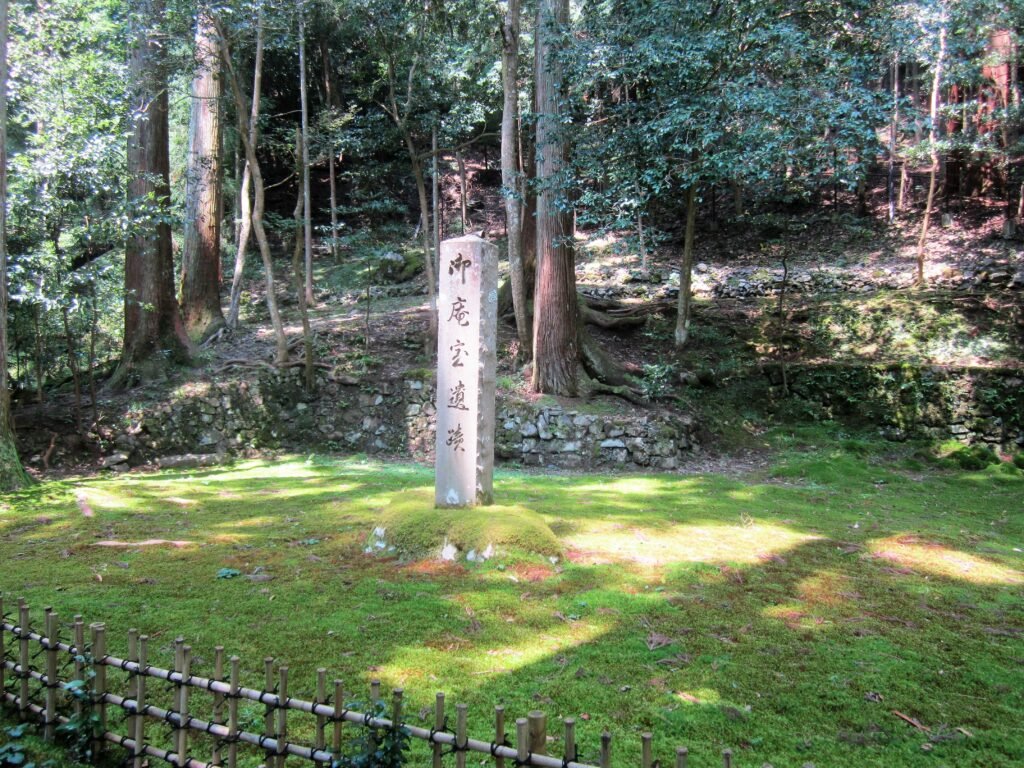
The reason anyone outside Ohara knows Jakko-in’s name is Kenreimon-in, born Taira no Tokuko, daughter of the clan leader Taira no Kiyomori and mother of the child Emperor Antoku. In 1185 the Taira clan was annihilated by the rival Minamoto at the naval Battle of Dan-no-ura, and in the chaos of the defeat, Kenreimon-in’s mother drowned herself and took the young emperor with her into the sea. Kenreimon-in attempted the same and survived, pulled from the water by Minamoto forces, and in the aftermath she took vows as a Buddhist nun and withdrew to Jakko-in to live out her life in mourning and prayer for her family. In 1186, her adoptive father, the retired Emperor Go-Shirakawa, traveled to Ohara to visit her — a meeting between the two survivors of a world that had just been violently overturned, later immortalized as one of the most quietly devastating scenes in the Tale of the Heike. Kenreimon-in died at Jakko-in in 1214, and her grave remains on the temple grounds today.
The 2000 Fire and What Was Lost
In May 2000, an arson fire destroyed Jakko-in’s main hall along with its principal image, a Jizo statue known as the Rokumantai Jizo that had stood in the temple for centuries. The hall was rebuilt to its earlier design and reopened in 2005, and the burned remains of the original statue are now kept and displayed in a small museum on the grounds rather than hidden away, a decision that turns the loss itself into part of what visitors see. The fire also badly damaged a pine tree on the grounds known as the hime komatsu, which is mentioned in the Tale of the Heike and had stood through everything else the temple had seen; the tree later withered, and only its trunk remains today. It is a genuinely sad detail layered on top of an already sad place, but it also means that what you are visiting now is partly a careful, respectful act of reconstruction rather than an unbroken original.

The Garden and Grounds
Jakko-in’s grounds hold several small gardens built around ponds, with cherry trees, moss, and mountain trees giving the whole site a soft, overgrown feel rather than the manicured look of some of Kyoto’s bigger temple gardens. A large iron lantern near the hall was donated in the 1600s by Toyotomi Hideyoshi, at the request of his consort Yodogimi, when she had the temple restored during that period — a reminder that Jakko-in’s quiet decline and revival has happened more than once across its history. The stone-step approach up to the temple is lined with maples that turn yellow and orange in autumn, a smaller and less crowded version of the koyo walks found elsewhere in the city; our Kyoto Autumn Foliage guide has more on how Ohara’s timing fits into the broader season.
Getting There
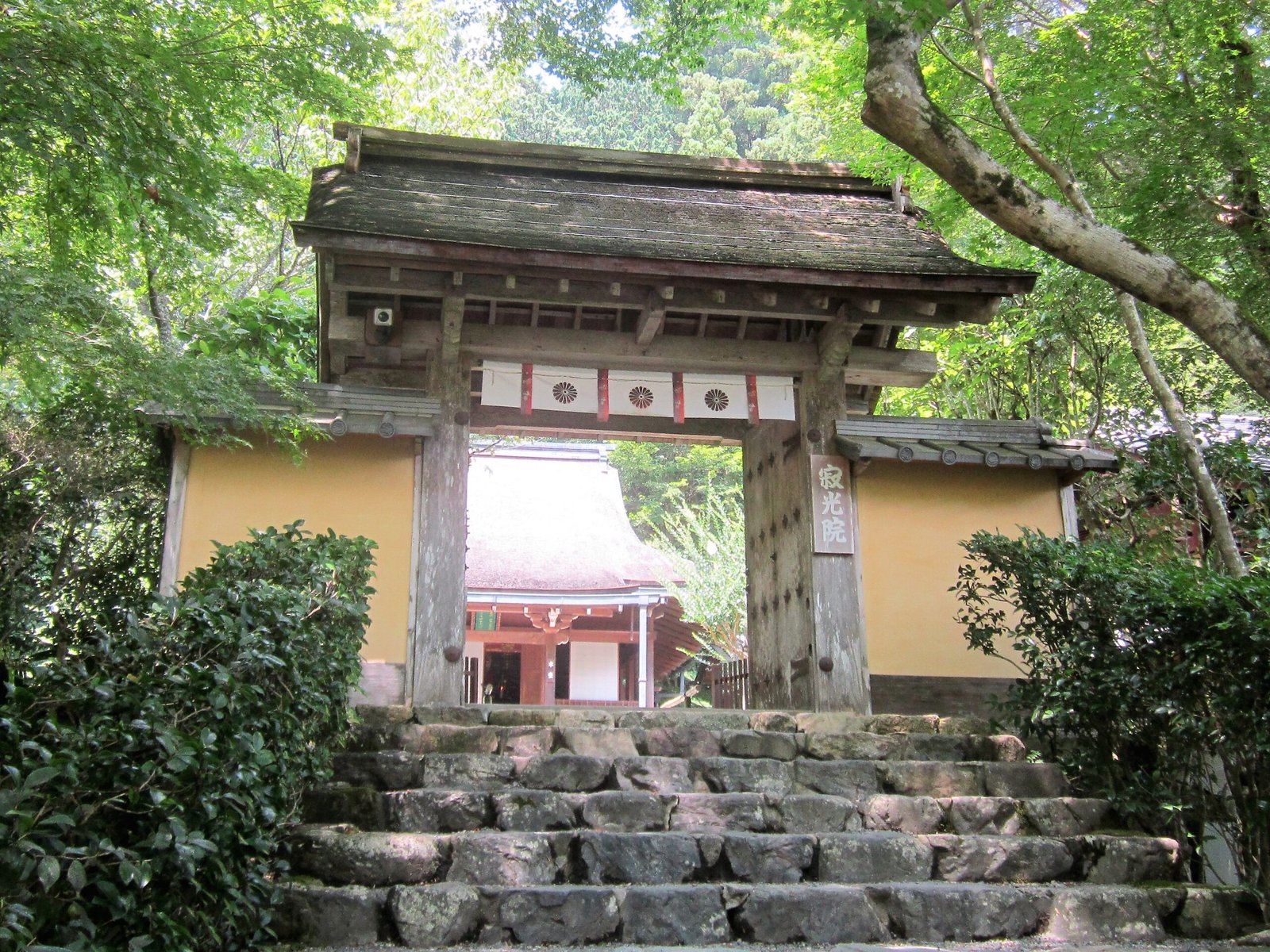
From Kyoto Station, Kyoto Bus 17 runs to the “Ohara” stop; from the Karasuma subway line’s Kokusaikaikan Station, Kyoto Bus 19 covers the same route from the northern end. Either way, the walk from the bus stop to Jakko-in takes about 20 minutes along the main road through the surrounding countryside, in the opposite direction from the path to Sanzen-in and the rest of the eastern temple cluster. Signage along the way is not reliably in English, so it helps to know the temple’s name in Japanese (寒光院) or have it saved on a map app before you set out.
Pairing It With the Rest of Ohara
Because Jakko-in sits on the opposite side of the village from Sanzen-in and Hosen-in, it genuinely requires a separate walk rather than a quick add-on, and it is worth deciding in advance whether you want to budget the extra time. Our Day Trip to Ohara guide covers the full village and how to split your time between both sides, while the Sanzen-in and Hosen-in guides cover the cluster on the eastern side if you are trying to plan the order of a single day. Most visitors do the eastern temples first and treat Jakko-in as a quieter, more reflective stop to end on.
Bottom Line
Jakko-in asks more of visitors than the other Ohara temples — a longer walk, a separate trip, a story that is genuinely sad rather than simply scenic — and that is exactly why it is worth the effort if that kind of history interests you. Few places in Kyoto let you stand this close to a single, specific human tragedy from eight centuries ago. Budget 45 minutes to an hour, including the walk, and go into it expecting something quieter and heavier than a typical temple stop.