One Day in Higashiyama: A Walking Itinerary Through Kyoto’s Historic District
Higashiyama is the district most people picture when they picture Kyoto — wooden temple gates, stone-paved slopes, machiya storefronts selling matcha and pickles, geiko slipping between appointments in Gion at dusk. The good news is that the district’s best-known sights sit close enough together to walk between them in a single day without much backtracking. This is the route: a loop from Kiyomizu-dera down through the old slopes to Kodaiji and Kenninji, then into Yasaka Shrine and Gion to finish. We’ve written full guides to every stop along the way, so consider this the map that ties them together.
The Route at a Glance
| What | Details |
|---|---|
| Total time | About 4–5 hours at a relaxed pace, including temple visits; longer if you add Chion-in or a Pontocho dinner |
| Distance | Roughly 3–4 km of walking, almost entirely downhill or flat |
| Rough budget | ¥1,500–¥2,500 per person in admission fees, depending on which temple interiors you enter |
| Starting point | Kiyomizu-dera (bus or a 10–15 minute uphill walk from Kiyomizu-Gojo Station) |
| Finishing point | Gion, near the Shijo Kawaramachi/Gion-Shijo area, well placed for dinner or a subway/bus connection onward |
| Best time to start | Early morning, ideally by 8:30–9:00, to beat the crowds on Sannenzaka and inside Kiyomizu-dera |
Stop 1: Kiyomizu-dera
Start at Kiyomizu-dera, the wooden-stage temple perched on the hillside above the district, and budget close to an hour if you want to see the main hall, the stage itself, and the walk down past Otowa Waterfall. This is the single most-visited stop on the route, so getting there as close to opening as you can manage makes a real difference to how crowded the approach feels. From the temple gate, you’ll head back down the way most visitors come up — except instead of returning to the main road, you’ll peel off onto the old slopes.
Stop 2: Sannenzaka and Ninenzaka
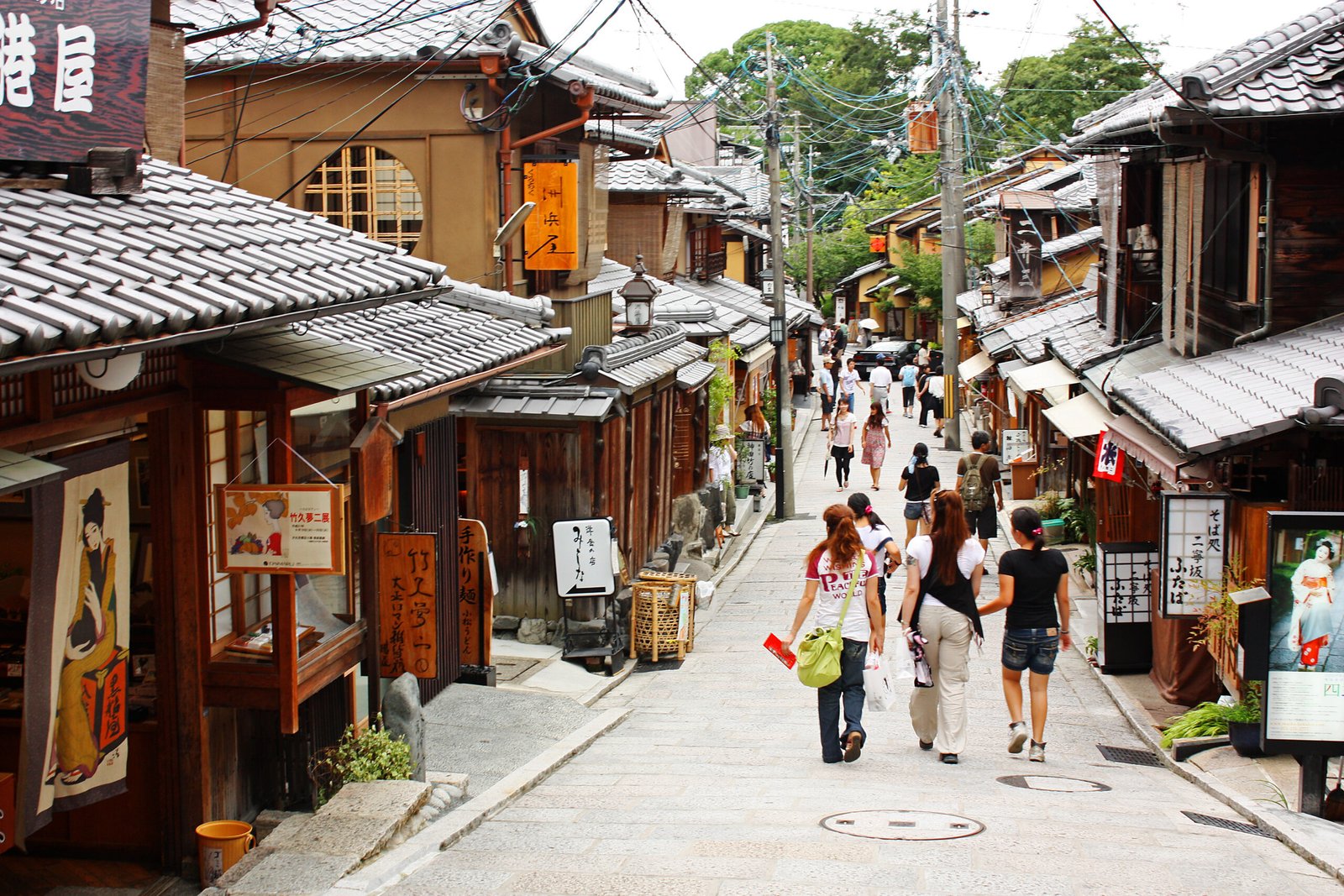
From Kiyomizu-dera’s approach, drop down onto Sannenzaka and Ninenzaka, the two connected stone-paved slopes lined with wooden machiya buildings that now hold tea shops, pottery stores, and snack stalls. There’s no single correct path through here — the point is to wander — but the slopes do funnel you naturally north toward Kodaiji, so give yourself 30–45 minutes to browse without worrying about getting lost. It’s a 10-minute walk in total, closer to 45 if you stop for photos and shopping, which most people do.
Stop 3: Kodai-ji
A short walk north brings you to Kodai-ji, the temple built in memory of the warlord Toyotomi Hideyoshi by his widow, known for its lacquer-work mausoleum and its bamboo grove path. Plan for 30–45 minutes here. If your visit happens to fall during one of Kodai-ji’s spring or autumn evening illumination periods, it’s worth considering circling back after dark — but for a daytime walking loop like this one, a single visit now is enough.
Stop 4: Kenninji
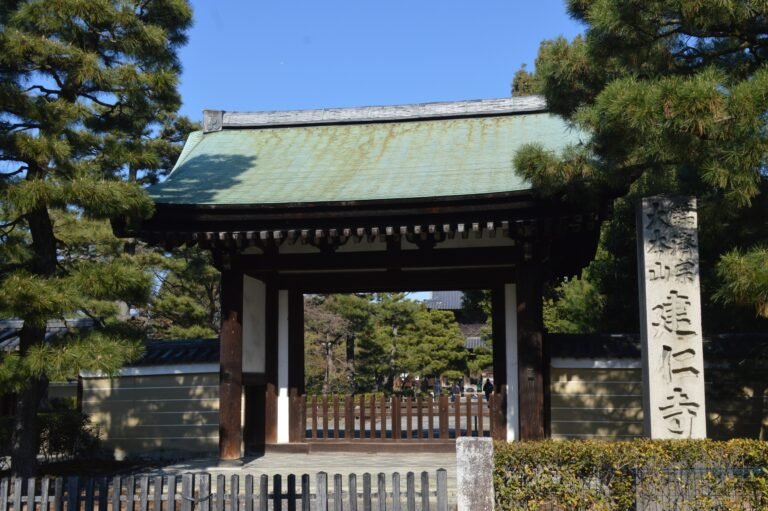
Continue toward Gion and you’ll pass Kenninji, Kyoto’s oldest Zen temple, tucked at the northern edge of the Higashiyama slopes right where they give way to Gion’s grid of streets. The ceiling painting of twin dragons in the lecture hall and the quiet Chotei-en garden make it worth 30–45 minutes, and it’s rarely as crowded as the temples further up the hill. From here it’s a five-minute walk into the heart of Gion.
Stop 5: Yasaka Shrine
Before diving into Gion’s back streets, swing by Yasaka Shrine, the vermilion shrine that marks the boundary between Higashiyama and Gion and that hosts Gion Matsuri every July. It’s free to enter and open around the clock, so a 20–30 minute stop works well here — walk through the main gate, see the main hall, and if you have the energy, continue up into Maruyama Park just behind it for a break on a bench under the trees.

Stop 6: Gion
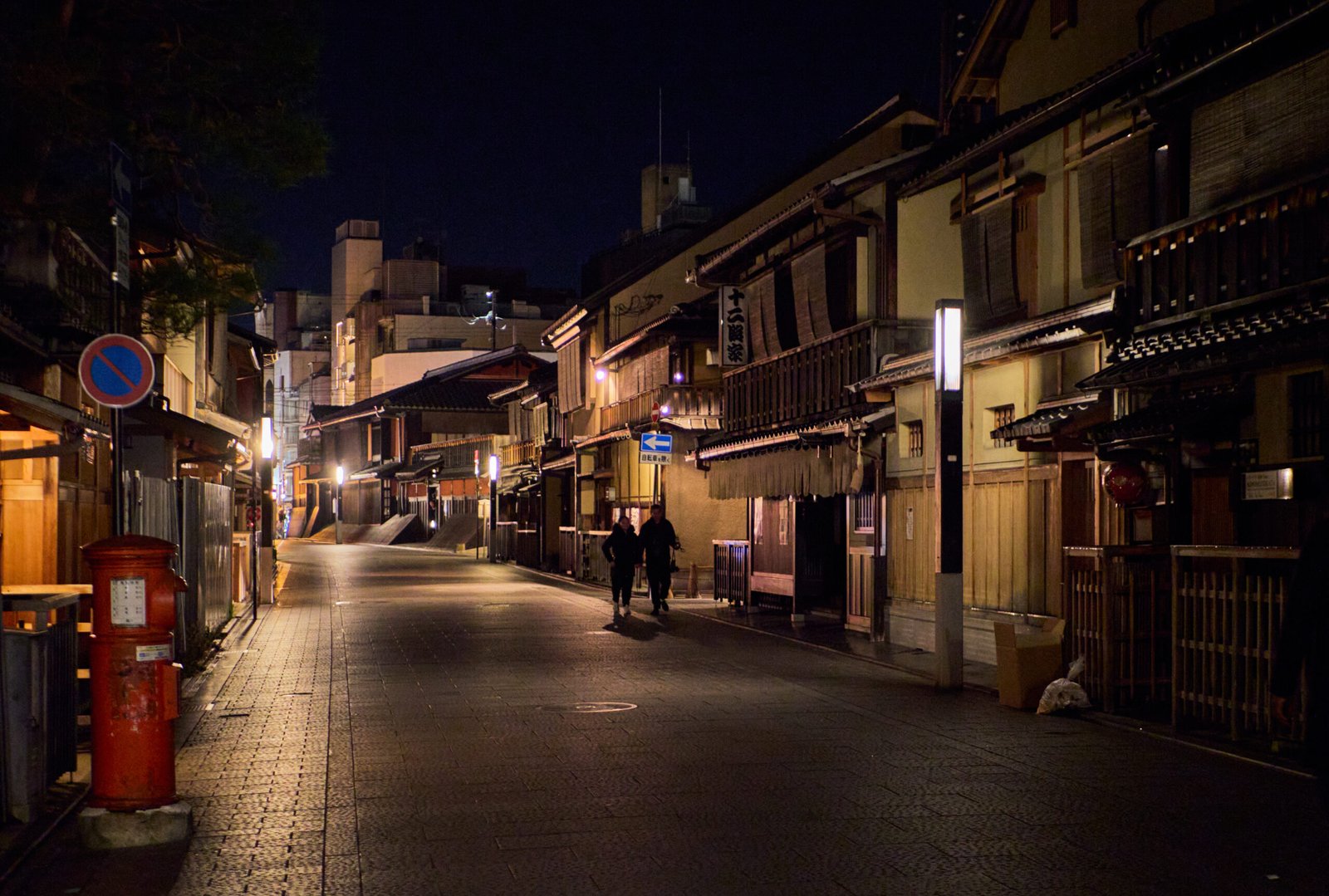
Finish in Gion itself, Kyoto’s most famous geisha district. Walk down Hanami-koji street toward Shijo Avenue, then cross over into the quieter Shirakawa canal area on the other side, where willow trees hang over a narrow stream lined with restaurants. Early evening, roughly 5:00–6:30 p.m., is the best window to be here if you want a chance at spotting a geiko or maiko on their way to an appointment — and it’s also, not coincidentally, when this walking route naturally ends. If you’d like a longer wind-down before dinner, Pontocho‘s lantern-lit alley is a five-minute walk further west across the river and makes a natural place to eat once you’re done walking for the day.
Optional Detour: Chion-in
If you still have energy after Yasaka Shrine and want one more stop before Gion, Chion-in sits just a few minutes’ walk to the east, behind Maruyama Park. Its Sanmon gate is the largest wooden temple gate in Japan, and the climb up to it is dramatic enough to be worth the detour even if you don’t go inside. It adds maybe 30 minutes round trip, which fits comfortably if you started the day close to 8:30 a.m.
Getting There and Adjusting the Route
The whole route runs north from Kiyomizu-dera to Gion, so the easiest approach is to take a bus or taxi to Kiyomizu-dera in the morning and then walk out, finishing near the Gion-Shijo or Kawaramachi stations where buses and the Keihan line both run — our Getting Around Kyoto guide covers how the bus day passes and IC cards work if this is your first time navigating the city. If four to five hours feels like too much for one day, the route splits cleanly in half: Kiyomizu-dera through Kodai-ji makes a satisfying half-day on its own, saving Kenninji, Yasaka Shrine, and Gion for an evening return trip. And if you’re visiting in autumn or under cherry blossoms, check our Best Time to Visit Kyoto guide first — several of these stops get significantly busier during peak color and bloom weeks, which can change how early you’ll want to start.
Bottom Line
This is Higashiyama in the order most people end up walking it anyway, just planned out ahead of time so you’re not backtracking or guessing which slope leads where. Start early, keep the pace loose enough to duck into shops on Sannenzaka, and let Gion’s early evening light be your natural finish line. Everything on this list has its own full guide linked above if you want the details on hours, fees, or what’s inside before you go.