Jonan-gu: A Practical Guide to Fushimi’s Shrine of Good-Direction Luck and Five Gardens
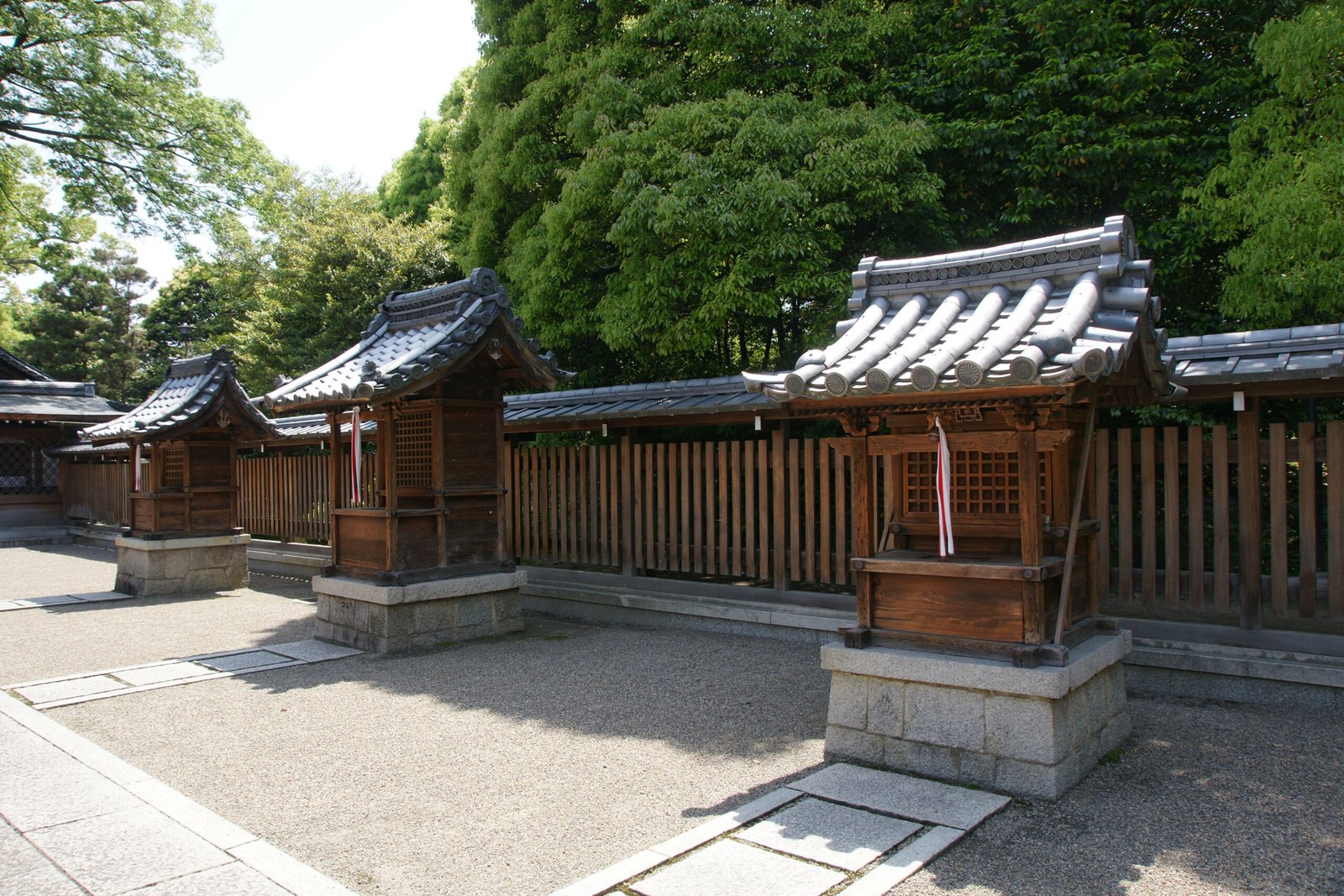
Fushimi Inari Taisha pulls in such crowds that it’s easy to assume Fushimi’s other shrine, a fifteen-minute walk from Takeda Station, must be some lesser version of the same thing. It isn’t. Jonan-gu is a shrine about direction and travel — built, according to its own history, to guard the southern approach into the newly founded capital in 794 — and today it’s better known locally for something else entirely: five small gardens, each styled after a different era of Japanese garden design, tucked around the main shrine buildings. If you’re reading this in late October or early November, there’s an added reason to go: the shrine holds a Heian-style poetry banquet on the water every November 3rd, one of only two days a year it happens.
The Essentials at a Glance
| What | Details |
|---|---|
| Location | Fushimi Ward, south of central Kyoto, not far from Fushimi Inari Taisha and the sake district |
| Enshrines | Kuni-no-Tokotachi-no-Mikoto, Okuninushi-no-Mikoto, and Empress Jingu, worshipped collectively as Jonan Okami |
| Founded | Said to date to 794, when Emperor Kanmu moved the capital to Heian-kyo (Kyoto) |
| Known for | Protection against unlucky directions and safe travel, the five-styled Rakusuien garden, weeping plum blossoms, and the Kyokusui no Utage poetry banquet |
| Hours | Open daily, no fixed closing day, roughly 9:00am–4:30pm (last garden entry around 4:00pm) |
| Admission | Shrine grounds free; Rakusuien garden ¥600 for adults, ¥400 for elementary and junior high students, ¥300 for visitors with disabilities |
| Access | Karasuma Subway or Kintetsu Line to Takeda Station, then a 15–20 minute walk; or city bus 19 from Kyoto Station’s Karasuma exit (Boarding Area C4), bound for Jonangu |
A Shrine Built to Guard the Capital’s Southern Gate
Jonan-gu’s own account of its founding ties it directly to the birth of Kyoto itself: when Emperor Kanmu relocated the capital here in 794, a shrine was placed at this spot, south of the new city, to protect it from inauspicious directions and pray for the country’s peace. That early role explains the name — Jonan means roughly “south of the castle” — and it’s also why the shrine’s identity has stayed tied to direction and travel ever since, long after Heian-kyo itself became Kyoto and the court that built it is gone. The shrine’s standing grew further in the late 11th century, when the retired emperor Shirakawa built a large villa, the Toba Detached Palace, around the site, turning the area into a genuine center of political power with court nobles’ residences nearby. It was also, for a time, a stop on the pilgrimage route to Kumano. None of that grandeur survived — the detached palace was destroyed and the shrine itself was rebuilt nearby — but it’s part of why a shrine this far from the usual Higashiyama temple circuit carries real historical weight. One more layer, much more recent: fighting in the Battle of Toba-Fushimi, the opening clash of the Boshin War that ended the shogunate, took place right around here in 1868, and a Meiji-era story credits the shrine’s gods with aiding the imperial side.
Five Gardens, Five Eras
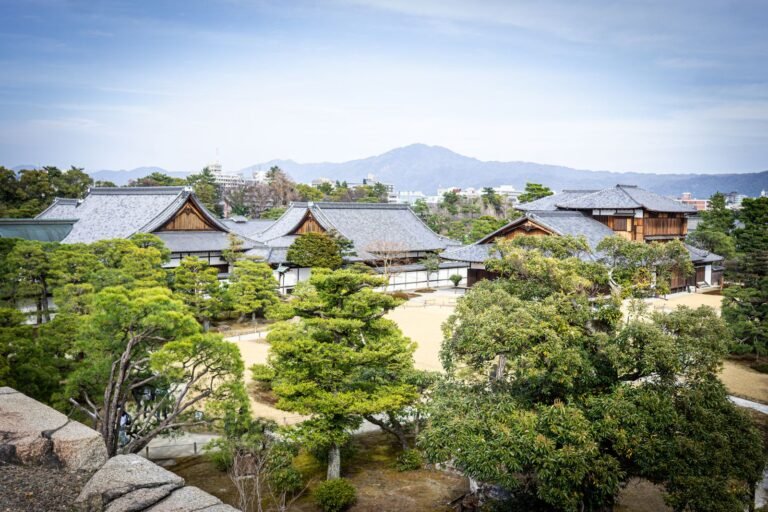
The reason most visitors actually come today is Rakusuien, the garden complex that wraps around the shrine buildings, redesigned in the 1960s by the landscape architect Nakane Kinsaku. Rather than one garden, it’s five, each built in the style of a different period in Japanese garden history and arranged so you walk through centuries of design in a single loop: a Spring Mountain Garden with a stream and weeping plum trees; a Heian-period garden centered on a pond, a brook, and a wisteria trellis; a Muromachi-style garden with a koi pond and a stone bridge; a Momoyama-style garden built around an open field and a teahouse; and a fifth modeled on the old Jonan Imperial Villa, with sculpted conifers and a stark white stone garden. It’s a clever way to take in garden history without a single placard doing the explaining — you can simply feel the difference in mood from one enclosure to the next.

A Shrine for Good Directions, and a Tiny Folk Hero
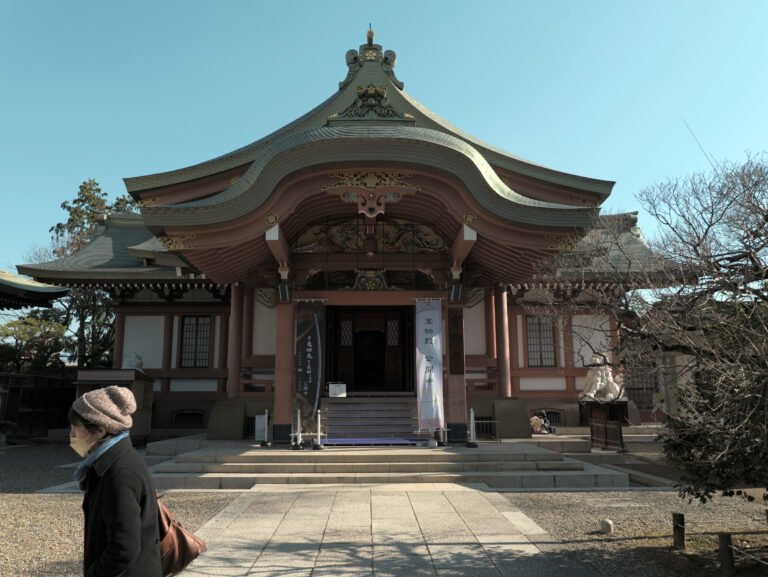
Because of its founding role protecting the capital from bad directional luck, Jonan-gu is still the shrine Kyoto locals tend to visit before a house move, a long trip, or anything else where “setting off in the wrong direction,” literally or otherwise, feels worth guarding against. You’ll see this reflected in the ema votive plaques and the steady trickle of visitors who clearly aren’t just sightseeing. The shrine has also attached itself, a little unexpectedly, to the folktale of Issun-boshi, the “One-Inch Boy” — a small statue of him stands in front of the main hall, giving the shrine an approachable, almost mascot-like presence that sits oddly but pleasantly alongside all the talk of directional fortune.
Kyokusui no Utage: A Poetry Party on the Water
Twice a year, on April 29th and November 3rd, Jonan-gu stages one of Kyoto’s more theatrical seasonal events: the Kyokusui no Utage, or winding-water banquet, a reconstruction of a pastime that peaked among Heian-period court nobles and had largely disappeared by the time the samurai rose to power, before being revived in the 20th century. Local poets dress in silk Heian-style robes, receive a poetry theme from the shrine’s priests, and take their places along the banks of a stream running through the garden. Small boats shaped like mythical birds carry cups of sake down the current while attendants with bamboo poles keep them moving; the poets watch an imayo dance performance while composing a poem on the day’s theme, with koto music playing throughout, and then recite what they’ve written aloud. The November event starts at 2:00pm and draws a real crowd for something this understated, so if your trip lines up with either date, it’s worth building the afternoon around it.
When to Visit
Jonan-gu rewards a visit in almost any season, which is part of why it’s worth folding into a Fushimi day rather than saving for one specific month. The weeping plum trees in the Spring Mountain Garden are the shrine’s signature image, generally at their best toward the end of February; camellias, of which the garden is said to hold more than thirty varieties, bloom across a long stretch from November into April; and if you’re visiting during koyo season, the garden’s Japanese maples — there are said to be roughly a hundred of them — color up through November, around the same stretch our Kyoto in November guide covers for the rest of the city. Wisteria and azaleas take over in late spring. Whatever the season, allow around an hour if you’re paying to walk the full garden loop.
Getting There, and What to Pair It With
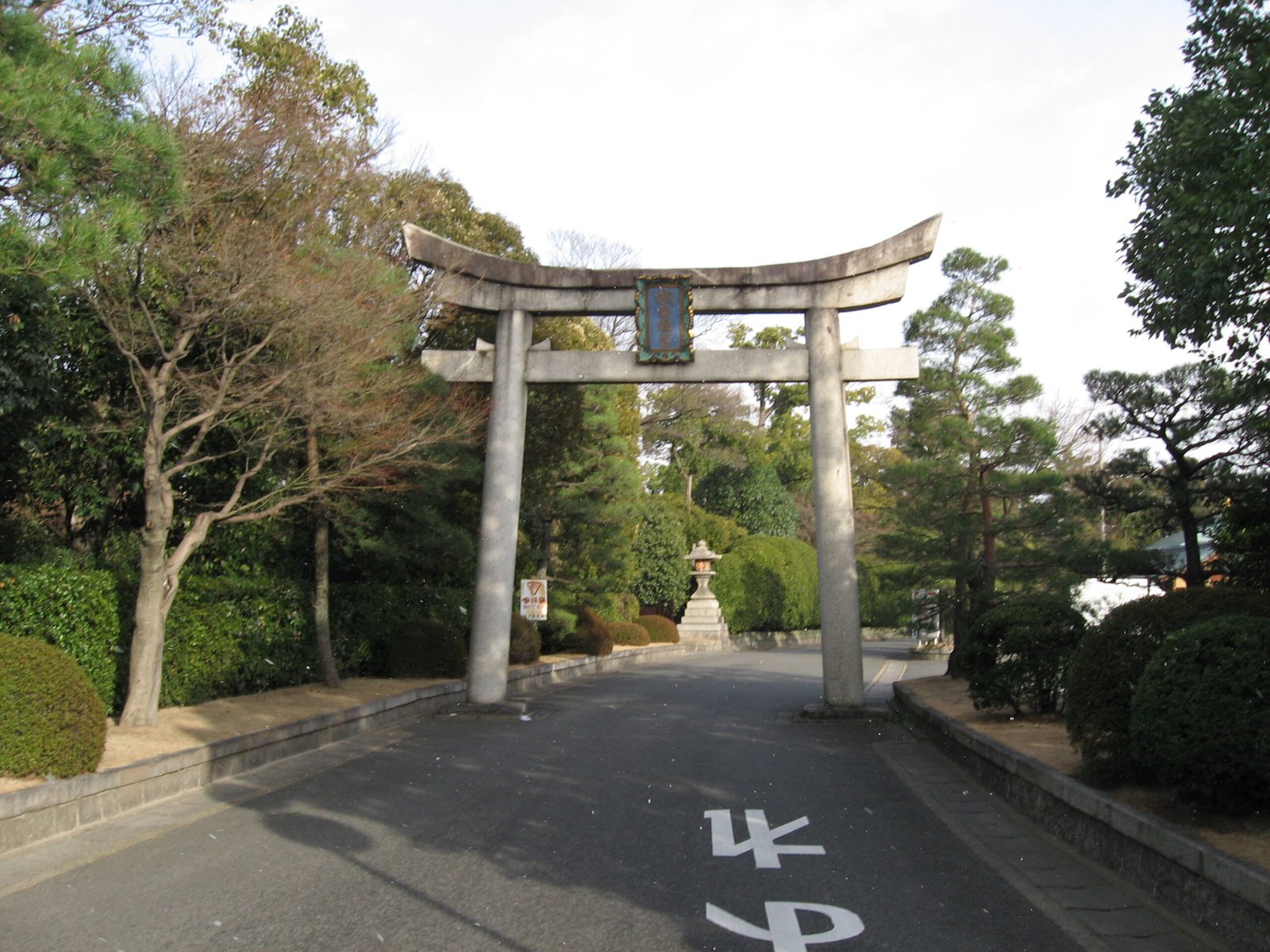
The easiest route is the Karasuma Subway Line or the Kintetsu Line to Takeda Station, followed by a walk of fifteen to twenty minutes; if you’d rather not walk, city buses run from near the station to a stop right by the shrine’s east entrance, and a direct bus (route 19) also runs from Kyoto Station’s Karasuma exit. One practical note: Jonan-gu isn’t reachable using the Japan Rail Pass, since the connecting lines aren’t JR, so budget a Suica, Icoca, or similar IC card fare for this leg. Because it sits a little apart from the rest of Fushimi’s sights, it pairs most naturally with a wider loop through the ward: our One Day in Fushimi itinerary covers Fushimi Inari Taisha, the Fushimi Sake District, and Fushimi Momoyama Castle in a single day, and Jonan-gu slots in well at either end of that route depending on which direction you’re working through the ward. For getting around the rest of the city on the same trip, see our Getting Around Kyoto guide.
Bottom Line
Jonan-gu doesn’t try to compete with Fushimi Inari’s thousand gates, and it doesn’t need to — its appeal is entirely different, built around five distinct gardens, a direction-guarding history that goes back to the founding of the capital, and, twice a year, a genuinely unusual poetry event on the water. Give it an hour, fold it into a wider Fushimi day, and time your visit around late February plum blossoms, November maples, or the Kyokusui no Utage if the calendar lines up.