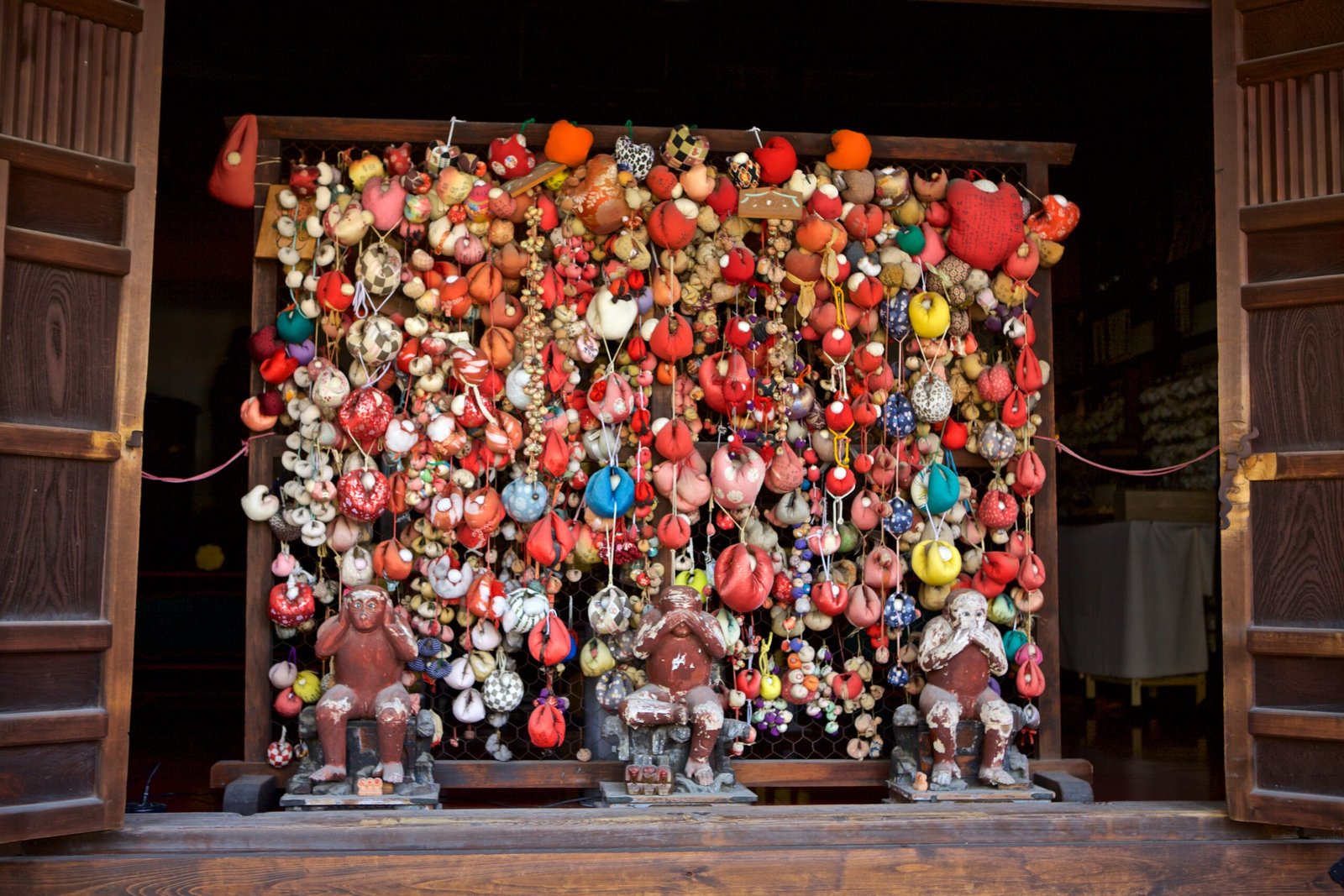
Yasui Konpira-gu: A Practical Guide to Kyoto’s Relationship-Cutting Shrine
Tucked into a quiet side street a few minutes south of Yasaka Shrine and Gion’s main tourist flow, Yasui Konpira-gu doesn’t look like much from the main road. Then you turn the corner and find a line of people waiting to crawl through a hole punched into a boulder the size of a small car, every visible inch of its surface buried under thousands of small white paper talismans. The shrine’s official business is cutting off bad relationships and sealing good ones, and it does that business in full view of anyone walking past, which makes it one of the stranger and more memorable stops in a part of the city otherwise known for temples, lanterns, and geiko sightings.
The Essentials at a Glance
| What | Details |
|---|---|
| Location | Higashiyama-ku, a short walk south of Yasaka Shrine and Gion |
| Hours | shrine grounds open 24 hours; most visitors come during daylight |
| Admission | free to enter; paper talismans (katashiro) for the stone ritual cost a small fee, typically a few hundred yen |
| Main deity | Emperor Sutoku, alongside Okuninushi and Omononushi |
| Known for | the Enkiri Enmusubi Ishi, a stone ritual for cutting bad ties and forming good ones |
| Access | about a 5 minute walk from Yasaka Shrine, or a short walk from the Gion or Higashiyama-Yasui bus stops |
| Pairs well with | Yasaka Shrine, Gion, and Sannenzaka and Ninenzaka |
From Wisteria Temple to a Banished Emperor’s Shrine
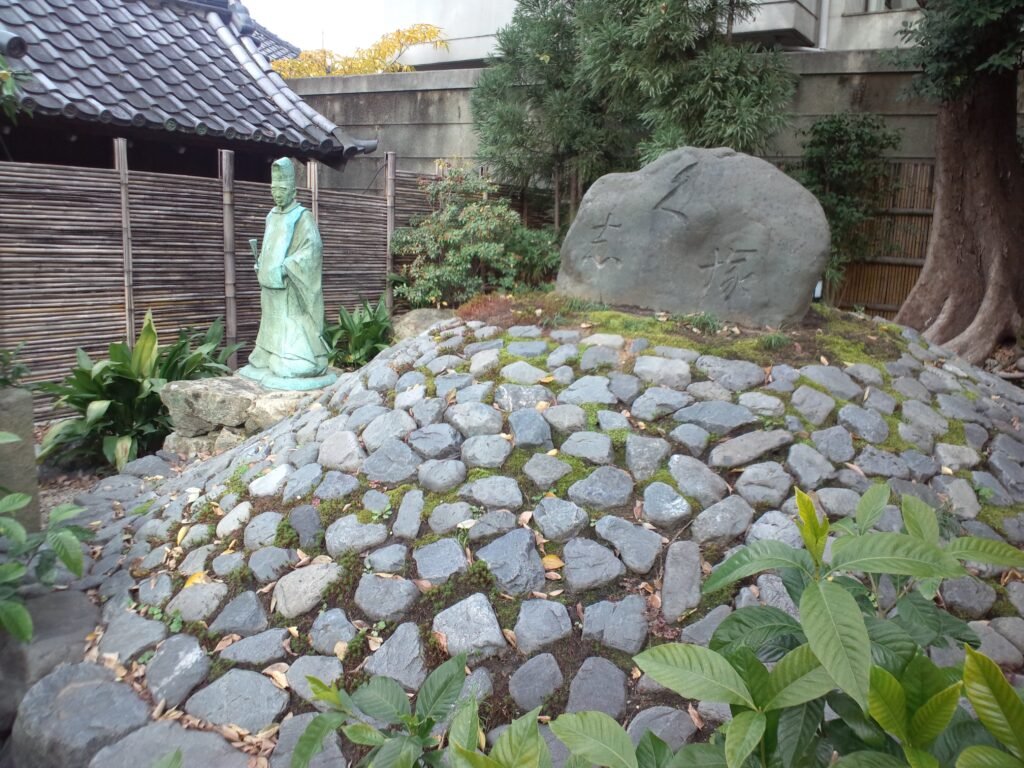
Yasui Konpira-gu’s history is traced back to the seventh century, to a temple on this site known as Fujidera, or Wisteria Temple. Its story later became entangled with Emperor Sutoku, the 75th emperor, who is said to have restored the grounds here during his reign in the twelfth century. Sutoku’s later history is considerably darker: defeated in the Hogen Rebellion of 1156, a succession conflict with his brother Emperor Go-Shirakawa, he was exiled to Sanuki Province on the island of Shikoku, where he reportedly turned to prayer at the Konpira shrine there, now known as Kotohira-gu, to let go of his worldly attachments before his death. After he died in exile, he came to be venerated back in the capital as a guardian deity, and the shrine on this site eventually took on the Konpira name through that connection.
For centuries the site operated as a combined Buddhist-Shinto temple called Rengekoin. That changed with the Meiji government’s policy of shinbutsu bunri, the forced separation of Buddhism and Shinto carried out after 1868; Rengekoin’s Buddhist identity was dropped, and the site was reorganized as Yasui Jinja, later settling on its current name, Yasui Konpira-gu.
The Stone That Cuts and Ties
The shrine’s main attraction sits just behind the main hall: a slab of stone roughly 1.5 meters tall and 3 meters wide, shaped like a giant ema votive plaque and split down the middle by a rough hole. It’s called the Enkiri Enmusubi Ishi, and according to the shrine’s own account it was installed in 1978, which makes it a modern addition to a very old site. What makes it memorable isn’t the stone itself so much as its surface, which by now is almost completely hidden under several thousand katashiro, small paper strips visitors write their wishes on and paste directly onto the rock.

The ritual follows a specific order: buy a katashiro at the shrine office, write your wish on it, crawl through the hole from front to back while praying to sever the bad relationship or circumstance you’re hoping to cut loose, then crawl through again from back to front to pray for a good one to take its place, and finally glue your own katashiro onto the stone to join the layers already there. “Relationship” here isn’t limited to romance; visitors come to pray for an end to anything from a bad habit to an illness to a difficult job, which is part of why the line keeps moving even on an ordinary weekday afternoon.
An Ema Museum and a Festival for Hairdressers
Yasui Konpira-gu is also home to the Konpira Emakan, a small museum built around the shrine’s collection of historical ema, the votive plaques worshippers have used for centuries to record prayers and thanks; it’s billed as one of the first museums in Japan dedicated to the format, though its hours can be limited and it’s occasionally closed for repairs, so don’t build a visit around it without checking ahead.
The shrine’s other claim to fame is the Kushi Matsuri, or Comb Festival, usually held in September, a memorial service for old and broken combs organized by hairdressing and beauty professionals. Its best-known feature is a procession of women dressed in historical hairstyles spanning different eras of Japanese fashion, walking from the shrine through the streets of Gion, which makes it worth timing a visit around if you happen to be in the city that week.
Visiting Information and Getting There
The shrine grounds themselves are open around the clock and cost nothing to enter; the only expense most visitors run into is the small fee for a katashiro if they want to take part in the stone ritual, generally a few hundred yen depending on size and color. There’s no formal dress code or reservation involved, and the whole visit, stone ritual included, typically takes well under an hour.
Yasui Konpira-gu sits a short walk south of Yasaka Shrine, tucked just off the main Higashioji-dori road behind Kenninji’s northern edge, which makes it an easy add-on to a Higashiyama walking day rather than a destination requiring its own trip. If you’re coming by bus, the Gion or Higashiyama-Yasui stops both leave a walk of only a few minutes; on foot, it’s a natural stop between Yasaka Shrine and Kiyomizu-dera if you’re working your way south through Sannenzaka and Ninenzaka.
Bottom Line
Yasui Konpira-gu is small enough to see in twenty minutes, but it’s one of the more distinctive stops in Higashiyama precisely because of how literally it treats the idea of cutting ties: a ritual you perform with your own hands, on a stone you can see thousands of other people’s wishes stuck to. Combine it with Yasaka Shrine, a walk through Gion, and the slopes of Sannenzaka and Ninenzaka for a full Higashiyama afternoon, and set aside a few hundred yen if you want to take part in the stone ritual rather than just watch the line.