Nishijin Textile Center: A Practical Guide to Kyoto’s Free Kimono Show and Weaving Hall
Most of what makes Nishijin famous happens behind closed doors — small family workshops scattered through the neighborhood north of the Imperial Palace, each one specializing in a single step of weaving an obi or a bolt of kimono silk, a tradition that’s been organized this way for something like seven centuries. The Nishijin Textile Center is the one place in the district built specifically to let outsiders in on it, and it does the job without asking much of you: it’s free, it’s an easy bus ride from the station, and it packs a weaving demonstration, a small museum, and a genuinely surprising kimono fashion show into a single building.
The Essentials at a Glance
| What | Details |
|---|---|
| Location | Horikawa-dori at Imadegawa, Kamigyo-ku — in the heart of the Nishijin weaving district |
| Run by | An association representing hundreds of small Nishijin textile producers |
| Hours | Generally open daily, roughly 9am/10am to between 4pm and 5pm depending on the source — worth a quick check before you go |
| Closed | Some Mondays (or the following day if Monday is a holiday), and around the New Year period |
| Admission | Free to enter and view the exhibits and demonstrations |
| Kimono fashion shows | Held roughly once an hour, included with free admission |
| Hands-on weaving | Around 40 minutes, roughly ¥2,000, you keep the small piece you make |
| Kimono dressing | Over 150 kimono to choose from, with premium geisha and junihitoe styling options (prices not published online — ask at the counter) |
| Access | Kyoto City Bus 9 from Kyoto Station to the Horikawa Imadegawa stop, about a minute’s walk from there |
A Neighborhood Named for a War, Known for Silk
Nishijin means “western camp,” and the name dates back to the Onin War of the late 1460s, when one side of the conflict set up its military camp in this part of the city. The fighting left much of Kyoto in ruins, but once it ended, weavers who had scattered during the war began resettling here, and the district slowly turned into the center of the capital’s silk textile trade. By the Edo period it had become the country’s premier source of fine kimono and obi fabric, and the work has stayed remarkably specialized ever since — a single obi can pass through a dozen or more independent workshops, each handling one part of the process, from dyeing the thread to the final weaving. It’s a genuinely cooperative industry in a way that’s hard to find equivalents for elsewhere, which is part of why the textile center itself was set up as something close to an alliance, representing hundreds of these small producers under one roof rather than any single company’s showroom.
What’s Actually Inside
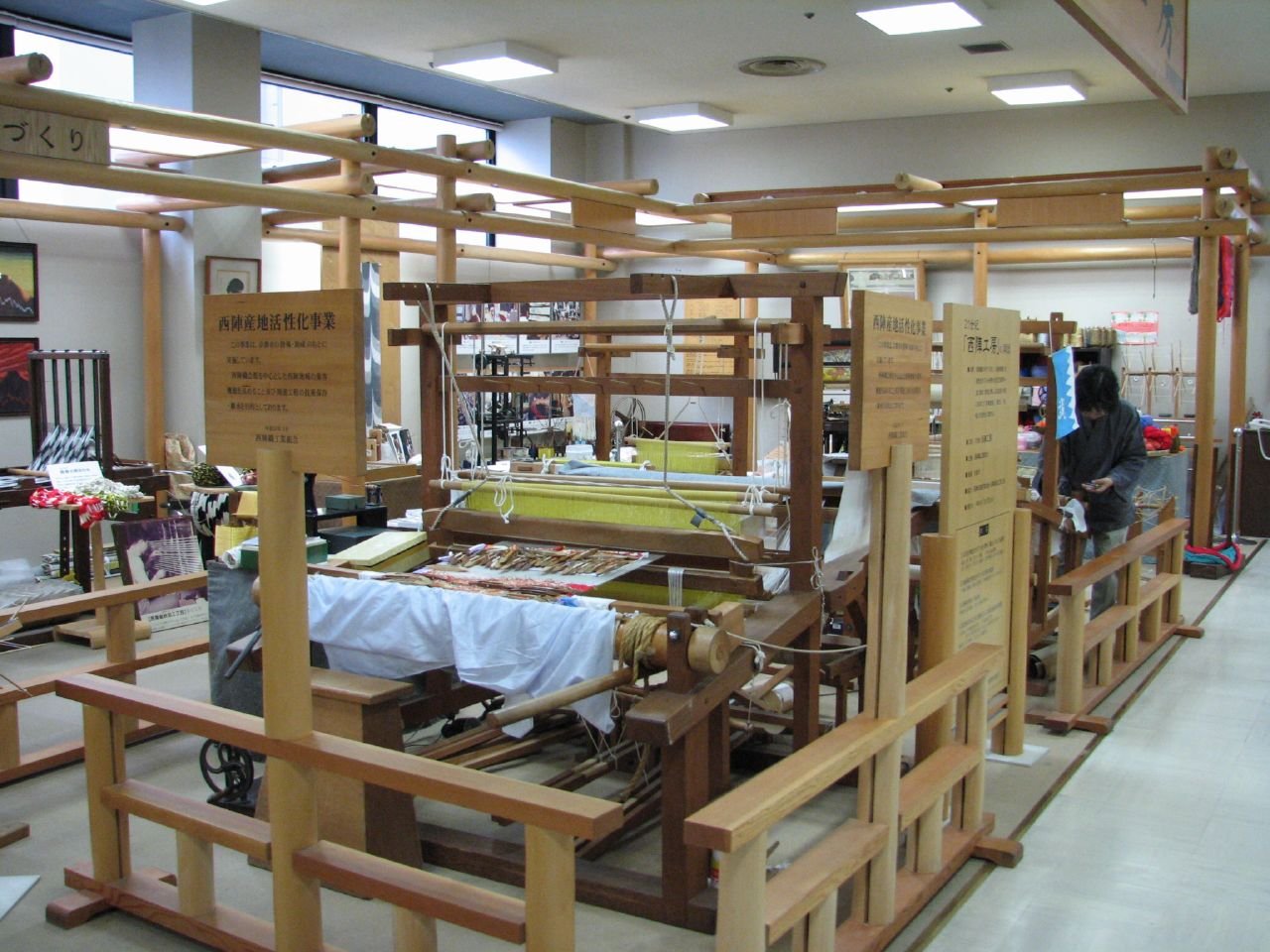
The building works on two levels, more or less. Downstairs, craftsmen operate traditional treadle looms in full view of visitors, and on a good day you’ll also see demonstrations of related techniques like silk reeling, hand-dyeing, or embroidery happening nearby. It’s not staged for cameras so much as just the daily work of the place continuing with people watching, which gives it a different feel from a lot of “cultural experience” stops around the city. Upstairs, the exhibits trace the history of Nishijin textiles from the Heian period through to the present, including historical looms, finished obi and kimono pieces, and the kind of detail about dyeing and pattern techniques that rewards a slower walk through if textiles interest you at all. None of it is flashy — a few reviewers online describe the museum side as a little dated — but it’s informative, and it’s free, which keeps the bar for a worthwhile stop pretty low.
If you want to do more than watch, there’s a hands-on weaving experience that runs about 40 minutes and costs in the neighborhood of ¥2,000, where you sit at one of the traditional looms yourself and come away with a small finished textile piece — a reasonable souvenir, and a far better sense of how much coordination a single pass of the shuttle actually takes than you’ll get just watching someone else do it. It’s worth reserving ahead during busier travel periods, since the looms and staff time are limited.
The Kimono Fashion Shows
The thing most visitors actually come for is the kimono fashion show, held on a small stage inside the center roughly once an hour through the day. Models walk out in a rotating selection of kimono — formal, seasonal, sometimes quite elaborate — while a narrator explains what’s being worn and why, and it’s a genuinely good way to see a range of kimono styles up close without needing to attend a formal event or ceremony where you’d never get this good a look. The schedule isn’t published in a way that’s easy to plan around from home, so the practical move is simply to check the board near the entrance when you arrive and time the rest of your visit — the looms, the museum floor, maybe a coffee at the in-house café — around the next showing.
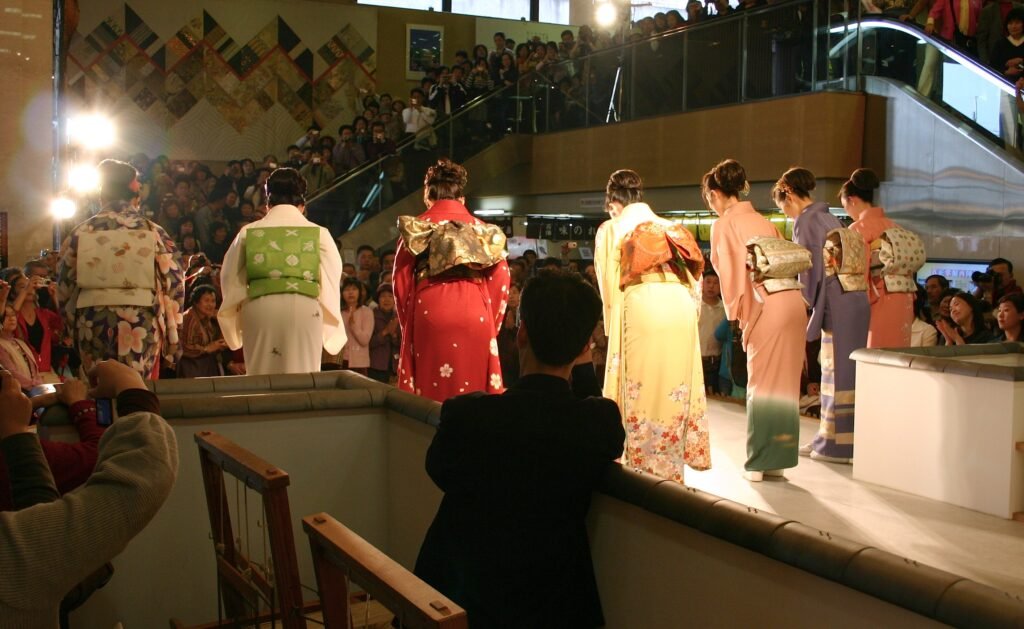
Because it’s a reliable, air-conditioned, free attraction with a fixed show format, the center is also a regular stop on group bus tour itineraries, so don’t be surprised if a show you’re watching shares the room with a tour group that just arrived. It’s rarely crowded enough to be a problem, but if you’d rather see it with fewer people around, arriving earlier in the day tends to help.
Dressing Up, If You Want To
Separate from the fashion show, the center also runs its own kimono dressing experience, with a selection of more than 150 komon — fine-patterned, everyday-formal — kimono to choose from. The standard package includes the kimono itself, the undergarments, footwear, and help getting dressed properly, and once you’re dressed you’re free to walk out and explore the neighborhood rather than staying confined to the building. There are also premium options if you want something more elaborate: styling as a geisha, or a chance to wear a junihitoe, the twelve-layered ceremonial court kimono, complete with professional hair and makeup. Pricing for these isn’t published in detail, so it’s worth asking directly when you arrive or checking current rates before you go. It’s a different flavor of experience from the rental shops covered in our general Kimono Rental in Kyoto guide — this one leans more toward formal, Nishijin-specific textiles rather than the lighter yukata-style rentals aimed at casual sightseeing.
Getting There and What to Pair It With
Kyoto City Bus 9 runs from Kyoto Station to the Horikawa Imadegawa stop, right outside the center’s door, which makes it one of the more straightforward attractions in the city to reach without any transfers. If you’re coming from elsewhere, the Randen streetcar line also runs through the general Nishijin area and is worth considering if you’re already planning to ride it that day, though it leaves you with a longer walk than the direct bus does. Our broader guide to getting around Kyoto covers IC cards and bus basics if this is your first time navigating the city’s bus network.
Once you’re in the neighborhood, it pairs naturally with a wider look at Kyoto’s craft traditions — our Kyoto’s Traditional Crafts guide covers Nishijin weaving alongside Kiyomizu pottery and Kyo-yuzen dyeing for a broader sense of how the city’s artisan trades fit together, and gives useful context for what you’re seeing demonstrated on the looms here.
Bottom Line
The Nishijin Textile Center isn’t a polished, modern museum experience, and it doesn’t try to be. What it offers instead is a genuine, close-up look at a craft tradition that’s largely invisible from the street — looms in motion, a kimono show that’s better than it sounds on paper, and the option to put one on yourself afterward. Free admission and an easy bus ride make it a low-risk addition to a day that already has you in the northern part of the city, and it’s one of the more rewarding stops in Kyoto for anyone who wants to understand where all that beautifully patterned silk in the city’s kimono shops actually comes from.