Kyoto Tower: A Practical Guide to Kyoto’s Candle-Shaped Landmark
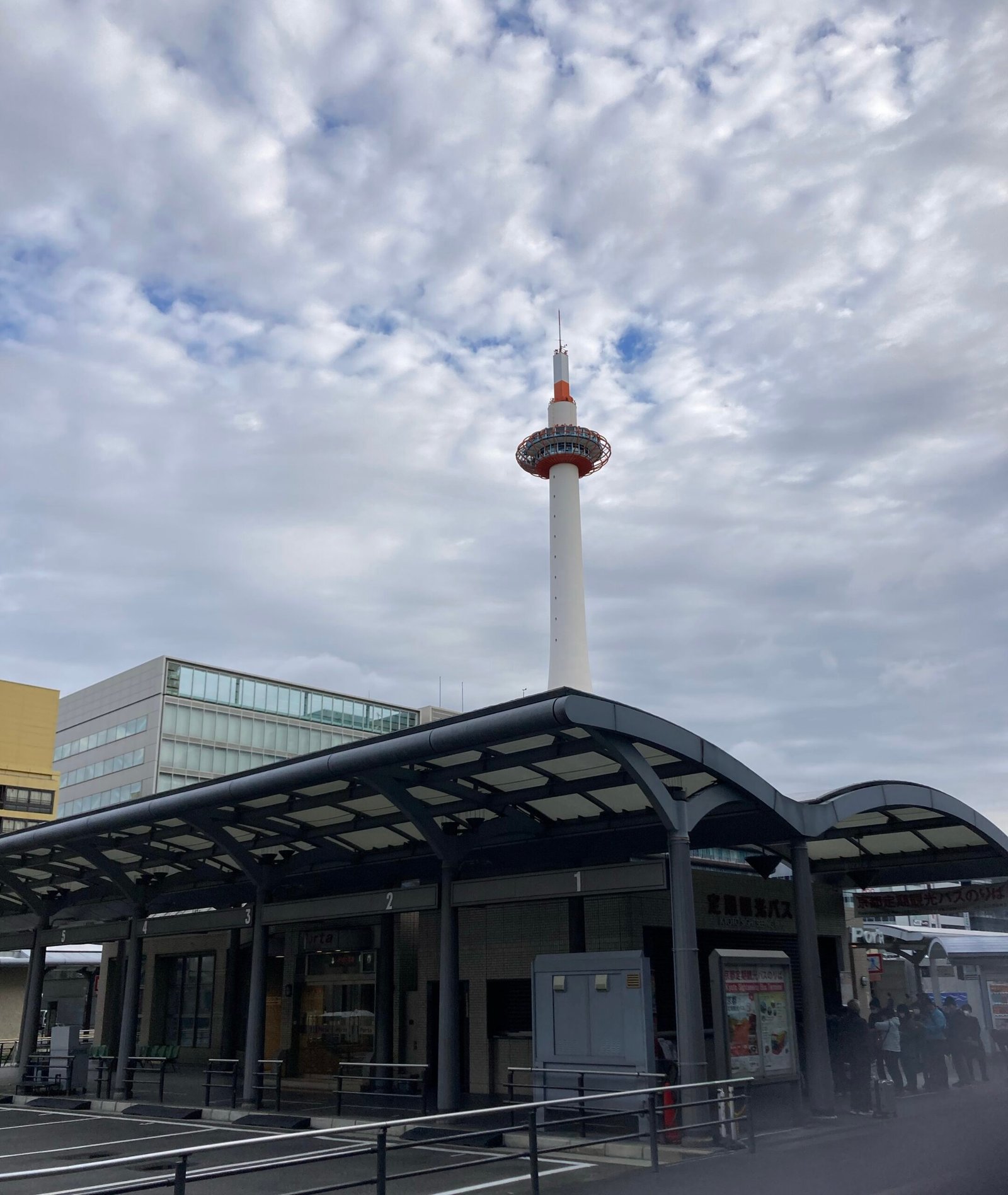
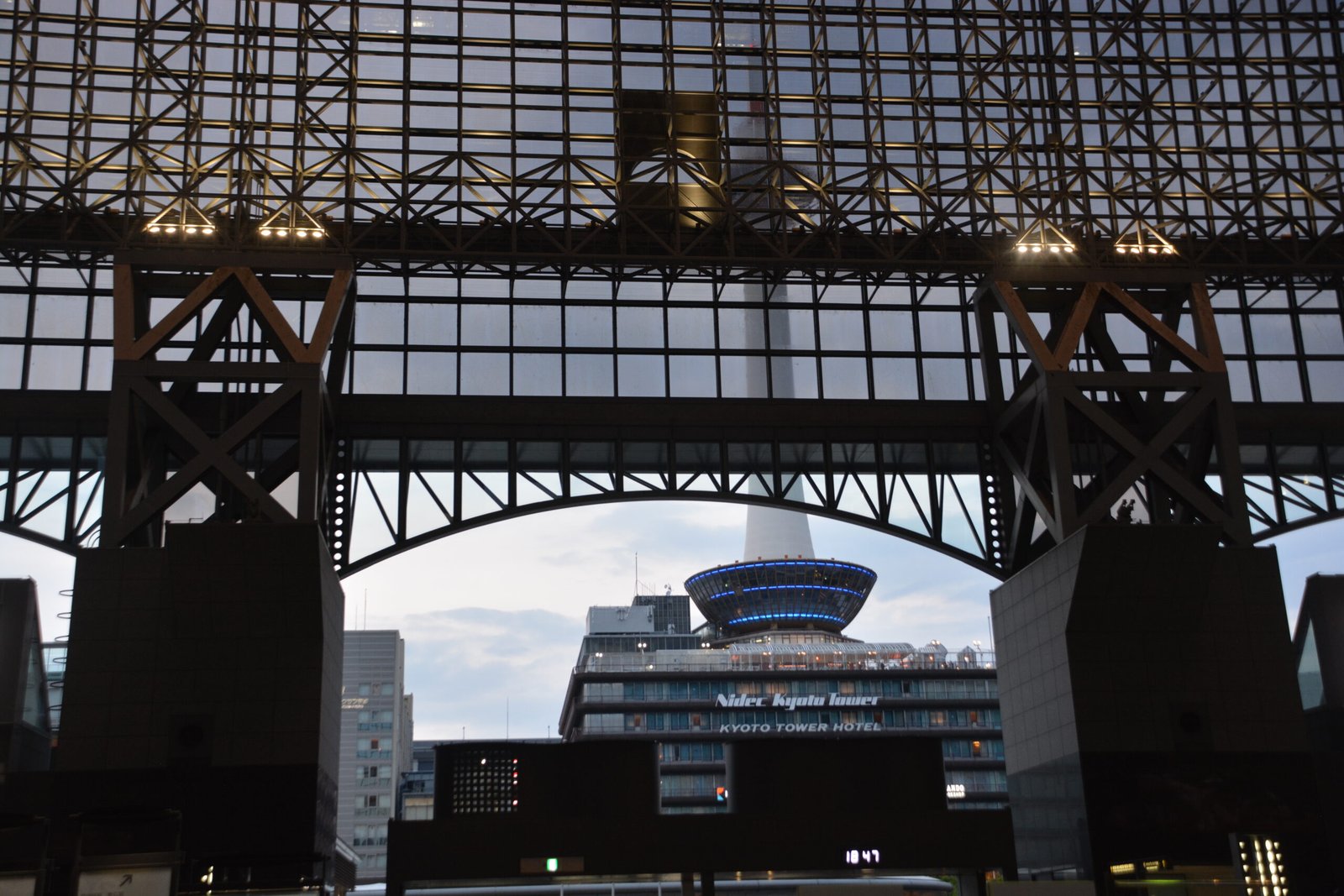
If you have arrived in Kyoto by train, you have already seen it: a white cylinder with a red-and-white candle-shaped top rising straight out of the plaza in front of Kyoto Station. Kyoto Tower gets a mixed reception from people who live here. It went up in 1964, at a moment when plenty of residents were uneasy about anything competing with the temple skyline, and more than sixty years later it is still the tallest structure in the city. Whatever you make of the shape, it is genuinely useful — a 360-degree platform 100 meters up, sitting exactly where most Kyoto trips begin and end.
The Essentials at a Glance
| What | Details |
|---|---|
| Height | 131 meters overall; the observation deck sits at the 100-meter mark |
| Observation deck admission | Adult tickets have run anywhere from roughly ¥800 to ¥1,000 depending on when you check, with reduced rates for students and young children — confirm the current price on site before you go |
| Hours | Generally around 9:00am to 9:00pm daily; the tower has no regular closed day |
| Visit length | 20–40 minutes for the deck itself; longer if you linger at the restaurants or the basement bath |
| Access | Directly across from Kyoto Station’s north (Karasuma) exit — about a two-minute walk, no transfer needed |
| Nearby | Kyoto Station’s shopping and dining complex, and the Kyoto Railway Museum a short walk or one bus stop away |
A Landmark Built to Dodge a Height Limit
The tower stands on the former site of the Kyoto Central Post Office, and it opened on December 25, 1964, right as Japan’s bullet train network was expanding and the city wanted a visible symbol to go with it. At the time, buildings in this part of Kyoto were capped at 31 meters to protect the view toward the surrounding hills and temples, and a 131-meter tower had no business clearing that limit. The architect, Mamoru Yamada, got around the problem on a technicality: the tower was registered as a single large rooftop fixture sitting on top of a lower building rather than as a freestanding structure, which kept it inside the rules on paper even though it obviously was not in spirit.
The candle shape was not an accident either. It is a deliberate echo of the wax candles used in temples across the city, built using a monocoque (cylindrical shell) method more associated with aircraft fuselages than with towers, and the whole structure weighs around 800 tons. Not everyone welcomed it — some residents at the time argued that a steel tower had no place next to a skyline of wooden temples, and versions of that argument still come up occasionally today. Six decades on, though, most people who live in Kyoto treat it as just another fixture of the station front, the kind of thing you stop noticing until a visitor points a camera at it.
What’s Actually Inside
The tower building is numbered separately from what most people picture as “the tower,” and it is worth knowing the layout before you arrive. The first floor holds the ticket booth for the observation deck. The third floor is where things get useful for travelers: a tourist information counter with multilingual staff who can help with transit passes and bookings, a handful of restaurants, and a kimono rental shop and photo studio nearby. Floors five through nine are a three-star hotel, and the tenth floor opens into an open-air beer and barbecue garden during the warmer months. Down in the basement, there is a food hall on B1, and below that, a public bath called Daiyokujo Yuu on B3 — a genuinely good way to rinse off a day of walking, ticketed separately from the observation deck and generally open from early morning into the evening.
The View From the Top
Getting to the observation deck takes two elevators: one to the upper floors of the tower building, then a second lift up to deck level. Once you are there, it is a single circular room wrapped in windows, with coin telescopes at intervals and a small shrine tucked into one corner. On a clear day you can pick out Kyoto Station’s curved roof directly below, the hills that ring the city, and on the clearest days, the edge of Osaka’s skyline in the distance. Sunset is the time most locals would recommend, since the deck empties out a little after the daytime tour groups move on and the city starts lighting up below. Midday in high season is the opposite experience — warm, crowded near the windows, and worth timing around if you have flexibility.

Good to Know Before You Go
A few practical notes worth keeping in mind. Ticket prices here have shifted more than once over the years, so treat any number you read online, including the ones above, as a starting point rather than a guarantee — the booth on the first floor will have the current figure. If you are staying at the Kyoto Tower Hotel on the floors above, you typically get a discount on the bath and some other amenities, which can make an otherwise ordinary business hotel worth a second look if you want easy access to the deck without planning around it. And because the tower sits right at the station, it pairs naturally with the dead time between arriving in Kyoto and checking into a hotel elsewhere, or the hour before a late departure — it does not need its own dedicated half-day the way a temple across town might.
Pairing It With the Rest of Your Trip
Because almost everyone passes through Kyoto Station at some point, the tower works well as a bookend rather than a destination in its own right. If you are still deciding where to base yourself, Where to Stay in Kyoto covers how the station area compares to neighborhoods like Gion or Kawaramachi for convenience versus atmosphere. If trains are a big part of your trip anyway, the Kyoto Railway Museum is close enough to combine with a tower visit into a single station-area afternoon. And since the deck is one of the few paid sights in this guide that is easy to simply skip, Kyoto on a Budget has some broader thinking on which paid attractions are worth the money and which are not.
Getting There
There is no transit puzzle to solve here: Kyoto Tower sits directly across the plaza from Kyoto Station’s north (Karasuma) central exit, close enough that you can see it before you clear the ticket gates. If you are arriving by Shinkansen or local train from anywhere in the Kansai region, this is simply the building in front of you when you walk out of the station. For getting around the rest of the city once you are done, Getting Around Kyoto covers buses, subways, and IC cards in more depth.
Bottom Line
Kyoto Tower will never have the gravity of a thousand-year-old temple, and it is not trying to. What it offers is a straightforward, unpretentious view of the city from a building you cannot avoid walking past anyway, with a hotel, a bath, and a few restaurants stacked underneath it in case you need any of those too. If you have an hour to spare between a train and a taxi, it is a perfectly reasonable way to spend it.